Tag: seizures

  • One Year Of Seizures

    One Year Of Seizures

    This week marks the one year anniversary of my son’s first seizure. It’s not an anniversary that we are celebrating, obviously. But it has been long enough now that it’s hard to remember a time before seizures, but when I do…when I see a picture from the “before time”, when I talk to someone who hasn’t seen him since he started having seizures…it’s hard to make the connection between then and now.

    His seizures started around the same time we moved from Colorado to Pennsylvania. The geographic difference makes it seem as if it was a different family back in Colorado. Their son didn’t have any seizures. The family in Pennsylvania, their son has seizures that are still not under control. The Colorado family was hockey and balance bikes. The Pennsylvania family’s son struggles to find his balance at all some days. The Colorado family had an infinite number of possible futures. The Pennsylvania family is mostly trying to manage day by day.

    Most of the pictures of the Colorado family are gone from the shelves. They were too hard to look at. We didn’t see our son in those pictures, we saw another child living another life. After a year, that other life stopped being our present and started to become our past. This is our life now.

    After a year, though, we’re slowly making new memories and celebrating new victories with new pictures that are making their ways in to frames and on to the empty shelves. This is our life now, and we’re finding ways to live it. We’re getting more help for him and for ourselves. We’re starting to go out to dinner, both as a family and on dates. We’re finding friends. We’re playing teeball. We’re going swimming. We’re going roller skating. We’re exploring our new home and making the days that we have count.

    epilepsy seizures normal life

    For all the differences…for how unconnected and disjointed that the two families seem to be, they do have one thing in common. The Colorado family had a tough kid that wouldn’t quit and that, somehow, kept a heart full of love through really difficult times. He lived fearlessly.

    The Pennsylvania family’s kid is the same way.

  • Really, Who Needs Sleep Anyway?

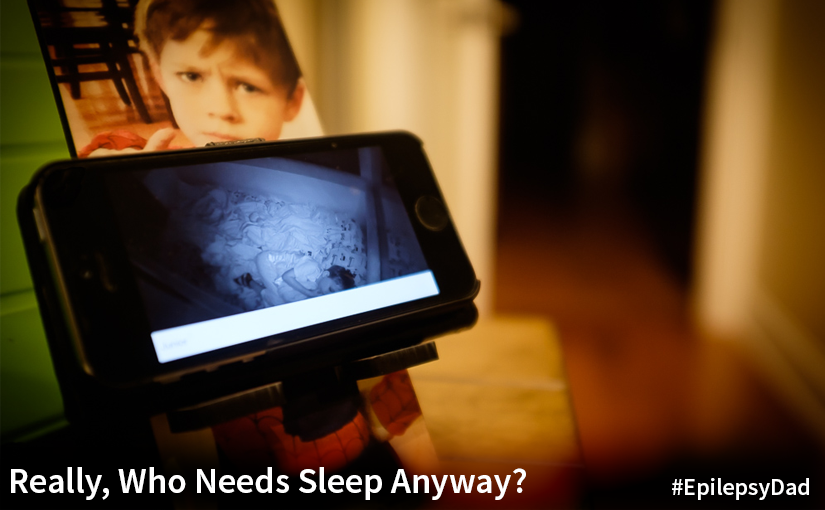
    Really, Who Needs Sleep Anyway?

    If you follow me on Twitter (@epilepsy_dad) or Facebook, you might have seen this update recently:

    Last night was first night in months where we didn’t get up even once. No seizures that we heard. No nightmares. No insomnia from the meds.

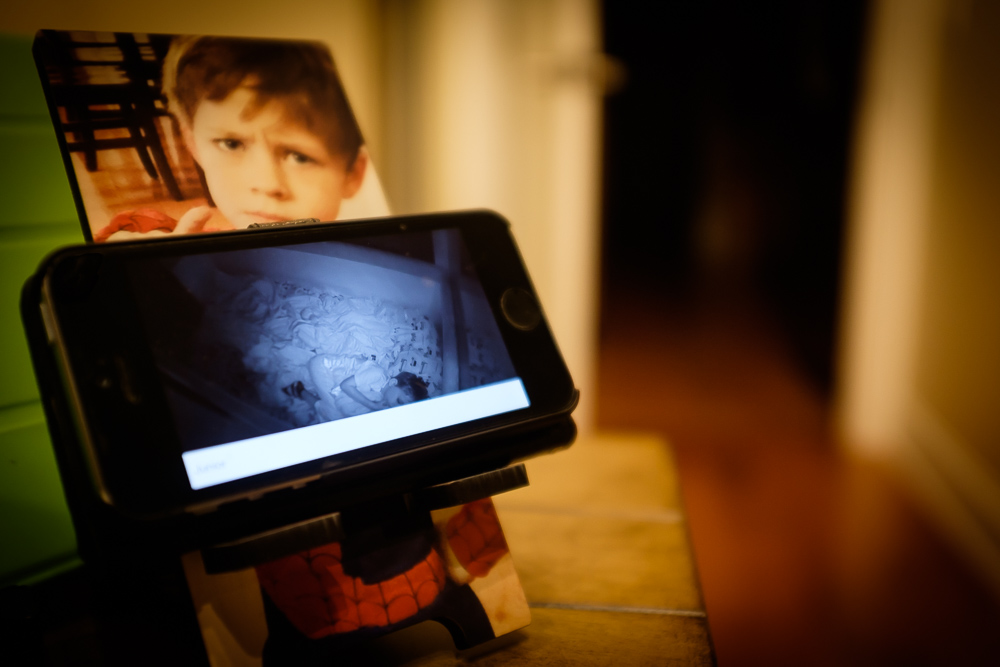
    The bags under my eyes, however, are a telling sign that the status update represented an anomaly. Most nights, my wife and I sleep just on the edge of consciousness. The doors between our room and our son’s room are open so that we can hear any sound that he makes. My phone is on my nightstand with the baby monitor app running so we can hear and see him while he sleeps. We’re on watchful guard listening for a seizure, or for him calling out or crying because of a bad dream, or because he just doesn’t want to be alone.

    epilepsy sleep tired seizure

    On any given night, we might get up between 3 and 10 times, which means we only get a few hours of consecutive sleep at a time. It’s been like this for months. Our informal system has been that whichever one of us that is less asleep will get up, allowing the other to let their guard down a little more and drift a little deeper into sleep. It might only be a few minutes or it might be an hour, but either way, my body welcomes the break and release from constant tension.

    When you have a child with epilepsy, especially if their seizures aren’t fully under control, a good night’s sleep is a luxury. Seizures don’t stay in a nice convenient box or stick to a schedule. They happen when they want to happen and, for many people including my son, that can be at night and during the lighter stages of sleep. The kicker is that those times are also when the body and mind desperately want to rest and recuperate and, since the seizures equate to an unrestful sleep, he’s left more tired. When he is overly tired, he’s more likely to have seizures during the day, as well.

    I feel like I want to end every post with some variation of “epilepsy is more than just seizures” because it’s the overall theme of our journey so far. Seizures are a part of epilepsy, but there is so much more. There is a lack of sleep. There is a being on constant alert. There is dealing with the stigma, and the uncertainty, and the lack of understanding. There is the inability to explain any of it, to him, to ourselves, and to the outside world. There’s so much to living with epilepsy that it would take too long to list out even a fraction of the ways that it impacts our lives. But right now, my son has gone to bed, and it’s time for me to get whatever bits of sleep that I can. I will hope for another night without one, but I will still listen for his call…a call that I will always and forever answer.


  • My Typical Day As A Parent Of A Child With Epilepsy

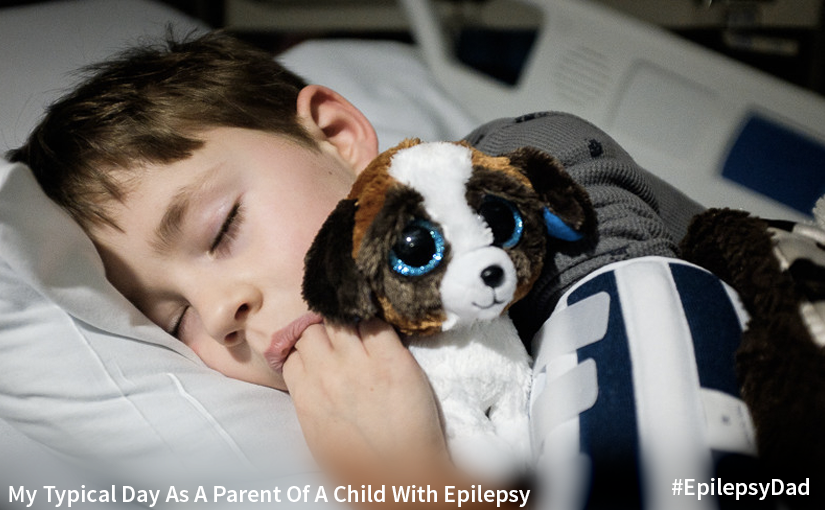
    My Typical Day As A Parent Of A Child With Epilepsy

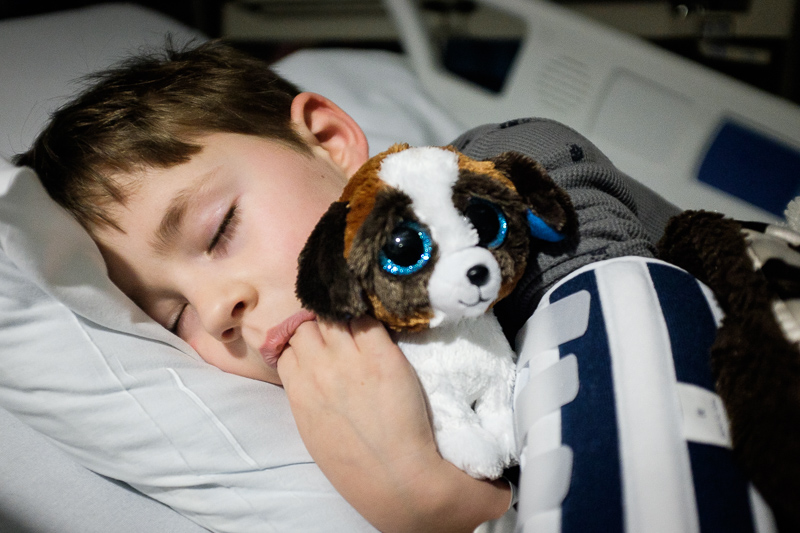
    My typical day starts around 2 AM. We’re sharing a bed now, my wife, my son and I, because we’re not ready to let our son be alone in his room a floor away. I’m usually awoken by my son having a myoclonic seizure, a brief expression of sound, a jerk, enough to wake me, but he usually returns right to sleep. I’ll lay awake and wait for the next seizure, which may or may not come immediately. Eventually, I drift back to sleep, only to repeat the process a few more times during the early morning until my son eventually wakes up between 7 and 8 AM.

    Once he wakes up, the next hour is a mix of listening for seizures and trying to judge his temperament to see if we’re going to have a good day or a not-so-good day, in which case I’ll hang around a bit more before I go to work.

    When I do go to work, I’m always on edge, waiting for the phone to ring. I check in constantly with my wife to see how my son is doing. How are his seizures? How is his behavior? Sometimes, she calls me. Sometimes, I have to go home.

    After work, if it was a good day, we will hang out as a family and have dinner. We’ll play hockey, or catch, or Xbox, and we’ll do normal family stuff. If it wasn’t, then I take over for my wife so she can get a break, and we’ll spend the rest of the night trying to just make it to bedtime.

    Around 7 PM, we start preparing for bedtime. Lately, we give him his calming medicine and a dose of melatonin, then around 7:30 we start the routine of brushing his teeth, washing his face, giving him the rest of his meds, and reading a story while listening to Mozart. If he’s tired enough, he will fall asleep and we count our blessings. If he doesn’t, we spend the next hour or two holding him down and trying to calm him down until he eventually falls asleep.

    epilepsy seizure behavior family

    Once he is down, my wife and I might watch a show or spend some time together, but we’re always still on edge, checking the camera in the room at every sound to see if it’s him getting up again, to see if we need to go in there and repeat the calming or the holding down. If we get to finish our show, we’ll head in to bed, grateful for another day, and hoping the next day will be better.

    There are a million similar, and a million different stories of how families are dealing with epileptic children. Many of us spend all day counting seizures and trying to keep our kids safe. Some of us are dealing with anger and impulse issues. Others are dealing with kids that might not be able to walk, or talk, or move, on top of having seizures. We’ve met some of these families, and we all have our own stories. The seizures might be a common thread, but as each of our stories reveal, epilepsy is so much more than just seizures, and living with epilepsy is something that impacts the entire family.


  • Break On Through

    Break On Through

    The house had been quiet at night since we left the hospital. My wife and son had been sleeping on our small bed while I slept on the couch in the living room. This temporary living arrangement was brought on by necessity since his elevated loft bed in the basement was not compatible with our new reality, and the stairs down to his room posed a hazard should he have a seizure and try to navigate his way up to our room in the middle of the night.

    The first few nights back home, there was little sleep as we waited to see how our son would do. We’d been in this cycle where we would leave the hospital armed with a new medicine and no seizures only to find ourselves back in the hospital a few days later when the seizures returned in force.

    But after a week without an incident, in a house filled with silence, my body was finally able to relax. The slender couch with the small “Home Sweet Home” decorative pillow (that I know I’m not supposed to use) were a welcome relief from the uncomfortable hospital accommodations.

    With so many quiet nights in a row, my brain resisted reacting to the alarm bell my ears heard echoing through the halls, the unmistakable sound bellowing from my son’s vocal chords that announced the arrival of another seizure . I rolled off the couch, landed on my feet, and raced to the bedroom at the back of our apartment. I caught a glance at the digital clock on the microwave as I passed. It read 5:32, and I noted it so that we could measure the duration of the seizure, the mechanics of counting and measuring seizures having become rote.

    By the time I reached the bedroom, the thankfully short seizure was already over and my wife was comforting my son. I laid with them for awhile before returning to the couch. This time, my body refused to relax, and I nervously stayed alert to listen for another seizure, which also came later the same morning, followed by another cluster that required the use of the rescue medicines before they dissipated.

    They call these “break through” seizures because they occur in spite of the use of anticonvulsants or, in our case, three anticonvulsants and countless prayers. We’ve experienced enough of them to know what we are supposed to do, which is as terrible as it sounds.  But we stayed home and, given our year so far, that is a marked improvement.

  • The Waiting Is The Worst Part

    The Waiting Is The Worst Part

    I spend a lot of time waiting for explosions.

    These explosions come from different places and take many forms in my life. Lately, they’ve come in the form of seizures and an angry reaction to a new medicine.

    Each explosion creates a new crater on the landscape in my mind as I hunker down in the bunker waiting for them to subside. The snow outside tonight makes me think of the soldiers in World War II, freezing in foxholes in the dark night of the Ardennes Forest while the Germans shelled them, destroying trees, bodies, and spirits alike. The physical damage is easy to rationalize, and to justify, and to accept. The damage to the spirit is harder to quantify, and it brings with it the wonder when the explosions will come again.

    epilepsy explosion shellshock

    The waiting is always the worst part. Waking up to every sound at night wondering if it’s another seizure, especially when there were none the previous night. Wondering if the next episode of my child not listening will escalate in to biting, and spitting, and the horrible things that no child should ever have in their heart. Only, you know with what’s happening, that is not really your child. Except, it is. And there is nothing you can do about it except try to calm things down, and hope that it will be the last time. The last outburst. The last bad reaction.

    And that’s when the waiting starts…all over again.