Taking A Chance Or Playing It Safe

I should have known there was something wrong when my wife texted me that our son had a seizure in school. Seizures during the day are rare for him, but I thought that maybe we wore him out sightseeing with his cousin who was visiting over the weekend. That was an especially bad day to break from his nocturnal seizure pattern because that afternoon he was supposed to be back on the ice for his first hockey class since his seizures started more than two years ago.

When we lived in Colorado, hockey was all this kid wanted to do. We played hockey on the floor since he could walk. We even made a movie about it.

He started skating when he was around three, and he started his first hockey class just before we moved to Philadelphia, which also happened to be the time his seizures started. With how bad things got, hockey and skating were out of the question. Taking away something he loved so much was one of the cruelest things that epilepsy did to him.

It took almost a year, but once he started to regain his balance and stamina, we found him a coach to do off-ice drills with him. We continued to play hockey on the floor or at the park, but he would always ask when he could get back on the ice. I didn’t have an answer.

After nearly eighteen months, we let him back on the ice. It was only for short periods of time because his balance, stamina, and attention issues still prevented anything too rigorous, but it was something. To a kid that loves hockey more than anything else, though, it’s just skating. There is something different about doing it in full pads, with a hockey stick, and surrounded by other hockey players and we weren’t there yet, although that was about to change if he was well enough to go to this new class. After more than two years, he was about to return to where he was before the seizures started, which is why the timing of the daytime seizure was extremely unfortunate.

We decided to see how the rest of the day went. After school, he took a nap and my wife said that he seemed fine after he rested. We took the chance and she brought him to the rink and I left work to meet them. As I walked in, I saw my son scan the room and realize that he was in a locker room, surrounded by other hockey players. He was so excited that he trembled as he put on his gear. By the time I got there, he flashed a smile and asked me to help him finish getting dressed. Apparently, mommy didn’t know the order things had to be put on in and he had to keep taking something off in order to first put on the thing that should have gone before.

Finally dressed, he tucked his mouth guard into his toothless smile, grabbed his stick, and headed to the ice. It took all he had to not sprint, and he would have if the ice were further away. But he walked up the steps, past the bench, through the door and, finally, onto the ice. He skated around for a minute to get a feel for the ice and then skated over to his coach with the rest of the team.

epilepsy dad parenting hockey risk

It took all I had to not burst into tears on the bench. My heart was filled with such joy to see my son so happy. We do a lot of cool stuff as a family, but my son also does a lot of stuff that other kids don’t have to. Dealing with seizures, doctor’s appointments, therapy, an impossible diet, more therapy, more testing. He doesn’t have much control over even basic things that his peers do and, for a while, epilepsy had taken from him the one place where he could be himself and do something that he loved to do for himself. But there he was, on the ice, smiling and sending me an occasional thumbs up (which is really difficult to do with a hockey glove on) as he did the drills with (and better than) the rest of the kids.

epilepsy dad parenting hockey risk

Halfway through practice, though, from across the ice, I heard the sound that I dread every morning and I saw my son slump forward onto the ice. The coach moved towards my son and I yelled, “He’s having a seizure.” “When?” the coach asked. “Right now, ” I replied. As the coach knelt down, my son rose to his feet. I motioned to the coach and he had an assistant help my son to the bench. We sat him down and went through the protocol. “Do you know what happened? Do you know where you are? How are you feeling? Which way is your brain going?”

I told the coach that my son was okay and that he needed a break. The coach mentioned that he’s a nursing student and just happened to start reading about seizures and epilepsy medication. Serendipity. After awhile, my son told me he was ready to go back on the ice. As a parent, I felt faced with an impossible choice. Should I put him back on the ice on a day where he is clearly having more seizures and risk him getting injured? Or should I play it safe and take him home and take away the joy he was feeling? I glanced at my son who was watching the other kids on the ice and I made the heavy choice to let him rejoin his team. As he skated towards the coach, my heart raced and I watched his every move without blinking. Every fall was agony. Did he just fall or did he have another seizure? Thankfully, he would pop right back up each time and rejoin the drill. When class ended, I let out a huge sigh of relief as my son skated over to me, gave me a fist bump, and stepped off the ice.

By this time, he was exhausted but he took off his gear and I helped him put it back in the hockey bag. His eyes were a bit droopy, and I could tell that he wasn’t really there. He had given everything he had to be on the ice and his body and mind were starting to give in. It’s a blessing and a curse that my son wills himself through the things he wants to do and the things we ask him to do. I wish life were easier for him.

When we got home, I put him on the couch and made him dinner. He ate quietly and watched a little television before bed. As I went to get his evening medicine, I noticed that his morning doses were still in the pill dispenser. I asked my wife if she had given him his meds. It turns out, she didn’t. The daytime seizures, the exhaustion…we found the culprit.

Mistakes happen. It’s a lot to juggle four doses of multiple medications a day, a special diet, seizures and the normal chaos that comes with a seven-year-old boy. I felt terrible that the first time back on the ice, his head must have been going haywire. He had seizures. He had to come off the ice. He wasn’t really present. He barely remembered being there. All because we made a mistake on the day that he was finally able to go back to his first love. The poor kid can’t catch a break.

We gave him his medicine and the next day he was thankfully back to normal. I’m still not sure if we made the right call keeping him on the ice, and I suspect that we’re going to have a lot of similar decisions to make in the future. But that’s just part of managing epilepsy, and trying to give my kid as many things back that his condition has tried to steal from him. He won’t get it all back, but every little bit counts.


Take Care Of Yourself To Take Care Of Others

I’ve racked up a lot of airline miles in my day. I’m such an expert traveler that I can recite the different safety speeches from the different airlines. Sometimes I’ll sit in my seat with my headphones on and think the words to myself as the flight attendants demonstrate the safety features of whatever Boeing or Airbus metal tube we’re about to push into the sky. “In the event of a loss of cabin pressure, yellow oxygen masks will deploy from the ceiling compartment located above you.” The flight attendant will reach across to the middle seat to the left and the right and let their sample mask drop from their hands and suspend from a rubber tube above the captive audience member.

“Reach up and pull a mask towards you. Place it over your nose and mouth, and secure with the elastic band that can be adjusted to ensure a snug fit. The plastic bag will not fully inflate, although oxygen is flowing.” The snap of the rubber band secures the mask to the painted face and perfect hair of the actors in the repetitive play before the big life lesson is revealed.

“Secure your own mask first before helping others.”

Boom. Mic drop. Well, except for the part about where the emergency exits are. And the safety lighting. And the raft. And I’m sure a loose microphone rolling around the plane is a safety hazard. But that statement about securing your own mask before helping others…that’s the one that gets all the press. But why? It goes against everything we’re taught. It’s selfish to think of yourself first. “I need to save my [insert anyone other than myself]!” “There will be time to put my mask on after I save everyone else.” “Think of the children!” Such a contradiction in a statement that is made thousands of times a day around the world in a hundred different languages but also one that is as relevant on the ground as it is at 30,000 feet.

I’m not the first person to write about the importance of taking care of yourself so that you can take care of those around you. I’ve read the articles, too. They sounded great in theory. But in practice, it’s easy to forget to do it or to realize that you’re not doing it. There’s always so much that needs to be done and no one else to do it or no time to do it all. There are jobs and obligations and doctor appointments and seizure days and batches of keto cooking to do. There are the day-to-day operations of keeping a family in the air and safe and together. There are the “have to” with little time for the “want to”.

In an airplane, there are sensors that detect the loss of cabin pressure and trip the release of the oxygen masks from the cabin. That’s a pretty clear sign that something is wrong. In life, there are no sensors. There are no oxygen masks. Most of the time, you don’t know that your cabin pressure has been lost until it’s too late. Instead of passing out from the lack of oxygen and unable to help those around you, you find yourself in a hole, alone, and distant from those that need you the most. In both cases, it is impossible to breathe.

I’m finding myself in that place again. I feel myself pulling away from those around me. My wife is hinting that she’s feeling alone in the quagmire. I’ve dropped the things from my list that are just for me, things that refuel me, and I’m feeling drained. These are my warning lights, telling me that I’m not taking care of myself and that it’s impacting my ability to take care of my family.

It is time for me to find my own mask and to put it on.

It’s Hard To Come Home

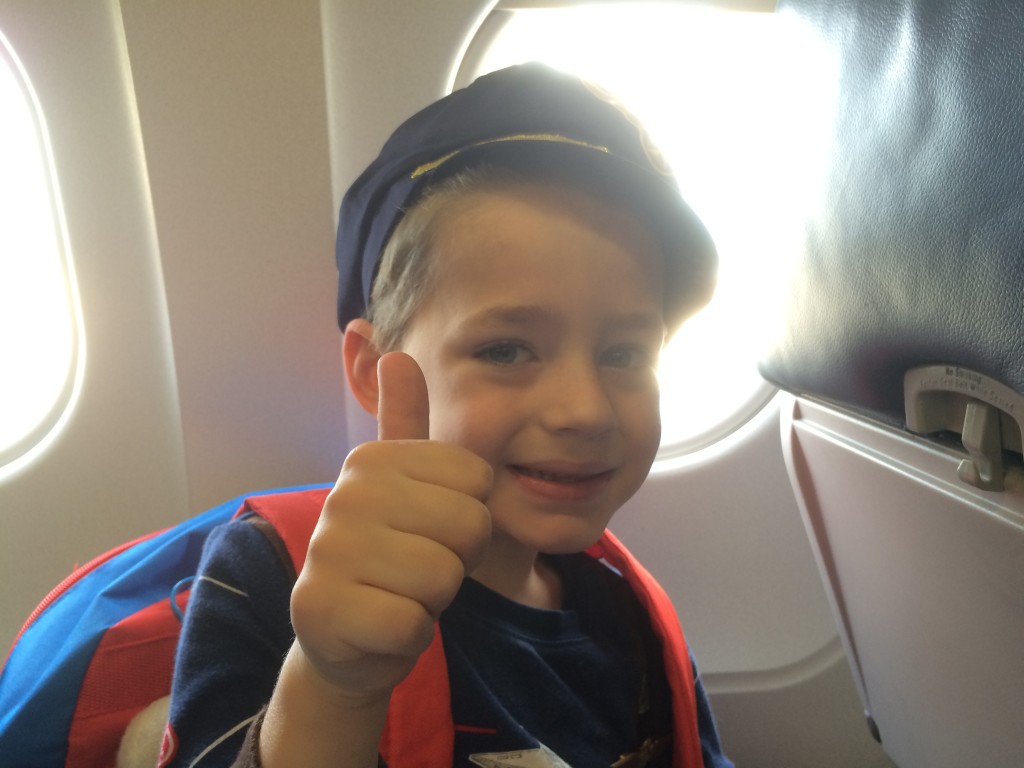
After three weeks of traveling, we headed back to Philadelphia. My son laid with his blankets against the window and we watched Colorado disappear in to the distance. The cars and the people were the first to fade, including the friends and family that we left two years ago when we moved east. The roads and the buildings were next to go as we climbed higher. Finally, the mountains were gone beyond the horizon as we straddled the line between the life that we had and the one we are trying to build in our new home.

epilepsy dad going home

It was good to be in Colorado. It was good for my son to be there, surrounded by people who love him. Surrounded by some of the only friends he has. Even though we’ve lived in Philadelphia for two years, for most of that time, he was sick and wasn’t able to make many strong bonds. Colorado, for him, still represents his universe, where everything is except for us. Philadelphia has only a smattering of significance, with a few friends but where most of his connections have come through the hospital or his condition.

It was good for me to be in Colorado, too. It was good to see my family happy. It was good for me to be able to talk face-to-face with friends that knows us from before and after the move and from before and after the seizures came. I move around a lot, and I don’t tend to keep people in my life that span the transition. It’s hard for me to maintain the connection, even though technology has in many ways made it easier. So those connections usually fade, just like the landscape passing by the airplane window.

But leaving Colorado was different. Those connections that we made there were stronger than I have ever had before. The life that we had there carries more weight than the life here that we have still yet to build. In many ways, Colorado still feels like home, but I force myself to respond with “Philadelphia” when I’m asked where home is, as if I’m trying to train my brain to actually believe it.

That makes it hard to come back. To leave a place where my son wore a constant smile. Where the faces of the people who looked at my son were those that love him and accept him and that weren’t only doctors or nurses or therapists. Where we were graced by a few seizure-free days. Where, when we lived there, anything was still possible.

I looked out the window from 35,000 feet. The landscape was a wash of browns and blues and greens. There wasn’t anything to identify where we were, and I felt the pull from both the east and the west. Between the future and the past. Between possibility and acceptance. These two places that were my homes…that are my homes…that mean completely different things.

As the plane hung in the air between those two places, I thought how hard it was to come home.

Especially when you don’t really know where home is.