Tag: memory

  • A Place Where Awareness Ends

    A Place Where Awareness Ends

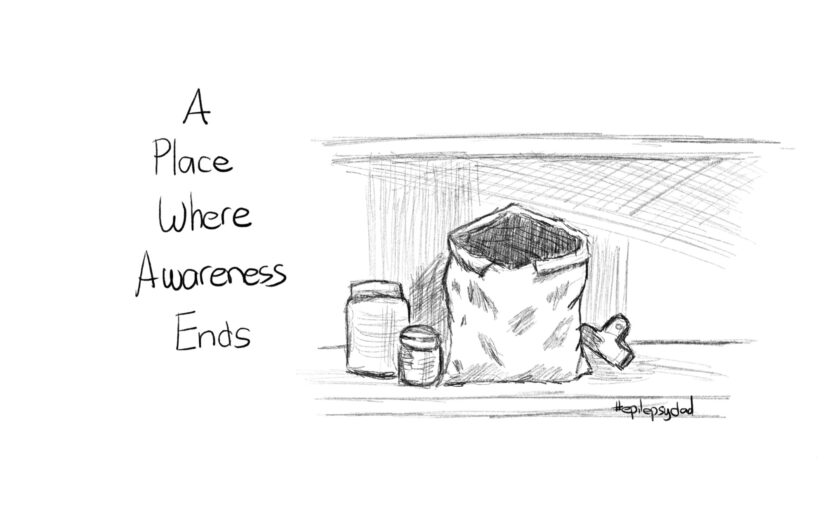
    I was making lunch for my son and went into the pantry to grab the bag of cheese puffs. It was the big bag, the one we keep on the top shelf. He had some as a snack after school the day before.

    The bag was wide open.

    It was sitting exactly where it always sits, but unfolded, unsealed, left the way it was when he last touched it.

    He knows to fold the bag over. We’ve talked about using a chip clip to keep it closed. I suspect he remembered that he needed one, looked for it, didn’t see it in the basket where they usually are—probably because something was in front of them—and stopped there. He’s not great at moving things out of the way to see if what he’s looking for is behind them. And instead of asking for help, he put the bag back on the shelf and walked away.

    This happens a lot.

    The cereal bag left open on the counter. A piece of recycling placed on top of the bin instead of inside it. A dish in the sink instead of the dishwasher. His lunchbox still holding an apple core or a wrapper from earlier that day.

    It can feel like I’m following his tracks through the house, noticing the small places where things were almost finished. Little markers of effort that ran out just before the end.

    I don’t get mad when I find the bag open again. I recognize it as a place where his awareness ended that day.

    I offer gentle reminders. Sometimes they stick for a while. Sometimes they fade, and weeks later I find the cereal bag open again on the top shelf. Not because he doesn’t care. Not because he’s being careless. But because holding all the steps—seeing the problem, finding the tool, moving obstacles, finishing the task—can be more than his brain can manage in that moment.

    This is what a lot of caregiving looks like.

    Not emergencies. Not hospital rooms. Not big, dramatic moments. Just quiet maintenance. Picking up what was left behind. Closing the loops that didn’t quite get closed. Learning to read these small, unfinished things not as failures, but as information.

    They tell me where his energy ran out. Where his attention drifted. Where the world became just a little too much to hold all at once.

    So I fold the bag. I clip it shut. I rinse the lunchbox. I don’t sigh. I don’t lecture. I just keep walking behind him, filling in the gaps.

    This is part of how I love him.
  • Lost in the Story

    Lost in the Story

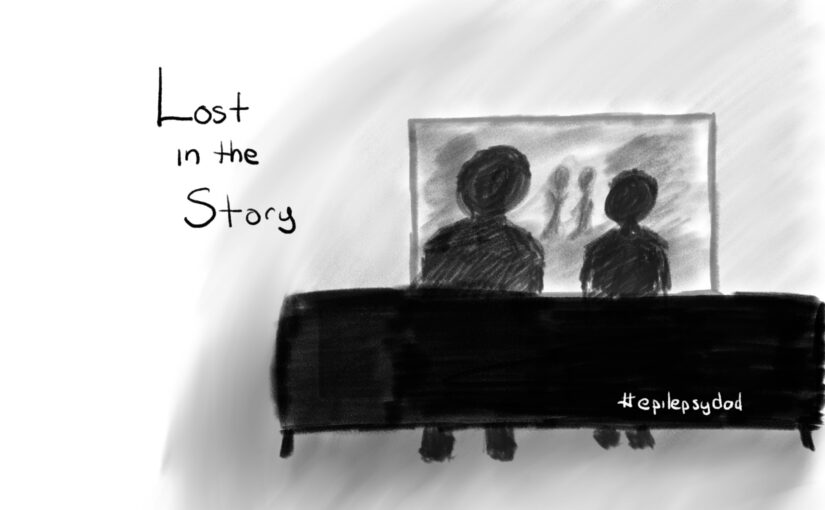
    Recently, we started watching Stranger Things.

    For most families, that means settling into the couch, grabbing snacks, and diving into the next episode. For us, it means something different.

    In between episodes, I have to remind him of what happened last time—who the characters are, what they’re trying to do, how the story left off. Even when we watched it the day before. Sometimes the same day.

    And when the new episode starts, I keep the remote close.

    Not to skip the scary parts.

    Not to turn up the volume.

    But to pause.

    To explain.

    To anchor him to what’s happening on the screen and how it connects to what came before.

    Sometimes it’s a quick reminder. Other times it’s a full recap: “That’s Will’s mom. Remember, she’s the one who put up all the Christmas lights. And these guys are going into the Upside Down. It’s like that dark world we saw last episode.”

    Sometimes he nods.

    Sometimes he asks more questions.

    Sometimes the explanation drifts away as quickly as it landed.

    It’s like this with every show. Every movie. A remote in one hand, a thread of the story in the other, trying to keep him connected to something that keeps slipping through his fingers.

    A few weeks ago, I read Still Alice, the book about a woman losing pieces of herself to Alzheimer’s. There’s a moment where her husband brings home movies because books have become too hard—too much to hold onto, too much to follow. Movies were supposed to be easier. But even those became confusing when scenes blurred together and storylines couldn’t be kept straight.

    She could no longer follow the thread of the plot or the significance of characters who weren’t in every scene. She could appreciate small moments but retained only a general sense of the film after the credits rolled.

    She wouldn’t understand why her family reacted the way they did to something on the screen, so she matched their expressions and faked the same reaction to protect them from how lost she was.

    Watching movies made her keenly aware of how lost she was.

    That part stopped me because it felt uncomfortably familiar.

    My son is not losing memories the way Alice was. His brain works differently for different reasons. But the impact is similar. He can’t follow all the threads. He struggles to remember the significance of characters who aren’t in every scene.

    And yet, he wants to watch these shows. He wants to enjoy them. He loves the characters, the action, the mystery. He wants to be part of the story.

    This is where the questions start to land heavy for me. I wonder if he is aware of how lost he is. I don’t know if he knows any different. But he probably sees that not everyone is lost. He knows that I am not lost.

    Does he think this is a common thing for kids his age? Does he believe you need to be a grown-up to follow the threads? Or does he know, somewhere inside, that this confusion is something uniquely his?

    I don’t have those answers. But I do know that every time I reach for the remote, I am not just pausing a show. I am trying to make sure he never feels like he has to fake understanding to keep up. I am trying to meet him where he is, in the spaces between the story he wants to follow and the story he is able to hold.

  • Ballpark Memories

    Ballpark Memories

    Growing up, I didn’t spend much time with my biological father. My parents divorced when I was two, and my mother had custody of my sister and me.

    Our father would pick us up for holidays, or to swim in our grandparents’ pool on those hot New England summer days. We would occasionally visit his mother in New Hampshire. But my favorite visits were the ones when he would take us to New York to see the Yankees.

    A few weeks ago, a friend gifted my son and me tickets to see the Philadelphia Phillies. It was our first game this season, and I’m glad we got at least one in before the season ended.

    Since it was just the two of us, it reminded me of the Yankee games with my father. I remember going to the games early and watching the players warm up. I remember running down to the first row next to the field, getting a closer look at them, and catching a ball tossed into the stands as they left the field. But even though I know he was there, I don’t remember my father at those games.

    I don’t remember having meaningful father-son conversations. I don’t remember even talking about the game. I don’t remember us joking or celebrating the wins and the dramatic plays, or sharing the misery and disappointment of a defeat. It wasn’t a shared experience.

    As I sat there with my son, I wondered how he would look back on this time with me. Will he remember how we bring our gloves to every game in case of a fly ball? Will he remember how I act surprised every time he eats an inhuman amount of hot dogs or a whole pizza? Will he remember how we call out to our favorite players, and will he see me on the other side of the high fives after a big play?

    I am not trying to rewrite the past, but I can shape the present. My father’s absence taught me how important it is to be fully present when we are together. Not just sitting in the seat next to my son, but sharing in the joy, the laughter, and the heartbreak that come with the game.

    I don’t just want him to remember going to games.

    I want him to remember that we went together.

  • Fine.

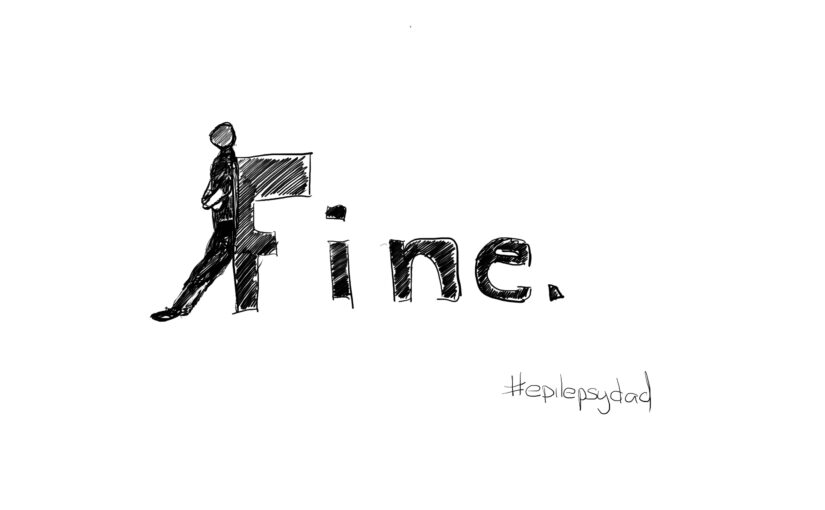
    Fine.

    On days when I work from home, I like to pick my son up from school. I sit in the line of cars slowly making their way to the exit and wait for the teacher to send him out.

    As he walks toward the car, he looks exhausted most days. School asks more of him each year—more performance, more endurance, more emotional regulation, and more social navigation.

    He throws his backpack into the back of the car and plops down in the front passenger seat.

    “Hi, pal. How was school?” I ask.

    “Fine.”

    That’s it.

    Fine. One word. One syllable. Full stop.

    “Well, what did you do in…” and I’ll rotate through his subjects.

    Sometimes I get a short answer, but most of the time he says he doesn’t remember.

    As a parent, it’s frustrating. I can see that he’s tired, but I don’t want him to think that—by not asking how his day went—I don’t care. I genuinely want to know how his day was, what he did, and what he learned. I’m curious about his experiences and want to understand more about what he does and how he sees the world.

    Additionally, my son struggles with his memory, so I feel pressure to ask the question right away—for a chance to hear any details before they fade. If I don’t get an answer, it feels like I’ve lost the opportunity to connect with him. It becomes an unmet need when his answer feels like it shuts the door.

    But that’s my need.

    His need, after working so hard all day just to get through it, is not to engage in that moment.

    I recently read an article about how school is harder for kids today, and something clicked.

    It may seem simple, but a genuine answer to the “how was school today” question requires considerable effort and decision making to synthesize information from a busy day.

    When my son gets in the car, he’s not just carrying books in his backpack. He’s carrying the weight of every demand he had to meet. He’s carrying the exhaustion from seizure-disrupted sleep. He’s carrying the side effects of his medication. He’s used up every bit of energy just to make it through the day.

    “Fine” isn’t a brush-off. It’s an exhausted plea for peace.

    The article offered a simple but powerful suggestion:

    Consider the purpose. Ask yourself whether you want to gather information or simply connect with your child.

    As much as it feels urgent to gather information about his day—as a way to connect—it often does the opposite. It leaves me frustrated and leaves him more drained, trying to process my question, reach into his memory, and find the right words. Instead of connecting, in those moments, we drift farther apart.

    My goal, always, is to connect with him.

    I want him to know I’m happy to see him. I want him to know that I feel lucky to be able to pick him up. I want him to know that I see him. I want him to know that I appreciate how hard he worked to make it through the day and that I hope he’s proud of himself, because I am.

    Instead of starting with a question that requires him to do more work, maybe I will start with a statement. Maybe one of those.

    Or maybe I’ll just tell him how lucky I am to be his dad.

  • The Fog

    The Fog

    “Do you understand?”

    “Not really.”

    We’ve had countless conversations with my son that all end the same way. We’ve tried repeating ourselves. We’ve tried to use smaller words. We’ve tried to use fewer words. But too many times, that process inside his brain that converts what he hears into something he understands breaks down.

    It could be related to his seizures. It also probably has something to do with the handfuls of pills he swallows every day. But he lives his life surrounded by a thick fog and he struggles to find his bearings.

    In conversations when we’re trying to explain something new to him, I can see a faint recognition. It’s like seeing a shape through a really thick fog. He knows there is something there, but he doesn’t know what it is.

    When we talk about a memory, even a big event, he has the look of seeing the edge of something familiar that he knows he should recognize but he can’t really place what or where the object is.

    In those moments when he can recall something, it’s like he is looking at something only a few feet in front of him. But then it backs away into the thick, white cloud and is lost again.

    It makes me think of trying to navigate a new city that is covered by fog. You might know the general direction to start in, but haven’t yet memorized the entire route. The tops of the buildings are obscured by the fog, so you navigate by finding landmarks at ground level. Most of the references are unknown. Occasionally you’ll find one that looks slightly familiar but is unhelpful because you don’t have the context of where it sits in relation to anything else. When you find something you recognize, you get the brief satisfaction of knowing where you are. You might turn in a certain direction. But as soon as you step away from it to continue your journey, you’re lost once again.

    We do our best to help him. We’re pointing out the landmarks, hoping that he’ll recognize more of them so that he can more easily know where he is. We’re getting him help so that he can develop the skills that he needs to find his way. And we’re calling out to him when he is too far away to see us so that he knows that we’re still there. But there is nothing we can do to lift the fog itself.