Category: technology

  • Yet

    Yet

    “Yet” is such a powerful word.

    “Yet” allows us to acknowledge current struggles while leaving space for future possibilities. It’s a bridge between what is and what could be, subtly shifting focus from a fixed state to one of potential.

    There have been so many times when we thought we were out of options when it came to treatments for our son’s epilepsy. We tried all the medications. We tried the ketogenic diet. Because his seizures were generalized, he wasn’t a candidate for surgeries that are available to people who have focal seizures.

    Each time one of the treatments failed to control his seizures, we felt resigned to give up hope.

    But even in the 10 years since my son was diagnosed, there have been many new advancements.

    Genetic testing is being used to identify specific genetic mutations associated with epilepsy, which has enabled personalized treatment strategies, improving efficacy and reducing side effects.

    Epidiolex was introduced in 2018 to treat Lennox-Gastaut syndrome and Dravet syndrome.

    A new surgical technique called Laser Interstitial Thermal Therapy (LITT) that uses a laser to target and ablate seizure-causing brain tissue precisely was approved, reducing recovery time compared to traditional surgery.

    Although it was used off-label earlier, Vagus Nerve Stimulation (VNS), which involves implanting a device that stimulates the vagus nerve to reduce seizure frequency, was FDA-approved in 2017 to treat children as young as 4 years old with drug-resistant focal epilepsy.

    Deep Brain Stimulation (DBS), traditionally used to treat movement disorders like Parkinson’s, is now being used to target brain regions like the anterior nucleus of the thalamus to reduce seizure frequency in individuals with drug-resistant epilepsy.

    We’ve benefited from these advancements. In addition to genetic testing, my son had VNS surgery when he was nine and DBS surgery right before his 15th birthday, even though they weren’t options when our journey started.

    Of course, it’s easier to be on this side of it and say that I always had hope or that I automatically added the word “yet” to the sentence “there is nothing left to try.” I didn’t. I was overwhelmed because everything we tried didn’t stop the seizures. I had almost lost my son, and I was afraid that, with every failed treatment, every door was closing on his future.

    Eventually, I would be reluctant to try a door because that would mean fewer were available. At least with untested doors, there was hope. It’s like in high school, when there was a girl I liked, if I didn’t ask her out, she couldn’t say “no,” so there was always hope for a “yes.”

    What changed for me was seeing the advancements and having them offered. First, there was a new medication, then another, and then the VNS. I saw first-hand how continued progress created more doors, making trying one a little less scary. I began to believe there would be more doors, which made it easier to believe in the word “yet.”

    Right now, our hand is on the DBS door. We’ve cracked it open and are waiting to see what is on the other side. There are never guarantees, but we hope it improves our son’s quality of life. If it doesn’t and we have to close that door, too, when the feeling comes back that there is nothing left to try, I will remember to complete the sentence:

    It feels like there is nothing left to try…yet.

  • Sneaky

    For a while, I’ve been thinking that Apple’s Parental Controls were poorly implemented. We would set the controls, and then within a few days or weeks, we would see them change.

    As an engineer, I set out to troubleshoot the problem. At first, I thought it was because our son has two devices. Perhaps the changes weren’t propagating to one of them, and that device was corrupting the settings. But even after I ensured both devices matched, the setting would change again after a few days.

    One day, my wife casually mentioned giving my son her phone because he needed to “check something.” That’s when we figured out he had convinced my wife to let him use her phone and was changing the settings.

    Sneaky.

    Once we figured that out, we sat him down and told him what we learned. We covered issues with trust, money (Apple’s refund policy for something like this is less than generous), responsibility, and consequences. We took away his devices for almost a week, and when he got them back, we didn’t encounter any issues.

    For a while.

    The other day, my son said, “Dad, I like your drawings.” I’ve been drawing on my iPad, which I leave downstairs in the living room. He knows my passcode but not the parental control code. We chatted about respecting people’s privacy and boundaries and not using my iPad without asking, and I left it at that.

    A few days later, I discovered that the parental control settings had changed again. As I went in to fix all the settings, I realized that once you unlock the iPad, it didn’t require the parental code to turn off the parental controls. You can turn off the parental controls with the device’s passcode, which my son knew.

    When my son saw my drawings on my iPad, he was on it to disable the parental control code. His mention of my drawings turned out to be his undoing,

    Sneaky.

    Controlling his impulses and urges is hard enough for him as a teenager. My son’s intellectual and emotional challenges mean that the process will take more time. We’ve been at this long enough to understand that it’s not a flip that we will switch; it’s a gradual undimming until the light is at its full brightness.

    As we talked to him about these choices and the consequences, I felt conflicted. His ability to troubleshoot the problem he was facing and come up with multiple solutions is actually impressive. I know engineers with less tenacity and creativity. Using that ability to be sneaky and violate our rules, however, is the wrong expression of those skills.

    Our job as parents is to help him use his power for good.

  • Executive (Dys)function

    Executive (Dys)function

    We’re probably those parents who have relied too much on technology while raising our son. Between the hospital stays, appointments, and sick days, we have spent a lot of time waiting. There have also been days where our son was too mentally or physically tired to do anything else, so we’d hand him one of our phones. Eventually, my wife and I also got bored sitting around with nothing to do. We also struggled with the reality and stresses of our complicated life and equally needed a way to escape, so we bought our son an iPad so we could disappear into our phones.

    In the beginning, leaning on technology served a purpose. It was a portable distraction that helped pass the time. By the time our son had fewer appointments and more good days, the habit of reaching for a device was automatic.

    The pandemic didn’t help. We played a lot of UNO and other board games, drawing, and finding ways to interact, but it felt like a lot of hours to fill, so we fell into our default of electronics.

    I’d often look up from my phone and see both my son and my wife firmly fixated on their devices. We were alone, together.

    As he got older, we would occasionally review his device usage to ensure he wasn’t doing anything inappropriate, but we didn’t use the parental controls or other settings to limit his access or screen time. Any time we would try, largely driven a realization that he was addicted to his devices, he would get sick or we’d find a reason why he needed his device, so we would remove the limits.

    When our son started puberty, we began to notice our son being more secretive about his device usage. When we investigated, we found that he was looking at inappropriate sites. As we looked into it, between his ADHD and issues with executive functioning, we also saw that he was having a hard time regulating and controlling his impulses.

    On more than one occasion, after we turned on parental controls, we would see a receipt for purchases he had made after disabling the “Ask to Purchase” feature. He would also bypass the content restrictions to download inappropriate apps and visit adult websites.

    Each time it happened, we’d sit down with him and have a conversation about rules and consequences. But, in many ways, it was like trying to rationalize with an addict. Worse, his struggles with attention and processing and our flexibility on the enforcement of the controls only set him up to fail. A few weeks ago, I saw another receipt for $200 worth of purchases in my inbox, including charges for apps that he knew were off-limits.

    This time, the conversation was different. We could see the struggle he was having to resist the urge to bypass the parental controls. It’s like when enough time passes and any previous consequences from the last incident has faded, his brain can’t make the right choice. The league of screen addiction, ADHD, and executive processing and decision making issues are simply too much to overcome.

    There are a number of studies detailing the impact of electronics on children, specifically as it relates to executive functioning and decision making, including “Less screen time, and more physical activity associated with executive function“, “Mobile Technology Use and Its Association With Executive Functioning in Healthy Young Adults” and “Addictive use of digital devices in young children: Associations with delay discounting, self-control and academic performance.” Many of the studies are on healthy children without the additional complexities that our son has, which can only exacerbate the impact on his developing brain.

    We tried to explain the situation to him in a way without shame by taking our responsibility for not providing more structure on his screen usage. We also let him know that these struggles are normal for children his age and that it’s our job as his parents to help him navigate this time in his life.

    Executive functioning, impulse control, and decision making are like muscles. A muscle doesn’t grow bigger unless you make it work hard, and you make this muscle work hard by having consequences, both good and bad. Historically, our negative consequences haven’t been very heavy, and that muscle hasn’t been strained. This time, we swapped in a heavy weight by taking away his devices completely for a few days. It was interesting to watch his attitude and awareness during that time, as both seemed to improve.

    When we gave him back his devices, we include time limits to help wean him off his dependence on them for entertainment and to pass time. Spending more time in the real world is where he can flex those muscles to help him continue to learn how to successfully live in the real world.

  • A Year With The VNS

    A Year With The VNS

    Last December marked the one-year anniversary of my son’s VNS surgery.

    Leading up to the surgery, I was a wreck. The week before, I had to give a preview of a presentation to one of our executives. I was not present and I stumbled through, relying heavily on the notes that I threw together on a handful of index cards. A few weeks later, my boss commented that she noticed how off I was. “You’re normally so put together. I don’t know what happened.” I did, I thought. My son was about to have surgery.

    As I wrote about when we were contemplating the VNS, there is something about a surgery that is so daunting. With medications or the ketogenic diet, we can stop them if they aren’t working and the side effects eventually go away. But you can’t “uncut” my child. Once the scalpel breaks the skin, that’s it. It’s done. Even if the VNS is turned off or if the leads are removed, there is no going back. That thought weighed heavily on my mind right up to when they wheeled him back to the operating room.

    Thankfully, we are near one of the best children’s hospitals in the country, and the surgery went smoothly. The device was turned on a few weeks later, and the waiting game began.

    For the first six months, I didn’t expect much of anything to happen, which was great because not much of anything happened. Except for the vibration in his voice from the tingle of the VNS and the two visible scars, there was no change.  We didn’t see any reduction in seizures, even as the doctors adjusted the intensity and frequency of the pulses.

    At nine months, there was more of the same. His vocal cords seemed to adjust and his vibrato was less pronounced, but I could still hear it. Again, though, there was no seizure reduction.

    A year after his VNS surgery, I would love to write that it took a year for the VNS to really start helping my son. I would love to write that he is seizure-free and that we were able to wean him off the ketogenic diet or remove a few pills from the handfuls of pills he takes every day. I would love to write that I sleep any better knowing that the VNS will protect my son from a catastrophic seizure and that I sleep much better at night.

    But I can’t.

    The obvious question is, knowing what I know now, would I have still gone through with the surgery?

    The short answer is yes. The VNS helps a lot of people. At the time, we didn’t know whether it would work and I was and still am willing to try anything to reduce or prevent my son’s seizures. I’m disappointed that it didn’t do more for him, but it was worth trying.

    Maybe someday it will help. Maybe it is already helping with seizures that we can’t see, or maybe it will someday prevent a really bad seizure.

  • Seizure Detection And Prediction

    This post is part of the Epilepsy Blog Relay™ which will run from March 1 through March 31, 2018. Follow along and add comments to posts that inspire you!

    As the parent of a child with epilepsy, I rarely sleep through the night. Instead, I periodically wake to check in on my son. We use a wireless camera that has an app that we run on an iPad that I prop up beside our bed. I can see in to his room, even at night, and hear any activity or seizures. For the most part, it’s a good setup. But occasionally a wireless issue will cause the connection to drop. I’ll wake up facing a dark screen, wondering if I missed a seizure as I fumble in the dark to restart the app.

    That scenario repeats a few times a month, which is why the news that the FDA approved the Empatica Embrace as a medical device was so exciting. The Embrace is a wearable device that detects generalized tonic-clonic seizures and sends an alert to caregivers. Devices like the Embrace will provide a piece of mind to many people with seizures and those that care for them.

    Unfortunately for us, we haven’t yet found a device that can reliably detect my son’s seizures. His seizures are short and without much movement, making them harder to detect. Generally, the longer a seizure is and the more activity it generates, the more likely it will be detected. But with new sensors and smarter algorithms, these devices will continue to improve. They’ll have a higher sensitivity to detect shorter and more subtle seizures. Instead of relying on my own eyes and ears to catch every seizure, I’m hopeful that these devices will work for my son someday, too.

    Since the theme this week is technology and epilepsy, I thought I would spend some time talking about the magic behind these devices.

    Detection versus Prediction

    Detection

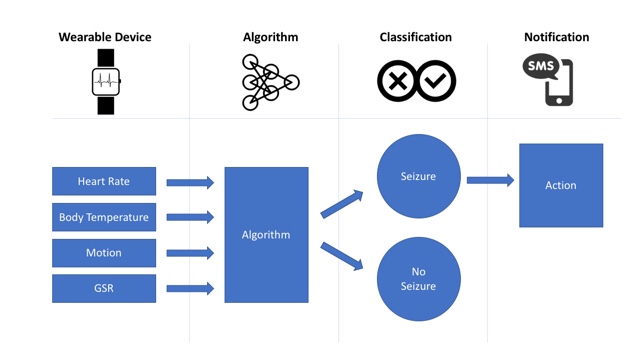
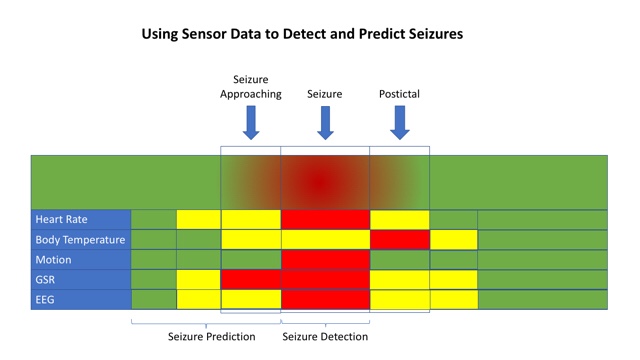
    First, I wanted to differentiate between detection and prediction. Devices like the Embrace focus on seizure detection. Detection figures out when a seizure is happening. The device monitors activity from embedded sensors and runs it through an algorithm. The algorithm has been trained to look for patterns that look like seizure activity. Once it is confident enough that a seizure is occurring, it will send out an alert.
    Prediction

    Seizure prediction tries to figure out when a seizure is likely to happen. Some people have auras or other cues that let them know that a seizure is coming. Imagine a device that could provide that same warning to everyone. This is a hard but achievable goal. The clues may be more subtle and harder to see. We may need more data or new sensors, but we’re well on our way to developing them. When we figure it out, the warning it provides cold allow a person about to have a seizure to go sit down or get to a safe area. It could alert caregivers ahead of time so that they provide help before or during the seizure.

    Training an Algorithm

    Both seizure detection and seizure prediction use much of the same data but for different goals. The techniques used to learn the algorithm are similar, too. Data is collected from a group of people wearing different sensors. The data includes both seizure and non-seizure activity and it’s fed in to a computer with a label such as “seizure” or ”no seizure.” The computer learns the difference between the two and creates a model that can be used to look at new data to classify it as a “seizure” or ”not a seizure.” The more examples the algorithm sees, the better it gets at identifying the common traits in the data that are associated with a seizure.
    The process is similar to teaching an algorithm to identify a cat. You feed the system a bunch of examples of cats and it identifies that a cat has two eyes, to ears, a nose, and whiskers. It generalizes traits using a technique called induction. Once it generalizes the traits, it can use them to identify a cat that it has never seen before using those traits. This is called deduction.
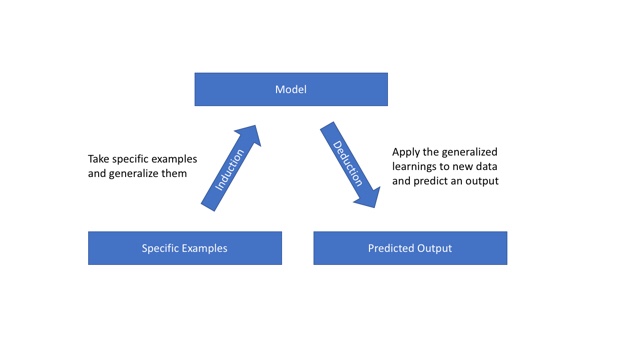
    The same approach happens with seizures. People and seizures are different. If we trained a model to look for a specific heart rate, it wouldn’t be useful because that would differ for everyone. Instead, we train a model to associate common changes that happen during a seizure. Then, when it sees the data coming in from sensors in a device, it looks for those similar markers to decide how to classify the data.

    No Algorithm Is Perfect

    As in the cat example, there are an infinite number of combinations of data points necessary to always get it right. We can’t practically train a model by showing it every angle of every cat that might exist. And we can’t give it data reflecting every possible seizure for every person. But we don’t have to. The magic of these algorithms is that they can do a pretty good job using subsets of the data. But that does mean they can make mistakes.

    There are two types of mistakes that are the most common: false positive and false negative. In the case of seizure detection, a false positive is when the algorithm said there was a seizure but there wasn’t. A false negative would be when the algorithm didn’t think there was a seizure but there was.

    These two error types present different challenges. In seizure detection, a false positive means that a caregiver might have been alerted. This can be annoying, especially if it happens too much, like The Boy Who Cried Wolf. Too many false positives means people may turn off the notification feature or stop wearing the device altogether.

    In seizure detection, the false negative is a much more severe problem because it means a seizure occured but the algorithm missed it. That means no notification was sent to alert a caregiver. If that is the primary purpose for the device then it can’t be relied on and won’t be used.

    Making Things Better

    The good news is that algorithms can learn from their mistakes and get better. We can use the times it was right and wrong to retrain the algorithm so that it can get better. That’s what Google, Facebook, and every other company that uses data does to make their products better. A popular concept in the world of machine learning and AI products is the Virtuous Circle of AI.
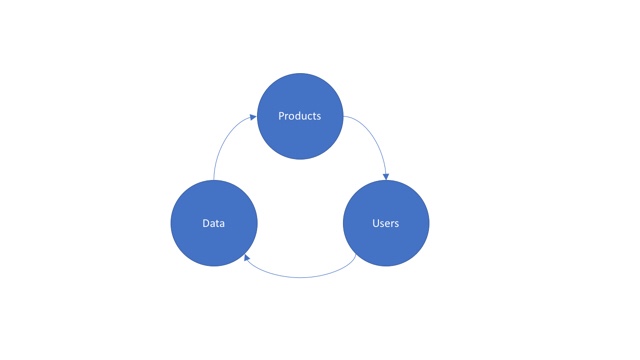
    We create products and give them to customers. The customers use the product and generate more data. The data is used to make the product better by making the algorithms better or adding new features. This is how Alexa gets better at understanding what you’re asking for, how Google gives you better search results, and how music and movie recommendations today are many times more accurate than even a few years ago. In the same way, as more devices like the Embrace find their way on to the market and more people use them, these products will use the data to get better, too.

    NEXT UP: Be sure to check out the next post tomorrow by Joe Stevenson at epilepticman.com for more on epilepsy awareness. For the full schedule of bloggers visit livingwellwithepilepsy.com.

    Don’t miss your chance to connect with bloggers on the #LivingWellChat on March 31 at 7PM ET.