Category: parenting

  • One Thing

    One Thing

    Lately, my wife and I have started a new routine. We sit next to each other on the couch, flip open our computers, pull up our calendars, and look at the week ahead. Even though it’s all digital and we share our calendars, it gives us a chance to get on the same page. We can add any events that we miss or decide who is picking up dessert for dinner at a friend’s house later in the week. But it also gives us a chance to create a manageable week for our son.

    Fatigue plays a big part in the frequency and severity of my son’s seizures. If he gets too mentally or physically taxed, they break free from their confinement. Instead of happening only in the morning, he’ll have them during his nap or after he goes to bed at night. The more seizures he has, the less rested he is, which causes more seizures. It’s a cycle that we work very hard to avoid.

    In most cases, that means we only plan one activity a day. While other kids his age go between team practices, play dates, and birthday parties, he’ll do one thing. Instead of “and”, our lives involve a lot of “or”. A birthday party or a movie. The museum or the park. A play date or a baseball game.

    Some days, that one thing is school. Other days, that one thing is therapy. Those activities are so draining to him that, if he goes in already tired, he can barely function. We see that, too, when he leaves school early to go to one of his appointments. But on those days, we don’t have a choice. He wills himself through it but then he stays exhausted through the next day. If that happens, we adjust his schedule to try to prevent those demanding days from adding up. If we can’t, or if we miss the signals that he’s running on fumes, we lie next to him in bed, watching him pay the price.

    We had a few of those nights in early summer. School was ending and we tried to juggle therapy and baseball practice. He loved baseball, but it broke my heart to see what the physical exhaustion did to him at the end of the night. It was all too much, but deciding what to cut and when was impossible. School is important and provides social opportunities. Therapy helps rebuild those skills that he lost and reinforce those that he will need. And baseball…baseball made him feel like he was part of a team. And that he was a normal kid.

    I wanted to take this post in a positive direction. I wanted to say that “in lives packed with activities and distractions, having to choose what to do helps clarify what is important.” I do believe that, but I also hate having to decide what to take out of my child’s life. I hate having to limit him in any way. To have to pick one thing. For every day. Every week. Every month. With no end in sight. There is no positivity in that.

    But as conflicted as I am, it has inspired me to try to make that one thing amazing and special. And I try to be mindful, present, and grateful for that one thing. Because I know that, no matter how much it hurts, one thing is better than nothing.

  • Wherever We Go, There They Are

    Wherever We Go, There They Are

    Whenever we go to a new place, in the back of my mind I want that place to change my life. It seems like a tall order, which may be why it hasn’t happened yet. I want to go to a place and be so inspired that I start writing that book that I’ve been thinking about. I want to leave a place a better person, having a better relationship with the people in my life. But mostly, I want to go to a place where my son doesn’t have any seizures.

    My son didn’t show any signs of having epilepsy until we moved to Philadelphia. I was only partially joking with the doctors when I asked them if it could be Philly causing his seizures. The first time we went back to Colorado, I was ready to move back if he was seizure-free during the trip. But he wasn’t. I had the same thought when we visited Florida. Maybe Colorado was at too high of an elevation and he needed an ocean breeze. But he had seizures in Florida, too. And in New York. And in California. Wherever we went, there they were.

    Even so, when I stepped off the plane in Hawaii, I had that same thought. That maybe this was going to be the place where my son would be seizure-free. If it was going to be any place, Hawaii wouldn’t be terrible. Before we even picked up our bags, I convinced myself we could make it work. I could find a job, even if it meant working remotely. I was sure the children’s hospitals would be fine, and we could make regular trips back to the mainland for care. But we wouldn’t need to, because he wouldn’t be having seizures. It was the perfect plan. Until it wasn’t.

    In our first early morning in paradise, the sound worse than every other sound filled the hotel room. His seizures had found us. Across the continent, across the ocean, to an island in the middle of the Pacific. In a place we’ve never been before, hidden from the world. Wherever we go, there they are.

    In a way, I was grateful that the seizure came quickly because it lifted the pressure that I had put on our vacation. The longer I carry that pressure, the less present I am and the more I miss of our life. But instead of worrying about that seizure around the corner, it had already come.

    It was freeing.

    It allowed me to focus on having an amazing vacation with my family in spite of our stowaway. It allowed me to be present and to be grateful for the moments that we have. I saw the beauty of the island. I saw the smile on my son’s face. It reminded me that it’s not a destination that is going to change my life. It’s that feeling that I get when I see his smile that makes my life better every day.

    epilepsy dad wherever we go

  • Heroes

    Heroes

    It was the second game of the baseball finals. My son’s team won the first game and another win would secure them the championship. But the good guys found themselves trailing late in game two. With only an inning to play, the top of the batting order came around. If a rally was going to happen, it needed to happen then.

    And it did. A leadoff single, followed by another put runners on base. A strikeout came next laying a thick blanket of tension over the spectators. But our team kept hitting, and a base-clearing triple made the game closer. Another few hits, they had rallied to take a one-run lead. With two outs, the bases were still loaded, and my son stepped up to the plate.

    It’s impossible to describe the feelings I had watching him knock the dirt off his cleats with his bat. Being down so late in the game, I had already resigned to a loss. The excitement of coming from behind already had my heart racing. With my son at bat, my heart felt like it was trying to escape from my body.

    I watched my son as he stood in the batter’s box and took the first pitch. There are no called strikes off the pitching machine, so he watches the first pitch to get the timing. He looked up at me and gave me a thumbs up.

    The next pitch came in. My son took a big cut and fouled the ball back to the backstop. He did the same with the following pitch, so he stood in the box with two strikes, two outs, and the bases loaded.

    epilepsy dad baseball hero heroes seizure

    My heart went from thunderous pounding to absolute silence. I stopped breathing. This is one of those scenarios that I replayed over and over as a kid. Now, my son was living it. The chance to put the game out of reach for good. The chance to be a hero.

    I wanted him to get that big hit that I imaged myself getting when I was his age. I wanted him to be hero. I wanted for him to hear everyone cheering his name. I wanted him to come back into the dugout and have his teammates tap him on the helmet in celebration.

    I thought about how hard this kid had to work just to be on the field. How he had two seizures earlier that morning. How he put up with the ketogenic diet every day. How he takes a handful of pills every morning and night. How much these games take out of him. How much he gives of himself in these games to contribute, even if that means that is all he can do that day.

    I wanted the universe to balance things out.

    My son stood in that batter’s box and got himself ready for the next pitch. He went through his setup routine and eyed the pitching machine. With a three-count from the coach, the ball left the machine. I held my breath and watched my son take a big swing over the top of the ball.

    The mighty Casey had struck out.

    epilepsy dad baseball hero heroes seizure

    My heart sank as my son walked back to the dugout. I didn’t know what to say to him. I wasn’t sure how he was going to react, so I waited for him to say the first word.

    He looked at me and said “I hope I get to hit again. Next time, I’ll get a hit.”

    He walked past me and his coaches and teammates tapped him on the helmet and said “nice try”, and “good job”, and “nice swing”. Then the team, my son included, took the field with smiles as they looked to protect their lead.

    I walked over to talk to my wife. We both wanted him to get that hit. We felt like the universe hadn’t given us what we needed for things to feel fair. But after I told her what he said, we both fought back tears.

    It wasn’t about being the hero or winning a championship. It was about being on the field. It was about being a part of a team. It was about doing the best he could. It was about getting hits and striking out. I had gotten so wrapped up in wanting him to feel like a hero that I almost forgot to be grateful that he was there at all.

    There will be plenty of opportunities for him to be a hero on the field. But every day, he teaches me lessons about what is important. He lives fearlessly in spite of his challenges. He lives generously even when things are taken from him. He lives every day pushing through failure and willing to try again. He lives his life with a smile.

    For that, he’s my hero every day.

  • Early Mornings And Coffee Spoons

    Early Mornings And Coffee Spoons

    It’s still dark outside, but I’m at my usual station, too early in the morning, writing. My son had a short seizure that woke me up. My wheels started turning and I couldn’t turn them off. The upside of him sleeping in our bed is that I don’t have to lose sleep wondering if the monitor is working. The downside is that his seizures are right in front of me, and its impossible to go back to sleep once they are over.

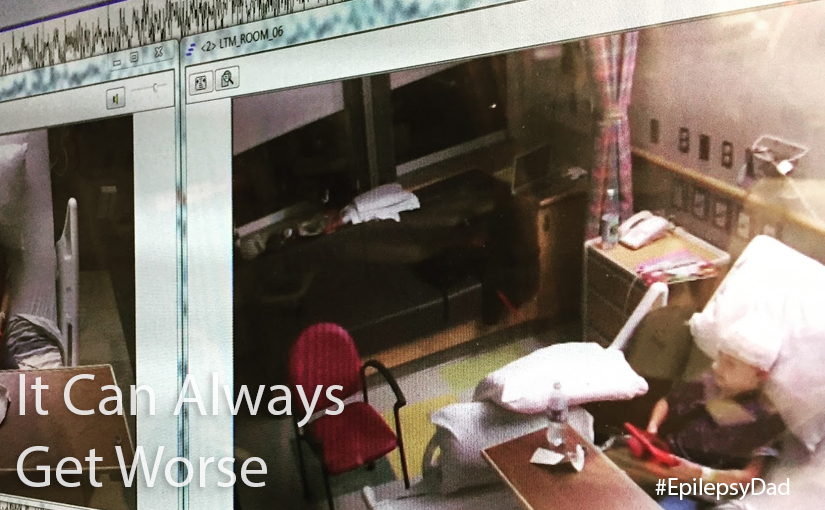
    At some point, he isn’t going to be able to sleep with us. He’ll be too old and too big to fit in our bed. If there were ever a reason to wish him to remain seven forever, that might be near the top of my list. Coming in a close second is the fear that his condition is going to get worse as he gets older. Our doctor is concerned about what happens at puberty. It’s another stage of brain development where seizures can change or be more severe. I thought it was impossible for things to get worse. Apparently, they can.

    Today, he’s only had epilepsy for a fraction of his existence, but by then, he’ll have had epilepsy for most of his life. We’ll long have lost count of seizures, and meds, and have long forgotten about the time before this began. It will be all we know and all he can remember.

    This is what happens to my unrested brain so early in the morning. It gets pulled into the stream and dragged wherever the current takes it, and there is no safe shore for my thoughts to land. The present is filled with seizures, medicine, side effects, and, presently, a lack of sleep. The future has too much uncertainty, doubt, and fear. The past is too painful. Remembering a time without epilepsy is getting harder and, if I try, it makes me sad. What we saw for our lives back then was not this life.

    My coffee sitting on the window sill does little to pull my unrested brain back to happier thoughts. But as I stare out onto the dark street, I can at least resist the urge to measure our lives with coffee spoons, in careful doses or as an observer. There is so much left to our journey, so much active living to do and so much of it is unknown that dwelling in any one place is fruitless toil.

    Instead of focusing on a when, I try to focus on my what. My what is my family that is together and, in many ways, stronger than ever. Most days are hard, but there is always something to be grateful for. We have a nightly routine where we call out something that we’re grateful for from our day. Even if we skip the rest of our routine, that one gets done. Because those things for which I am grateful are worth measuring, and I want to focus on adding as many of them as I can to this life.

    On that note, I’m going to sneak back into bed and lay next to my family. I’m going to do everything that I can to settle my mind and be present in that feeling of being together.

    And, maybe, I’ll actually sleep.

  • Leading With Love

    Leading With Love

    Sometimes I look at my son and I see a tall blade of grass, swaying in the breeze. His legs appears rooted on the ground, but his body moves and bends as if it is being pushed by an invisible force. Or a corn stalk that is too thin to support the ear that is is carrying, bobbing in no particular direction but down. It seems an exhausting tasks to constantly keep from falling over.

    When he moves, I see a puppet whose strings sometimes get twisted. The extension of his limbs or the gate of his stride are not quite right, and he sometimes tumbles to the ground. We do our best to pull him up and untangle his knotted strings, but each time he falls, my heart aches.

    I wonder if, when he does fall, when he’s lying on the ground, if that’s when he feels the most stable. Like in my younger days after I had too much to drink. When I wanted to lay on the bed and prayed for the world to stop spinning around me. My prayers were rarely answered, but at least I felt like there was nowhere further to fall. I could close my eyes and feel the world spread out below me and holding me so that my body could release all its tension. Only, he shouldn’t be old enough to know what that feels like.

    When he falls to the ground, I get angy and frustrated and sad. I look at him as that blade of grass, or stalk of corn, or sailor, or puppet. I can’t help myself but wonder if he wants to stay down for an extra second to let his body not worry about balance. But when I do, when he looks at me, I worry that he will see those expressions on my face directed at him. That he’ll think that I am angry and frustrated at him, or that he’ll see me sad and think that it is because of him. It’s a heavy burden to think that you are the cause of such powerful emotions in another person. Of course, he’s not. My anger, my frustration, and my sadness are not because of him, but because of what is happening to him. But what else could he think when I look at him the way I do? He shouldn’t be old enough to know what that feels like, either.

    The cruelest thing that epilepsy continues to do is to try to make my son feel less than he is. Less than an amazing boy. Less than the best son. Less than a gift. Less than a miracle. It feels as if it is using me to do its dirty work, to project those feelings on my son through my worry and frustration. I catch myself doing it, but usually after the message has been delivered. It’s a terrible feeling to worry about what your child thinks you think when you look at him. Because regardless of what is visible on the surface, hidden underneath is always love.

    I wish my instict was to lead with love. I want so much for that to be what he sees when I’m looking at him instead of the temporary emotions caused by a symptom of his condition. I don’t want him to have to remember that I also love him, I want that to be where he goes first. Because the pain and sadness at what his condition is doing to him is amplified by that love. Because loving him is where I am, first and always.