Nothing, Again

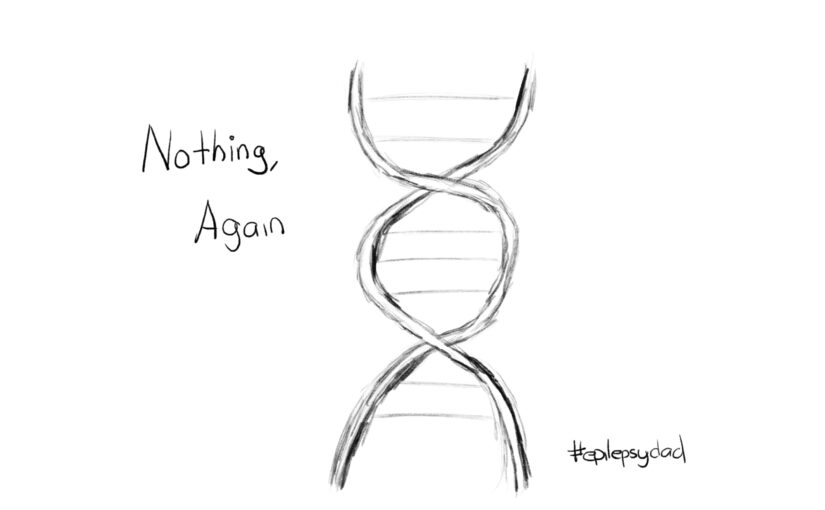
A few years ago, we did genetic testing for the first time. An exome sequencing — not the full genome, but a significant portion of it. They found a variation in the PRICKLE1 gene, which is associated with epilepsy. It looked like it might be something.

It wasn’t.

We were told the science was always advancing. New connections were being made between genetic variations and conditions like his. It would be worth revisiting in a few years.

So we did.

This time it was the whole genome. All three of us — my son, his mom, and me. The test looked for epilepsy markers, indicators connected to intellectual disability, and secondary findings in areas like heart and cancer risk. The technology had advanced. The dataset was larger. There was more to look at than there was last time.

I didn’t go in with much hope. Not because I’ve given up, but because I know where we are. My son is sixteen, and we’re twelve years into our epilepsy journey. We’ve tried most of what there is to try. We know his condition better than most people ever know anything. A clearly-named cause wouldn’t open new treatment doors at this point. It would just be a name.

What I was actually hoping for was not to hear something worse. There are types of epilepsy with harder trajectories than the one we’re already on. A result isn’t always good news. Sometimes it reframes everything you thought you understood.

I got a voicemail from the genetic team. I called back and left one of my own. A few days passed. Then they called me at work.

The call lasted for about five minutes.

The epilepsy markers and the intellectual disability indicators. Nothing found.

She asked if I had any questions. I didn’t.

The secondary findings came back clear for all three of us. No elevated markers for heart conditions. No increased cancer risk. That was genuinely good news. It landed as good news. I noticed that it did.

At the end of the call, she said that science is always advancing. New connections are being made. She said we should revisit in two years.

I recognized the closing. It was the same one from last time, when the PRICKLE1 variation turned out to be nothing. We’ll keep looking. Check back when the data has caught up.

I said thank you. I hung up. I went back to work.

That’s the part I keep coming back to. Not the results. It’s how quickly I moved on. There was a time when a call like that would have carried weight for days. The waiting, the callback, the five minutes of someone telling me we still don’t know. That used to be an event.

Now it’s just a Wednesday.

I don’t know if that’s peace or just distance. I don’t know if I’ve made my peace with the uncertainty or if I’ve just stopped expecting it to resolve. Those aren’t the same thing, even if they look similar from the outside.

What I know is this. He is who he is, named or unnamed. The cause doesn’t change the kid. It doesn’t change what we do tomorrow, or next week, or when the next appointment comes.

In two years, we’ll do it again. We’ll see what the science has found by then.

Until then, we’ll keep doing what we’re doing. Living our lives. Hoping the science advances. Hoping for new medications, new treatment options. Hoping his DBS continues to provide more benefit. Doing what we’ve been doing since the last time we sat down for this test.

Living, and waiting.

In that order.
Where Are My Boys

Poodles have hair, not fur. Like most hair, it grows in a certain direction. Dogs generally like to be pet in the direction their coat grows, not against it.

My son didn’t notice for a long time.

When Emmet first came home, my son was eleven. Emmet is a service dog, trained specifically for children with epilepsy. He was a year and a half, already trained, already knowing his job. He knew how to lay across a person’s lap with his full weight, the way a weighted blanket settles. He knew “over” and “lap” and how to read a room. He was ready.

My son wasn’t sure what to do with him.

The petting was the first sign. He would reach for whatever part of Emmet happened to be closest and move his hand in a way that looked like petting without quite being it. He wasn’t feeling Emmet. He was mimicking the shape of what petting looks like. And he’d go against the grain without noticing, his hand moving in whatever direction felt natural rather than the direction Emmet’s hair ran.

They would be in the same space, close enough to touch. But there was something between them. An invisible distance that kept the contact from becoming connection.

Emmet is trained to comfort. His weight across your lap is supposed to mean something, to regulate, to settle. But when he’d do “over” and lay across my son, I don’t think my son felt it. The command worked. The dog complied. The comfort didn’t arrive.

We kept at it. We practiced in the kitchen, the three of us, Emmet running through his commands while my son learned to offer the right reward. A treat, and then his hand in the places Emmet actually likes. Under his chin. Along his neck. Near his ears. The top of his back.

And then one day Emmet leaned in.

My son was petting him the right way, in the right place, and Emmet pressed into his hand the way dogs do when they want more of something.

“See how he’s leaning in to you? That means he likes it.”

My son noticed. I could see him register it. The idea that the dog had a response, that something he was doing was causing something in return. It was a small thing. But it was the first time the contact went both ways.

Viktor joined the family a few years ago, ten weeks old and completely feral. My son helped name him. We asked for ideas and he said “Victory Royale,” the winning moment in Fortnite, which is how we landed on Viktor. The name fit. He has been chaos ever since.

He’d rocket into whatever room my son was in and be immediately in his face, all energy and no concept of personal space. My son didn’t know how to play with dogs yet, not really. He’d try to do what he’d seen me do, but the timing was off and Viktor was relentless. It was too much.

Viktor also, on more than one occasion, relieved himself on my son’s bed. This did not help.

But time passed. Viktor calmed down, somewhat. My son got older. And slowly, something started to change.

He started throwing the ball for Viktor. He learned that Emmet likes it when someone holds a nylabone while he chews, and he started doing that. Small things. Quiet things. Things I noticed without saying anything.

Then the dogs started showing up in his room. I’d go check on my goddaughter across the hall and hear him from his doorway, pleased about something. The dogs had migrated to his bed. He’d send me pictures from the couch, one or both of them pressed against him, settled, staying.

Now when he comes home, he wants what I get.

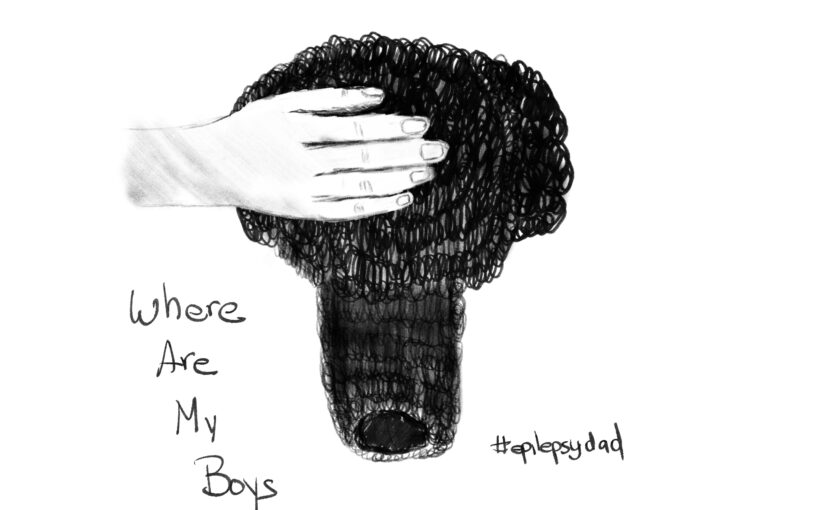
He comes through the door and looks around. “Where are my puppies? Where are my boys?”

The dogs come to me first. They usually do. But I redirect them, and eventually they split. One finds him, one stays with me. He bends down toward whichever one comes his way. He doesn’t get on the floor the way I do, not yet. But he bends. He reaches. He waits for them to come to him.

And they do.

It took four years. It didn’t look like bonding for most of them. It looked like proximity without connection, effort without payoff, a boy and a dog in the same room who hadn’t figured out what they were to each other yet.

But they got there.

The Water Level: Disability and Technology

When driving comes up, I tense.

It doesn’t happen every time, but when we’re with other families and someone mentions permits or practice drives or the freedom of having a new driver in the house, something tightens in me. I watch my son. He doesn’t say anything. He just goes quiet and waits for the conversation to move somewhere else. I usually help it along.

I don’t know exactly what he’s thinking in those moments. I don’t ask. Maybe it’s nothing. Maybe it’s everything. But I was in that exam room when his neurologist answered his question about driving, and I know what “probably not” sounds like when it lands.

His friends are getting permits. He’s watching that happen from the outside, the way he watches a lot of things.

I think about his future more than I let on to him. I think about medications they haven’t discovered yet. Therapies. Devices. I think about his independence — what it might look like, what it might require. Autonomous vehicles have been part of that thought for a while. Not as a certainty, just as a possibility worth holding onto. So when I came across a podcast recently about autonomous vehicles and what they might mean for people who can’t drive, I expected something that confirmed what I’d been quietly hoping. Instead it pulled in two directions at once.

The first part was about job displacement — the ways AI is already eliminating work, particularly at the lower end. Automation moving through the kinds of jobs that don’t require a degree or specialized training. The ones with structure and repetition. Then the second half shifted to autonomous vehicles and the disabled community. The argument was straightforward: people who can’t drive because of a medical condition, a physical limitation, age — autonomous vehicles could give them something they don’t currently have. Independence. The ability to get somewhere on their own.

And then someone in the episode pointed out that the disabled community was being used to make the case for technology that primarily serves other interests. That the promise of accessibility was real but also convenient. I don’t know where the truth lands on that. Probably somewhere uncomfortable.

My son is sixteen. He wants to be a hockey player or a streamer. Neither is straightforward. Hockey as a player isn’t realistic, though being involved in the sport in some other way might be possible someday. Streaming is something he genuinely enjoys, but it requires consistency, memory, sequencing — things that are hard for him right now, harder than they look from the outside. He has dreams the way any teenager has dreams. He just has more walls. And the jobs most likely to be within reach for him — the ones with structure, repetition, and the right support in place — are the same ones that automation is already eliminating.

I’ve worked in AI for more than a decade. I use it every day. The work it’s making easier is white collar work — the kind that requires education, executive function, the ability to synthesize and decide. The jobs it’s eliminating are the ones that could work for him.

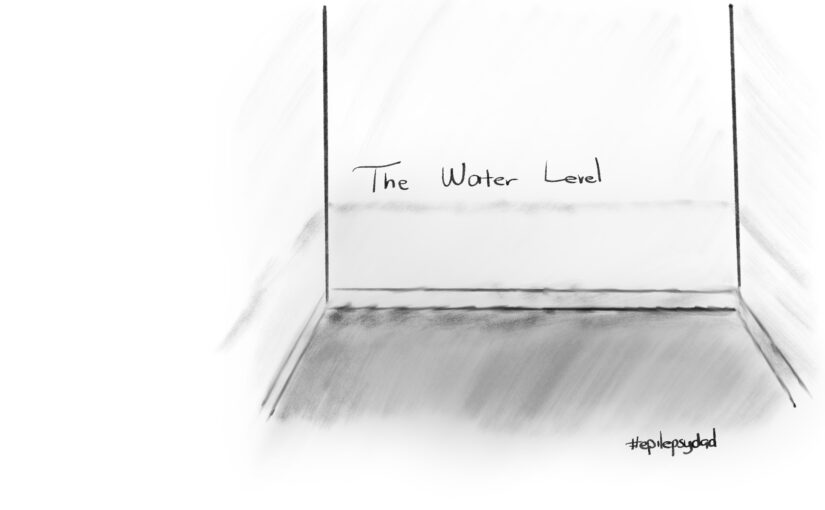
The water level keeps rising. He’s already underwater.

That’s the part I can’t think my way out of. Autonomous vehicles might eventually give him a way to get to a job on his own. That would matter. That would be real. But if the job itself has been replaced by the time the technology arrives, the independence doesn’t have anywhere to go.

I don’t know how to hold both of those things. I’m not sure I’m supposed to yet.

What I keep coming back to is that exam room. His neurologist exhaled before she answered. My son sat there and took it without flinching. Part of him probably already knew. Part of him was hoping for a different answer.

He’s been doing that his whole life — absorbing the gap between what other kids have and what’s available to him. Sitting quietly while the conversation moves on. Waiting.

I don’t know what the world looks like when he’s thirty. I don’t know which promises will have been kept and which ones will have turned out to be convenient. I don’t know if the door that technology seems to be opening will still be open, or what will be on the other side of it if it is.

I just know he’s sitting with questions he shouldn’t have to sit with at sixteen.

And I know what it looks like when he goes quiet.


I also wrote about this topic from a different angle on davidmonnerat.com, where I explore the structural side of the question — who technology is built for, who it displaces, and why those two groups are often the same people. You can read that piece here: The Other Hand: AI, Disability, and the Cost of Progress.