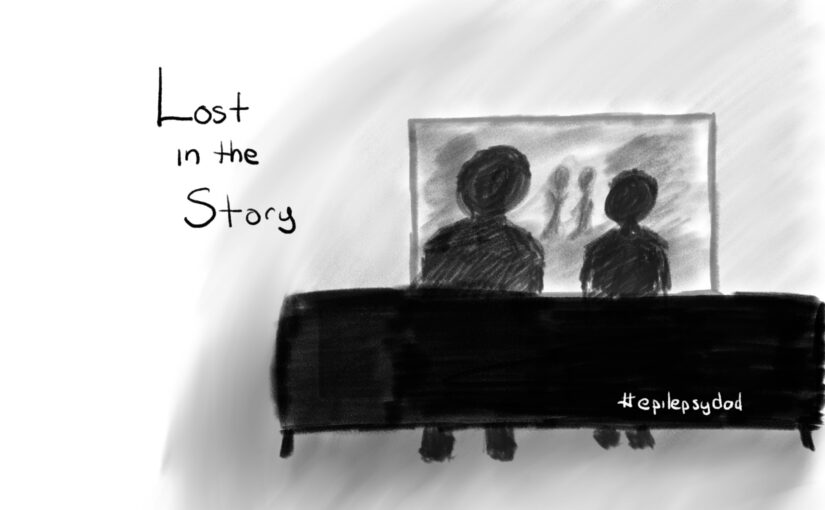
Lost in the Story

Recently, we started watching Stranger Things.

For most families, that means settling into the couch, grabbing snacks, and diving into the next episode. For us, it means something different.

In between episodes, I have to remind him of what happened last time—who the characters are, what they’re trying to do, how the story left off. Even when we watched it the day before. Sometimes the same day.

And when the new episode starts, I keep the remote close.

Not to skip the scary parts.

Not to turn up the volume.

But to pause.

To explain.

To anchor him to what’s happening on the screen and how it connects to what came before.

Sometimes it’s a quick reminder. Other times it’s a full recap: “That’s Will’s mom. Remember, she’s the one who put up all the Christmas lights. And these guys are going into the Upside Down. It’s like that dark world we saw last episode.”

Sometimes he nods.

Sometimes he asks more questions.

Sometimes the explanation drifts away as quickly as it landed.

It’s like this with every show. Every movie. A remote in one hand, a thread of the story in the other, trying to keep him connected to something that keeps slipping through his fingers.

A few weeks ago, I read Still Alice, the book about a woman losing pieces of herself to Alzheimer’s. There’s a moment where her husband brings home movies because books have become too hard—too much to hold onto, too much to follow. Movies were supposed to be easier. But even those became confusing when scenes blurred together and storylines couldn’t be kept straight.

She could no longer follow the thread of the plot or the significance of characters who weren’t in every scene. She could appreciate small moments but retained only a general sense of the film after the credits rolled.

She wouldn’t understand why her family reacted the way they did to something on the screen, so she matched their expressions and faked the same reaction to protect them from how lost she was.

Watching movies made her keenly aware of how lost she was.

That part stopped me because it felt uncomfortably familiar.

My son is not losing memories the way Alice was. His brain works differently for different reasons. But the impact is similar. He can’t follow all the threads. He struggles to remember the significance of characters who aren’t in every scene.

And yet, he wants to watch these shows. He wants to enjoy them. He loves the characters, the action, the mystery. He wants to be part of the story.

This is where the questions start to land heavy for me. I wonder if he is aware of how lost he is. I don’t know if he knows any different. But he probably sees that not everyone is lost. He knows that I am not lost.

Does he think this is a common thing for kids his age? Does he believe you need to be a grown-up to follow the threads? Or does he know, somewhere inside, that this confusion is something uniquely his?

I don’t have those answers. But I do know that every time I reach for the remote, I am not just pausing a show. I am trying to make sure he never feels like he has to fake understanding to keep up. I am trying to meet him where he is, in the spaces between the story he wants to follow and the story he is able to hold.
Not Having To (Always) Say You’re Sorry

I grew up thinking that everything had to be perfect. Between the nuns at my Catholic school and my parents at home, I walked a very thin rope of perfection, calculating each step so as not to fall and raise the ire of either side. I wasn’t perfect, of course, and I probably spent just as much time suffering the consequences as I did running from them. Today, the legacy of that rigid black-and-white right-and-wrong upbringing causes me to be extremely hard on myself.

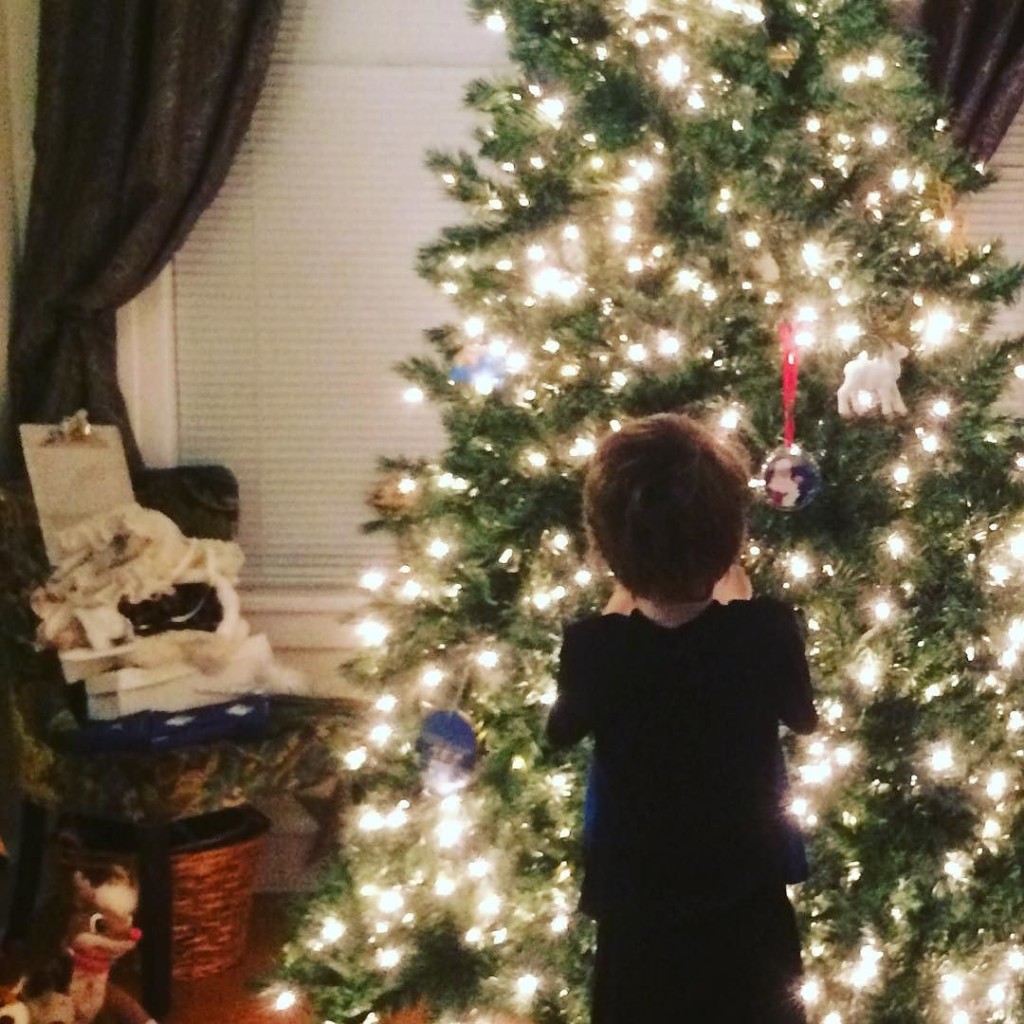
A few weeks ago, we were putting ornaments on the Christmas tree. My son was enthusiastically picking up ornaments from the pile we made for him and rushing to place them on the tree. Inevitably, one of the fragile glass bulbs slipped from his tiny hands as he rushed to stand and it crashed and broke on the floor. “I’m sorry”, he said. I told him that he should be more careful and slow down, and he apologized again.

epilepsy behavior sorry

Lately, I feel like I’m always on my son and that he spends most of his time with me apologizing. It’s a terrible feeling for me, and I can only imagine what it feels like for him. What makes it worse is that there are many times when he can’t control his body. When he’s tired, there is a disconnect between his brain and his body that exacerbates the gap that is already present in an average six-year-old.

I have gotten so used to dealing with him when the side effects of the medicine and seizures took away his ability to reason and control his body and I needed to catch everything before it escalated. Now, I can’t step back and let him explore and make mistakes.

He must feel helpless to avoid my disapproving gaze and constantly feel like he’s disappointing me. “I’m not mad, honey, I’m just disappointed” is classically the worst sentence in the history of parenting, and I feel as if I’m delivering it with every dissatisfied glance.

I’m not suggesting that there shouldn’t be any rules or consequences. Now that we’re back among the general population, I see other kids going without boundaries as their parents ignore them, and that’s the other extreme. It’s my job to teach him right and wrong, acceptable and unacceptable. But my response needs to be in proportion to the behavior, and I’m having a hard time letting go of those feelings I had when things were at their worst.

One of our therapists offered a piece of advice that I am trying to put in to practice. She said that if he’s not doing something unsafe, and if what he is doing is not the end of the world, then take a deep breath and ignore it. Especially when an innocent action now feels like one that he did when his behavior was out of control, it makes sense that my alarms would be firing. But that doesn’t mean that every action needs a response. If he is being unsafe, or if he is breaking a house rule (no hitting, for example), then address it. But if he’s flopping on the ground, or his laughs turn in to a scream, then I should take that breath.

I don’t want my son spending his childhood always having to say he’s sorry. What he is going through is hard enough, and I don’t want to contribute to squelching the bright, special light that is inside his heart by making him feel like he needs to be perfect. It’s my job to help guide him along the way to stay on the right path, but it’s also my responsibility to help him be happy and free.