The D Word

At a recent appointment, my son brought up the topic of driving. Even though we had talked about how he wouldn’t be able to get a license while he was still having seizures, I knew that, once he turned 16, we would have to revisit the conversation.

I remember getting my driver’s license shortly after my 16th birthday. I had been working since I was 14 and saved up enough money to buy a car. It was a white Hyundai Excel with a manual transmission, air conditioning, and a sunroof. It wasn’t the flashiest car, but it was mine, and it gave me freedom to go where I wanted when I wanted. I started driving to school instead of taking the bus. I drove to work instead of riding my bike. I could go where I wanted and get there faster. The car gave me more range, speed, and independence.

I know that feeling is something my son wants, especially as some of his friends will soon be getting their learner’s permits or licenses. In all likelihood, though, he won’t be able to drive. Even if we manage to keep him seizure-free for six months, despite never going more than a day without a seizure since they started, the responsibility of having a license and driving isn’t something he’s ready for today.

His challenges with executive functioning and slower processing are a dangerous combination behind the wheel of a two-ton moving rocket. The coordination required to operate a vehicle physically and the focus needed to mentally navigate safely on the streets and around obstacles are both areas where he struggles every day.

He needs reminders to stay on task, whether it’s chores or homework. He has learned to make a few basic microwave meals, but even then, we’ve learned first-hand what happens to the mac and cheese in the microwave when you forget to add water.

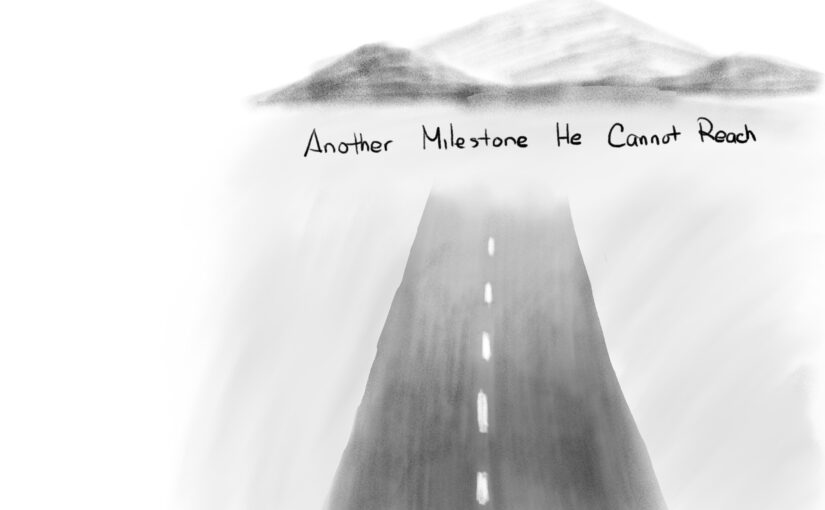
When he brings up driving, I can feel the weight of what he’s really asking — not just Can I drive?, but Will I ever be able to? Will I ever be like everyone else?

That’s the part that breaks me.

Driving represents so much more than transportation. It’s independence, choice, and self-direction. It’s being able to decide where to go and when. And for him, it’s a symbol of everything that still feels out of reach.

Because the truth is, driving isn’t just about safety. It’s about trust — trust in his body, his brain, and the world. And right now, none of those things is reliable enough to hand him the keys.

When I think about him behind the wheel, I imagine all the things that could go wrong. The seizures, the split-second decisions, the distractions. The danger is obvious. But underneath that fear is a quieter one — that he’ll never have the kind of independence that comes so easily to other kids his age. That he’ll always need someone — me, or someone after me — to help him navigate the world.

That thought terrifies me more than anything else. Because as much as I want to keep him safe, I also want him to have a life that’s his. I want him to feel capable, to feel like he belongs in the world, not just protected from it.

So for now, we’ll keep talking about driving — what it means, what it represents. Maybe someday he’ll be able to drive, maybe not. But my hope is that he still finds his own kind of freedom, one that doesn’t depend on a license or a steering wheel. One that lets him move through the world in his own way, with confidence and joy.

Even if he’ll always need help getting there.

More Than Survival

When I was young, I didn’t have a lot of support learning how to manage big emotions. When things got hard, I would go internal, like a turtle pulling itself into its shell. I’d get anxious and scared, pulling my extremities closer to my body to make myself as small as possible until the danger passed.

That was a survival skill, but while it helped me get through the danger, it didn’t address the fear and anxiety that remained. I never learned to regulate my emotions and nervous system. As a result, I spent much of my life being an anxious, introverted, scared little boy and hiding from the world.

I developed other skills to compensate. I found the courage to join the Army. After the army, I started a career, got promoted, and led teams. I got married and started a family. That’s when those compensatory skills began to fail, and I reverted to the safety of going internal, which had worked for me. Still, it didn’t work for deepening a relationship or dealing with difficult situations together.

The stress of starting a family is real, and it was terrifying to bring another life into the world and be responsible for keeping it alive. I knew I wanted to give my son a better childhood and life than I had, which felt like a huge responsibility especially considering I had no reference or idea what that meant. It was easy to do the fun stuff with him, but the stress and anxiety brought some of those survival skills back to the surface which created distance between me and my family. But we managed.

The bigger test was when we moved to Pennsylvania. We moved across the county into a new city for a new job and, within a few months, my son also began having seizures. Within that first year of moving, we spent nearly six months in the hospital trying to get his seizures under control, dealing with side effects from his medications, behavioral issues, and the fear of losing him, all in a new environment where we had no support.

Again, those survival skills that I learned as a child came back in full force. I forced my emotions down inside my shell and focused my energy on the logistics and on getting things done, rather than dealing with the fear, anxiety, shame, and despair that were trying to make their presence known.

That could be what was necessary. I needed to keep my job, maintain our insurance, put food on the table, and create a sense of normalcy in an unstable and unnatural time. While the crisis was happening, I needed that focus and detachment. But afterward, when the danger had subsided and what was left was the rebuilding of our son, that detachment became a divide, a chasm I couldn’t reach across to connect with my family.

I’ve spent a lot of time since then to cross that divide. Therapy, self-reflection, and the hard work of being present have brought me closer to my son, and I hope they have also set an example for him on how to balance survival with connection. It’s not easy, but it’s worth it because my son deserves more than just survival.

He deserves me.

It’s Not Your Fault

For most of my life, I carried the idea that the things that happened to me as a child were my fault.

I didn’t think I was a bad kid, but I knew and hung out with plenty of bad kids. My neighborhood growing up wasn’t a stranger to crime and drugs. Compared to many of my friends, I was an angel. But I was a child, and I did childish things as I experimented and explored the world. I swore, stole, lied, snuck out at night, and fought with my sister. But often the consequences of these actions were disproportionate to the severity of the infractions.

As a result, I began to blame myself for those consequences. It was a survival mechanism. I had to make it my fault because my developing brain couldn’t make sense of the idea that the people who were supposed to protect me and take care of me were hurting me.

As I got older, that behavior continued. It was easier to take responsibility for everything than it was to shift that responsibility to the other person. It was easier to feel that the work I had done wasn’t enough or wasn’t the right work, which is why the other person was angry or disappointed. The idea that I was enough, that I was worthy, and that I wasn’t to blame never seemed like an option.

The result was that I spent much of my life in unhealthy situations, convinced that if I could fix myself, everything else would fall into place. But no matter how hard I tried, it never worked.

I didn’t realize that’s what I was doing until a few years ago. There is a movie trope, “it’s not your fault,” that is a common line used to reassure someone who blames themselves for a tragic event. One powerful example is in Good Will Hunting, where Sean, played by Robin Williams, repeats the line multiple times until Will, played by Matt Damon, breaks down and cries.

It was a surreal moment to have that play out in my life. At the time, it was directed at my past. It took me time (and therapy) to realize it also applied to aspects of my present, too.

That realization is what will help me set my son on a different path, one where he doesn’t struggle with blame, shame, and worthiness, the same way that I did. I don’t want him to blame himself for his seizures, his condition, or especially the way the world reacts to him. I want him to be able to put the actions of others on them and not internalize them as what he deserves because of who he is. Most of all, I want him to know—now, not decades from now—that who he is is already enough.

As parents, we want our kids to have it better than we did. In many ways, that may not be possible given the challenges he will face. But if he can live a life without carrying the blame for others, whatever those challenges may be, he will have a freedom I never knew. A freedom to face what comes without the added weight of shame. A freedom to believe he is worthy of love and belonging just as he is.

And maybe, in giving that to him, I’ll learn to finally believe it for myself, too.