Tag: life

  • No Extra

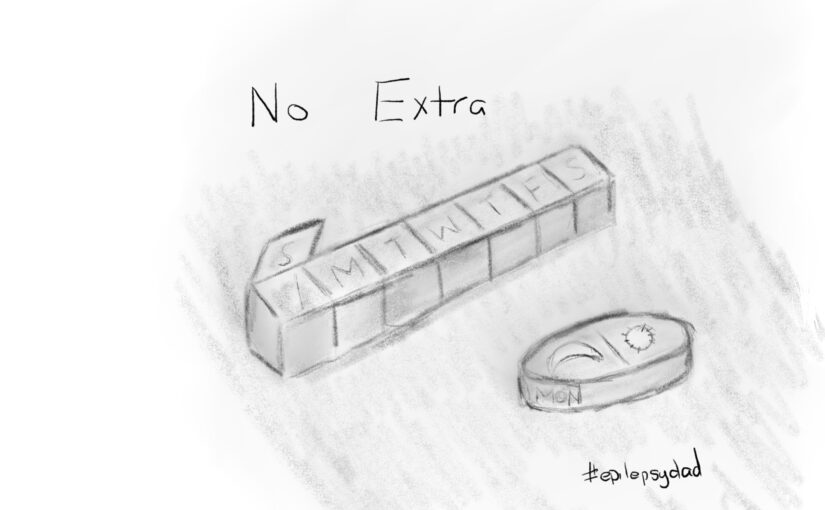
    No Extra

    There’s no extra right now.

    Not extra money. Not extra time. Not extra energy. The margins are narrow. The system runs because it has to.

    Sunday mornings are for medication.

    I make coffee. I put on a podcast or an audiobook. I stand at the kitchen island and start with mine. A few supplements come out first so they can go into my son’s pills later. Mine go straight into the organizer. His get laid out on a paper towel, seven days in a row, then transferred into the plastic containers. When they’re finished, Sunday goes on top.

    I take my pills. I set both containers on top of the coffee machine for when he wakes up. The dogs are usually on the couch, half-watching. They know the routine.

    Every morning I swap the containers. I take mine. I put them back. It’s mechanical. Quiet. Just part of the structure.

    Everything goes in the calendar now. Appointments. School events. Guitar lessons. Therapy. Tennis. If it isn’t there, it doesn’t exist. The to-do list is long, but it turns over. Things come off. New things go on. Nothing flashy, but nothing slipping.

    The house is tidy. The clothes are clean. The dogs get walked, even when it’s freezing. They get groomed. My son and I get haircuts regularly. It might look like a small luxury from the outside, but it feels more like maintenance. A way of saying we’re still taking care of what’s ours.

    There’s no extra, but there’s enough.

    We’re not adding new things. Guitar and tennis stay for now, but they’re the first to go if something else demands attention. I don’t feel deprived. What we have feels deliberate. Contained.

    The debt is heavy. The future has large shapes in it. I want clarity. I want the numbers to go down. I want more margin. But the day-to-day isn’t falling apart.

    That’s new.

    Control feels quiet. It isn’t about power. It’s about not bracing. It’s about knowing that if something goes wrong, it’s a problem to solve.

    I’ve been doing this job longer than the title suggests. Now there’s no one else to absorb it. Income. Meds. Schedules. Appointments. A cold this weekend. Likely more seizures. That’s just the math. I’ll adjust. I’ll keep going.

    The system holds.

    It isn’t elegant. It isn’t abundant. But it’s ordered. Maintained.

    There’s no extra right now.

    There’s what must get done. There’s what keeps us steady.

    For now, that’s enough.
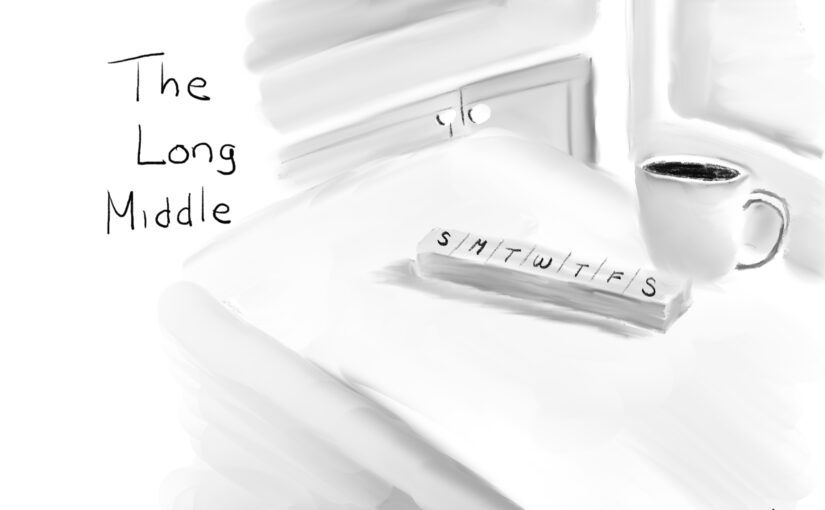
  • The Long Middle

    The Long Middle

    The old version of me would still call this a crisis.

    There was a time when this much responsibility, this much uncertainty, this many variables would have felt like an emergency. Therapy, time, and experience have changed that. I don’t react the same way anymore. I don’t spiral at every shift.

    But that doesn’t mean it feels light.

    Everything is on me now. Income. Care. Medications. Schedules. Appointments. If my son catches a cold, I already know what that usually means. Colds often mean more seizures. That’s just a fact. I can’t change it. I won’t panic when it happens. I won’t treat it like a catastrophe.

    But I still have to carry it.

    The structure of my day hasn’t changed much. That’s part of what makes this the middle. Morning follows night. Work follows the morning routine and school drop-off. Pickup follows work. Dinner follows pickup. Bedtime follows dinner. Then it starts again.

    Each segment feels like a middle. The morning is between the night and the workday. The workday is between drop-off and pickup. The evening is between dinner and sleep. It’s like a loop that keeps folding back on itself. Nothing climactic. Nothing final. Just continuation.

    The worst version of events hasn’t come to pass.

    The things I used to brace for haven’t arrived.

    But nothing has resolved either.

    There are still things in motion. Still decisions that aren’t finished. Still outcomes I can’t control yet. I can see that an official “new life” is approaching, but even that feels like another middle. I’m not there yet. I’m here.

    Here looks like waking up, working out, showering, making breakfast, and packing lunches. It looks like responding to seizures while my son sleeps in late, postictal. It looks like getting him ready for school, dropping him off, going to work, leaving early to pick him up, and finishing work at home. Walking the dogs. Chores. Hoping for a game of Fortnite together before dinner. Cleanup. Bedtime routine. Repeat.

    It’s not dramatic. It’s not cinematic. It’s routine.

    And maybe that’s what the long middle really is.

    Not the beginning. Not the breakthrough. Not the clean ending. Just the steady stretch where responsibility becomes ordinary. Where weight doesn’t disappear, but it becomes familiar enough that you stop naming it every hour.

    The house is quieter now. Less chaotic. There’s space where noise used to be. That space isn’t exactly peaceful, but it isn’t volatile either. It just is.

    I don’t know what the future version of this life will look like. I know there are changes coming. I know certain realities are solidifying. But today is not about that.

    Today is about the loop. About carrying what needs carrying. About not treating endurance like emergency.

    The long middle isn’t dramatic.

    It’s repetitive. It’s responsible. It’s unfinished.

    And for now, it’s just the way it is.

  • Choosing Without Certainty

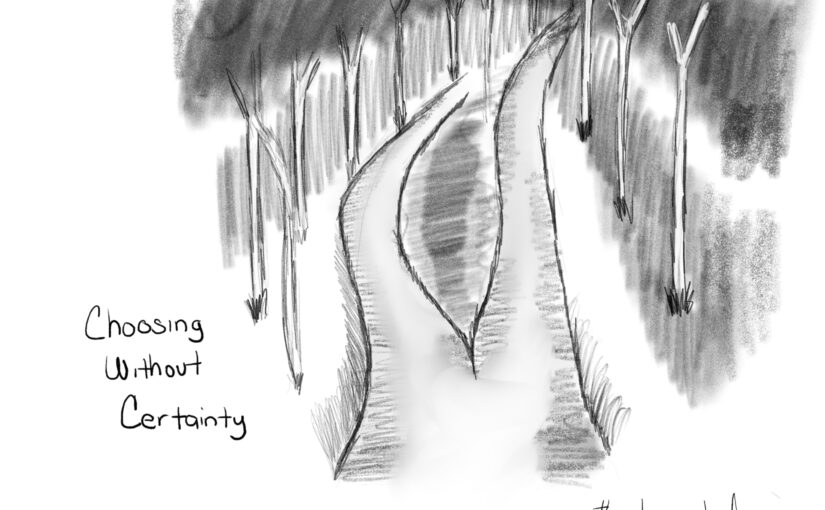
    Choosing Without Certainty

    I used to wait until I was sure.

    Certainty felt like responsibility. It felt like proof that I had thought things through far enough to move without regret. If I could explain a decision, if I could justify it to myself and to others, then it felt safe to act.

    That approach worked when life moved more slowly. When the variables were limited. When waiting did not carry much cost.

    That is not where things are now.

    A lot is already in motion. Some of it by choice, some of it not. Changes are unfolding that do not pause while I gather clarity, and waiting for certainty no longer feels responsible. It feels like standing still while the ground continues to shift beneath me.

    What has been hardest to accept is that staying put is not neutral.

    Indecision has consequences too. Not dramatic ones most of the time, but quieter ones that accumulate. Lost momentum. Lingering tension. The constant effort of holding everything in place while pretending nothing has changed yet.

    Choosing without certainty looks different than I expected.

    It is not decisive or confident, and it does not arrive with relief. Most of the choices I am making now are small and provisional. They are for-now choices, decisions that can be revisited, adjusted, or undone if needed. They do not try to solve everything at once.

    I am choosing when to stop instead of always pushing through. I am choosing not to answer every question immediately. I am choosing direction over destination, and movement over mastery. I am choosing what is survivable over what is optimal.

    That is a shift for me.

    I used to believe the right choice would feel solid, that it would quiet the noise and settle the uncertainty. Now I am learning that sometimes the right choice simply reduces the pressure enough to keep moving.

    Right does not mean permanent. It does not mean perfect. It means proportionate to the moment I am in.

    I still want certainty. I still look for it. Old habits do not disappear quietly. But I am learning to move without certainty when I have to, to trust the information I have, to respect my limits, and to accept that clarity often follows action rather than preceding it.

    I do not know where these choices lead. I do not have a clean narrative arc or a clear end point in mind.

    I just know that standing still is not an option anymore.

    So I am choosing without certainty. Not because I am ready, but because movement, imperfect and reversible, has become the most honest response to a life that is already changing.

    For now, that is enough direction.

  • Learning to Trust the Signals

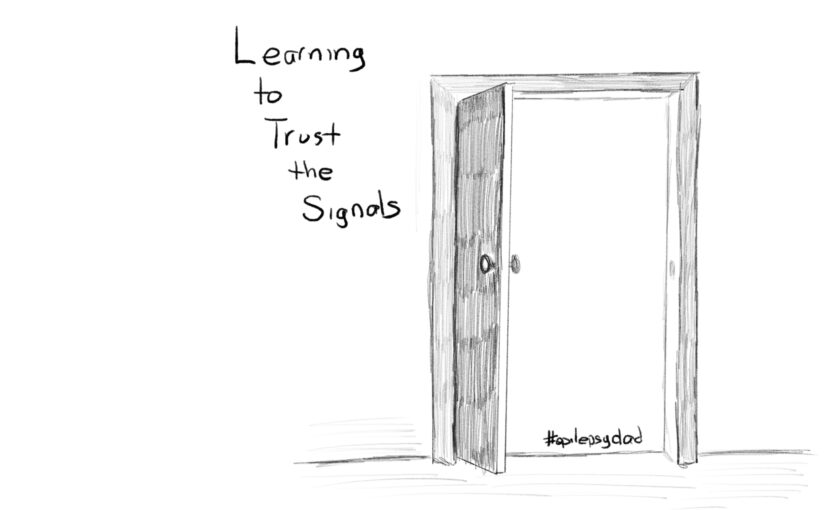
    Learning to Trust the Signals

    For a long time, pushing through felt normal.

    Stopping rarely felt like an option, and slowing down felt like failure. If something needed attention, I gave it more of myself. That became the pattern. Over time, I stopped questioning it.

    What I didn’t notice at first was how often I worked past the moments when something felt off.

    Fatigue showed up and I ignored it. Tension settled in and I kept moving. Irritability crept into my days, and I told myself it was just part of being responsible. I learned how to treat those moments as noise rather than information—something to manage instead of something to listen to.

    Being tired didn’t mean stop. Feeling overwhelmed didn’t mean slow down. Reaching a limit didn’t mean the limit mattered. There was always a reason to keep going, always something else that needed attention, always someone who needed more.

    When you spend enough time carrying more than you should, you stop listening to the warnings. You learn how to override them. You tell yourself this is just what responsibility feels like, that everyone is exhausted, that rest can come later.

    Later rarely comes.

    This year, something has started to shift. Not dramatically, and not all at once. But I’m noticing those moments again—and more importantly, I’m beginning to take them seriously.

    I notice when my body tightens before my mind catches up. When a day feels heavier than it should. When my patience thins faster than usual. These moments don’t feel like personal failures anymore. They feel like information. Like early indicators that something needs attention before it becomes something harder to manage.

    Looking back, those were signals. I just didn’t trust them.

    For a long time, I treated those signals as obstacles—things to push through so the day could keep moving. Now I’m trying to treat them as guidance. Not instructions, exactly, but feedback. A way of understanding where the edges are before I collide with them.

    That doesn’t mean I always stop when I should. Old habits don’t disappear quietly. I still push past things sometimes, still tell myself I can handle a little more. But I’m paying attention in a way I wasn’t before. I’m learning the difference between discomfort that’s part of the work and discomfort that’s telling me I’ve crossed a line.

    Trusting the signals doesn’t mean avoiding hard things. It means recognizing when the cost is no longer proportional—when effort turns into erosion, and when pushing forward stops being responsible and starts being destructive.

    I don’t need to analyze every feeling or justify every boundary. I just need to notice what happens when I listen, and what happens when I don’t.

    So far, the pattern is clear. When I ignore the signals, the consequences show up anyway. They just arrive later, louder, and harder to manage. When I listen, things don’t fall apart. They get quieter. More contained. More honest.

    Learning to trust myself again isn’t about certainty. It’s about permission. Permission to believe what my body and my attention have been telling me all along.

    I spent a long time surviving by pushing through.

    Now I’m learning how to live by paying attention.

  • Learning What’s Enough

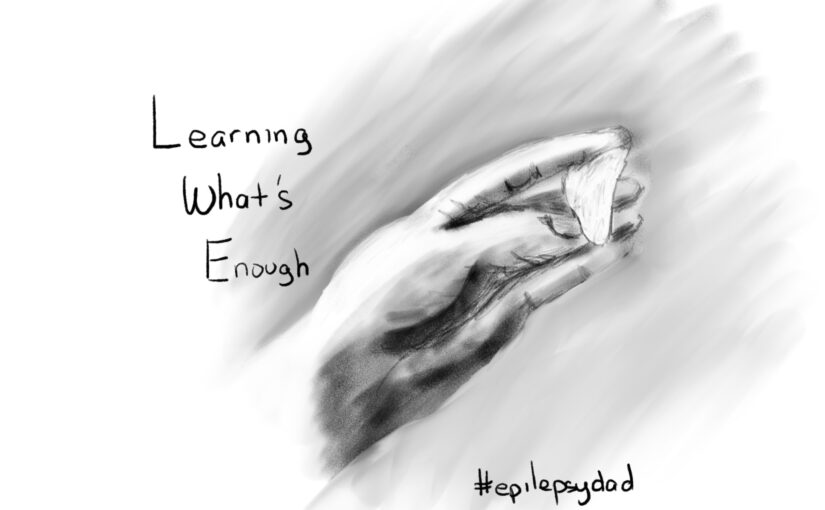
    Learning What’s Enough

    Enough used to feel like settling.

    Like lowering the bar. Like admitting I couldn’t handle more. Enough was what you accepted when the bigger version of your life didn’t work out the way you planned.

    After a year of loss, and at the beginning of a year of transition, that definition doesn’t hold anymore.

    Now, enough feels different.

    Enough doesn’t mean the days are easy. Most days, I still end them depleted. I give what I have, and there usually isn’t much left afterward. But the exhaustion feels proportionate now. It matches the effort. I end the day tired, not defeated.

    Before, I was always behind. No matter how much I did, it never felt like enough. There was always another emotional demand waiting, another situation to manage, another moment where I had to stay alert. I was never really off. Even rest required vigilance.

    Now, the days still ask for everything I have. But when they end, I can tell myself the truth: I showed up. I did what needed to be done. I’m not carrying the constant sense that I failed simply because I ran out of capacity.

    Enough isn’t having energy left over.

    Enough is being able to stop without guilt.

    It’s not about having fewer responsibilities. It’s about having responsibilities with edges. They’re clearer now. Narrower. More specific. Showing up for my son. Being present for my goddaughter. Keeping the day moving forward without asking it to carry more than it can.

    Enough isn’t ambitious. It isn’t impressive. It doesn’t photograph well.

    Enough is when the weight of the day matches the strength I have available to carry it.

    That balance used to feel like compromise. Now it feels like alignment.

    I still want things. I still imagine futures that look different from this one. But I’m no longer measuring the present against a version of life that no longer exists. I’m measuring it against reality.

    Enough doesn’t mean I’m done growing. It means I’m done chasing the wrong scale.

    Some days, enough is patience.

    Some days, it’s endurance.

    Some days, it’s simply making it through without feeling like I failed.

    Enough will change. It has to.

    But learning what enough feels like has given me something I didn’t have before: a way to recognize when a day actually fits.

    And for now, that’s enough.