Tag: ketogenic

  • Traveling On The Ketogenic Diet

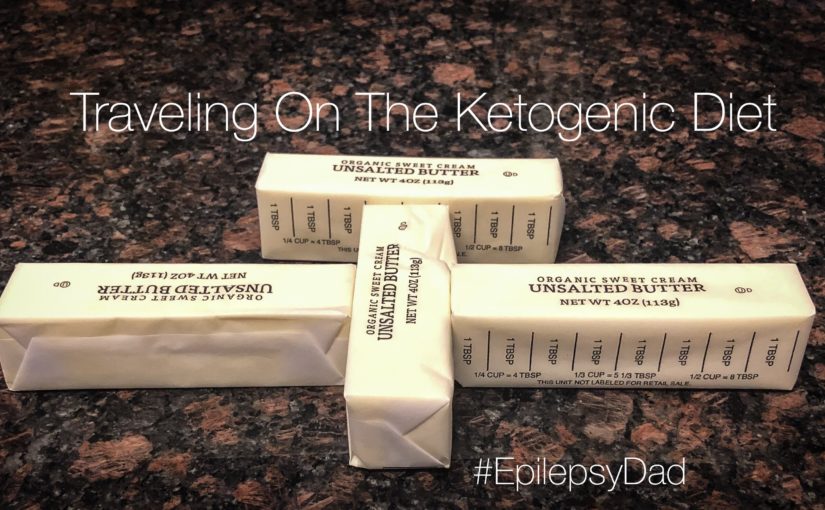
    Traveling On The Ketogenic Diet

    We love to travel, so when we started on the ketogenic diet four years ago, I worried that the diet would close off the world to us. We could still go to Colorado and Florida because we had friends and family there with kitchens. There were also stores where we could buy ingredients for his meals and pharmacies if we ran out of medication. But what about the places where we would be on our own?

    Our first big trip was almost two weeks in Hawaii. I wasn’t sure how easy it would be to find specific ingredients we would need to make food. I also didn’t know if we could find a room with a kitchen, so we prepared as much food as we could to take it with us. It was our first time traveling with a cooler, so I read through the TSA rules to see where they stood on traveling with ice. I researched coolers to find one that would fit enough food but wouldn’t be too big to carry on the airplane. The week before, we made enough food so that we had meals available for the entire trip. The cooler was heavy, but it allowed us to enjoy our trip without worrying about staying in ketosis.

    This year, we went to Panama. At least in Hawaii, there was an ABC Store on every corner. In the remote places we were going to in Panama, that would not be the case. It was also not likely that the closest store would have the specific ingredients we needed. There would also not be a pharmacy to stroll into if we needed a prescription. Again, I hit the internet to read about bringing medication and food internationally. There were no specific restrictions about bringing my son’s food into the country, so we again prepared enough meals to cover the trip plus a few extra days. Even though we were staying in homes with kitchens, making the food ahead of time removed many variables. We also upgraded our cooler to a backpack to make it easier to carry on those long travel days.

    Now, traveling on the ketogenic diet feels routine. We prepare the food ahead of time. We know the routine to pack and get through security. And we no longer worry about the world being closed off to us. If we can make keto work in the mountains of Panama, we can pretty much make it work anyway.

    If you’re looking to travel on keto, here are a few tips:

    1. Find complete meals you can prepare ahead of time. Ideally, it’s also food that can be frozen, like ice cream, pizza, and pancakes (syrup went in checked baggage). Some restaurants will heat food for you, some won’t. Keep that in mind when you plan the meals.
    2. Make sure everything is frozen. Freeze all of the food for the journey and use the blue ice packs to keep everything cool. Make sure the ice packs are frozen, though, because TSA won’t allow them through if they aren’t.
    3. Keep a letter from your doctor handy. If a situation arises where you may need to explain the diet, a letter from your doctor can come in handy.
    4. Don’t forget utensils. Not every segment of your journey will have access to forks and spoons, so bring some with you. Plastic, disposable utensils are best because washing silverware while traveling is not always possible.
    5. Get to the airport early, just in case. We generally get pulled out of line by TSA when they scan the cooler, so having the extra time creates a more stress-free experience.

    My final piece of advice is don’t be afraid to travel. It is a big, amazing world out there with so much to see. The ketogenic diet doesn’t need to prevent you from experiencing it.

    If you have any questions about traveling on the ketogenic diet, feel free to leave a comment or send me a note.


  • The Ketogenic Diet Is A Family Affair

    The Ketogenic Diet Is A Family Affair

    On the morning of New Years Eve, my wife and I got a head start on our healthy new year resolution and went for a run. We left our son sitting on the couch watching his iPad with my mother-in-law sleeping in the next room.

    Over the past few months, my son (who is on the ketogenic diet for epilepsy) has been sneaking food, so we took the precaution of hiding any tempting holiday treats on top of the refrigerator. Before we left, I looked my son in the eye and told him that we would be right back and to stay on the couch. He nodded in agreement and nestled comfortably in to the corner with his blanked.

    When we returned, he was still on the couch. When I asked him, he confirmed that he hadn’t moved but he wouldn’t look at me when he answered. I glanced in to the kitchen and noticed that the step stool that we have under the counter had been moved. On top of the fridge, I could see empty containers of leftover deserts.

    I looked back at my son and his head was down. “It was me, ” he said softly.

    There has been a lot of this lately. He’ll sneak crackers from the pantry or leftover spaghetti from the fridge. A few weeks ago, he took a bite out of a tomato at a grocery store.

    epilepsy dad ketogenic diet seizures

    I am both heartbroken and frustrated. I’m heartbroken because of how restrictive the diet is for a 9-year old boy who sees the people around him eating whatever they want. As his father, I’m frustrated because his initial instinct is to lie and the foundation of our family is built on love and honesty. But I’m also frustrated because I know I have a hand in making the environment tempting for him by keeping unhealthy food in the house when the stakes are so high. Where a typical kid would just get an upset stomach from eating too many cookies, my son falls out of ketosis which could lead to an increase in seizures.

    He’s been on the diet for more than 3 years. That’s a long time, and these recent incidents of sneaking food are starting to grind down my resolve. I’ve gone from thinking that the diet partly helped saved my son’s life to questioning whether it helped at all or if he still needs to be on it with his new medications and his VNS. I’m collecting evidence to support my theory but deep down I know it’s tainted with confirmation bias because I don’t want the diet to be working.

    I want there to be an easy way out. It’s would be easier if there were a clear indicator that the diet was making a difference. It would be easier to stop the diet to remove the strain we are feeling instead of figuring out what other modifications we can do to make the diet more tolerable. But like so many things that come with an epilepsy diagnosis, it’s not that easy. It’s also not easy as a parent to feel like your child is missing out on something when his life is already so hard.

    But there are things we can do to not make it harder. We can make better dietary choices ourselves and not have the tempting food in the house. We can make a big deal out of eating better and stressing the importance of diet for our health, the same way his diet is important to his health. We can be his parents, and take on some of the burden ourselves to alleviate some of his. Because if we can’t make it all go away, we should at least show that we are in it together.

  • Keeping The Lid On

    Keeping The Lid On

    We had a few good weeks. After a year on the ketogenic diet and what seemed like the constant juggling of medicine, we were only seeing an occasional seizure in the early morning. The behavioral issues leveled out, even if the problems with attention and ataxia did not. But we felt stable enough that the conversation with our neurologist turned to talks of lowering one of my son’s medicines.

    There was one medicine, in particular, that we started last year while we were living on the neurology floor of the hospital. It was one of the rounds on the bombardment of medicines that my son was given to battle the endless onslaught of seizures attacking his brain. After the smoke cleared, we left the hospital with a long list of prescriptions that included a few pills of questionable effect. Now that we were relatively stable, we decided to lower the dose of the first medicine to see if it was working and hopefully lessen any its side effects that were burdening my son.

    The first reduction (with every medicine, there is a gradual weaning, not an abrupt stoppage) was uneventful. We did not see an increase in seizures, but we also did not see a reduction of side effects. After the second reduction, though, we started to see a change. Instead of confining themselves to the early morning hours, we started to see seizure activity during the day, as well. The myoclonic jerks that, in hindsight, acted as our canary in the epileptic mine slowly came back. At first, there were only a few…so few that we probably missed them initially. But then there were more, and they were hard to ignore. Then the tonic-clonic seizures also crept in to the daytime. Then the most telltale signs of a problem returned…the exhaustion, the uncontrollable sadness, slurring and having a hard time finding words, and the anger.

    Our neurologist scheduled an EEG that confirmed that the subclinical seizures were also back and his EEG background was a mess. The report showed that the medicine that we suspected wasn’t helping had been working, so we again adjusted course and started raising the dosage.

    Unfortunately, it was too late. By the time we realized that the medicine was working, the seizures were already cascading through my son’s brain, and it would take days before the increased dose would have an effect. We had taken the lid off the pot and it was boiling over.

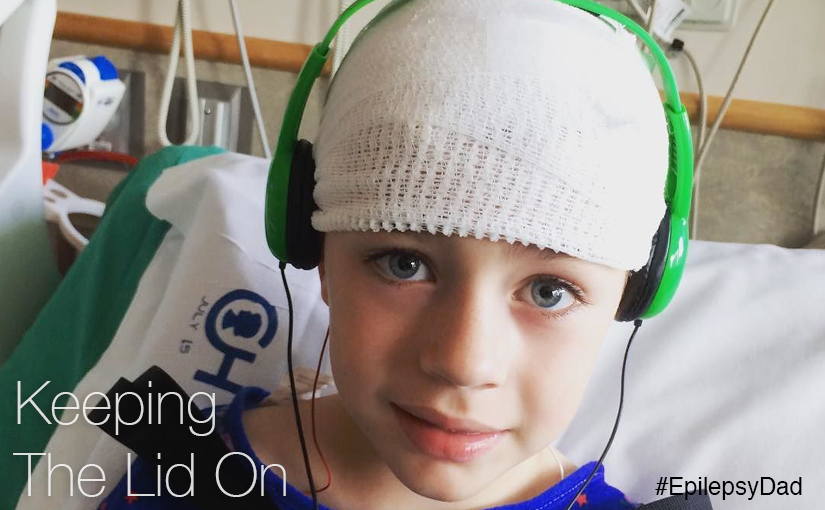
    As the seizures continued and the effects of each seizure lingered longer, we used our rescue medicine to buy us some time until the increase in dosage kicked in. We made it through the night, but the next morning the seizures and my son’s exhaustion and processing difficulties continued. “My brain is still going backwards,” my son said, which was his way of communicating that something was still wrong. We contacted our neurologist and by that night, we found ourselves admitted to the neurology floor.

    The technicians hooked him up to an overnight EEG and within an hour our neurologist came in to tell us that his readout was still a mess. The plan was to monitor him to determine if we needed to introduce a temporary medicine to hold us over until we were back up to our working dose of his regular medicines, but the bridge medicine was one that, while it worked for seizures, brought with it rage.

    We spent the night watching the EEG screen, pushing an alarm for each seizure we saw and calling out in to the night which type of his many seizures we were reporting. That night was a combination of a lack of sleep, concern for our son, and dreading the threat of the temporary medicine. By early morning, my son had gone a few hours without a seizure and I fell asleep next to him on his bed.

    We woke up the next morning and my son started to feel better. The doctors came in and said, while his EEG still wasn’t great, it was trending in the right direction and that we could go home. While it seemed terrifying to leave while things were still “not great”, we learned last year that a positive trend is enough to go home with.

    As we left the hospital, I knew, like I do every time, that this wouldn’t be our last time there. While this episode seemed like it was caused by a dosage change, there is always the concern that an illness will cause more seizures, or that a medicine stopped working, or that it’s a progression of my son’s condition.

    We seem to be just trying to keep the lid on his seizures and the side effects of the medicine we use to try to control them, when all we really want is for someone to turn down the heat.


  • A Message Of Hope

    A Message Of Hope

    I was nervous walking up to the doors of the classroom. I put my hand on one of the door handles, leaning in close, hoping to hear the conversations in the room. I turned slightly and could see in to the room through the gap between the two doors.

    The tables were arranged in a “U”. The door that I was hiding behind was in the back of the room, so I saw the face of the presenter and the backs of the heads of some of the attendees. Shifting left and right, I could see the sides of the faces of those seated on the sides. I took a deep breath, turned the handle, and quietly walked in to the room.

    As I came through the doors, the presenter at the podium and other staff smiled and greeted me quietly and warmly. A few of the attendees…parents…turned briefly to look at me and then back to the presenter.

    As I moved to a seat in the back of the room, the presenter said  “…and you will hear from one of our parents shortly” and gestured towards me. I sat, flashed a smile and casually nodded as I made eye contact with the other parents that were now looking in my direction.

    I pulled open my laptop, pretending to make last minute changes to my slides (that were actually not mine, they were my wife’s). I wasn’t ready for eye contact. I took a few deep breaths and tried to calm my nervous energy.

    I had been in this room before. Just over a year before, I sat where the other parents were sitting, learning about the ketogenic diet. Like these parents, I was there because I had a child with epilepsy that was not responding well to medicine. Like them, I was scared…about epilepsy, about the future, about how scary and terrible and daunting the diet seemed to be. Like them, I was there trying to find hope.

    The keto team at the hospital puts on these information sessions once a month, giving the dirty details of the ketogenic diet as a treatment for epilepsy. The day is filled with the history and the application of the diet. There are demonstrations of how a meal is measured. The social worker talks about support during the journey. And at the end, the grand finale, a parent of a keto kid takes the stage.

    On that day, that parent was me.

    My mind kept going back to when I was in the class. We had only been out of the hospital for a month or two, and my son was still seizing, still not responding to medicine, and still having side effects from the medicine that he was on. I was still reeling from the trauma of his ongoing condition. My wife had to stay home with my son, so I went to the class alone…cared, overwhelmed, and alone.

    I remember being more buried by the information that was being presented. The diet works for some people, not for others. The diet is hard work. Thoughts of what was happening to my son mixed with the sad possibility that the diet wouldn’t work, or that it would but he wouldn’t be able to scarf down a bag of potato chips or eat a candy bar. By the time the parent speaker, Amy, stepped up, I was raw.

    Amy talked about her son who was on the diet for two years. She talked about how the diet worked for them, and that it was hard at first, but became easier. She shared some of her tips, and she brought her son in with her and he sad quietly eating his snack…a snack that looked like a normal snack, except for the shot of oil at the end. After the class, I talked to her, and we talked about what was happening with us, and I asked if my wife could contact her. She said yes. Because, as I’ve learned, we’re all in this together, and we need to support each other, because no one understands what we’re going through like other people going through the same thing.

    I thought about Amy, and about how I felt sitting on the other side of the table, as I nervously walked up to the podium. I made a checklist in my head of the things I wanted to talk about. I wanted to talk about how scared and overwhelmed I was, and how hard the diet was at first. I wanted to talk about my son, and how much better he was doing since we started the diet. But mostly, I talked about hope, the thing that I went to the class desperate to find a year before, and the thing that I most wanted them to leave with.

    I scanned the room. One mom who was too overwhelmed and had left the room was making her way back to her seat. The other parents looked exhausted after a long day. And now, they were looking at me.

    “Hi, I’m David, ” I began, “and just over a year ago, I was sitting right where you are.”


  • Always Something There To Remind Me

    Always Something There To Remind Me

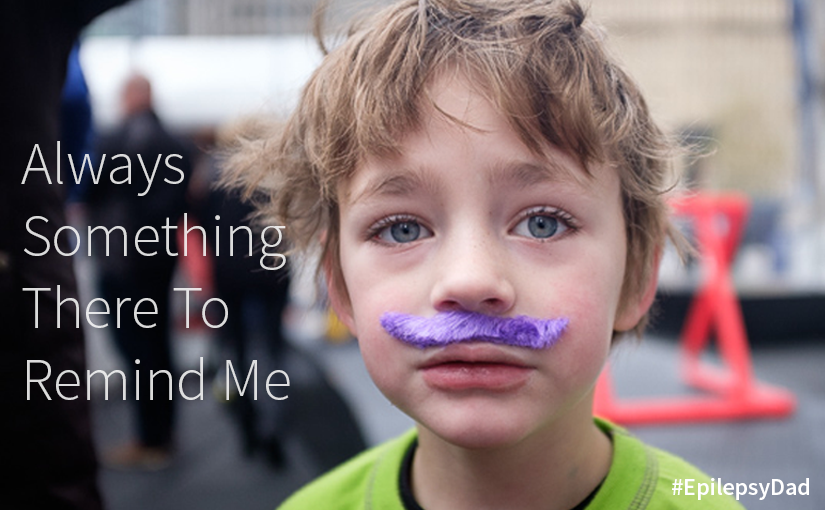
    Epilepsy has infiltrated every aspect of my son’s life, from the time before he wakes up to when his head hits the pillow at the end of the day and beyond. Every new day brings with it reminders of his condition, and every interaction, every task, every breath carries inside of it a burden that he must overcome.

    reminders of epilepsy seizure

    Before my son even leaves his bed, there is an occasional seizure streaming from the camera we installed in his room to the iPad at my bedside. When he comes out of his room, his first stop is in the kitchen so that he can take his first handful of pills of the day. We spend some time together, constantly evaluating his behavior to see if his brain is firing properly, looking for those signs to see if he is going to have a good day or a bad day. Every morning is filled with these little reminders of his condition.

    From there, it’s on to breakfast. Usually once a week, we spend a few hours making batches of pancakes so that he can have a keto pancake with a small amount of fruit. The diet has a high-fat requirement that, if we can’t incorporate the fat in to the food itself, needs to come from a straight shot of oil. My son likes the pancakes because they incorporate all the fat and don’t require any extra oil. If there are no pancakes, breakfast, like most of his other meals, involves looking up each component to find the ketogenic exchange rate, cutting and weighing everything to within a tenth of a gram including, unfortunately, oil.  Every meal is measured this way, so every meal becomes another reminder of the challenges he faces and the things he must do to manage his epilepsy.

    Many other tasks during the day involve helping him stay focused, or breathing to keep his body under control, or sleeping to recover from the exhaustion that is always present on his face…all reminders, every time we look at him, about how present and real and exhausting epilepsy is.

    Before he goes to bed, he counts out another handful of medicine before making his way in to his room with just enough energy to brush his teeth, put on his pajamas, and crawl in to bed. The wash of fatigue that swallows him as he is finally able to just switch off his brain serves as the final reminder of how much effort it takes him to make it to through his daily challenges.

    As he drifts off to sleep, I know that we have to do it all again the next day.

    There is more, though, to our day than just these negative reminders of my son’s epilepsy. There are also the reminders of how lucky we are.

    Those pills that he takes, his first and last activities of the day, are keeping his seizures under control. The magic diet, with all the extra effort and measuring and restrictions, also helps his seizures and cognition. That he is able to read, and is learning at all, shows how much he continues to improve.

    Every morning that he is able to get up and go to school, and the fact that his body is strong enough to ride his scooter to school, is nothing short of a miracle. That he has friends in school and that the kids are sincere when they say goodbye to him fills my heart with such gratitude, as does him having individual support in school and an essential, loving aid when he gets home. He has regained much of his physical ability, allowing him to ice skate and play hockey in the basement, two of his favorite things. Every time he puts on his skates or scores a goal in his stocking feet downstairs, it’s a reminder that epilepsy has not taken everything from him.

    reminders of epilepsy seizure

    Tucking him in, these reminders and milestones make me grateful that we had another day together, and grateful that we get to do it all again tomorrow.