When driving comes up, I tense.
It doesn’t happen every time, but when we’re with other families and someone mentions permits or practice drives or the freedom of having a new driver in the house, something tightens in me. I watch my son. He doesn’t say anything. He just goes quiet and waits for the conversation to move somewhere else. I usually help it along.
I don’t know exactly what he’s thinking in those moments. I don’t ask. Maybe it’s nothing. Maybe it’s everything. But I was in that exam room when his neurologist answered his question about driving, and I know what “probably not” sounds like when it lands.
His friends are getting permits. He’s watching that happen from the outside, the way he watches a lot of things.
I think about his future more than I let on to him. I think about medications they haven’t discovered yet. Therapies. Devices. I think about his independence — what it might look like, what it might require. Autonomous vehicles have been part of that thought for a while. Not as a certainty, just as a possibility worth holding onto. So when I came across a podcast recently about autonomous vehicles and what they might mean for people who can’t drive, I expected something that confirmed what I’d been quietly hoping. Instead it pulled in two directions at once.
The first part was about job displacement — the ways AI is already eliminating work, particularly at the lower end. Automation moving through the kinds of jobs that don’t require a degree or specialized training. The ones with structure and repetition. Then the second half shifted to autonomous vehicles and the disabled community. The argument was straightforward: people who can’t drive because of a medical condition, a physical limitation, age — autonomous vehicles could give them something they don’t currently have. Independence. The ability to get somewhere on their own.
And then someone in the episode pointed out that the disabled community was being used to make the case for technology that primarily serves other interests. That the promise of accessibility was real but also convenient. I don’t know where the truth lands on that. Probably somewhere uncomfortable.
My son is sixteen. He wants to be a hockey player or a streamer. Neither is straightforward. Hockey as a player isn’t realistic, though being involved in the sport in some other way might be possible someday. Streaming is something he genuinely enjoys, but it requires consistency, memory, sequencing — things that are hard for him right now, harder than they look from the outside. He has dreams the way any teenager has dreams. He just has more walls. And the jobs most likely to be within reach for him — the ones with structure, repetition, and the right support in place — are the same ones that automation is already eliminating.
I’ve worked in AI for more than a decade. I use it every day. The work it’s making easier is white collar work — the kind that requires education, executive function, the ability to synthesize and decide. The jobs it’s eliminating are the ones that could work for him.
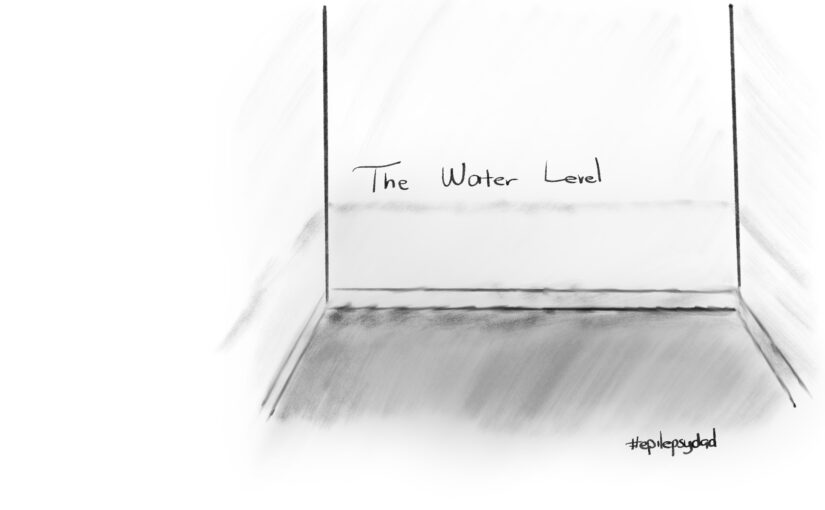
The water level keeps rising. He’s already underwater.
That’s the part I can’t think my way out of. Autonomous vehicles might eventually give him a way to get to a job on his own. That would matter. That would be real. But if the job itself has been replaced by the time the technology arrives, the independence doesn’t have anywhere to go.
I don’t know how to hold both of those things. I’m not sure I’m supposed to yet.
What I keep coming back to is that exam room. His neurologist exhaled before she answered. My son sat there and took it without flinching. Part of him probably already knew. Part of him was hoping for a different answer.
He’s been doing that his whole life — absorbing the gap between what other kids have and what’s available to him. Sitting quietly while the conversation moves on. Waiting.
I don’t know what the world looks like when he’s thirty. I don’t know which promises will have been kept and which ones will have turned out to be convenient. I don’t know if the door that technology seems to be opening will still be open, or what will be on the other side of it if it is.
I just know he’s sitting with questions he shouldn’t have to sit with at sixteen.
And I know what it looks like when he goes quiet.
I also wrote about this topic from a different angle on davidmonnerat.com, where I explore the structural side of the question — who technology is built for, who it displaces, and why those two groups are often the same people. You can read that piece here: The Other Hand: AI, Disability, and the Cost of Progress.