Tag: hospital

  • Patterns

    Patterns

    I sat in the chair at the side of my goddaughter’s bed in the hospital. She had major surgery a few days prior and was recovering in the intensive care unit.

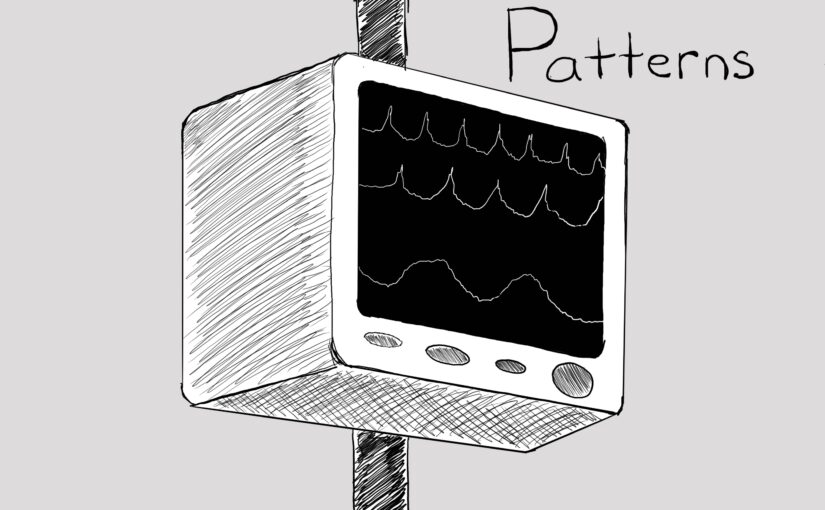
    As she slept, her body continued the healing process, connected through tubes and wires to various machines delivering her medicine and monitoring her progress. A screen displayed her heart rate and breathing rate with regular peaks and valleys of rigid blue and green lines. Rhythmic tones broke through the muffled sounds of the hallway outside.

    There is something familiar about the screens and the sounds of a hospital room. With my son, we’ve spent months at a time in the hospital. Eventually, the sounds faded into the background, like living near a highway or railroad for too long. It is then the absence of those sounds that I notice.

    I stared at the screen and watched the lines move left to right before starting again on the left and overwriting the evidence of the past. At times, the lines perfectly overlapped the pattern of the one before. At other times, the peaks were slightly shifted forward and gave the appearance of a wave being animated to the left.

    I watched one of the many intravenous drips. Three drops. Then another three. Then three. Then four. Three. Three. Three. Four. Every fourth cycle, the pattern would change to three, three, four before starting the original sequence again.

    Observing these patterns was soothing. It made me feel like she was safe. It made me feel that the universe was continuing in an orderly fashion with every molecule and atom precisely in its expected state and that the cells in her body were repairing the intrusion of the surgeon’s instruments.

    The patterns represent order after chaos, stability after uncertainty, and calm after a storm. They bring a sense of control. They bring peace.

    As welcome as this feeling was, I didn’t expect to find myself experiencing it again. I thought the first time I felt it, after the doctors were finally able to lift my son from status and stabilize him when we thought we might lose him, would be the only time. I remember sitting in the dark hospital room without the constant flow of doctors, nurses, and therapists and letting out a breath of relief. It was probably the first deep breath I had taken in months.

    I would feel that feeling again many times as my son’s condition proved challenging to manage, and we found ourselves back on the neurology floor of the children’s hospital. Each stay started in a panicked attempt to wrestle back control from his seizures, and each stay ended with another deep breath and the thought that we had gone through an ordeal for the last time.

    But there is no last time for us. Whether it’s from surgeries or complications for our son, for my aging parents after a stroke or a fall, or for our goddaughter as she attempts to find a way forward to better health, we will always find ourselves back in the hospital, surrounded by the monitors and sounds.

    When we find ourselves there, listening to the sounds of the machines, we will seek out the moments of calm, stability, and peace that come from the comforting presence of these patterns. While we can never know what will happen next and have little control over the outcome, we can choose how we experience it.

    As I sat beside my goddaughter, I chose to embrace that peace.

    Because in that moment, it was enough.
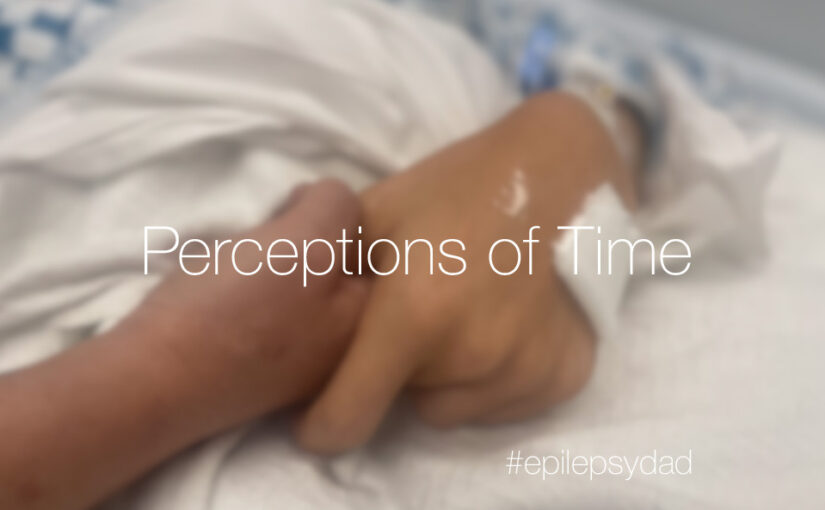
  • Perceptions of Time

    Perceptions of Time

    A nurse led us into the recovery room, where the first thing that struck me was the stark change in my son’s appearance. His familiar Bryce Harper haircut had been replaced by a closely shaved head, but it wasn’t just the missing hair. As we rounded the bed, my wife and I froze. There, across our son’s skull, were the sutured incisions, and beneath the skin, the faint, raised outlines of the leads that connected deep into his brain, extending down to the generator implanted in his chest.

    We both gasped, instinctively reaching out, trying to bridge the chasm between shock and reassurance.

    I don’t know what I was expecting. Maybe nothing could have prepared me for the reality of seeing those physical marks—a visceral reminder of just how serious his condition is. It was more than jarring. It was a harsh collision with the truth that no matter how much we try to normalize life, this—his reality—is never far away.

    Seeing him reminded me of the last time he was in a recovery room after having his VNS implanted. The visible signs of that surgery were less intense. However, it was still our little boy sleeping on a bed in front of us who had, only hours earlier, been sedated and opened up on an operating room table, then carefully stitched back up after inserting a few extra parts.

    The DBS and the VNS were only two of the many procedures that our son has had at this hospital, the same hospital that saved his life and the same hospital that continues to look for ways to improve it. He’s had almost every type of scan, given gallons of blood, taken piles of pills, received tons of therapy, and otherwise been poked, prodded, and tested in every way possible.

    After he woke up, he was moved to the neurology floor, which had been our second home for a long time. Once we settled into his room, a wave of comfort washed away the shock and anxiety of the surgery. With that comfort also came the familiar change in the perception of time.

    Time on this floor doesn’t pass the way it does in the outside world. Inside these walls, it feels suspended, each moment stretching out between visits from the doctors, nurses, and support staff. We’d sit on the blue couch that doubled as a bed, gazing through the windows at the city rushing by below. We’d try to fill our time with distractions—phones, TV, bingo—but no amount of distraction makes the intervals between visits any shorter.

    Minutes stretched to hours stretched to days as they monitored our son, and we waited our turn for the final scans he needed before we could go home. To our real home, not this second home. To the real world, not this isolated, supportive, comfortable world. To the place where we would now wait, again, for our son to recover and to see if the procedure and the device make a difference.

    Looking at the past, at everything that happened to get us to this point, time passed in a flash. In the hospital, in our bubble of comfort and support, time stood still. Looking at the future, waiting for another answer, time stretches out for eternity.

  • There Is No Blue Wire

    There Is No Blue Wire

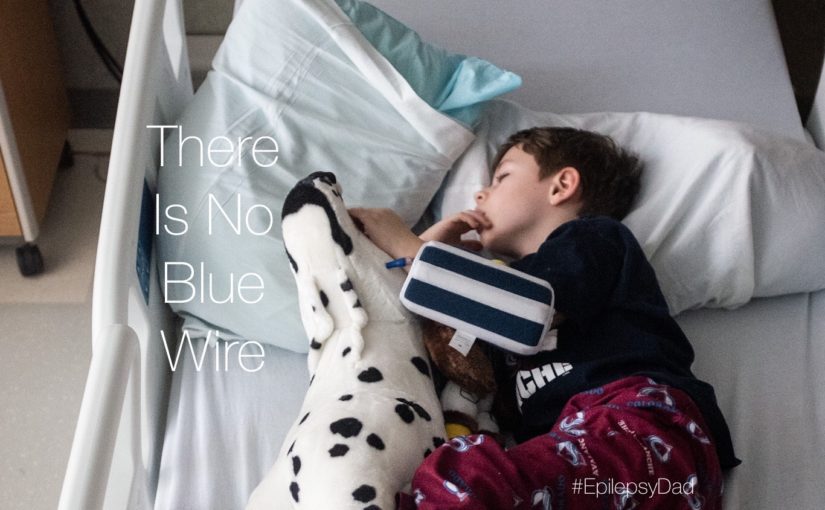
    We don’t really know how long our son was in status epilepticus.

    We had moved to a new city only six months before, around the time when my son had his first seizure. He had his second a few months later, which lit a fuse inside his brain. We started to see more “ticks”. I didn’t think anything about them, at first, because they looked very different from the seizures we saw. But he started having more of them. The fuse was burning and it was quickly reaching the explosives.

    In movies, when a hero defuses a bomb, it’s very dramatic. She’s on the radio with the experts who are talking her through the process.

    “Take off the cover.”

    Our hero unscrews the cover, exposing a spaghetti of wires. “Done,” she says. “I see the wires.”

    “Now, “ a voice says through her earpiece, “carefully trace the wires back to their source. You should see a control board with a power source.”

    Our hero uses the back of her hand to wipe the sweat from her brow. She squints her eyes as she uses the screwdriver to carefully push wires out of the way to reveal a circuit board with a series of glowing lights.

    “Done. I see the board, ” she confirms.

    “Ok, coming off the back of the board you should see a red wire and a blue wire. You need to cut the blue wire.”

    Our here slowly grabs the wire cutters from her pocket. In her left hand, she uses the screwdriver to push back the wires further. As she starts to weave the wire cutters into position with her right hand, she stops.

    In movies, when a hero defuses a bomb, there is a blue wire. In our story, there was no blue wire. The spark ignited. The bomb exploded.

    Inside my son’s brain, an uncontrollable chain reaction began and sent electricity coursing through every cell. His body contorted. He was disoriented. He slept. The cycle repeated for days as another team of doctors tried to contain the secondary effects of detonation, like stopping the spread of radiation after Chernobyl.

    While the doctors managed to prevent the worst possible outcome, the damage was done both from the seizures and the tactics employed to put out the electrical storm. We’re still dealing with those consequences years later. But our son is here, and he’s happy, and we are grateful.


  • Starting From The Beginning

    Starting From The Beginning

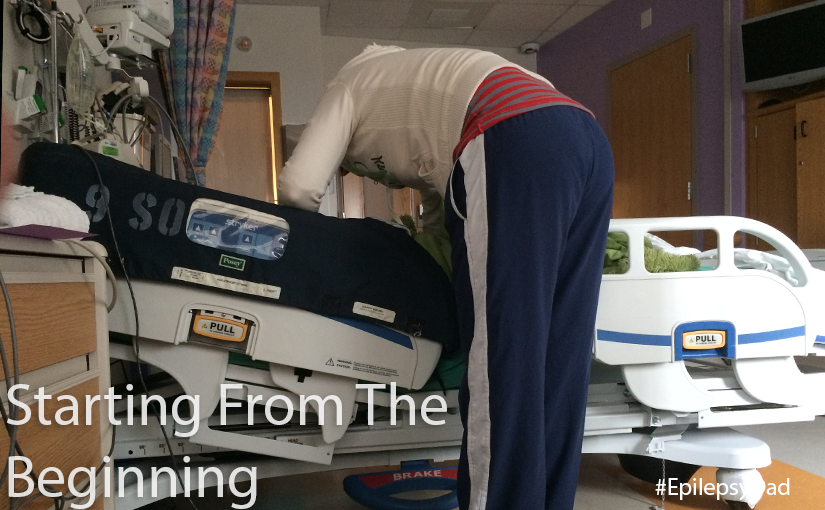
    One of the truths about anyone new coming into our lives today is that they will never know how bad things were. Eventually, anyone that hangs around long enough will hear my son’s story. We will tell them how dark the times were and how sick my son got and how grateful we are to be where we are. But looking at my son today, it’s hard for most people to believe that things were that bad.

    That disconnect feels isolating. It’s a reminder that there aren’t many people in our lives from that time. We were largely confined to the hospital after moving to a new city. The only people we knew were the medical staff, but they were transitory. We rarely saw any with regularity. Instead, we repeated my son’s history to every new face we saw. But they moved on and we stayed trapped in our world scared, desperate, and alone in the dark. Every day, every week, every month.

    Sometimes, when you tell a story over and over again, it can dull the pain. The repetition has a numbing effect that makes it easier to deal with. But when you’re in the middle of it, that doesn’t work. Instead, it keeps the pain and the fear fresh and present. After months of unrelenting confrontation with our new reality, I wanted it to stop. I wanted one person, just one person, who I felt knew us, knew my son and could understand.

    After a long string of random faces, my wish was finally answered. One neurologist started coming back through on rotation. Instead of repeating our son’s entire history each time, we could give her updates. She provided consistency and stability through our endlessly repeating days. I began to feel like I was talking to someone who understood what we were up against. Someone who knew how bad things were. She cared about us. Without those connections, it’s hard to imagine anyone fighting as hard as we were to not go back to that place. But she did. And for the last three years, we’ve had her at our side every step of the way.

    Until now.

    The woman who in many ways saved my son is leaving. I’m trying to be stoic. I’m trying to be grateful for everything she did for us. I’m trying to be happy for her as she pursues more of a focus on epilepsy because of her experience with my son. I’m trying to think about the many more children she is going to be able to help. But I mostly feel afraid. Afraid to take these next steps without her. Afraid that no one is going to get us or my son like she did. Afraid that no one is going to fight as hard as she did because of how connected she was to our story. When there aren’t many people that can relate to what you are going through, the loss of one is significant.

    We’re at one of the best children’s hospitals in the country. Our new neurologist is one of the best in that hospital. But she didn’t see my son at his worst and I’m struggling with whether that matters. Whether she’ll fight as hard as she would if she had seen him back when this all started. Whether she will be personally invested in his outcome. Because I need that. I need his caregivers to have that connection to him. I need them to know and call him by his nickname. I need them to know how important he is. I need them to know who he is. He’s not just a patient, he’s my son.

    The thought of having to start over is stirring memories from when this all began. I’m afraid of having to start retelling my son’s story and reliving those dark and fearful days. But I’m also going to miss that light that lifted us from the darkness. I’m going to miss having her at our side.

    We tell our son to be brave. To be grateful. To try to find the positive. And I am trying, but right now I just feel scared, and alone, and sad.

  • Moving To Australia

    Moving To Australia

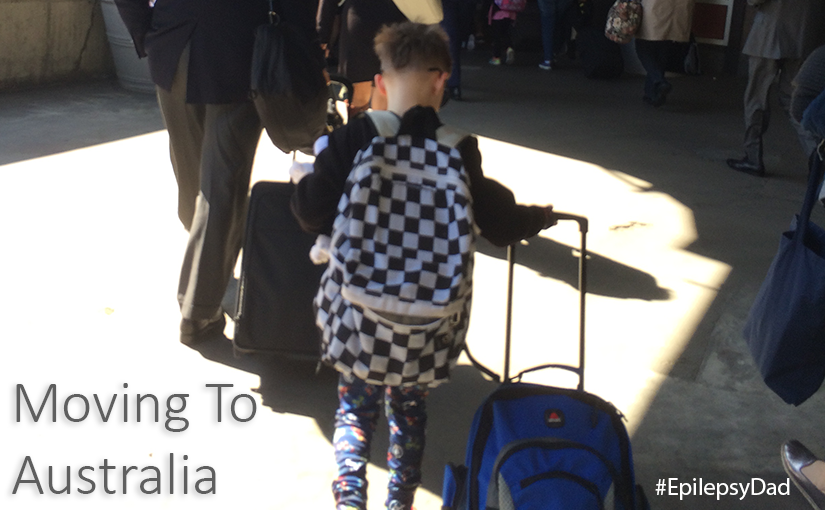
    Before my son was born, my wife and I talked about moving to Australia. It wasn’t because we were having a terrible, horrible, no good, very bad day. It was because we had been there on our honeymoon and we loved the experience. The idea of packing up and living on the other side of the world seemed like an amazing adventure.

    In a way, it’s the same reason we moved to Philadelphia. While it wasn’t on the other side of the world, it might as well have been. Moving from the suburbs to the city. From the Colorado laid-back mentality to the always-moving city. The people and culture are as different as if we had moved to another planet.

    At the time, the logistics of moving were easier. I already had a job, so we only needed to pack and find a place to live. Everything else we could figure out as we got more familiar with our surroundings. But we landed in Philadelphia right before my son’s seizures started. After that, the idea of moving became a lot more complicated.

    It’s no longer a simple matter of packing up and finding a place to live. “Everywhere” is no longer the list of possible destinations. Our mindset needed to shift from aspirational to practical. The nature and complexity of my son’s condition mandated more specific requirements.

    We would have to research the hospitals in the area to get a feel for their ability to support my son. How good is the medical care? Do they have the testing equipment on site, like a video EEG, or would we have to travel to another hospital? How easy is it to get in to see our neurologist?

    We also have to do more research on the schools. In the past, we would have asked about class sizes and the quality of the education. Now, we would need to ask more targeted questions. Can they accommodate my son’s special needs? Can he get a one-on-one aide? Is the nurse familiar with seizures and epilepsy? Will the integrate him or isolate him?

    Many of the answers to these questions would remove cities from our list of potential new homes. And there are many more questions to ask, each one shortening the list.

    In many ways, epilepsy has taken away choices. Where we can live is one area, but there are so many. It also forces restrictions on what job I can take, what activities my son can do, even what he can eat. I assumed that we could build our lives by picking pieces from an unlimited list of options. But instead of the full buffet, we’re limited to the salad bar.

    It would be easy to be resentful. It would be easy to see these limitations that epilepsy has imposed on us make and feel like victims. It would be easy to see only loss. Loss of freedom. Loss of choice. Loss of potential. But being where we’ve been, I’m grateful for where we are. I don’t resent what we don’t have or where we can’t go because I know how special what we do have is.

    I still like the idea of an adventure. I still think about moving to Australia. Maybe some day, if we can get my son’s epilepsy under control, we’ll be able to move to have that adventure. Until then, we are exactly where we need to be. The dream of living in another part of the world might seem far away. But the reality is that our journey so far has brought us closer together.