Actually, he’s wanted to be a hockey player for most of his life.
Hockey has always been part of his identity. He had a hockey stick in his hands as soon as he could stand. He left the hospital with an NHL toque on his head. One of my earliest memories of him is lying on a couch in a hospital room a day or two after he was born, him asleep on my chest, a hockey game on the television.
Before the seizures.
Before we knew what was coming.
When he was little, we played hockey in the living room with miniature sticks and a foam ball. We took turns as players and goalies. We went to an outdoor rink near our house with sticks and a ball and played one on one.
One time, there were other people there—teenagers, I think. One of them was a goalie. He let my son take shots on him. Let a few go in. My son was three or four. This was still Colorado. Still before everything changed.
He started skating when he was two. He joined “Intro to Hockey” when he was about four. Right before we moved to Pennsylvania. Right before the seizures started.
Right before we knew what we were carrying forward.
Once his seizures were somewhat under control—though never eliminated—we tried again. We went back to skating. We worked on stick handling off the ice. But even that eventually became too much. Then COVID hit, and everything stopped.
When we moved to the suburbs and the world slowly opened back up, we tried skating lessons again. But they were exhausting for him. His ankle strength wasn’t there. His stamina wasn’t there.
Eventually, we stopped.
But hockey never really went away.
A few years ago, he brought up the idea of being in the NHL. We talked about how it wasn’t something he could safely pursue. With his health challenges and the fact that he still has seizures, the risks of hockey make it unsafe.
We tried to name other ways hockey could still be part of his life. Other ways to love the game and stay close to it.
We watch hockey. He loves his Avalanche. We went to an NHL Finals game—his Avalanche versus my Tampa Bay Lightning. The Avalanche won 7–0 and went on to win the Stanley Cup.
Two facts my son reminds me of constantly.
A few weeks ago, he told me he’s been practicing hockey every day. Because that’s one of the things we always talk about when people eventually make it to the NHL—how much work they put in before anyone noticed.
He asked me whether he should be a player or a goalie.
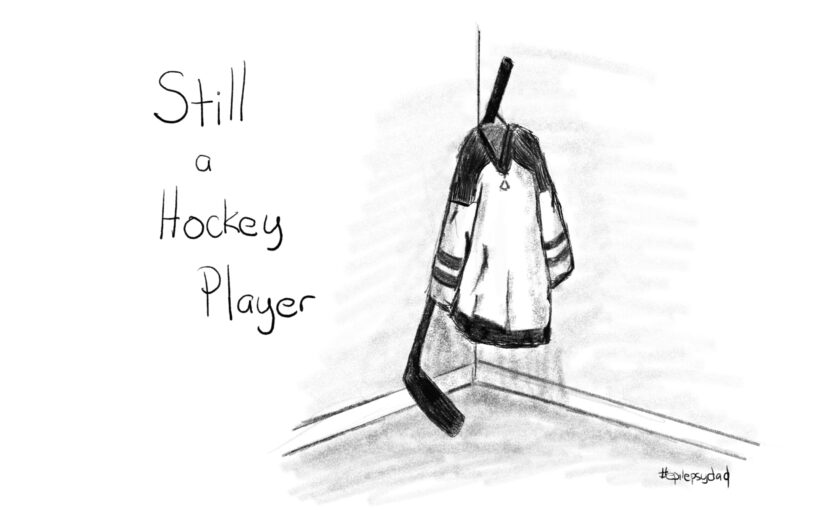
He’s been wearing his Avalanche jersey again. Drawing players. Talking about teams. He understands that he might not get to choose which team signs him.
Now I have to talk to him again.
That’s the hard part. Not the safety. Not the medical reality. The sense that something meaningful may be slipping out of reach.
I ask myself whether I’m wrong for not letting him live in the fantasy of it. Whether I should just let it sit there, untouched.
But he’s sixteen. And I don’t want him chasing something that can’t hold him safely. I want him chasing something that asks a lot of him. Something that’s still hard. Something that still matters. But something that’s possible.
Working toward an NHL career isn’t something he can do safely. But there may be other ways for hockey to remain part of his life. Other paths that keep the game close.
I don’t need those paths to replace his dream. I just need them to exist.
This isn’t a conversation I can rush. Or solve. Or make painless. It’s something I have to sit with him in, and return to as he grows and changes.
I know I’m not the one who set these limits. I know where they come from.
All I can do is stay with him as he bumps up against them, and not look away.
I thought we were going to be a hockey family. I grew up watching the Hartford Whalers and would pretend to play hockey on the frozen ponds when I was a child. When I moved back to Florida after my military service, the Whalers were no more, so I latched on to the Tampa Bay Lightning and started taking hockey classes at a nearby rink. When I moved to Colorado, I joined a recreational team and played for years until the late nights became too much, and I settled for playing the occasional drop-in game.
My son and I started playing floor hockey as soon as he could walk. He was on the ice taking skating lessons when he was two, and by the time he was four, he started hockey clinics. When we would go to a hockey game, my son would make me keep my phone handy in case the Colorado Avalanche needed him. It was awesome.
Around that time, we moved to Philadelphia. By then, my son had had his first seizure, but it was only one, so we still looked for ice rinks in the area for him to continue skating. But, by that winter, things had taken a turn for the worse, and he would wind up being in and out of the hospital for the next few months.
By the spring, we were out of the hospital, but his seizures were still not under control. We were in a new city with no friends, no family, and the only support we had was at the hospital. We had just spent months isolated in the hospital and wanted to give him something to do. Skating wasn’t an option, at least until he became more stable, but we found a tee-ball league nearby and signed him up.
That first season was rough. There were wonderful moments watching him play with the other kids as he learned to hit and throw and play the game. But there were constant reminders that we hadn’t yet figured out what was wrong. We would watch as my son stood on third base and slumped over because of a seizure, only to pop back up and try to get back into the game. Sometimes he could; other times, we’d rest and hold him on the sideline as his tiny body recovered, watching the other kids continue to play. It was heartbreaking. But he loved being on the field, so we made it work.
Eventually, and after he stabilized a bit more, we signed him up for some skating lessons and a hockey clinic. They taxed his body and brain, and we had at least one seizure on the ice, but he was happy. Again, though, his seizures and the side effects of his medication took over, and skating was too much for him. For a while, we tried working on hockey skills on a concrete rink, but even that was too much. We still loved going to games and playing on the tennis courts in the park. My son still dreamed of a career in the NHL, but skating and being on the ice took too much out of him to be able to do it consistently.
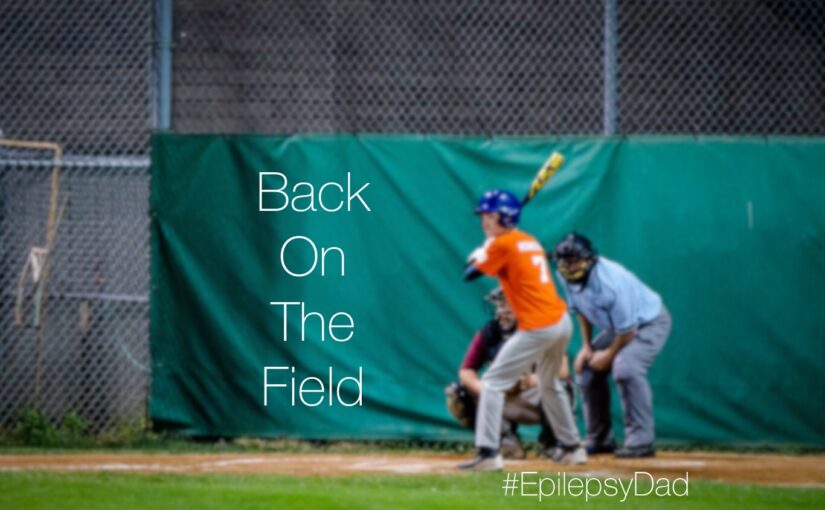
Baseball, though, was different. Each spring, we would sign up, even though we didn’t know how much our son would be able to handle. Each spring, I would fill out the signup forms and list his condition and make notes to warn his coaches about his issues with stamina and attention. Each season, my son would show up on the field and work hard to be a part of the team.
Through the years, we were lucky with the teams he was on and especially the coaches. The experience the coaches created for him was exactly what he needed, and it gave him a bit of normalcy during a very unstable time. And the coaches were good people, too. One year, his coaches attended our local Epilepsy Foundation gala, donating their time and money to a cause so important to our son and family.
When the pandemic hit, we missed those moments. When the weather permitted, we would go to a field as a family and play. As fun as that was, it wasn’t the same. Just as the world was beginning to open up and we were going to register for the upcoming season, we uprooted and moved out of the city and missed the registration for our new community, and missed out on another season.
This spring, though, we signed him up as soon as registration opened. Again, I filled out the forms and felt nervous filling out the “Medical Conditions” section. I was worried that we had found a bubble of support in our previous league where the coaches knew my son and that this new league wouldn’t be as positive. He’d be surrounded by entitled suburban kids and parents who have known each other for years. I was worried he wouldn’t fit it because it’s easier to do when everyone is new, but here he would be the only new kid coming in, and it had been years since the last time he played. I was worried that this experience would take away something that he loved to do.
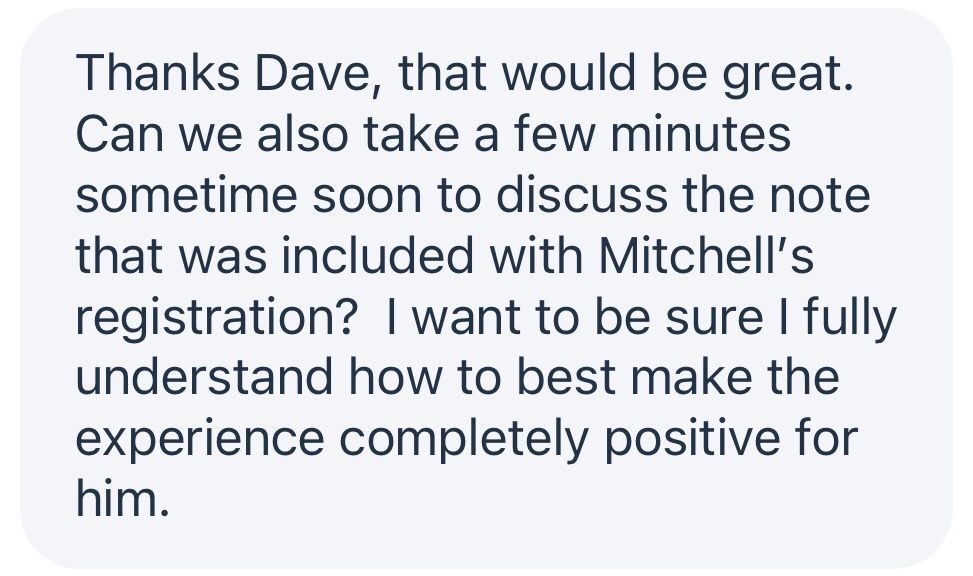
I suppose it could have gone that way. But shortly before the season started, I receive this message from his coach:
Immediately, I felt better. That simple gesture lifted the worry and fear I had been carrying from the time I signed him up. The conversation that followed was sincere and kind and set my son up to have a positive experience on the team. We continued to communicate as we figured out where my son was physically and what he was capable of (which turned out, as always, to be much more than I assume he is).
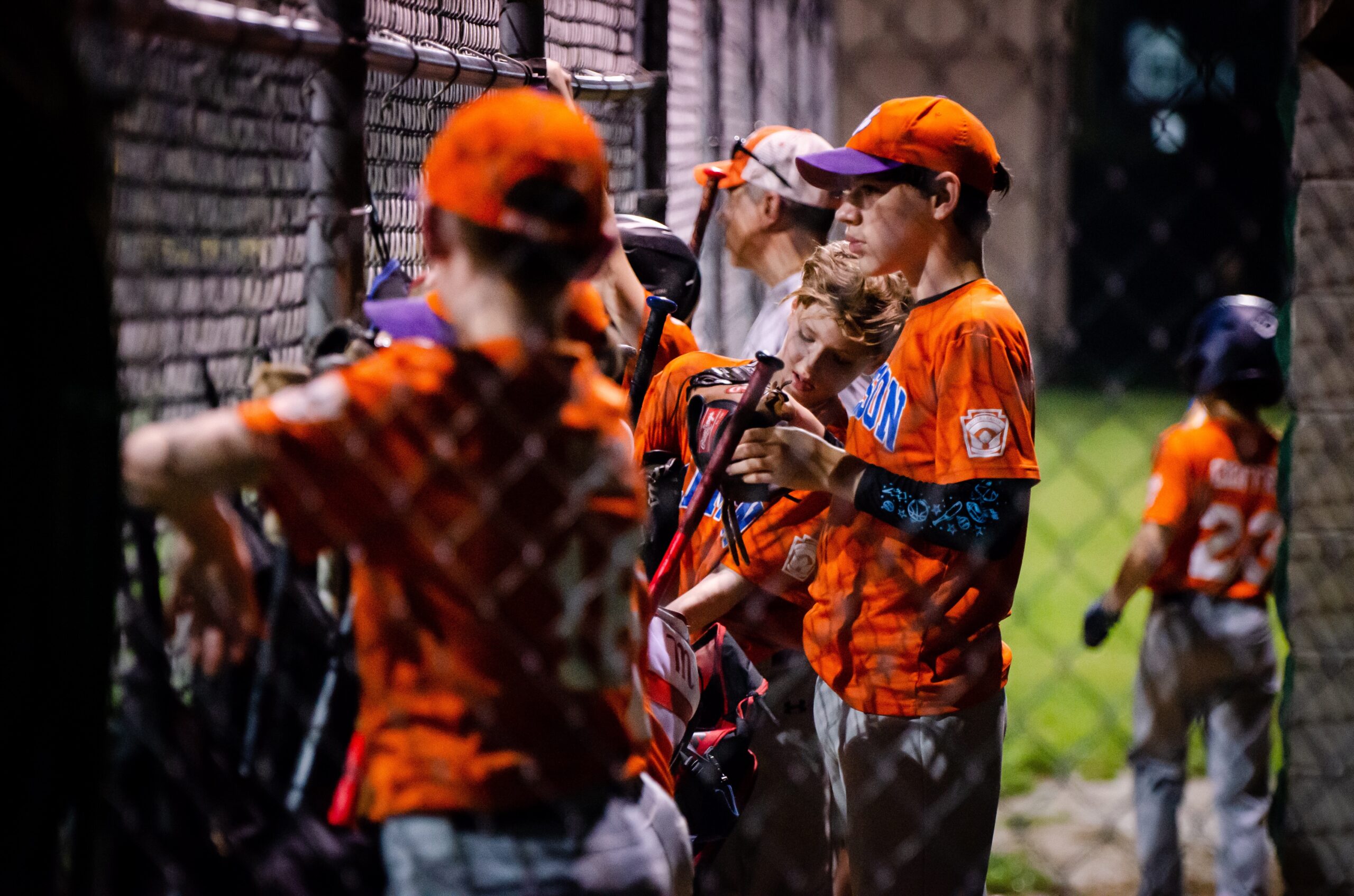
Even though many of the other kids had been playing together for years, my son felt like a part of the team. The players celebrated hits, and solid fielding plays. They cheered for each other and got to know each other…Fortnite was a popular topic and something that my son had in common. A few kids from our neighborhood were on different teams, so my son also developed connections across the league. I couldn’t help but smile as I saw the kids chat and mingle during batting practice before a game, like professional baseball players getting ready to hit the field.
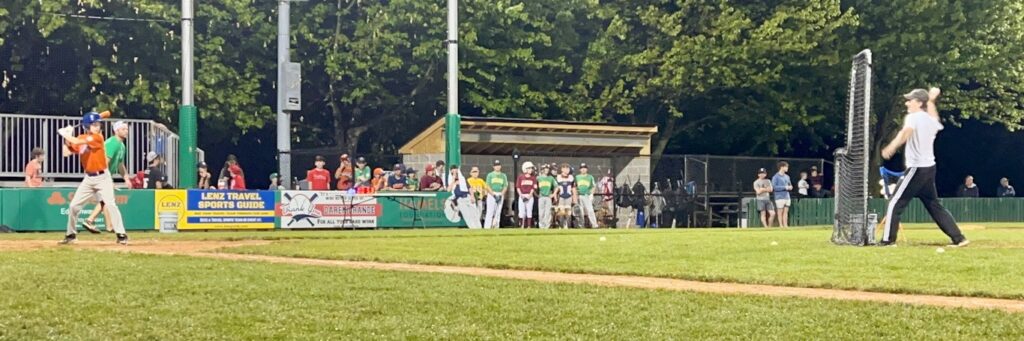
A highlight for me was during a day of celebration that the league puts together for the kids that raises money to support the organization. One of the events was a Home Run Derby for the 12-year-olds who would be “graduating” from their division. Only a few kids could hit the ball over the fence, but there was a point system for hitting deep balls that allowed everyone to participate.
My son was excited to participate, always believing he could hit a “dinger.” Nervously, I signed up to pitch to him during the event. Selfishly, I thought it would be a good father/son moment. But, even though I’ve been pitching to him since he first picked up a bat, I wanted to ensure that he was set up for success. When I asked him what he preferred, he said that he wanted me to pitch, so I practiced for days ahead of the event.
When I was out there on the mound, it wasn’t about whether or not my son hit any home runs (he didn’t) or how far he hit the ball (very, very far). It was watching him step up to the plate and do something brave. It was watching him take that deep breath, set himself up, and swing the bat. It was watching the smile on his face or the way he holds the pose at the end of his swing when he makes solid contact. It was hearing the other players in the dugout cheering for him when he sent a ball to the outfield or to try to reassure him when he had a string of infield hits. It was, after his time ended, walking up to him and telling him how proud of him I was and seeing how proud of himself he was.
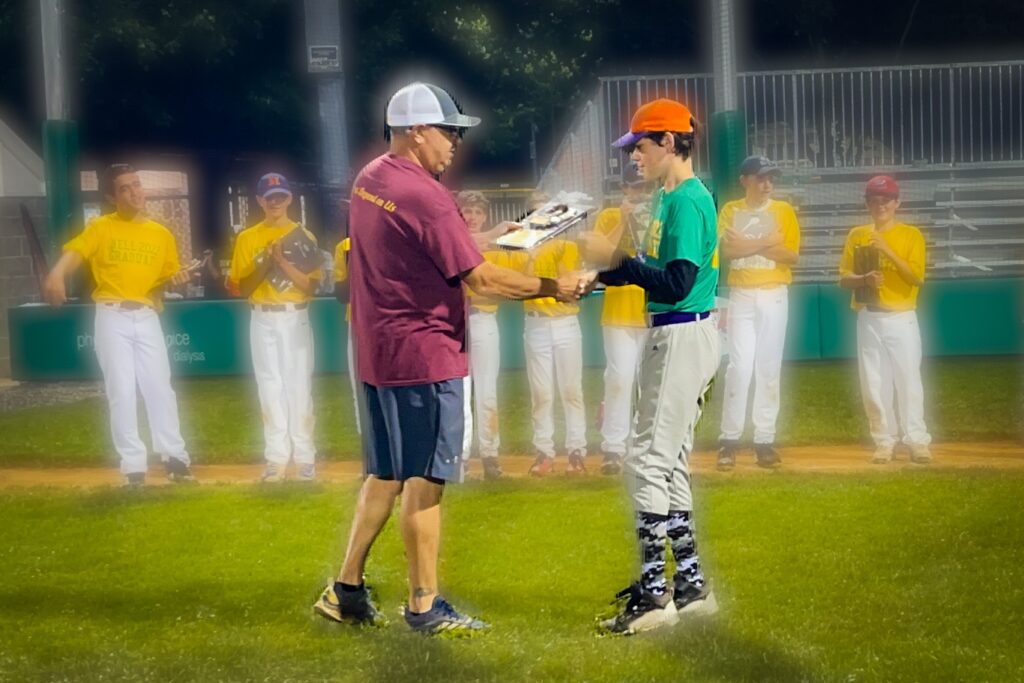
The season’s final game was a “Graduation Game,” where they put all the 12-year-olds on teams one last time. It felt like an All Star Game where all the kids who had gotten to know each other over the season could go out and play one last time. After the game, each player received a plaque commemorating the season. They called up each player one by one while the others cheered. My heart swelled when it was my son’s turn, and I hid behind my phone to not embarrass him with my huge smile and watering eyes.
I am so grateful that my son has found something that brings him joy. There were times when I only focused on the loss of hockey…the idea that something he loved was taken away from him by his condition. There were times watching him have seizures on the field or struggle with his stamina and attention that I worried that he wouldn’t be able to find anything else. There were times when my overprotective, helicopter-parent nature and the terrifying experiences we’ve had with epilepsy have caused me to focus on the things he shouldn’t or can’t do.
But going through these experiences and watching my son continue to surprise me with what he can do…it’s humbling and wonderful and inspiring. It has caused me to move from a place of fear to a place of hope and gratitude. It has caused me to stop worrying as much about creating a perfect experience and to appreciate and enjoy the experiences as they come more fully. Every day my son teaches me something just by being himself. Every day, I feel like the luckiest dad in the universe.
I don’t remember ever having dreams of what I wanted to be when I grew up. I had friends who wanted to be cowboys, or baseball players, or astronauts when they were children. As they matured, they wanted to be doctors, or lawyers, or police officers. And I once knew a person who dreamed of being a circus performer, which might seem weird, but I knew him in a city that had a “clown college.” But I don’t remember having dreams of my own. I knew someday that I would be older, but I didn’t know what I wanted to be doing when that day arrived.
After we moved to Florida in my mid-teens, I got it in my head that I wanted to be a marine biologist. It seemed like a good fit. I spent most of my summers when I was younger in the water, catching fish and crabs. I wasn’t afraid to pick up the random sea creatures that I’d come across. And, most importantly, a girl that I had a major crush on also wanted to be a marine biologist and she agreed to be my lab partner because of this newly developed common interest.
I would have made an excellent marine biologist. Ignore the fact that I won’t go in water that is below 80 degrees. Ignore the fact that I’m more of a sinker than a swimmer. Ignore the fact that I don’t like being cold and wet. Ignore the fact that I get seasick. If you ignore all the things that are in the job description that involves being in or on the water, I would have been great.
So, I signed up for a marine biology class in high school and sat across the room, watching my romantic interest instead of the fish. But she was watching the fish, but also started seeing one of the popular kids. As a result, my interest in her began to wane, and, coincidentally, so did my interest in becoming a marine biologist.
My son, however, has known since he was born that he wanted to be a hockey player. He and I started playing hockey together before he could walk, and his love for the sport has only grown. Over the years, he’s added careers like a baseball player and professional video gamer. But they have been “in addition to” never “instead of.” Even now, at ten years old, he’s waiting for the call from the Colorado Avalanche or the Vegas Golden Knights to tell him they need him, and we’ll be on a plane.
To help him pursue that dream, I took him to skating lessons starting when he was two. At four, we added the hockey classes. The look on his face when he got his first official jersey is etched in my mind.
But then, just before his fifth birthday, he had his first seizure.
The first seizure didn’t adjust his course, but the second one did. And the third. And the three months in the hospital battling status. And the exhaustion and side effects of the medication. For more than two years, we struggled to get him back on the ice. We’d play hockey in the basement, but the level of exertion necessary to be on the ice and playing hockey was too much. We’d try a few classes, and his body would shut down for days. During one class, he had a seizure. The fighter that he is, he got right back up and tried to participate, but we needed to keep him off the ice for his safety until we could figure something out.
We added tee-ball and baseball since those sports were easier to manage breaks and his level of effort. He is good at baseball, and he likes it, but he keeps asking about hockey. He has a friend who has been playing for a few years now, and I can hear it when he talks about his friend that he wishes it was him on the ice instead. But it isn’t. And the reality is that I don’t know if it ever will be.
The reality is that my son’s seizures are still not under control. The reality is that the more he pushes himself, physically and mentally, the more exhausted he gets, and the more seizures he has, which perpetuates the cycle. No one can tell us if that will ever get any better, so we’ve tried to structure his life in a way where he gets the most out of it while minimizing the impact of his epilepsy. But the thing that he loves the most, the thing he’s dreamed about all his life, is the thing we haven’t figured out how to give back to him.
I never had dreams when I was younger, so I don’t feel any remorse or regret for where I wound up. I think I am where I am supposed to be, with the family I love and a job in a field that I’m good at and find rewarding. Looking back, the choices that I made, even subconsciously, all aligned on a clear path to here.
I believe the same will happen for my son. He will be where he is supposed to be. But I’ve always wanted to give him every opportunity to succeed, every opportunity to explore every possibility, and to feel supported every step of the way. Part of my purpose is giving that to him, and doing everything I can to help him achieve his dreams.
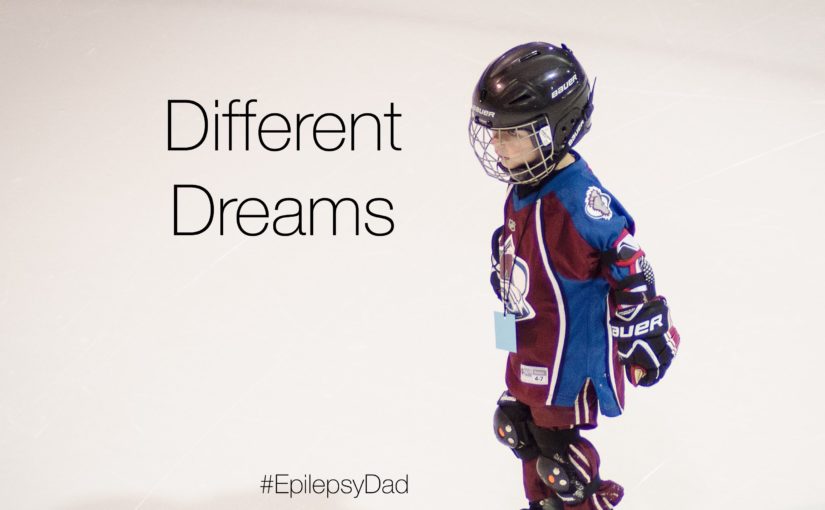
It breaks my heart to think that I may need to tell him that he needs to have different dreams.
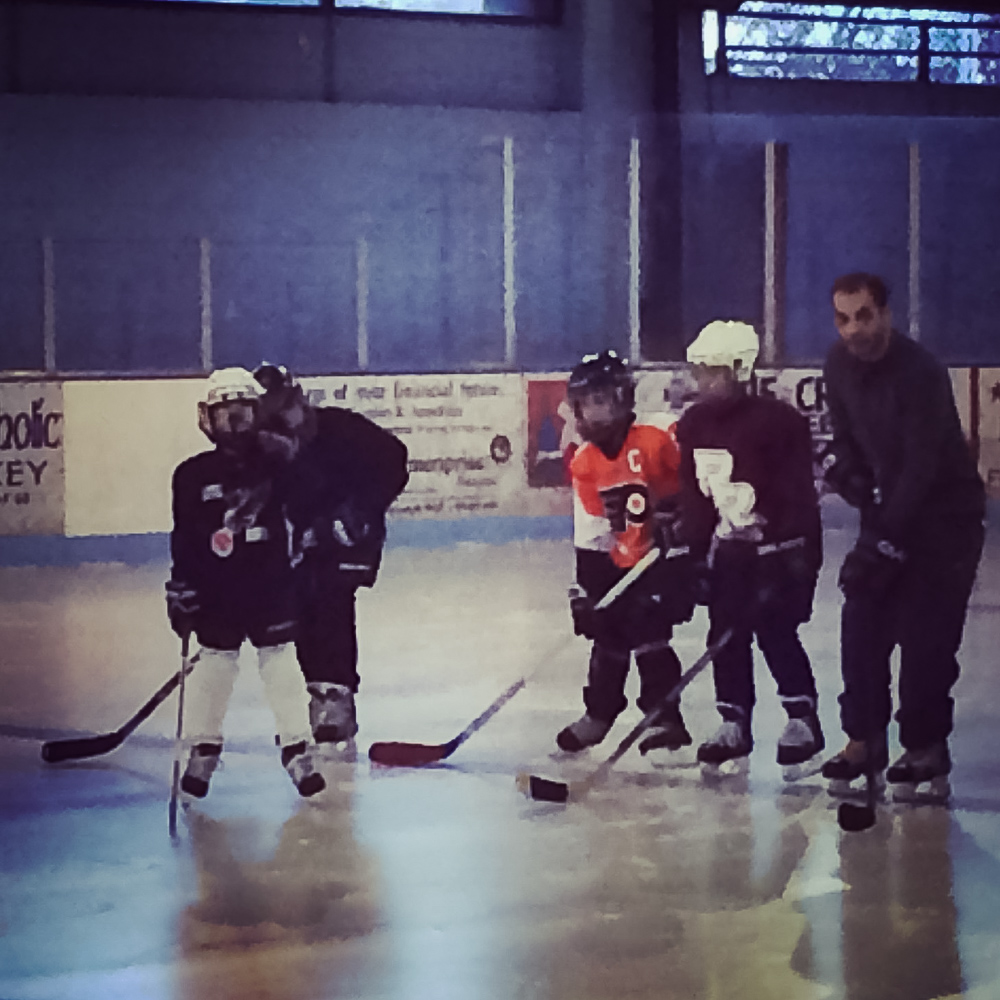
Coming out of the womb, all my son wanted to do was play hockey. He started skating before he was two, and we played floor hockey almost every day, even when he had a broken foot. When he was five, before we left Colorado, we signed him up for an “Intro To Hockey” class. Watching him step on to the ice (and fall) for the first time in full hockey gear was one of my favorite moments. I remember him skating around during warmups as if he was preparing for an NHL game. His energy was electric. Every time he made eye contact with me, I saw the look on his face that, as his father, I’ve strived to replicate ever since.
The onset of his seizures changed our lives in many ways. Huge ways. Profound ways. But one of the hardest things for me to accept was taking away that look my son had when he was on the ice. When the seizures started, he would ask when he could get back to playing hockey. When he was at his worst, he stopped asking altogether. It was like taking air from him when he desperately needed to breathe. He needed to feel a connection to something to take away the fear and uncertainty. We couldn’t play floor hockey. We’d watch hockey on the television but I didn’t know if that was helping or hurting. They were pictures of a lost love that stayed just out of reach.
After a long recovery, but amidst continuing seizures, he picked up his hockey stick again. Our epic battles of floor hockey returned. He skated, but it was inconsistent and only as his endurance, balance, and ataxia would allow. We found a coach to work with him off the ice on hockey skills. It was good to see him back in the world that he loved, but those activities were only parts of the whole. As he was able to do more of these activities, he started asking about ice hockey again. Every time he did, I still didn’t have an answer. It broke my heart.
For two years, that question stabbed me every time he asked it. Finally, though, after grueling rehabilitation, we did something I thought was impossible. We signed him up for another hockey class. Granted, the first class didn’t go as planned. As I mentioned in a previous post, that first time back on the ice include a handful of seizures. But he stuck with it and he’s been going as much as his body and mind will allow. There were a few sessions he missed because he was too exhausted. But he kept going back, even when the drills were hard and as he struggled to control his body. He falls a lot, maybe not more than other kids, but every fall takes its toll more on him. Physically and emotionally, after practice he is spent, wasted and unraveled. But during class, he’s so, so happy.
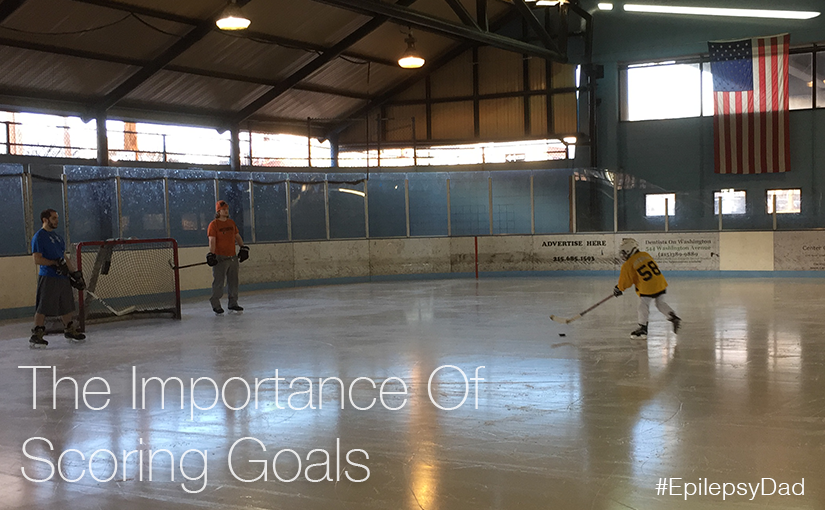
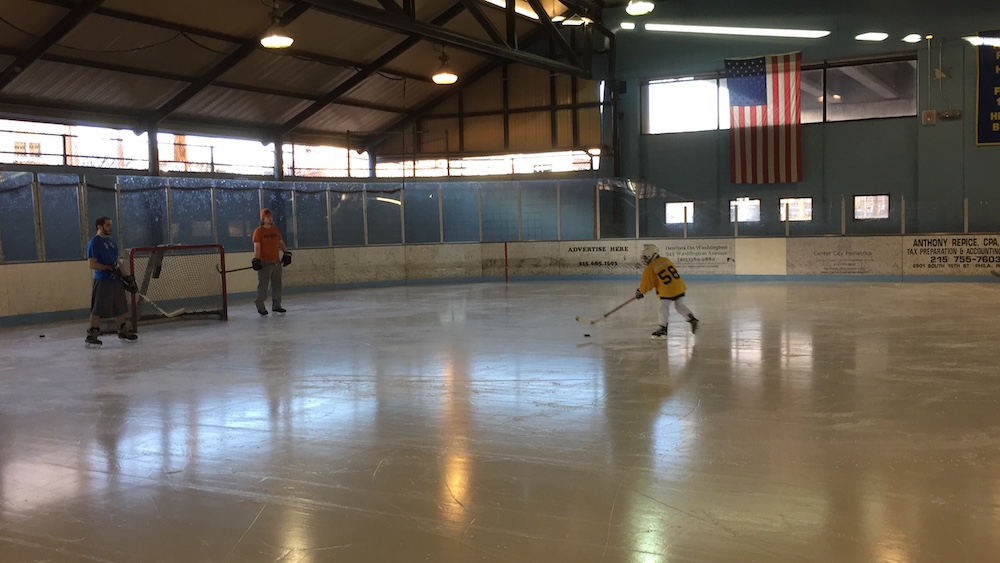
Last week, they set up nets and let the kids move the puck from one and to the other and shoot. Unless you’re a goalie (or even if you are), scoring a goal represents one of the defining moments for a player. Watch a young player in the NHL score his first goal and you can see that lifetime of waiting finally end. I felt the same way watching my son push the puck across the ice and take a shot. It seemed like a lifetime had passed since that class in Colorado. But after he took a shot, and after the puck slowly crossed into the net, he made eye contact with me. I saw the look that I wondered if I would ever see again.
During the car ride home that night, we watched the videos I took of him on my phone. “Did you see me score a goal on the backhand?” he asked. “Of course, ” I replied and restarted the video. We watched it over and over. Every time, I was more grateful than the last.
I should have known there was something wrong when my wife texted me that our son had a seizure in school. Seizures during the day are rare for him, but I thought that maybe we wore him out sightseeing with his cousin who was visiting over the weekend. That was an especially bad day to break from his nocturnal seizure pattern because that afternoon he was supposed to be back on the ice for his first hockey class since his seizures started more than two years ago.
When we lived in Colorado, hockey was all this kid wanted to do. We played hockey on the floor since he could walk. We even made a movie about it.
He started skating when he was around three, and he started his first hockey class just before we moved to Philadelphia, which also happened to be the time his seizures started. With how bad things got, hockey and skating were out of the question. Taking away something he loved so much was one of the cruelest things that epilepsy did to him.
It took almost a year, but once he started to regain his balance and stamina, we found him a coach to do off-ice drills with him. We continued to play hockey on the floor or at the park, but he would always ask when he could get back on the ice. I didn’t have an answer.
After nearly eighteen months, we let him back on the ice. It was only for short periods of time because his balance, stamina, and attention issues still prevented anything too rigorous, but it was something. To a kid that loves hockey more than anything else, though, it’s just skating. There is something different about doing it in full pads, with a hockey stick, and surrounded by other hockey players and we weren’t there yet, although that was about to change if he was well enough to go to this new class. After more than two years, he was about to return to where he was before the seizures started, which is why the timing of the daytime seizure was extremely unfortunate.
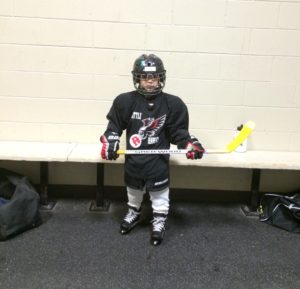
We decided to see how the rest of the day went. After school, he took a nap and my wife said that he seemed fine after he rested. We took the chance and she brought him to the rink and I left work to meet them. As I walked in, I saw my son scan the room and realize that he was in a locker room, surrounded by other hockey players. He was so excited that he trembled as he put on his gear. By the time I got there, he flashed a smile and asked me to help him finish getting dressed. Apparently, mommy didn’t know the order things had to be put on in and he had to keep taking something off in order to first put on the thing that should have gone before.
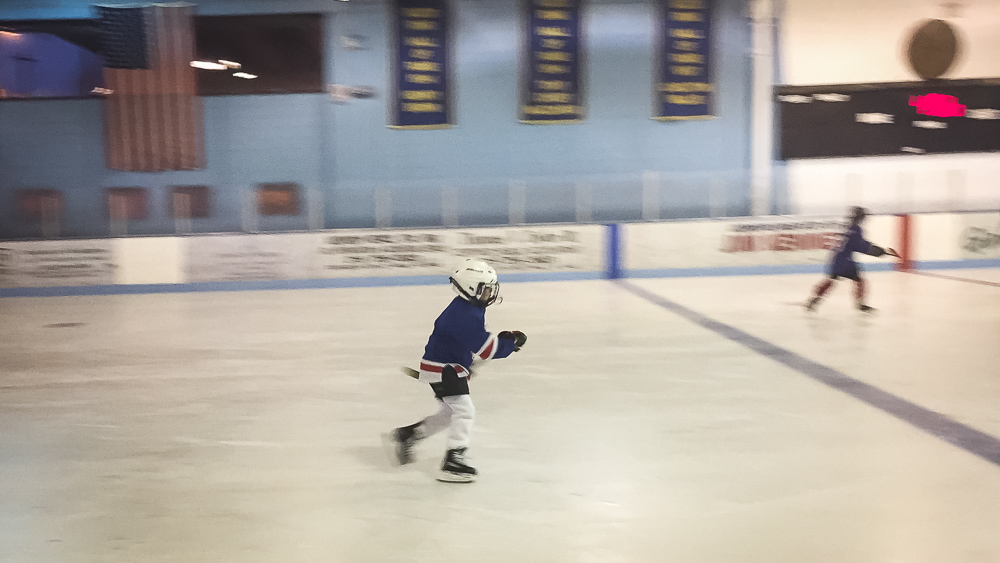
Finally dressed, he tucked his mouth guard into his toothless smile, grabbed his stick, and headed to the ice. It took all he had to not sprint, and he would have if the ice were further away. But he walked up the steps, past the bench, through the door and, finally, onto the ice. He skated around for a minute to get a feel for the ice and then skated over to his coach with the rest of the team.
It took all I had to not burst into tears on the bench. My heart was filled with such joy to see my son so happy. We do a lot of cool stuff as a family, but my son also does a lot of stuff that other kids don’t have to. Dealing with seizures, doctor’s appointments, therapy, an impossible diet, more therapy, more testing. He doesn’t have much control over even basic things that his peers do and, for a while, epilepsy had taken from him the one place where he could be himself and do something that he loved to do for himself. But there he was, on the ice, smiling and sending me an occasional thumbs up (which is really difficult to do with a hockey glove on) as he did the drills with (and better than) the rest of the kids.
Halfway through practice, though, from across the ice, I heard the sound that I dread every morning and I saw my son slump forward onto the ice. The coach moved towards my son and I yelled, “He’s having a seizure.” “When?” the coach asked. “Right now, ” I replied. As the coach knelt down, my son rose to his feet. I motioned to the coach and he had an assistant help my son to the bench. We sat him down and went through the protocol. “Do you know what happened? Do you know where you are? How are you feeling? Which way is your brain going?”
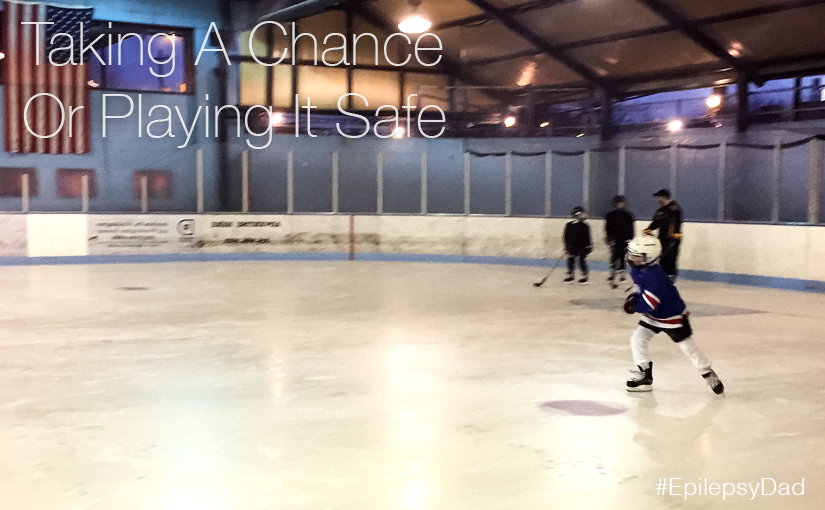
I told the coach that my son was okay and that he needed a break. The coach mentioned that he’s a nursing student and just happened to start reading about seizures and epilepsy medication. Serendipity. After awhile, my son told me he was ready to go back on the ice. As a parent, I felt faced with an impossible choice. Should I put him back on the ice on a day where he is clearly having more seizures and risk him getting injured? Or should I play it safe and take him home and take away the joy he was feeling? I glanced at my son who was watching the other kids on the ice and I made the heavy choice to let him rejoin his team. As he skated towards the coach, my heart raced and I watched his every move without blinking. Every fall was agony. Did he just fall or did he have another seizure? Thankfully, he would pop right back up each time and rejoin the drill. When class ended, I let out a huge sigh of relief as my son skated over to me, gave me a fist bump, and stepped off the ice.
By this time, he was exhausted but he took off his gear and I helped him put it back in the hockey bag. His eyes were a bit droopy, and I could tell that he wasn’t really there. He had given everything he had to be on the ice and his body and mind were starting to give in. It’s a blessing and a curse that my son wills himself through the things he wants to do and the things we ask him to do. I wish life were easier for him.
When we got home, I put him on the couch and made him dinner. He ate quietly and watched a little television before bed. As I went to get his evening medicine, I noticed that his morning doses were still in the pill dispenser. I asked my wife if she had given him his meds. It turns out, she didn’t. The daytime seizures, the exhaustion…we found the culprit.
Mistakes happen. It’s a lot to juggle four doses of multiple medications a day, a special diet, seizures and the normal chaos that comes with a seven-year-old boy. I felt terrible that the first time back on the ice, his head must have been going haywire. He had seizures. He had to come off the ice. He wasn’t really present. He barely remembered being there. All because we made a mistake on the day that he was finally able to go back to his first love. The poor kid can’t catch a break.
We gave him his medicine and the next day he was thankfully back to normal. I’m still not sure if we made the right call keeping him on the ice, and I suspect that we’re going to have a lot of similar decisions to make in the future. But that’s just part of managing epilepsy, and trying to give my kid as many things back that his condition has tried to steal from him. He won’t get it all back, but every little bit counts.