A Night (Or, At Least, A Few Hours) On The Town

Last night, my wife and I we were able to go on our first proper date (it was her birthday) since we moved to Philadelphia and since our family’s journey with epilepsy began. It was only a few hours on the town, but it came after many months of struggle.

On_the_town_in__philadelphia

One of the challenges that we’ve had has been to find someone to help take care of our son during the day. Up until now, it’s been primarily my wife, with me filling in after work and on the weekends. But my wife has to deal with the brunt of the behavior every day, all day, as well as struggle to find the time and attention to also give to her business, which she can’t do very often because our son needs near constant attention. And so she has bore the brunt of this for our family, sacrificed much of herself and her business, since it started.

As parents, there was no training for how to navigate this new world. We were simply thrust in to it, as was our son. We’re trying to manage his epilepsy and control and direct his behavior, while at the same time simply trying to wrap our head around what is happening and why it is happening, two questions to which we still do not have answers. Like so many families that are going through the same thing, whether it’s for epilepsy or for another condition, the relentless struggle to simply manage the day-to-day is exhausting, and frustrating, and constant. We have both broken many times, only to go to bed, wake up, and do it all over again.

Back when we lived in Colorado, we got breaks, we had jobs that we could focus on, and we went on dates. We had a few different babysitters, some as young as 15 because they only needed to play with our son and put him to bed. But now, a teenager is no more equipped for the situation than we were when we started. We needed someone who could handle the seizures, and keep him safe during an outburst, and that was trained, and capable, and able to handle the stress of working with a “special needs” kid.

While we need someone with a particular set of skills (cue Liam Neeson), our son’s condition didn’t qualify as a medical necessity that required a nurse so, again like many other families, we’re left in the middle…not a medical necessity but more than a parent can handle. If you need assistance, you need to find it yourself and pay for it yourself, too. Both of those obstacles leave many people helpless, in every sense of the word.

We’re very fortunate that we found an amazing caregiver that is patient and that works academically with our son since he hasn’t been able to attend school. But she can only come for a set number of hours a week…enough to help out and give my wife a chance to breathe, but not enough for her to actually catch her breath. We’re grateful the help and for the opportunity to go out for my wife’s birthday, especially since we know that there are other families that are not as lucky.
 

My Typical Day As A Parent Of A Child With Epilepsy

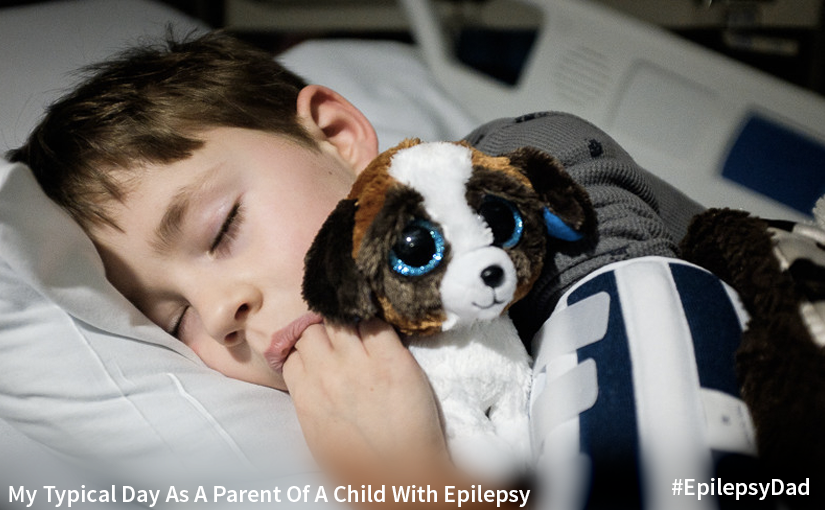
My typical day starts around 2 AM. We’re sharing a bed now, my wife, my son and I, because we’re not ready to let our son be alone in his room a floor away. I’m usually awoken by my son having a myoclonic seizure, a brief expression of sound, a jerk, enough to wake me, but he usually returns right to sleep. I’ll lay awake and wait for the next seizure, which may or may not come immediately. Eventually, I drift back to sleep, only to repeat the process a few more times during the early morning until my son eventually wakes up between 7 and 8 AM.

Once he wakes up, the next hour is a mix of listening for seizures and trying to judge his temperament to see if we’re going to have a good day or a not-so-good day, in which case I’ll hang around a bit more before I go to work.

When I do go to work, I’m always on edge, waiting for the phone to ring. I check in constantly with my wife to see how my son is doing. How are his seizures? How is his behavior? Sometimes, she calls me. Sometimes, I have to go home.

After work, if it was a good day, we will hang out as a family and have dinner. We’ll play hockey, or catch, or Xbox, and we’ll do normal family stuff. If it wasn’t, then I take over for my wife so she can get a break, and we’ll spend the rest of the night trying to just make it to bedtime.

Around 7 PM, we start preparing for bedtime. Lately, we give him his calming medicine and a dose of melatonin, then around 7:30 we start the routine of brushing his teeth, washing his face, giving him the rest of his meds, and reading a story while listening to Mozart. If he’s tired enough, he will fall asleep and we count our blessings. If he doesn’t, we spend the next hour or two holding him down and trying to calm him down until he eventually falls asleep.

epilepsy seizure behavior family

Once he is down, my wife and I might watch a show or spend some time together, but we’re always still on edge, checking the camera in the room at every sound to see if it’s him getting up again, to see if we need to go in there and repeat the calming or the holding down. If we get to finish our show, we’ll head in to bed, grateful for another day, and hoping the next day will be better.

There are a million similar, and a million different stories of how families are dealing with epileptic children. Many of us spend all day counting seizures and trying to keep our kids safe. Some of us are dealing with anger and impulse issues. Others are dealing with kids that might not be able to walk, or talk, or move, on top of having seizures. We’ve met some of these families, and we all have our own stories. The seizures might be a common thread, but as each of our stories reveal, epilepsy is so much more than just seizures, and living with epilepsy is something that impacts the entire family.


Resisting The Inevitable

When my son’s epilepsy diagnosis came, it came with a list of changes that we needed to make to our lifestyle. No more baths without supervision, no more swimming without someone else in the pool, and no bunk beds. The first two changes were precautions to prevent drowning, and the last one was to prevent falling out of bed during or after a seizure.

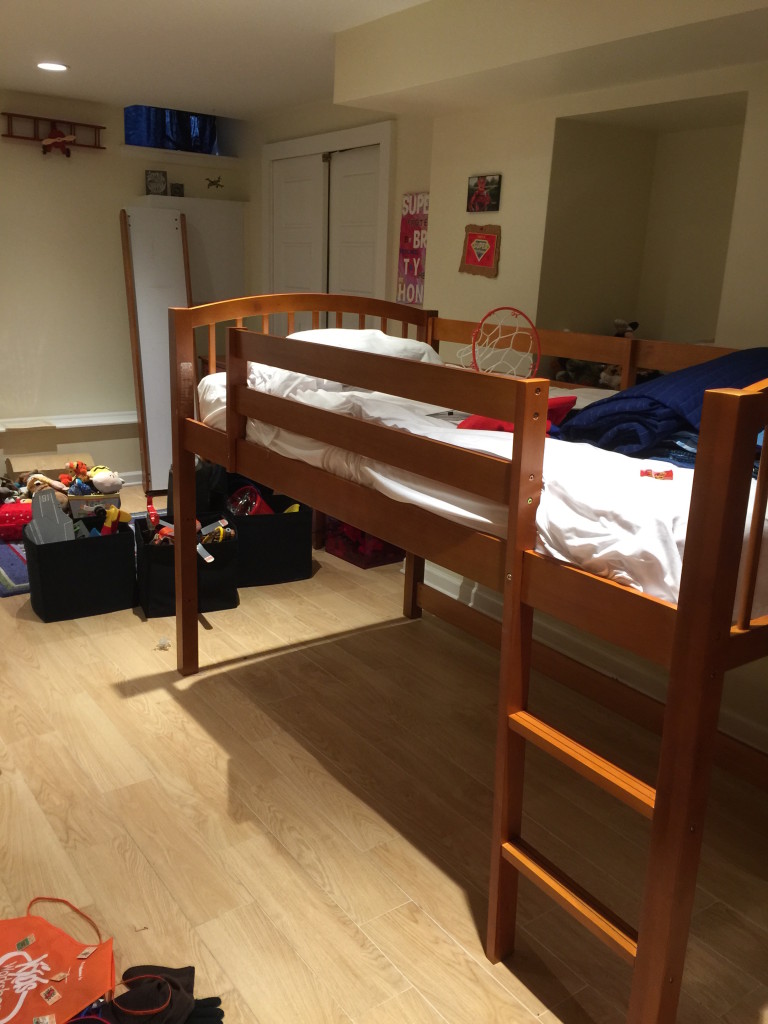
A few months before his diagnosis, to help ease the transition for my son with our move from Colorado to Philadelphia,  we sprung for a new bedroom set for his new room. The bed? A loft bed with a slide, clearly not on the epilepsy-friendly list.

epilepsy safety bed rail


We really struggled with what to do. The diagnosis was new, and it was bad enough that our son was having seizures, we didn’t want this also to mean we had to start taking stuff away from him and changing his environment. Besides, we told ourselves, the medicine was doing its job, and he wasn’t having seizures anymore. So we let him keep his bed.

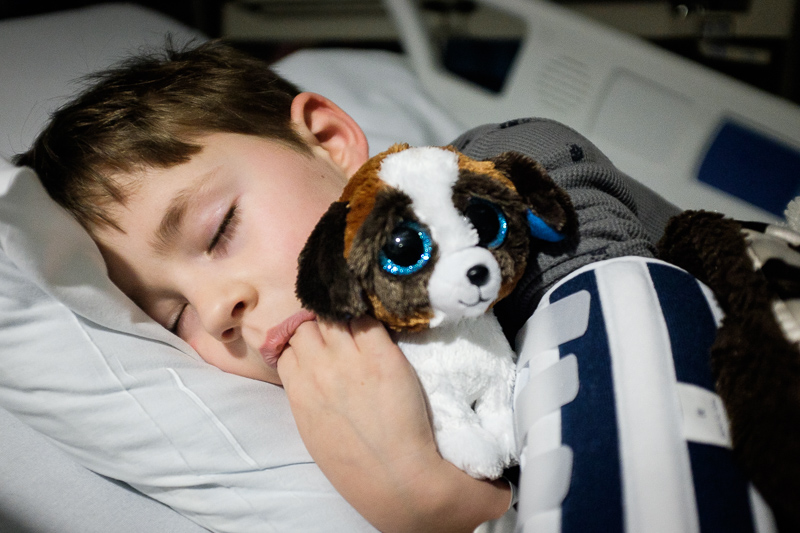
As it turned out, his seizures weren’t under control. They were masked by the medicine and they evolved, happening early in the morning and shortly after he woke up…both times when having a bed that was five feet off the ground posed a serious danger. After our latest hospital stay, my wife and I finally had the conversation that we had been putting off and made the decision to create a safer environment for our son.

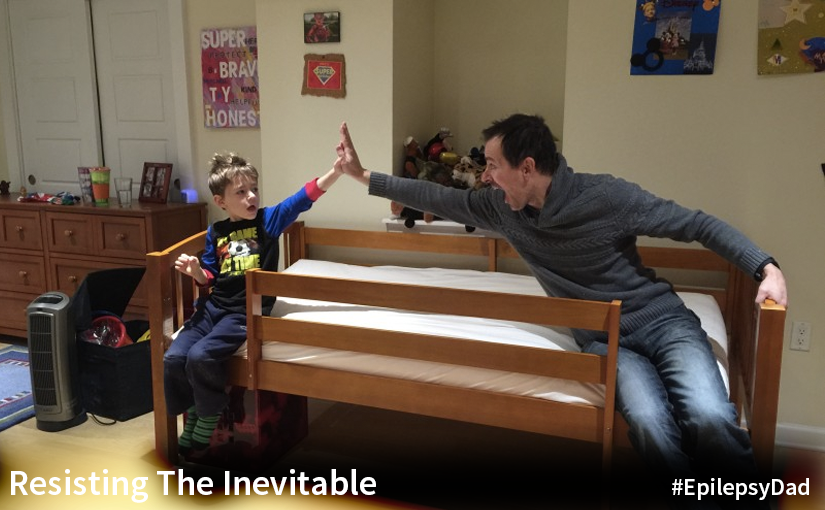
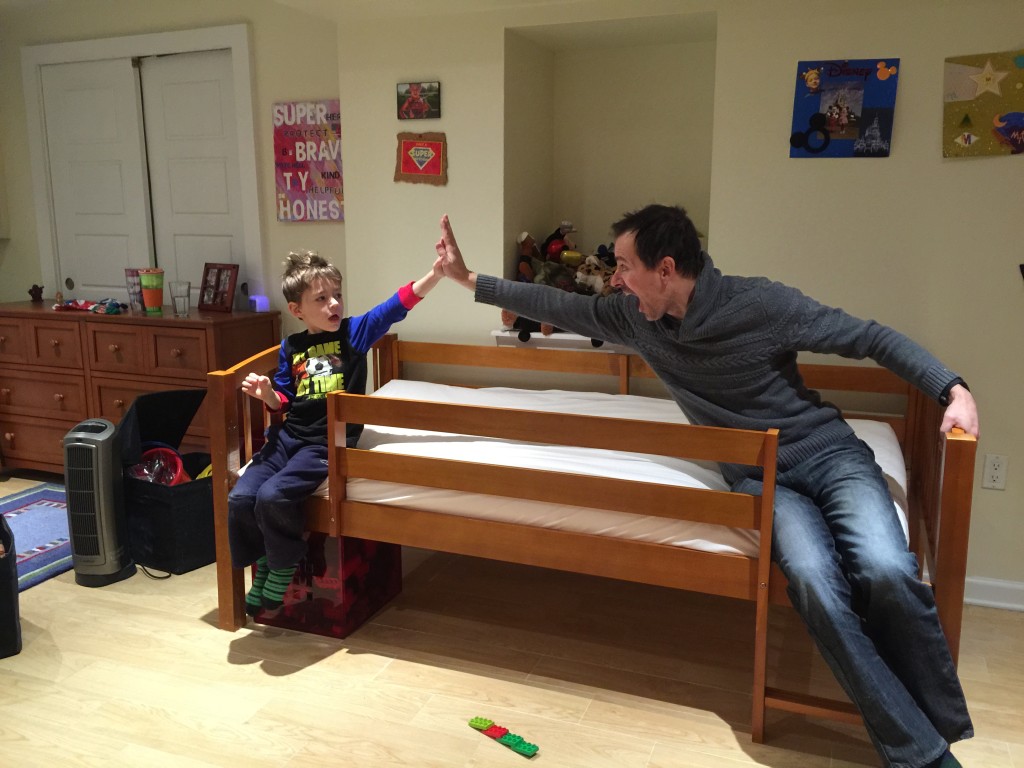
Instead of ordering a new bed, we talked to our son about converting his fire station loft bedroom in to a ground level hockey bedroom and he was thankfully on board. Most of the time, he handles so much of this better than I do, and my fears about him resisting these changes or feeling like his epilepsy were going to ruin his life proved a much easier conversation, especially when we talked to him about the silver linings and making him a part of the process. He will get to help pick his sheets and blankets with his favorite teams. With the slide removed, there is more room to play hockey. And, probably most importantly, lowering the bed is the next step in to him being able to sleep in his own room again.

The lesson is that safety should always come first, and that there are ways to make these transitions less traumatic. It just takes a little creativity and a lot of love, which our family has in spades.

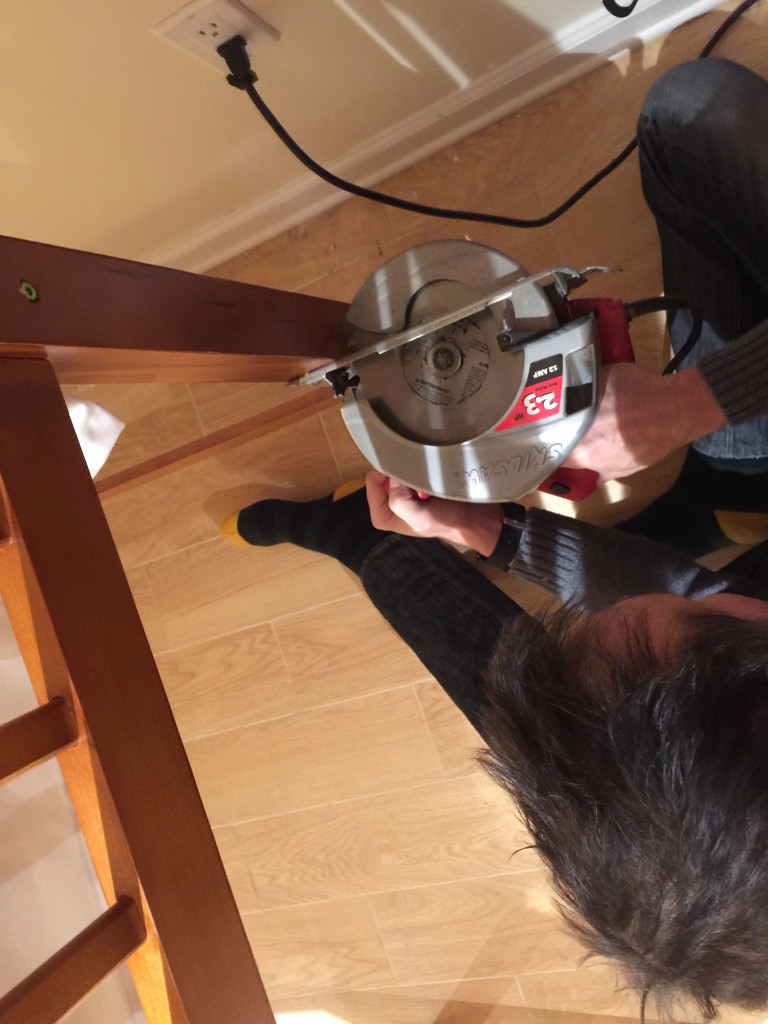
Oh, and by “converting” his bed, I broke out the circular saw…

epilepsy safety environment seizure

…and cut the legs down on his bad to a safer height.
bed epilepsy safety seizure

I wish taking away his seizures were as easy.