I got feedback from the editor a few weeks ago.
The notes were better than I expected. The voice is working. He found no places where it breaks. He called it a strong draft and said he didn’t have a long list of major overhauls. For a first editorial assessment on a memoir I wrote alone over several years, that landed well.
But one note stayed with me.
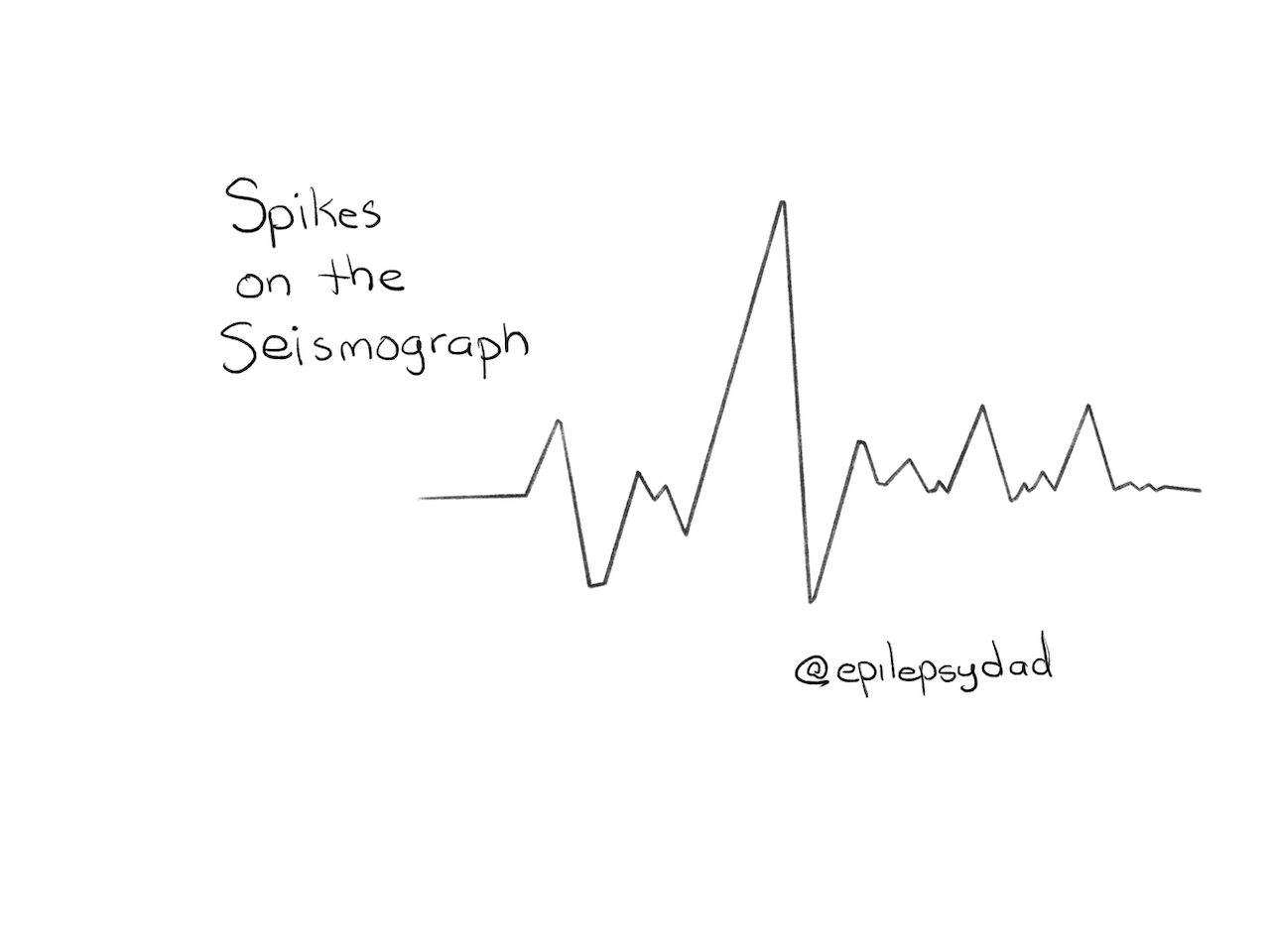
The arc flattens in the back half. The first seventy or eighty pages have urgency and momentum. After the new normal is established, readers lose the driving question. He wanted to feel spikes on the seismograph. Major moments, framed with more intention, so readers stay invested.
I knew exactly what he meant. I’ve been reading spikes on a graph for twelve years. Just not a seismograph.
An EEG measures electrical activity in the brain. When my son has a seizure, it shows up as a spike. The line is moving; something is happening; the brain is firing in a way it shouldn’t. Between seizures, the line settles. Still active, still registering, but different. Quieter in a specific way.
The first few years of our epilepsy journey looked like the first half of the manuscript. Spike after spike.
The first seizure. The first time a doctor said the word SUDEP in a room I was sitting in. The first surgery. Each one arrived before my nervous system knew what it was, before I had any capacity to absorb it. Those years wrote themselves because every day had that quality. New, unknown, the stakes impossible to fully hold.
Then the line steadied.
Not flat. Just steadier. The nexts arrived. More medications. More adjustments. More appointments. More waiting. The weight didn’t disappear, but the shock did. I had built the capacity to carry it without it registering the same way. That’s not numbness. That’s what happens when something hard becomes familiar.
And then, further apart and in a different register, the milestones.
Puberty. Graduating eighth grade. The conversation about driving. The surgeries, each one its own chapter. Friendships. His song landing on Spotify. The books he wrote and sent to his favorite teams.
These weren’t smaller than the firsts. In some ways they were larger. We didn’t know we’d get there, and getting there meant something. But they arrived less frequently and with less shock. Joy registers differently than fear on the page. Relief doesn’t pull a reader forward the way dread does.
What the editor detected was real. But I’ve been thinking about what he was actually measuring.
The back half of the manuscript isn’t missing spikes. It’s that the first half sets a scale that everything after gets measured against. A first seizure and a SUDEP conversation calibrate the instrument a certain way. After that, puberty and a song on Spotify read like aftershocks even when they aren’t. The frequency dropped. The amplitude dropped. But the line was still registering.
The reader doesn’t know that. They come in cold, without my calibration, without twelve years of living inside the story. They feel the first half and adjust to that baseline. When the back half arrives at a different scale, it reads quieter than it was.
That’s the honest explanation. It’s also not enough.
The revision work is figuring out how to close that gap. How to help a reader feel the weight of a milestone that doesn’t arrive with shock attached. How to make the back half spikes register at their actual size rather than in comparison to what came before. The EEG metaphor explains why the problem exists. It doesn’t solve it.
That’s what I’m working on now. The voice is there. The story is there. The shape of the manuscript reflects the shape of the life. But a memoir isn’t just a life. It’s an experience a reader has to be pulled through, and I owe them enough craft to make the back half worth staying for.
The editor was reading a manuscript. What he found, without knowing it, was twelve years of EEG readings. Now I have to figure out how to make the quieter stretches legible to someone who wasn’t in the room.
Leave a Reply