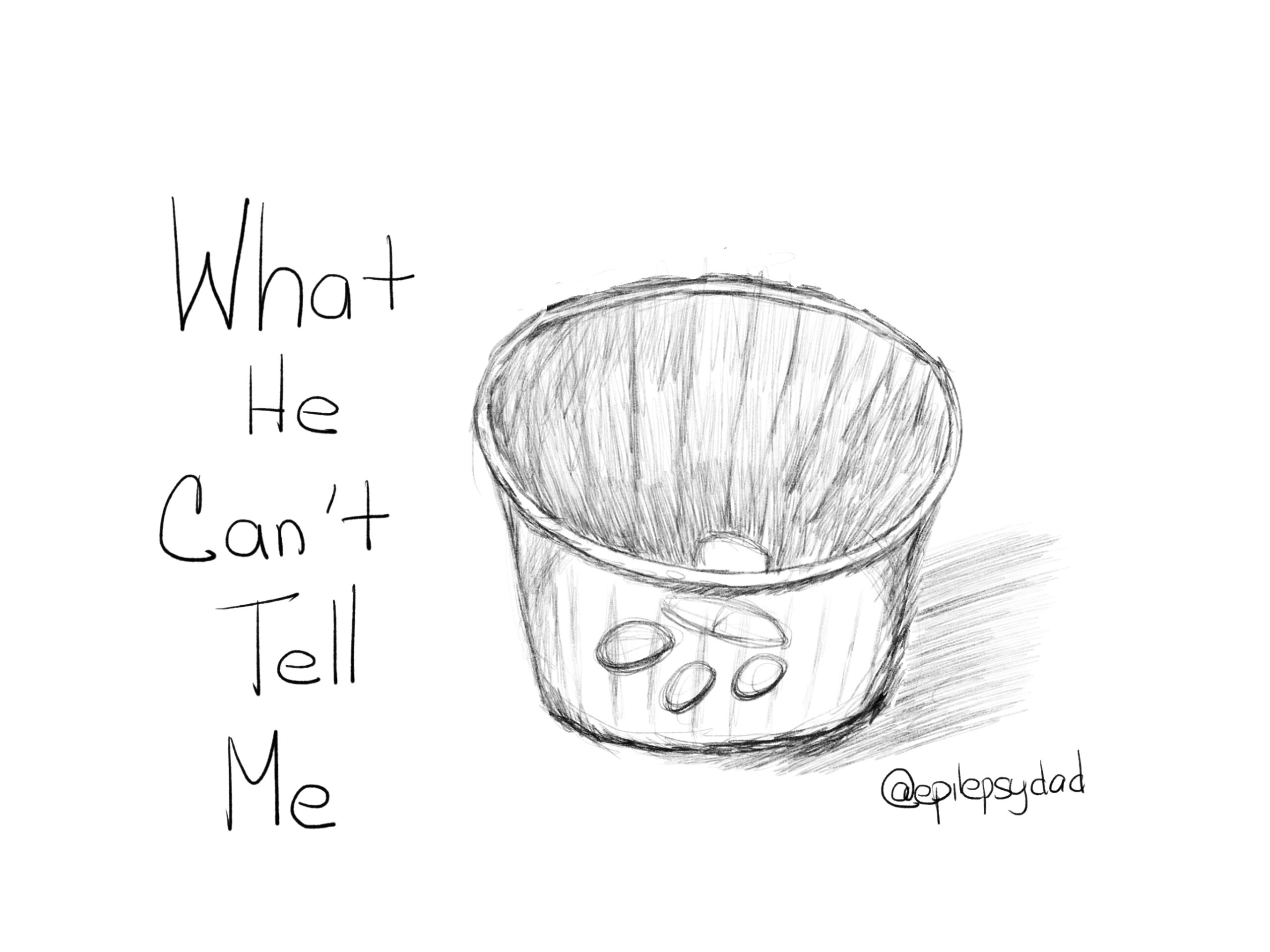
I came across a post on Instagram recently. It said something like: no one talks about the grief of giving medications to a child who can’t tell you how they feel.
I’ve been thinking about that. Not for the first time.
My son was four when he started taking medications for his epilepsy. The seizures had been relentless. He had been in status for a long time. The doctor said take these and we gave them to him and he took them. That was just how it was. That was where we were.
I remember watching him take them and feeling something I didn’t have a word for. Scared, yes. Desperate for something to work. But also something quieter underneath. The awareness that he couldn’t tell me what they felt like. That he was four, and even if he had the language, he didn’t have the experience of different to compare it to.
He just took them. He always just took them.
The nurses in the hospital would always ask if they needed to do anything special to help him take his medications. We’d tell them no. He’d take the cup, put them in his mouth, and chase it with water. However many there were. However large. However often. No complaints, no resistance, no negotiation.
When he was on the ketogenic diet, there was no option to switch to a liquid formulation. Liquids have sugars and carbs. So he took the pills. He always just took the pills.
Twelve years of that.
I’ve thought about what the medications must feel like. The ones that alter brain chemistry, that slow the electrical misfires, that do what they do by changing something fundamental about how the brain works. I imagine something like fog. Like every thought has to push through water before it arrives. Like looking back is hazy because the memory doesn’t hold the way it should.
But here’s the part that’s harder to sit with. I don’t have a before to compare it to. The medications arrived at the same time as the seizures, at the same time as everything else. There’s no version of him I knew before all of this started. I don’t know what he felt like before the medications because by the time I was paying that kind of attention, the medications were already part of him.
He doesn’t know either. He has no reference for different. He can’t tell me the medications make him feel foggy because he doesn’t know what not-foggy feels like. This is just what being him feels like.
We didn’t have a choice. The alternative was worse. You give the medications because not giving them isn’t an option.
What I haven’t made peace with is the not knowing. Twelve years of watching him take a cup of pills and not being able to ask the question that matters. Not because he won’t answer, but because there may not be an answer available to either of us.
The grief isn’t in the giving. It’s in the silence that comes after.
Leave a Reply