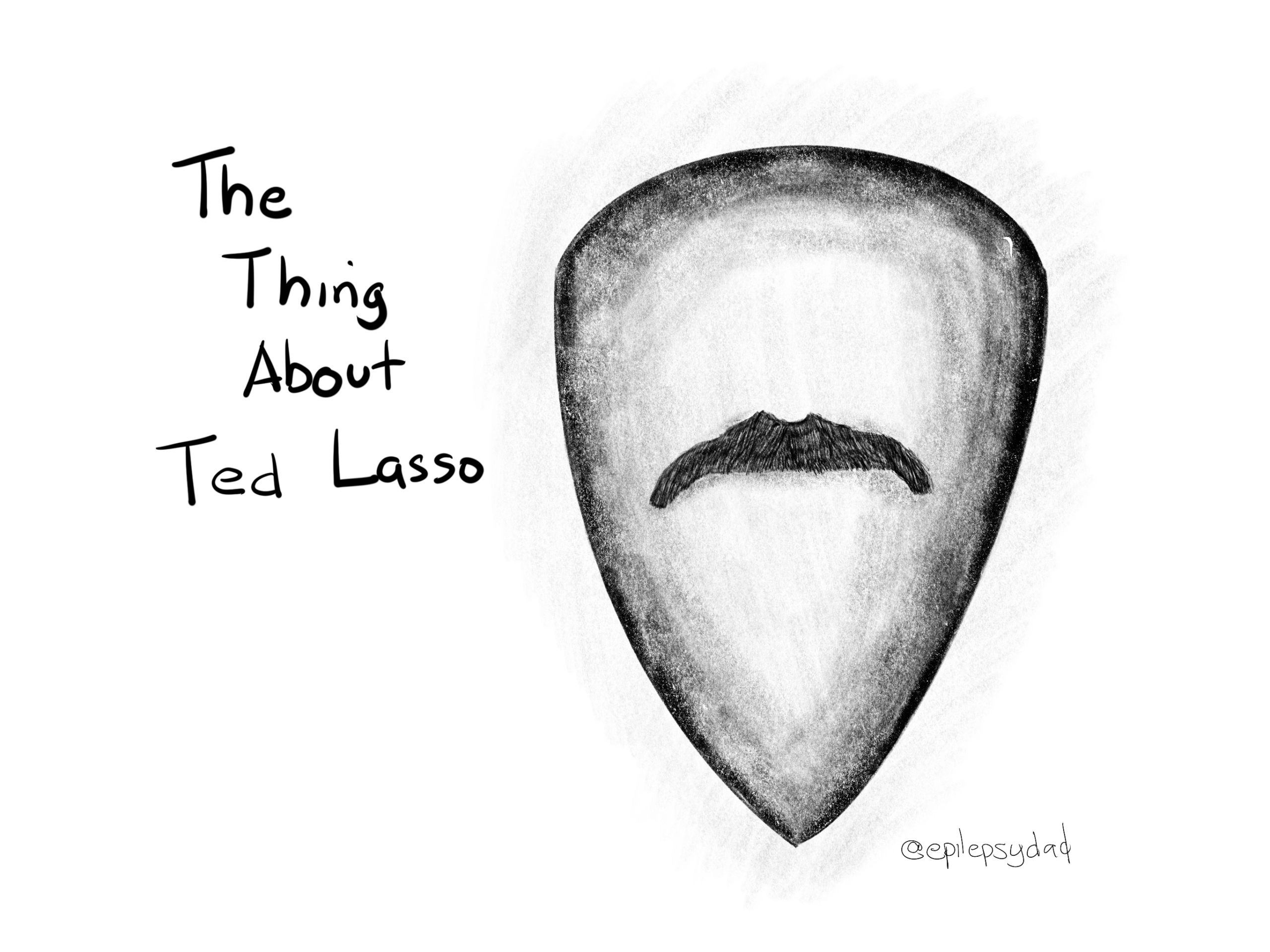
I’ve written about Ted Lasso before. About curiosity, about being curious not judgmental. That’s the part of him that’s easy to take. The warmth, the belief in people, the way he walks into a room and makes everyone feel like they matter.
But lately I’ve been thinking about the part that’s harder to see.
We’re drawn to Ted because he’s what we want more of, or the opposite of what we want less of. We watch him and we feel something. Hope, maybe, or recognition, or the particular ache of wanting to be that generous with the world and not quite getting there. He makes for great television because he makes goodness look possible. We react to him because we’re good people and we want to believe the world has more of that in it.
But the thing about Ted is that his optimism isn’t who he is.
His father died by suicide when Ted was sixteen. Ted found the body. He spent years angry at him for quitting on his family. After that he made himself a rule: never let anyone get by without knowing they might be hurting inside. His whole thing, the positivity, the belief in everyone, the relentless warmth, is armor he built after the worst day of his life. He didn’t lose his marriage because he wasn’t good enough. He lost it because the armor kept everyone at a safe distance, including his wife. You can’t build something real around a performance of okayness, however beautiful it is.
I recognize the armor. Not because I built mine the same way, from the same kind of loss, but because I’ve been doing my own version of it for most of my life. Mine looks like humor. Like acts of service. If I can care for other people, do things for other people, be useful to other people, then I must be okay. Mine looks like handling everything, doing more, being the one who absorbs it so nobody else has to. Martyrdom dressed up as love.
I didn’t know what it was for a long time. It didn’t feel like armor. It felt like just being me, just how I moved through the world. It took a lot of therapy and a lot of time to see it for what it was. And once I saw it I started recognizing it in people I’ve loved. The same performance, different costume. The same distance it creates, the same thing it costs.
Season four is out. I haven’t watched it yet. But I’ve been thinking about what the show does to us before I get there. We see Ted and we want to be that. The warmth, the optimism, the belief. And we miss what’s underneath it because the performance is so complete and so genuinely good that it doesn’t look like a performance at all.
That’s the most convincing kind of armor. The kind that looks like a personality.
I’m still wearing some of mine. I know that. Therapy has made it visible but visible isn’t the same as gone. What’s different now is that I can see it when it goes up. I can ask myself what it’s protecting. Sometimes the answer is something worth protecting. Sometimes it’s just a habit from a long time ago that doesn’t know the threat has passed.
Ted made his rule at sixteen, after the worst day of his life, and he’s been keeping it ever since. It made him someone extraordinary. It also kept people at a distance he probably didn’t mean to keep.
Sometimes the most important thing he shows us is what it costs to be that okay all the time.
Leave a Reply