Tag: future

  • A Different Life

    A Different Life

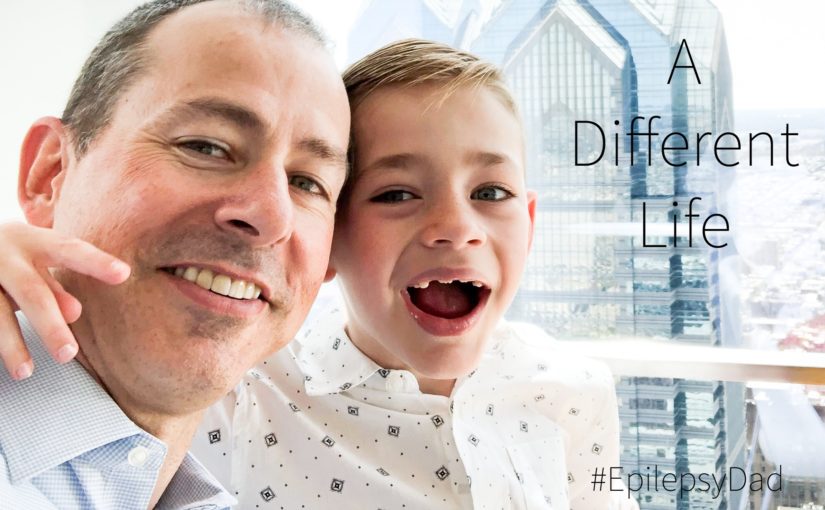
    There have been times when I have wondered how my family’s life would be different if my son didn’t have epilepsy. There have been times when I have wondered what it would be like even if his seizures were under control, or if he didn’t have the side effects that he does from his medications. But a television show forced me to confront a much tougher question.

    I’m a big fan of the show Black Mirror, and I found a similar show on Amazon Prime called Electric Dreams, based on short stories from Phillip K. Dick. In an episode called The Commuter, the protagonist is a father who has a son prone to violent outbursts. As the story develops, the father is offered the chance for a different life, an easier life, in which his son was never born.
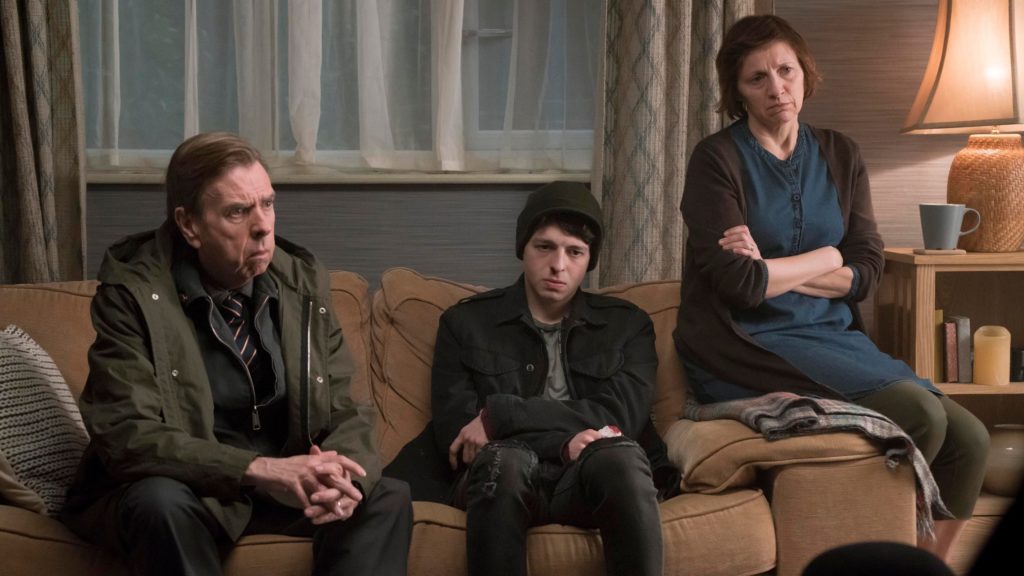
    electric dreams the commuter parenting
    The Commuter, Philip K. Dick’s Electric Dreams, Amazon

    As I watched the episode, I thought about turning it off. The story hit too close to home, because I’ve also thought about what my son’s future will be like if we can’t get his seizures under control. I’ve wondered what his future will be like if his emotional and behavioral issues weren’t able to be controlled. And I was ashamed that, when things were at their worst, I also wondered where my life would be if my son wasn’t born.

    Even writing it down, I feel sick. I’m looking at those words and I’m not sure where to go with them. I want to spin it to be about my son because this wasn’t the life that I dreamed for him. But, while that is part of it, there is also a selfish component. When we were having to hold him to control his angry, dangerous outbursts, my thoughts went to darker places. I thought about having to do that for the rest of my life. I thought about someday having to put him in an institution or visit him in jail. I dreaded the phone call where someone on the other end tells me something that my son has done that we can’t excuse or take back. But those thoughts weren’t about what his life would look like. They were about what my life would look like.

    Our life is hard sometimes. It’s also amazing, and we’re very fortunate in so many ways. But it’s also impossibly hard. It’s hard to watch my son struggle every day. It’s hard to feel like everything is always out of our control. It’s hard to keep having conversations about what to try next because everything we’ve already tried didn’t work. It’s hard to hold on to hope for a future that is different than what is in front of us. It’s hard to not let fear take over and seek out alternative paths.

    But having the thought isn’t the same as wanting it to be true. If I were given the choice, I would choose this life every time. I would choose my son every time, because being his father is one of the best things about my life. Being his father has made me a better person and a better man. Being his father has opened me up in ways where I can have these impossible thoughts and come out the other side knowing that I am where I am supposed to be. And every day, when I see his face, I also know that I am where I want to be.
  • It Can Always Get Worse

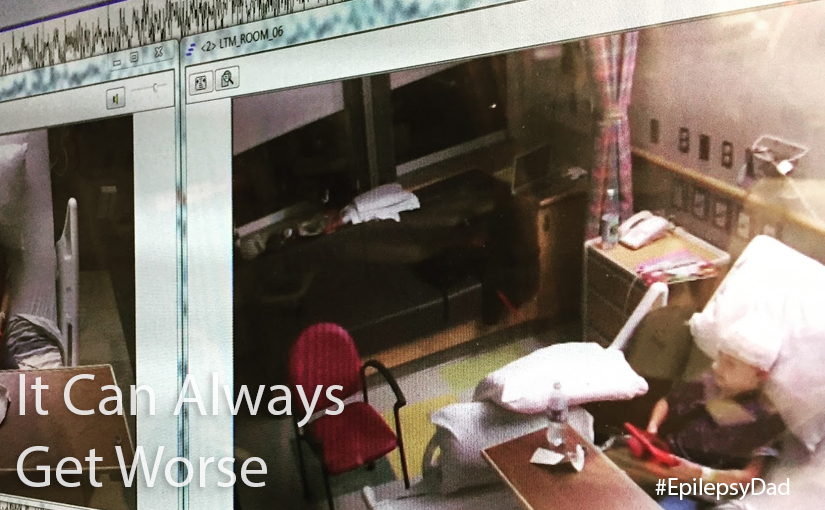
    It Can Always Get Worse

    We finally got a second opinion. Not because we didn’t think the doctors at our hospital were doing everything they could. But because that’s what responsible parents do.

    I wasn’t expecting a miracle. I wasn’t expecting someone to tell us we missed something that would cure my son’s epilepsy. We were looking for another perspective or treatment that we missed. We hoped that someone out there had another case like ours and could provide some insight. We wanted a little more hope. We wanted a little more of something to hold on to.

    The hospital sent the report to my wife. That night, she tried to tell me what it said, but I didn’t let it in. I nodded as she spoke the words but I put my guard up and those words bounced off me and fell to the floor. For the rest of the night, I stepped over them as I distracted myself with other things until it was time to go to bed. But I didn’t sleep.

    The next day, I started to feel the effects of the night before. Not only the report but how I reacted. How I tried to ignore it to make it less real. How not facing it doesn’t make it go away. And how I left my wife holding that emotional weight by herself.

    When I got home from work, I hugged her and apologized for leaving her stranded. I asked her to send me the report, and I read the pages of detailed notes that the doctor had put together. It was a thorough summary of the last three years of our lives. It included confirmation that our doctors are doing the right things and that there wasn’t anything we missed. Then, towards the end, I saw what I didn’t want to see the night before.

    What should we expect in the short and long term? Is there any other information you feel would be helpful for us to know?

    I do worry that his clinical picture has raised suspicion for a myoclonic epilepsy that may be progressive, in which case, continued difficulty in treatment and learning decline can be seen.

    It wasn’t the first time we heard that. We’re three years in without seizure freedom, and it’s feeling like a more elusive goal every day. Our doctors alluded to the possibility but kept us focused on stabilizing what we can now. The near-term goals were a welcome distraction from the long-term possibilities. But I also don’t think about it getting worse because I can’t think of anything worse than what is happening to him now.

    That night I laid next to my son as I put him to bed. I told him that I loved him. That I would always be there. That I was sorry that his life was so hard. I was trying to communicate my feelings to him. But he’s eight and doesn’t understand the words we use to express those very big feelings.

    Somedays, neither do I.

    But I feel the need to get them out and hope that he will someday be able to understand. I worry that there will be a window between now and if things get worse where he is able to grasp the meaning in my words. I don’t want to miss that window. Even if it only cracks a little, I want to get something through. Because if things do get worse, I need to know that he will have something to hold on to.

  • Saying Goodbye To The Past

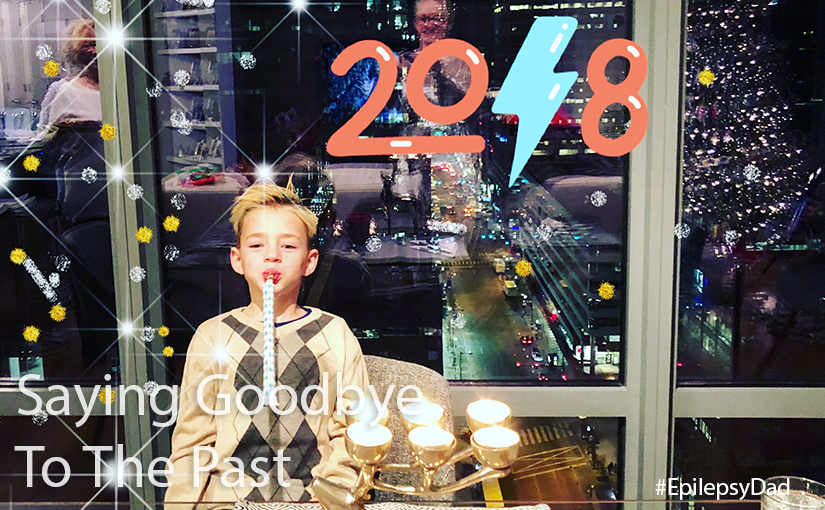
    Saying Goodbye To The Past

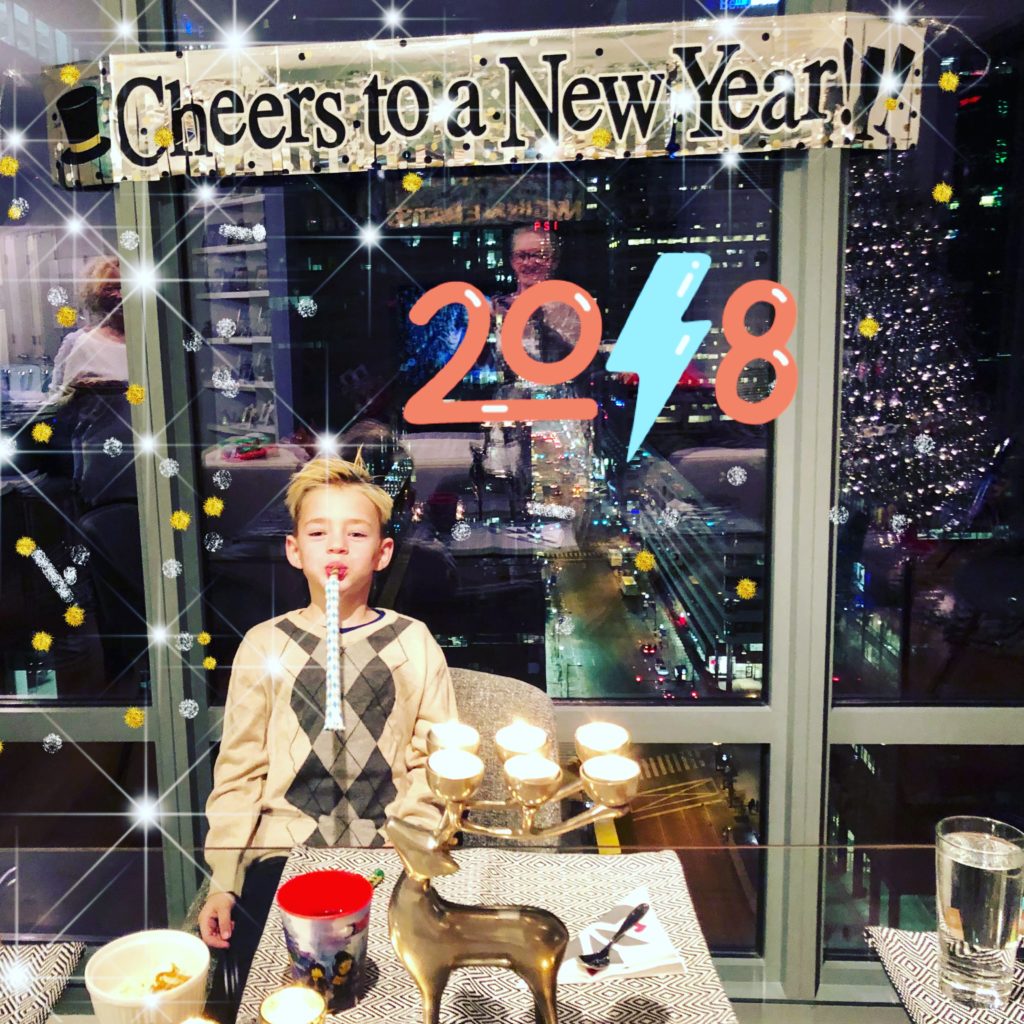
    I sat down to write a post reflecting on 2017 but couldn’t decide where to begin. To say that 2017 was a big year is an understatement. Not just globally or politically, but personally, as well.

    Even narrowing my focus to our lives, I’m not sure where to start. Our lives look completely different today than they did a year ago. We might as well be two different families, tied together by the common thread of a child and a family living with epilepsy.

    We sold our first house back in Colorado and used the proceeds to buy and move into a place here in Philadelphia. Our Colorado house was the one we brought our son home to and it is where we made all our first memories with him. We were able to tour it one last time before we signed the paperwork, which provided some closure. But it was not without the pains of recognition of a life that might have been.

    Around the same time, I started a new job. I’m still in the same company, but doing something completely different. In some ways, I’m going back to my roots by taking on a brand new challenge. It feels good to be excited to go to work again, and to feel like what I’m doing is making a difference. For a while, it felt my like half of my life was my job and half was my family, and both were spinning out of control. Things are only now starting to level off, but for the first time in a long time, I can take a breath.

    We lost both our primary neurologist and our nanny. Our neurologist was there from the beginning. She knew my son and was our lighthouse during the stormier times. When she decided to continue her studies in epilepsy, we selfishly hoped she could do it at our hospital. But her path took her elsewhere. We miss her, but she left us in good hands.

    Our nanny came into our lives when we needed her most. When my son was at his worst medically and behaviorally, she jumped in and rescued us. When she left, we naïvely thought we were in a stable enough place to go it alone. But the seizures and the side effects didn’t care what we thought, and they came back with old friends. The behavior issues we thought we had overcome were back and, before we knew it, they overwhelmed us. We finally asked for help, and we’re hopeful that we were blessed again with our new nanny.

    This year, like every year since his diagnosis, we’ve adjusted my son’s medications. We stopped CBD and another medication because they weren’t working for him and started a new one. We’re ending the year with fewer seizures but more side effects and trying to strike a balance. He’s still on the ketogenic diet but at a lower ratio, and I’m hoping by this time next year he will be off it completely.

    My son also started second grade, which is a testament to his resilience. But it has also shone a light on his limitations. Academically and socially, school is challenging for him. We’re continuing to adjust his education plan and our expectations, but it will be a long, uphill journey.

    There isn’t a moment from last year that wasn’t touched by epilepsy. Every day we face the reality that our son has seizures, and needs medication, and faces challenges. But that doesn’t mean it has to define our year or our lives.

    Somewhere in the middle of this, we went on a family vacation to Hawaii. It was an opportunity to get away from everything. The seizures followed us, but the experiences we had made them feel like a minor annoyance instead of the gorilla that we deal with daily. We visited family in Florida and Colorado. I ran a half-marathon, and we did an Inflatable 5K and became Spartans as a family.

    In reflecting on last year, I want to say goodbye to it. I want to learn the lessons that it taught me, but I want to focus on the year ahead. It’s important to know where you have been to know where you are going. To repeat the things that brought you joy. To avoid the things that took away from your existence. To see the things you have survived so that you know you can survive them again. But it’s also important to be present in this moment and to look forward to the next.

    I have great respect for the past. If you don’t know where you’ve come from, you don’t know where you’re going. I have respect for the past, but I’m a person of the moment. I’m here, and I do my best to be completely centered at the place I’m at, then I go forward to the next place. ~Maya Angelou

    I wish you a very happy new year.

    epilepsy dad feature saying goodbye to past

  • Early Mornings And Coffee Spoons

    Early Mornings And Coffee Spoons

    It’s still dark outside, but I’m at my usual station, too early in the morning, writing. My son had a short seizure that woke me up. My wheels started turning and I couldn’t turn them off. The upside of him sleeping in our bed is that I don’t have to lose sleep wondering if the monitor is working. The downside is that his seizures are right in front of me, and its impossible to go back to sleep once they are over.

    At some point, he isn’t going to be able to sleep with us. He’ll be too old and too big to fit in our bed. If there were ever a reason to wish him to remain seven forever, that might be near the top of my list. Coming in a close second is the fear that his condition is going to get worse as he gets older. Our doctor is concerned about what happens at puberty. It’s another stage of brain development where seizures can change or be more severe. I thought it was impossible for things to get worse. Apparently, they can.

    Today, he’s only had epilepsy for a fraction of his existence, but by then, he’ll have had epilepsy for most of his life. We’ll long have lost count of seizures, and meds, and have long forgotten about the time before this began. It will be all we know and all he can remember.

    This is what happens to my unrested brain so early in the morning. It gets pulled into the stream and dragged wherever the current takes it, and there is no safe shore for my thoughts to land. The present is filled with seizures, medicine, side effects, and, presently, a lack of sleep. The future has too much uncertainty, doubt, and fear. The past is too painful. Remembering a time without epilepsy is getting harder and, if I try, it makes me sad. What we saw for our lives back then was not this life.

    My coffee sitting on the window sill does little to pull my unrested brain back to happier thoughts. But as I stare out onto the dark street, I can at least resist the urge to measure our lives with coffee spoons, in careful doses or as an observer. There is so much left to our journey, so much active living to do and so much of it is unknown that dwelling in any one place is fruitless toil.

    Instead of focusing on a when, I try to focus on my what. My what is my family that is together and, in many ways, stronger than ever. Most days are hard, but there is always something to be grateful for. We have a nightly routine where we call out something that we’re grateful for from our day. Even if we skip the rest of our routine, that one gets done. Because those things for which I am grateful are worth measuring, and I want to focus on adding as many of them as I can to this life.

    On that note, I’m going to sneak back into bed and lay next to my family. I’m going to do everything that I can to settle my mind and be present in that feeling of being together.

    And, maybe, I’ll actually sleep.

  • Planning For An Uncertain Future

    Planning For An Uncertain Future

    I slid my finger up the length of the envelope, tearing it open along the spine. Pushing the sides apart with my thumb and finger, I reached in and pulled out the folded piece of paper. I lifted the top section above the crease to reveal a bold, red logo and the words “To the parents of…” introducing the rest of the text.

    The form letter listed one of my son’s prescriptions at the top and used phrases like “convenience and cost-saving” and “long-term prescriptions”. After I finished reading the letter, my eyes retraced their path and scanned the paper, searching for the words that my mind refused to process the first time around: “long-term”.

    “Long-term.” I raised my head as I lowered the letter down to my side. “Long-term.”  The words echoed in my head. “Long-term.” My mind ran through inflated synonyms. Never-ending. Without end. Constant. Permanent. Forever. My son would be on these medicines for the rest of his life. The letter became impossibly heavy and pulled itself from my fingers. It landed on the floor without a sound.

    When my son was two, long before his first seizure, we set up an educational savings account. It’s one of those investment accounts that provides interest-free growth and tax breaks along the way, but the money must be used for college. We’ve been funding the account ever since, even after my son started struggling with memory recall and attention. He still does and, if things get worse or if his condition changes, he may not go to college. I struggle to acknowledge that possibility. I should look at other options that hope for the best but aren’t penalized if things don’t work out, but I feel like I have given into his condition. That his epilepsy would have somehow won and stolen my son’s future.

    Looming larger over me is the idea of what would happen to my son if my wife and I passed away or were unable to take care of him. Our parents are at an age where caring for a child isn’t an option. Before he had epilepsy, we had asked friends in Colorado to care for him. But now, I look at how complicated and hard life can be dealing with epilepsy. I imagine the commitment to care for him as a huge burden that I can’t bring myself to ask anyone to bear. I need to write a letter to our friends and ask if they would be willing to care for a beautiful, amazing child that has epilepsy but I can’t. I can’t risk the feeling of rejection, of rejecting my son, if they say “no”. And I can’t face a world where that’s all I hear and where my I feel like I will be leaving my son alone.

    Until I do, we’re sitting in this terrible space where nothing is decided and where everything is at risk. Instead of being brave, of doing what needs to be done, I have been frozen. Being responsible feels like an impossible task when it involves admitting to the cruel condition that my son may live with forever. I’m frustrated not only by my inaction but because I know the worst outcome would be for someone else to make the decision for me. It makes me feel like a terrible parent. It makes me feel like I am letting my son down.

    It’s hard to figure out how much hope to have, how much reality to let in, or how much to commit to the possibility that there is an equal chance that things get worse as things getting better. It’s not that I thought my son would be cured. It’s not that I didn’t think that he would be on these medicines for the rest of his life. But I also didn’t actively think that he wouldn’t be cured or that he would have to stay on his medicines for anything longer than today. I didn’t open my mind to either possibility. Instead, I kept my head down and tried to live in the present without looking too far into an uncertain future. Reading the letter reminded me that my son’s epilepsy and his medications will exist beyond today, whether I wanted to face the idea or not.

    The reality is that these types of things will continue to weigh me down and keep me feeling stuck until I take action to remedy them. The best thing I can do is to acknowledge that the future is uncertain and to take control of the choices in front of me.

    Maybe facing the situation will help. Maybe writing about it will spur me to action. Maybe the new year will renew my strength that last year depleted.

    I picked the letter off the floor and put it on the desk in the pile of things that I need to do. It’s time to be brave. I pulled out the chair and sat down in front of the computer and started drafting a letter of my own.

    “Dear friends,” it began.