Tag: fatherhood

  • What It Means To Be An Epilepsy Dad

    This post is part of the Epilepsy Blog Relay™. Follow along all month!

    Father’s Day was last Sunday.

    I woke up early, like I do on most Sundays, and went for a run. When I returned, I was greeted to my favorite sound in the world when my son said “Hi, Daddy. Happy Father’s Day!” as he handed me a card that he made himself and a big hug.

    Being a father is the most amazing experience of my life. It’s also the hardest, most fun, most frustrating, most rewarding, and scariest experiences of my life. I feel the pressure to give my son a very different childhood than I had and, most days, I feel ill-equipped to do so, but I am trying.

    Adding to the challenge of just being a good father is being the father to a child with special needs. Even if there were a manual called How To Be a Good Dad, it’s the equivalent to trying to read that book in the dark. Every intention, every plan, every expectation went out the window and I had to start again looking through a very different lens.

    This July, it will have been five years since my son’s first seizure. It will have been five years since I started looking at the world through that different lens. And it will have been five years of living a very different life than I thought I would.

    I’m not just a father. I’m an epilepsy dad.

    When I became an epilepsy dad, I started this blog so that I could share my experiences navigating this new world. Five years in, here are a few of the things I’ve learned:

    I may never know why this happened. I’m an engineer, a problem solver. I’m used to finding the reason why something is broken so that I can fix it. After countless scans and genetic testing, there is no identifiable reason why my son has seizures. But not knowing why and living in denial doesn’t change the fact that he has epilepsy.

    It doesn’t matter why this happened. There is nothing that I could have done differently. Even if there was, there is no way to go back and change it. Looking backward and wondering why takes me away from the present, from my son, and from our future.

    It may never go away. My son has refractory epilepsy, which means that even though we’ve tried a lot of different medications, he still has seizures. He is on the ketogenic diet and he has a VNS and he still has seizures. It is the most helpless feeling to know that there is nothing that I can do to fix this for him and that his seizures may never go away.

    Plans change. I think as parents we all have grand plans for our children when they are born. But as our kids get older and discover what they want, those plans change. This is no different, even though I want to be mad at epilepsy and blame it for the changes. My son was always going to find his own path and, in some way, epilepsy will influence his course. But that is not a reason to give up on the future. It’s a reason to accept that plans change to support him on his journey of discovery, which is what a good parent should do, anyway.

    There is a lot to be grateful for. Five years ago, we almost lost our son when the doctors couldn’t get his seizures under control. The pressure and fear and anger that I have felt in the last five years placed a strain on my relationships and on my marriage. But today, my son plays baseball and makes me the most amazing cards on Father’s Day. My wife and I are closer now than we have been in a long time. The situation hasn’t changed, but we have and I am grateful every day that we are together.

    You can’t be an epilepsy dad without being a dad. At the end of the day, I’m still his dad. We still have fun, and laugh, and joke, and have pillow fights right before trying to take a nap. I still need to teach him good values and show him how to be a good person. It’s easy to get wrapped up in the worry and the diagnosis and the future but that shouldn’t take away from being a dad first. Because, especially with all the complexity that life has thrown at us, that is what he needs from me the most.

    NEXT UP: Be sure to check out the next post by Lisa Hairston at livingwellwithepilepsy.com for more on epilepsy awareness. You can check out any of the Epilepsy Blog Relay posts you may have missed.
  • What Can’t Be Undone

    What Can’t Be Undone

    The suggestion to implant a VNS was made by our neurologist years ago. But there were still options to try so we held off. Unfortunately, CBD was not our miracle and other medications didn’t help. The seizures kept coming and we ran out of things to try.

    When our neurologist brought up the VNS again, I felt the overwhelming weight of the decision squeezing the air out of me. If it even has the potential to improve his quality of life, she asked, shouldn’t we try it? Of course, she was right, but that knowledge didn’t help me breathe.

    Neither did having an amazing surgeon in one of the best children’s hospitals in the country. Neither did the love and support of friends who would try to reassure me about how safe surgery and anesthesia are. Neither did my wife who held everything together when I couldn’t.

    It wasn’t the mechanics of the surgery that occupied my thoughts. It was the idea of cutting into my little boy. It was the permanence of it all. It was the thing that can’t be undone.

    We can wean off a medication that doesn’t work. We can stop the ketogenic diet. If years from now his seizures miraculously go away, we could stop everything and pretend that all the hard things about his childhood didn’t happen. There would be no signs, no trace. I could live in denial about how traumatized I was by this experience.

    But the surgery forced me to confront the fact that these things aren’t going away. That the magical, unburdened life I wanted for my son is not going to materialize. That I can’t fix this or make it go away. That this is real, and that the future for him will include challenges brought on by his condition. That I’ve somehow failed him.

    From the time the decision was made to the time they wheeled him away hopped up on “giggle juice”, I pushed my feelings down. I was practical but emotionless. I showed up for the appointments and answered the questions as he was prepped for surgery, but I wasn’t really there. I couldn’t be. I had to push it all down just to appear strong enough to make it through.

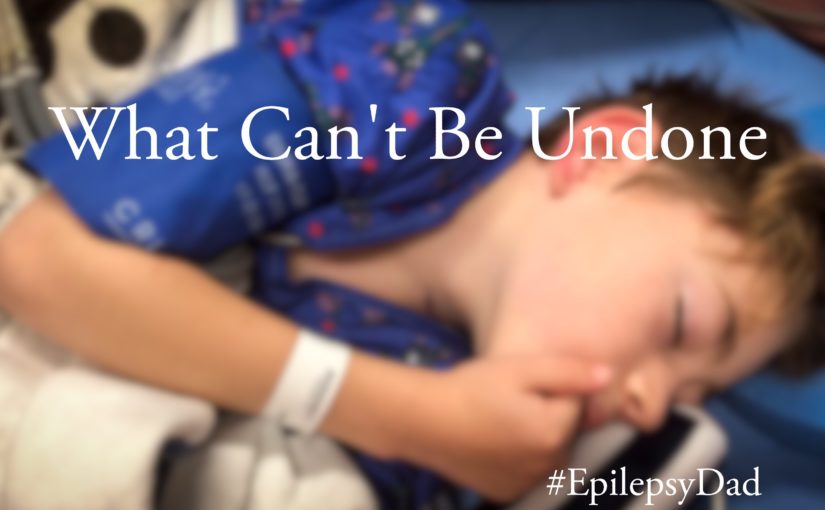
    Even after his surgery was over, I had a hard time being present and acknowledging what had happened. I had a hard time looking at his scars. They were bigger than I thought they would be. Instead of small ones hidden by clothes, they’re long and visible. I looked away. I caught a glimpse of the device itself, raised under the skin and I looked away. It’s more than just being squeamish, it’s a spotlight of reality shining into my eyes and blinding me.

    I worry that he’ll think I can’t look at him. I worry that he’ll feel like he did something wrong or that there is something wrong with him that is causing this reaction from me. I’m worried that I can’t get over my own hang-ups and be there for him when he needs me.

    I tried to explain to him the feelings I was having but he didn’t understand. I didn’t, either, until I started to unpack them. But I still don’t know what to do with them. I want my acceptance to turn the spotlight that was blinding me into a beacon that brings me to him. But instead, it feels like the light has turned off. It’s not repelling me but it’s also not drawing me in. Instead, I’m left in the darkness trying to find my way.

    But I can hear his voice. And I hear my wife’s voice. They’re calling me. And so I’m pushing through the blackness, the emptiness, to find my way back to them. It’s scary and impossibly hard. But I can hear them and they need me. I can hear them, and I don’t feel alone.

    I’m on my way.

  • Questions Without Answers

    Questions Without Answers

    Like many fathers, when my son was born, I had a list of things that I wanted to teach him. I wanted to be the sage, the guru that imparted to him wisdom drawn from my life experiences. I looked forward to the opportunity of leaving him feeling like his old man was a fountain of knowledge for all things. I longed for the bond that the transfer of knowledge would create between us.

    How do I tie my shoes?

    How do I throw a ball?

    How do I tell a joke?

    How do I ride a bike?

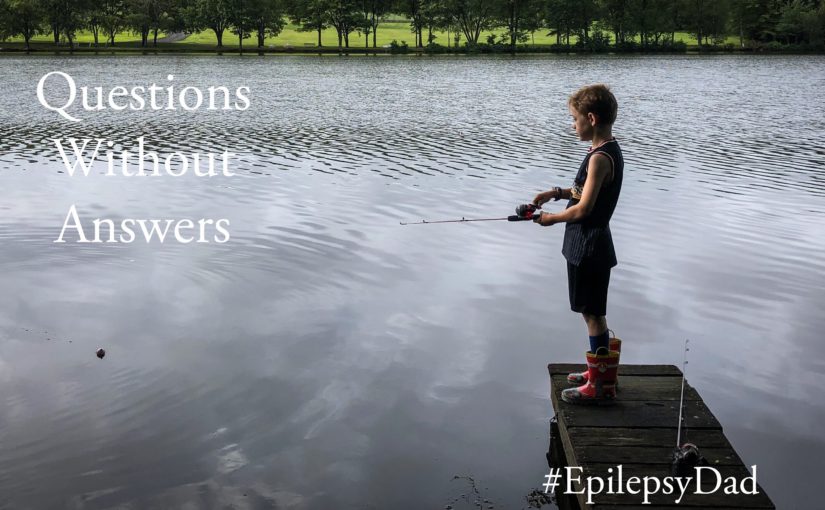
    How do I catch a fish?

    How do I program a computer?

    How do I ask a girl out on a date?

    How do I drive a car?

    But after he was diagnosed with epilepsy, I began to fear the questions that I knew he would eventually ask. I went from wanting to be the person he went to for answers to the person afraid to disappoint him when he asked questions for which I didn’t have an answer.

    Why is this happening?

    Will it ever go away?

    How do I live with epilepsy?

    These questions may be the biggest questions that he will ever ask because they are the biggest questions that I have ever asked. I’m also on a search for answers, but I don’t think I’ll have them before he poses the questions to me because not every question has an answer. We may never know why this is happening to him, but it is clear that this is our path. We may never know if it will go away, but we know that is here now. And we may not know how to live with epilepsy down the road, but we are doing the best we can today.

    Rarely does life go according to plan, but we are facing a life that can’t be planned. How my son is each morning, depending on seizures and side effects, determines what we can expect from the day ahead. It’s impossible to predict anything in the future when you can’t predict the next day.

    In the beginning, this uncertainty shut us down. I’m not sure it could have gone differently when my son was first diagnosed with epilepsy because we were fighting for his life. But even after he was stable, we were consumed with finding answers. After four years, it has become clear that there aren’t going to be any. But instead of letting that pull us back into hopelessness, we’re trying to allow it fill us with gratitude for what we do have. Because we have today, and for a time we didn’t think that we would even have that.

    I went into fatherhood expecting to show my son the things he needed to know. But maybe the most important thing I can show him is how to live without having all the answers.

  • Happy Anniversary, Epilepsy

    Happy Anniversary, Epilepsy

    Four years ago this week, my son had his first seizure.

    Four years.

    Almost half his life.

    He doesn’t remember the time before. Most days, neither do I. Our memories are of our new life that started the night his body contorted and stiffened on the floor of the arcade. It was the night that time stopped as we prayed that our son would come back to us and when I held his frozen body in a thunderstorm waiting for the ambulance to arrive.

    Even though his second seizure wouldn’t be for nearly two months, the fear and uncertainty that the first one had caused lingered. It turned out that time was the quiet before the storm…that feeling you get when the clouds darken and the air changes and you know the storm is close. The air filled with the same electricity that would soon wreak havoc on my son’s developing brain.

    And then it happened. The second seizure burst free just as my son sat in his seat onboard an airplane. Another thirty minutes and the plane would have been in the air but, thankfully, the crew got him safely off the plane and on his way to the children’s hospital. Within a few months, his seizures would be out of control and we’d be back in the same hospital learning firsthand what status epilepticus was.

    It would take nearly two years before my son was stable. But even then, we were still adjusting medication, dealing with side effects and behavioral issues, and occasionally using his rescue medication. He was stable, but not living the life we had planned. But by then we were beginning to realize that we needed a new plan.

    Four years in, we’re still adjusting that plan. There hasn’t been a day that has not been affected by epilepsy. He’s had countless seizures. He’s been on and off medications and suffered endless side effects. He’s had a barrage of blood draws, EEGs, and other testing and had a myriad of therapies trying to restore what epilepsy had taken away. He’s been isolated from his peers and falling more behind in a world that doesn’t wait for people who can’t keep up, or are different, or need help.

    After four years, I thought we’d be further along. I hoped he would outgrow his seizures or we’d at least have them under control. I thought we would have figured it all out. I thought we’d be able to get back to normal. But, instead, we had to change our definition of “normal” and learn how to live life with different expectations.

    In these four years, I’ve learned a lot of other things, too. I think I am a better man, husband, and father than I was before this started. And we’ve had so many wonderful experiences and met some amazing people on our journey. But I can’t bring myself to be grateful. I can’t allow myself to acknowledge the things that are good because I don’t want to reward the monster that continues to attack my son. Our life is what it is in spite of epilepsy, not because of it.

    Four years is a long time. But I know we have many years to go. We didn’t ask for this, and we don’t want it. But it looks like we’re going to be together for a while.

    So, Happy Anniversary, Epilepsy.

    I didn’t get you anything.

    Because I hate you.

  • In The Moment

    In The Moment

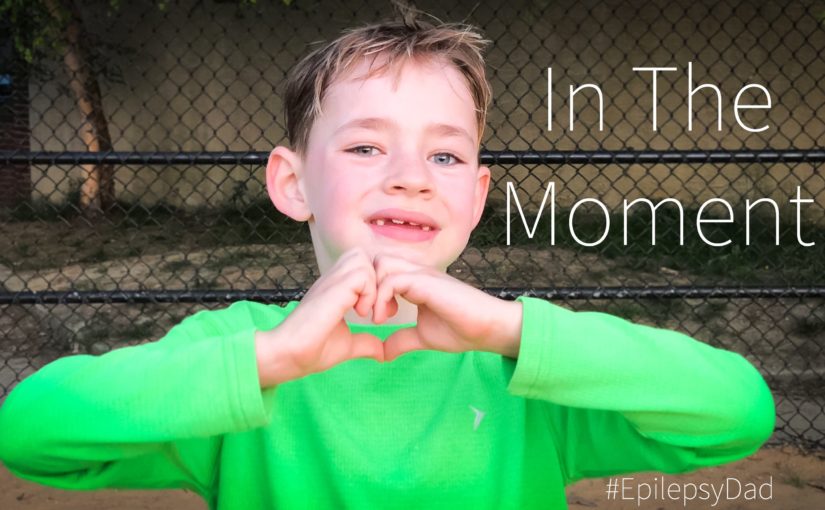
    I remember a few months ago sitting on the floor holding my son who was in the middle of an angry tantrum. I don’t recall what set it off but he had clearly lost control. His eyes were glazed over and he was saying hurtful, mean things while trying to hit me. It was an all too familiar Jekyll and Hyde moment when my son became someone else.

    I sat there, holding him, and tried to not get hurt or become angry by what he was saying and doing. I remember thinking “This is our life now.” Things were never going to change. Things were never going to get better. For the rest of my life, I would need to be there to shield the world from my son.

    Even when this episode passed, I felt like I would only be waiting for the next one. And there was a next one. And another after that. But with each of those episodes, I began to notice the moments in between. Those moments when we weren’t on high alert. The moments when we might have looked like a normal family. I tried to let myself believe those moments would become our new normal, but that didn’t happen, either.

    My mistake was treating these highs and lows and my feelings and reactions to them as a permanent thing. When I was sitting on the floor holding my son, those fears and emotions were very real and very consuming. They were all I could see. When we were happy and hopeful, I held on to those feelings tightly. They were all I wanted to see. But in both cases, the moments passed. Those feelings fell into the stream of time and it carried them away.

    The current of the stream is strong and unbiased. It takes away the good and the bad. When it takes away the good, it’s always faster than I want it to. Those precious moments sometimes disappear before I can appreciate them. When it takes away the bad, it’s never fast enough. The pain and heartache seem to consume me and linger longer than I think I can endure.

    I’ve tried to control the stream. I’ve tried to hold on to those good moments longer by slowing the flow. But I wind up focusing too hard on not letting go that I wind up not being present. While I struggle to hold on to that one moment, others are floating by without notice.

    I’ve tried to push away the bad moments. But the more attention I give them, the more they seem to stay with me. Instead of being pulled away by the current, they bob up and down in front of me, creating a compounding log jam of moments behind them.

    The hardest thing to do is to give up trying to control every moment and, instead, to be in the moment. To be aware of how the moment affects me and my reaction to it. To be present in each moment and to take what the moment offers but then to let it go.