Tag: fatherhood

  • Little Bricks And Shaky Hands

    Little Bricks And Shaky Hands

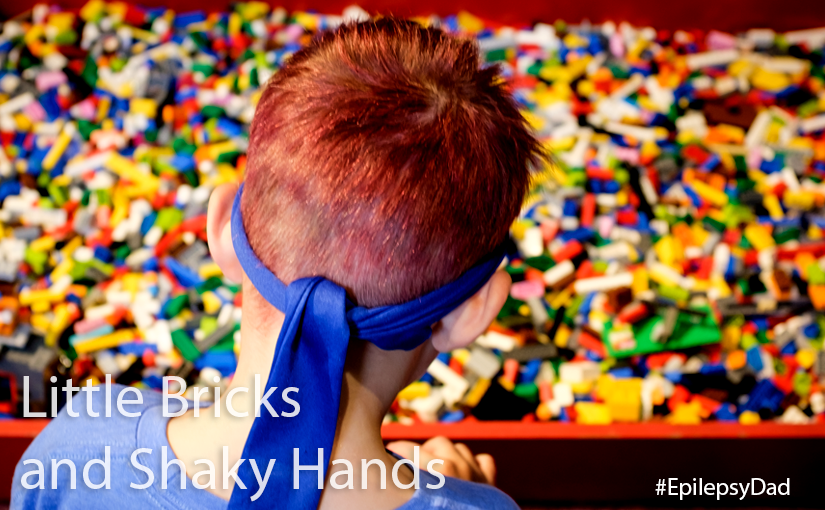
    When I was young, I loved playing with Legos. At my grandparents’ house, my favorite toy was a box of loose bricks. I would turn them into houses, or animals, or fighter jets. I remember “upgrading” to the more advanced Technic set when I was about ten. It felt like a right of passage. You’re born, learn to walk and talk, play with kid Legos, then hit that milestone of playing with Technic. From there, it’s all downhill and the only things left are to do are learn to drive, marry, have kids and, finally, die.

    My son has developed his own affinity for the little plastic toys. Late last year, he needed less of my help to assemble the kits. It’s one of those moments that both made me proud for his accomplishments and sad for my loss of usefulness. Now, he is putting more complicated sets together mostly by himself. He’ll spend hours working through the instructions until he reveals his masterpiece.

    Sometimes he’ll still ask for help with some of the smaller bricks because he has a hard time taking them apart. When I go to him, I see his little fingers struggle to grasp the tiny pieces. Especially when he is tired, his ataxia is more noticeable. His hands shake and make tasks that need fine motor control almost impossible. On his face, you can see the attention he is trying to give to his efforts. But his body’s instability wins out over his mind.
    epilepsy dad lego seizure ataxia shaky hands parenting fatherhood

    It’s frustrating and sad to watch. Compared to the occasional seizure or handful of pills he takes twice a day, the shakes are always there. They’re visible playing with Legos, trying to use a fork, and coloring and writing. They make learning new tasks difficult and they make playtime harder than it should be. I can’t imagine the mask he wears and how frustrated he feels inside when he tells me “I’m just a little shaky.”

    Those words cut through me. I can’t fix it. It’s hard to watch him struggle. These are some of the same activities he works on in therapy and the more he does them, the better he will get at them. But many of these tasks will never be easy for him. It’s hard to watch my son have a hard time with such basic tasks like using a fork. It’s hard to let him struggle through and not do something for him or let him take a shortcut and eat with his hands.

    I want to encourage that mindset of pushing through because I hope it will get better. He already has such determination and I want him to keep it. Even when it’s hard. Even when it’s unfair. Even when there are easier options. Why? Because that’s what is going to help him survive and succeed with the challenges he has ahead of him. My job as his father is to prepare him for what is ahead. Even if it means watching him struggle and shake. But I also want him to know that I am there for him should it get too hard. I want him to know that he is not alone.

    I’m struggling to find the right balance between helping and letting him keep trying. When is it helping and when is it cruel? It’s cruel what this disease has done to him. I worry that I’m being cruel too when I watch him suffer its effects when I could step in to help.

    How much of this is me hoping he’ll struggle through it and that there will be another side? What if there is no other side? What if it gets worse? What does that mean for when my wife and I are gone? I try to focus on the positive progress he has made since his condition was worse. But it’s hard to do when I’m looking at my child struggle because of his condition. The thought of this being the rest of his life is too much to think about with a seven-year-old.

    And there aren’t any answers, at least for now. His condition changes, his medicine changes, his body will continue to change. I try to remind myself to take each day as it comes and to take my son wherever he is that day. Doing that is one of the hardest things I have ever had to do in my life. But when I can do it, I see a little boy smiling as he creates something out of bricks. I see that sense of accomplishment on his face when he shows us what he made. And sometimes, I think things are going to work out okay.
    epilepsy dad lego seizure ataxia shaky hands parenting fatherhood

  • Being Remembered

    Being Remembered

    We were in Colorado recently, closing the sale of the house that we lived in when my son was born. Our agent sent us the lock code so we stopped by one last time. I hadn’t seen the house since we left it almost five years ago. As we stepped through the front door, it was like looking back into a forgotten time of our lives.

    The house was smaller than I expected, but nostalgia has a way of making things bigger than they were. We went from room to room telling each other the stories that we remembered. There might have been tears, some of joy and some of pain and sorrow. The feelings that surfaced were raw and real and big.

    We continued on until we reached my son’s room. We made our first memories with our son in that house. I remember bringing him home and putting him in the crib that we assembled together. I remember sitting on the yellow rocking chair singing to him as we looked out his window. I remember long nights, and changing diapers, and feeling that new-parent fear.

    As we toured the house, my son listened and told us that he remembered things, too. He told me how I would be on my knees playing goalie, blocking his shots when we played hockey in the basement. He remembered us eating vegetables from our small garden. He remembered us playing in the backyard on his swing set that my wife and I put together. Fortunately, he didn’t remember that we finished it at midnight after too many bottles of wine.

    My son was two when we moved to a different house and then four when we moved to Philadelphia. I wasn’t sure how of the stories he told us he actually remembered. What he said most likely came from us looking at pictures and telling him the details many years later. But whether he was remembering our memories or his, there was one thing in his version that caught me off guard. That thing was me.

    I know why it caught me off guard, though. I had two drastically different experiences as a child with my father and my stepfather.

    My parents split up when I was two, and I lived with my mother and my sister. My father was only occasionally in the picture. Sometimes he would take me to a hockey game or a baseball game, and we did “second Christmas” with his side of the family. I remember the hockey games, watching the Whalers on the ice and I can still hear their song echoing in my memories. I remember going to Yankee games, going down to the edge of the field during warm ups and catching balls. But the thing missing from those memories is my father.

    My stepfather coming into the picture changed my life. My mother was much happier and I had someone who spent time with me. I have memories of my stepfather and I fixing bicycles in the driveway. I remember him driving our old wood-paneled station wagon towing our camper with me in the passenger seat on the two-way radio. I remember making him laugh when my mother was trimming his mustache and his face as he tried to fight back the smile. Featured in each of those memories is my stepfather.

    I’ve often thought about the difference in how I think about my father and my stepfather. About how one is still in my life and one is not. About how one is in my memories and one is not. Neither is perfect but at least one of them was there and still is there for me. These experiences shaped what type of father I want to be to my son and how I want him to remember me.

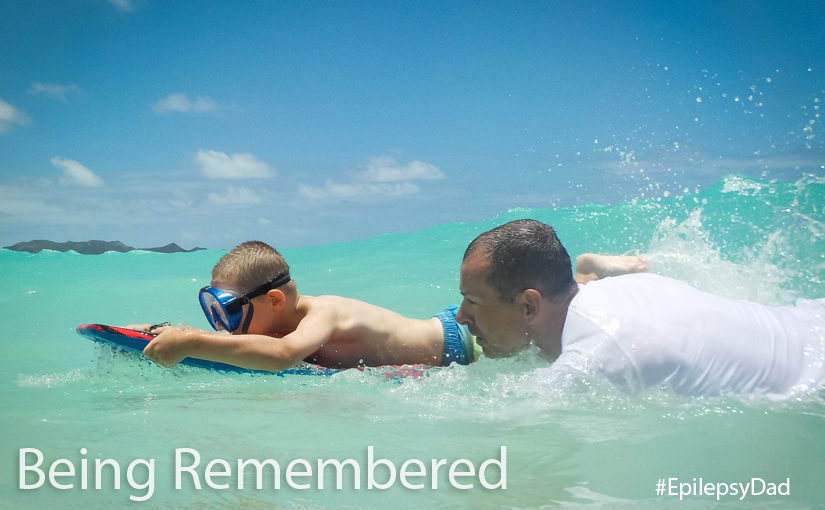
    I want to be a part of his story. When he is telling his own children memories from his childhood, I want to be in them. I want him to see my face when he remembers that time he got a foul ball at a baseball game. I want him to remember me sitting on the couch next to him playing a video game or a board game. I want him to remember me helping him boogie board in Hawaii. I want him to remember with joy the “my dad always” remarks that show that I cared and was there.

    I want him to remember me, not for my sake, but for his. I want him to know and remember how important he was to me because I want him to feel important and loved. I want him to feel supported and strong. I want him to be a part of a childhood that set up for success instead of something that he will need to get over. My son is going to have enough things to overcome in his life. I don’t want him to ever question his worth or wonder where I was. Because I am here. And I love him more than anything. That’s how I want to be remembered.


  • By His Side

    By His Side

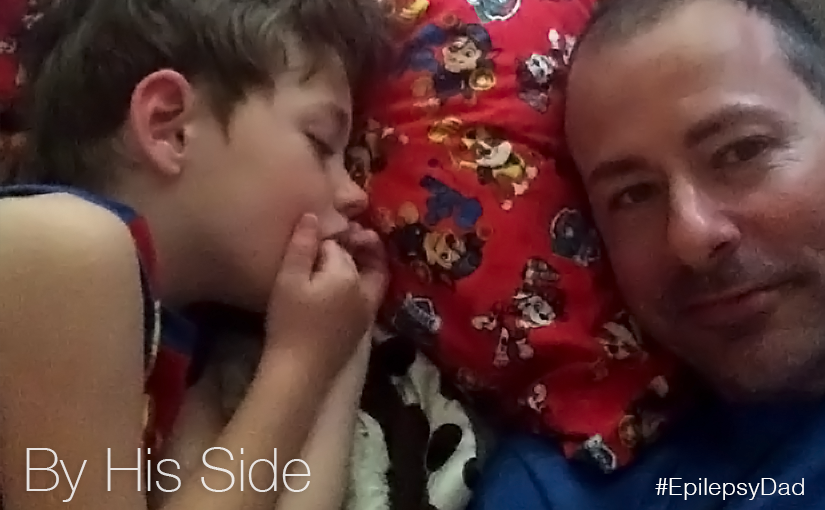
    A noise stirred me from my sleep. Instinctively, I rolled to face the monitor. Even though it was on the dimmest setting, my eyes struggled to focus against the light of the screen. I closed one eye completely and squinted the other until I could make out the image. Then, another sound. That sound. The sound that still breaks the silence of the early morning. The sound that wakes me from my sleep and tells me that my son’s brain has lost control.

    Some mornings, I watch the screen to see if my son can put himself back to sleep. But this morning, I could tell by the way the sound echoed through the halls that it was a bad seizure. I slid my body off the bed and felt the cold floor beneath my feet. Keeping one eye closed did little to help readjust to the darkness. I navigated my way through the kitchen on instinct until I reached his door. I felt for the handrail and made my way down the stairs. Halfway down, my eyes finally caught up to the rest of my body and I could make out the bottom of the stairs. I swung myself around the banister and landed at the foot of my son’s bed as he sat upright and started to cry.

    I write a lot about these early morning hours. These are the hours when our unwelcome visitor makes its presence known. These are the hours of sounds, and seizures, and tears. Of scrambling down stairs and early morning comfort. The hours without sleep, when there is nothing to do but think about our lives…my son’s life.

    I wonder if these trips to his room will ever end. I wonder if our house will ever be quiet again in the early morning, or if I will ever be able to let my guard down. I wonder if this is his life, destined to call out into the night for the rest of his days. I try not to think about who will answer that call when I am gone. On that night, I was there, like I was on countless other nights. I did answer the call, like I will for as long as I am able.

    I crawled into bed with him and sat next to him. I rubbed his back and told him that he was okay, that everything was going to be okay. It didn’t feel like a lie when I said it, but it didn’t quite feel like the truth, either. After a few minutes, he started to calm down. I helped him lay back down and covered him with his favorite green blanket. He stuck his fingers in his mouth as he closed his eyes. I laid next to him until his breathing slowed and the sound of him sucking on his fingers faded to silence. Then I stayed a little longer, letting my own eyes grow heavy, and fell asleep by his side.

  • The Importance Of Scoring Goals

    The Importance Of Scoring Goals

    Coming out of the womb, all my son wanted to do was play hockey. He started skating before he was two, and we played floor hockey almost every day, even when he had a broken foot. When he was five, before we left Colorado, we signed him up for an “Intro To Hockey” class. Watching him step on to  the ice (and fall) for the first time in full hockey gear was one of my favorite moments. I remember him skating around during warmups as if he was preparing for an NHL game. His energy was electric. Every time he made eye contact with me, I saw the look on his face that, as his father, I’ve strived to replicate ever since.

    The onset of his seizures changed our lives in many ways. Huge ways. Profound ways. But one of the hardest things for me to accept was taking away that look my son had when he was on the ice. When the seizures started, he would ask when he could get back to playing hockey. When he was at his worst, he stopped asking altogether. It was like taking air from him when he desperately needed to breathe. He needed to feel a connection to something to take away the fear and uncertainty. We couldn’t play floor hockey. We’d watch hockey on the television but I didn’t know if that was helping or hurting. They were pictures of a lost love that stayed just out of reach.

    After a long recovery, but amidst continuing seizures, he picked up his hockey stick again. Our epic battles of floor hockey returned. He skated, but it was inconsistent and only as his endurance, balance, and ataxia would allow. We found a coach to work with him off the ice on hockey skills. It was good to see him back in the world that he loved, but those activities were only parts of the whole. As he was able to do more of these activities, he started asking about ice hockey again. Every time he did, I still didn’t have an answer. It broke my heart.

    For two years, that question stabbed me every time he asked it. Finally, though, after grueling rehabilitation, we did something I thought was impossible. We signed him up for another hockey class. Granted, the first class didn’t go as planned. As I mentioned in a previous post, that first time back on the ice include a handful of seizures. But he stuck with it and he’s been going as much as his body and mind will allow. There were a few sessions he missed because he was too exhausted. But he kept going back, even when the drills were hard and as he struggled to control his body. He falls a lot, maybe not more than other kids, but every fall takes its toll more on him. Physically and emotionally, after practice he is spent, wasted and unraveled. But during class, he’s so, so happy.

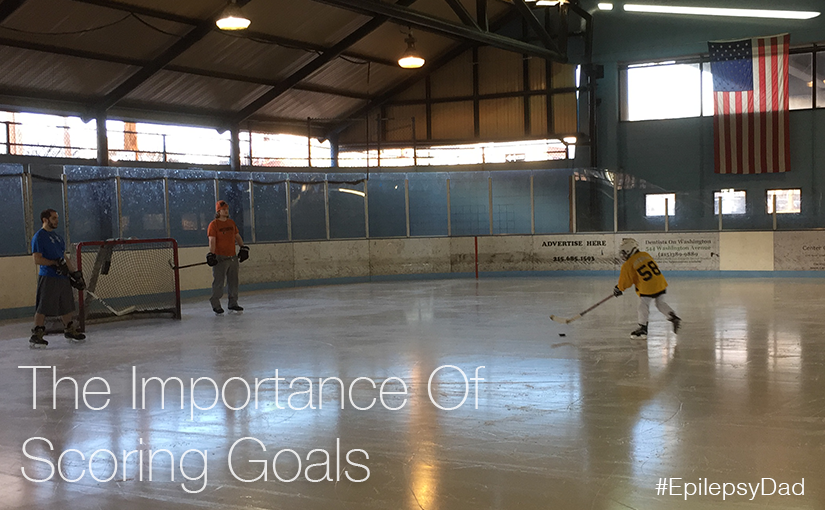
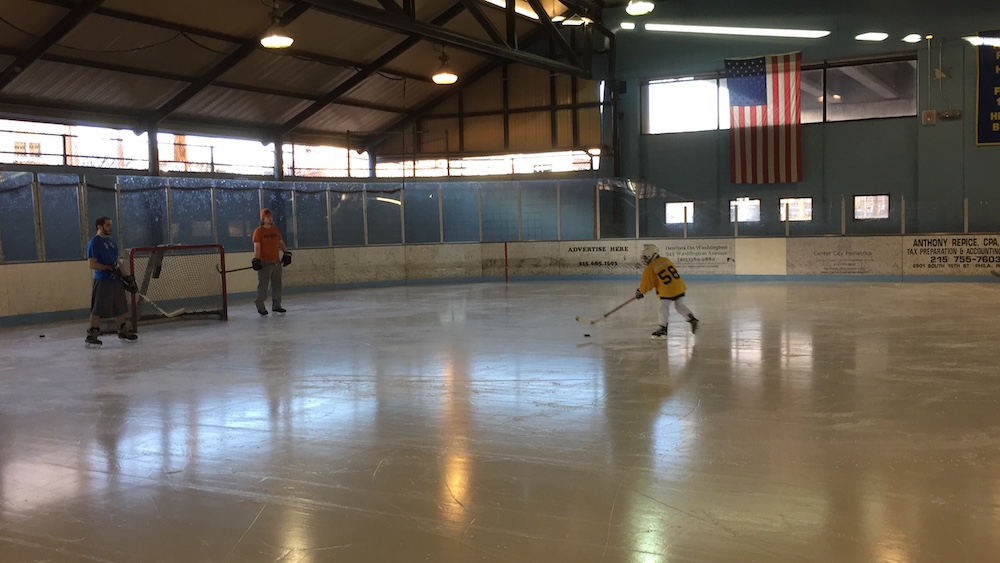
    Last week, they set up nets and let the kids move the puck from one and to the other and shoot. Unless you’re a goalie (or even if you are), scoring a goal represents one of the defining moments for a player. Watch a young player in the NHL score his first goal and you can see that lifetime of waiting finally end. I felt the same way watching my son push the puck across the ice and take a shot. It seemed like a lifetime had passed since that class in Colorado. But after he took a shot, and after the puck slowly crossed into the net, he made eye contact with me. I saw the look that I wondered if I would ever see again.

    epilepsy dad hockey fatherhood

    During the car ride home that night, we watched the videos I took of him on my phone. “Did you see me score a goal on the backhand?” he asked. “Of course, ” I replied and restarted the video. We watched it over and over. Every time, I was more grateful than the last.

    Backhanded goal and celebration…

    A post shared by David Monnerat (@davidmonnerat) on

  • We All Make Mistakes

    We All Make Mistakes

    When I was growing up, there was a family across the street from us that had two boys. One was my age, the other a little older, and they were both part of our neighborhood pack that would play baseball and football in the street, ride around on our bikes, or simply hang out in one of our yards. The younger boy and I, being closer in age, also shared an affinity for computers. His powerful Amiga had better games, so we would spend time at his house playing them, often for hours at a time.

    I remember their dad being really strict. They would address him as “sir” and had to ask his permission for everything, from a can of coke to going outside to play. I could often see a look of fear on their faces when they interacted with their father, and I never knew what that was about until one day when my friend took a soda without asking. We were in the front room on the computer, and his father dragged him to the back of the house. As I sat there, I could hear my friend apologizing through the muffled sobs that echoed down the hallway. I heard the unbuckling of a belt followed by the crack of a whip and then more cries. After a few minutes, there was silence. My friend returned to the front of the house and told me that he couldn’t use the computer anymore and that I had to leave. His eyes were still wet. I couldn’t see him, but I knew my friend’s dad was listening, just out of eyesight. I stood up and left quietly.

    I was probably thirteen when that happened and, in the years that followed, I watched as my friend continued to wrestle with his relationship with his dad. I could see it worn on his face, but he often shared how he desperately tried to please his father but always seemed to come up short. It was his failure, he would say, and not the unrealistic or inappropriate expectations of his father. I could see him starting to respond more with his own anger. His grades went down, which only made things worse between him and his father. He started to pull away, hanging out with different friends, until I stopped seeing him altogether.

    After I moved away, my mother would occasionally give me updates. Unsurprisingly, my friend turned to drugs in high school. I’m not sure if he graduated, but this bright kid who could have done amazing things with computers burned out and gave up. My mother would see him every once in a while, usually at his father’s house after another stay at rehab. She said he was always polite, calling my parents “Mr.” and “Mrs.”. Each time, I would hope that he had finally sorted his life out, even as I wondered why he kept returning to the place that likely was the catalyst for the direction his life had taken.

    As much as I hoped his life would take a different path, it never did. He was 33 when he died of an overdose. I couldn’t help but think that his death was the finally, unforgivable mistake that he would ever make and that it was the last in a long line of disappointments to his father. My friend spent his life never feeling like he could please his father. And then it was over.

    I haven’t spoken to him since, but I sometimes think about my friend’s father. I wonder if he feels any responsibility for what happened. I wonder if he would change the past and how he treated his son. Sometimes, I wonder if I am making my son feel the same way.

    The other night as I was putting him to sleep, my son said that he was sorry for making so many mistakes. It was a gut punch that came out of nowhere. My chest tightened up. I thought of my friend and his dad and I didn’t know how to respond. His comment was like an arrow that struck the bullseye of my greatest insecurity.

    I feel like I’m always riding my son. Sometimes, it’s for normal mistakes that kids are supposed to make. Other times, it’s for things he can’t control because of the side effects of his medicine or seizures, or other complications caused by his condition. He struggles with attention and impulse control issues every day and, as hard as that must be for him, it must be even worse because I am constantly saying “no” and making him feel like he is always doing something wrong. I push him towards perfection because I think it will make his life easier if he can overcome his obstacles, but I am setting extremely unrealistic and unachievable expectations and setting him up for failure. And so I found myself lying next to my six-year-old who is apologizing for being a kid…and human. I don’t need to raise my hand like my neighbor’s father did to do the same type of damage.

    I reached out and put my hand on my son’s shoulder. “We all make mistakes, buddy. It’s a part of learning and growing. If we didn’t make any mistakes, then we wouldn’t learn anything new. I make mistakes all the time. I must have made a hundred mistakes today.”

    He rolled over and turned to me. “You did?”, he asked. “Like what?”

    I laid down next to him and draped my arm over his shoulder. “Well, ” I said, and then I told him about the mistakes that I made during the day. I told him about what I learned from making them and that I was happy that I learned something new. We talked for a while (there were a lot of opportunities to learn and grow that day) until I saw his eyes get heavy.  As he drifted off to sleep, I hoped that by sharing my own mistakes, he would see that everyone makes them and not feel so defeated. It was also an opportunity for me to reflect on those mistakes that I made, including how I responded to my son, so that I, too, could forgive myself, and learn, and grow.

    My wife had a great idea and I think we are going to start doing it. We have a nightly routine where we talk about out day…something good, something bad, something we are grateful for. We are going to add a mistake that we did today and what we learned.

    And then we’re going to celebrate it.

    epilepsy dad make mistakes