Category: seizures

  • A Moment Of Lucidity

    A Moment Of Lucidity

    I came home and everyone was sitting at the kitchen table. The topic of conversation was about how good a day my son had. A smile flashed across my face. We haven’t had a lot of those lately, and this sounded like a really good day.

    My wife made a strong case for possibly his best day in months as she described what had happened. She told me that his aide at work commented about him being his old self. My son jumped in, adding emphasis to his trip to the library and the Lego club he discovered there. The energy in the house was amazing, and we held on to it all evening.

    Over the past few months, we’ve been adjusting my son’s medications. It is a hard time for everyone as we try to manage the seizures and side effects that always follow. Insomnia, fatigue, and emotional and behavioral issues disrupt everything about his life. I saw the turmoil inside of him taking a toll, and his bouts of sadness shred my heart to pieces. I was so happy for him to get a win.

    It wasn’t until we started to get ready for bed that we noticed that he didn’t get his morning medication. In the 1,128 days that we’ve been giving him medication for his seizures, this is only the third time that we screwed up. In the past, if we get off-schedule for his dosing, we saw signs that raised an alarm. He might have a seizure during the day or more during his nap. But this time, there were no signs like that. Only a really good day.

    We scrambled to get him back on track, but the inevitable happened. He had more seizures that night than he has had in while. The next day, his behavior was erratic and it took most of the day to get him settled down. Over the course of the next couple of days, both his seizures and his behavior started to level off.

    Before we knew about the missed medications, we thought that we had cracked the code. His head has been swimming in medication for so long but we continue to look for the right mix. We lower the dosage on ones that put him in the haze and increase the dosage on ones that help his seizures. We thought that with this latest combination we found that balance.

    But instead of a solution, what we spotted was an anomaly. A single, dangerous moment of lucidity. I picture him suspended in a sea of medication. It slows his movements, makes it hard to think and to see and to be himself. That day, he was finally able to reach the surface. He was able to take one big breath and see the world around him. We could see him, too, as his head broke into the open air. Then we watched as he was slowly pulled back under.

    Was this a glimpse of the boy behind the seizures and the medicine and the side effects? Is he gone again? Lost beneath the surface of his condition? Or was it a coincidence? He has had some pretty good days before. Are we are trending in the right direction and that really good day was a sign of things to come?

    The answer to those questions is the same frustrating answer it always is. Wait and see. It’s the same answer when we change medications. It’s the same answer when we start a new treatment or therapy. Everything is so unpredictable that we just have to wait and see. But this time, the stakes seem higher because we’re trying to figure out if what we saw was our son or a mirage.

    Deep down, I know what the answer is. The reality is that it was my son. But it is him on the other days, too. He is whoever he is in front of us on any given day. That’s the reality of his condition. The good and the bad. The sweet, gentle boy and the sad, angry boy. The lucid and the drugged. The boy who can face any challenge and the boy who wants to hide and be alone.

    Sometimes, I get so wrapped up in the differences between the two that I wind up chasing the mirage. I focus on the way things should be because I want his life to be easier. To be better. But when I do that, I leave my son behind. I miss out on the gifts that we are given instead of simply being grateful that my son is here and that he had a really, really good day.
     

  • An Uphill Battle

    An Uphill Battle

    A few weeks ago, my son’s science teacher e-mailed a video to the parents of his class. In the video, the students were blowing through straws to move a paper ball around the table to show the power of air. The camera panned across the room showing groups of kids performing their experiment.

    I watched the video, eager to see my son. When his table finally came in to view, I could see his classmates doing the experiment. But my son was off his chair, standing and facing the wrong direction. The camera caught his aide helping him turn around and back into his seat before it moved on to the next table. I didn’t see it, but I am sure he said he was sorry to his aide and then tried again. Because that’s what he always does.

    My son is always surrounded by people who are there to help him. Whether it’s because of ADHD or side effects of his medication, he struggles to regulate his attention and emotions. The excitement of his crowded classroom is too much. Being left alone is too much. Trying to sequence events or remember the steps to a math problem is too much. Everything we ask him to do is a slippery slope down a path where someone has to be there to catch him.

    The worst part is that he seems to be more aware of it as he gets older. The look on his face when his aide guided him back into his chair was one of realization. He knew that he wasn’t doing what he should be doing. We see that look a lot…like he’s disappointing the world around him as much as he’s disappointing himself. He walks around apologizing all the time, and it breaks my heart.

    I can’t imagine what that is like for him. Always being watched. Constantly being told that whatever you’re doing is something you shouldn’t be doing. And feeling like it’s out of your control.

    This isn’t one of those posts where I have an answer. We’re getting help for him and as a family to try to figure it out. We’re surrounding ourselves with people who will help him succeed. We are trying to help him build confidence and treat his condition as a condition and not a reflection of his value as a human being. We’re trying to boost his confidence and find ways to make him feel as special as he is. Having to do that for my son is hard and it makes me sad. It’s an uphill battle. But I would do it all day, every day, if that is what he needed.

    Because there is nothing more important.

  • Early Morning

    Early Morning

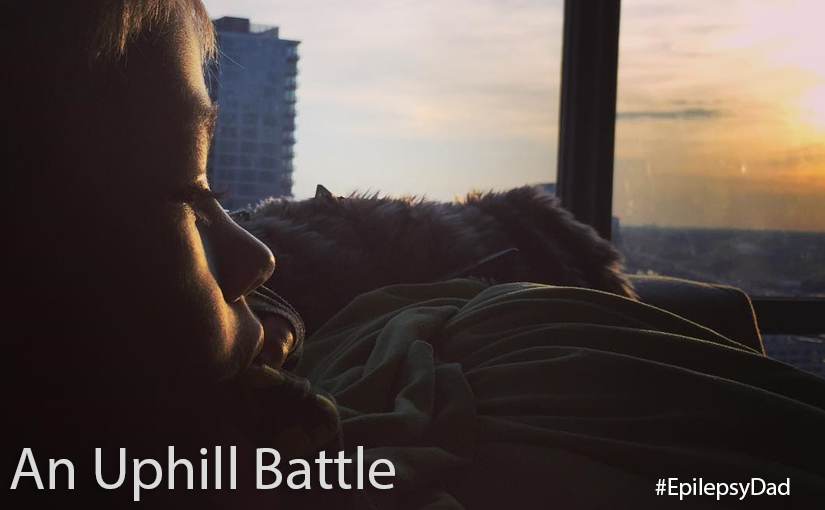
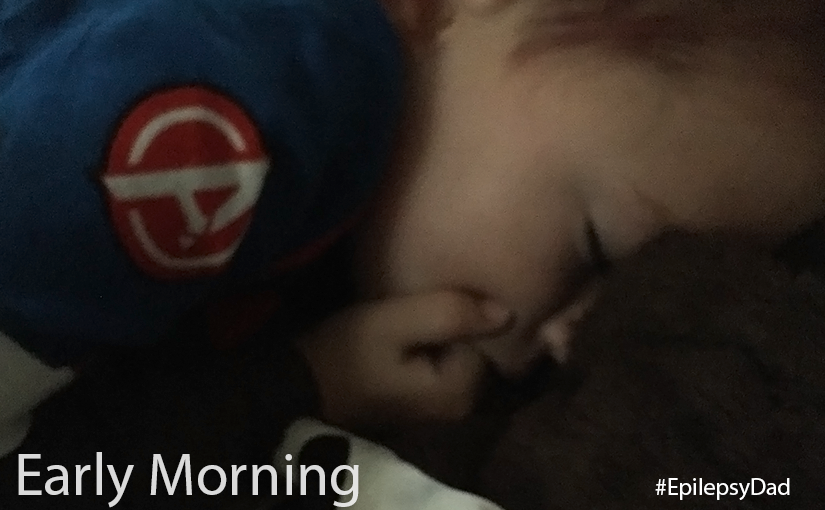
    Lying in bed, I opened my eyes in the early morning and stared at the ceiling. My son’s arm was draped across my chest and his head rested on my shoulder. Ahead of our move, he’s been sleeping with us. The chaos of our lives and the distance to his room has become increasingly problematic. Until we move into our new place, it’s a concession we made so that we can all be together and so we can monitor his seizures.

    I brought my free hand up and rubbed his head. Usually, my wife is the recipient of his slumbery affections. I get the other end with a face-full of feet as he turns horizontally on the bed. But not that morning. That morning, I looked down to see my the beautiful face of my boy sleeping peacefully. I remember smiling as I made minor adjustments to my position and was once again comfortable. I closed my eyes, my hand still rubbing his head, and enjoyed the moment.

    It’s in these early morning hours that I’ll catch my son talking in his sleep. Sometimes the words are decipherable. He has had unconscious conversations about baseball and hockey. Once he talked about his iPad, which I’m pretty sure is a sign that we let him use it too much. Other times, his voice is too low or the words are too jumbled but it’s still clear that he’s having a conversation.

    Sometimes, his hands or legs will twitch. It’s like watching a dog dream of running and watching its limbs move in response. We had a cat once that would dream of drinking and we would watch him lap at the air as we laughed quietly so as not to wake him. It’s impossible to tell what activity my son was trying to do in his sleep, but it still made me smile. Dreaming at seven looks very different from dreaming at forty.

    That morning, though, a different and unfortunately familiar sequence began. It started with a tensing of his muscles. As he laid at my side, I could feel his body start to stiffen and elongate. I adjusted my position to give his body room the room it needed. The room went quiet. The only sound was me telling him that everything was going to be okay as I kept my hand on his head.

    At its apex, his body is rigid and long like a piece of wood. His body continued to squeeze, forcing the air from his lungs. The audible moan also started as his body expelled air past his vocal chords and out his mouth. His body relaxed before tensing up again, the rhythmic jerking of a myoclonic seizure. Every pulse of his body made me feel more and more helpless, but there was nothing to do but wait it out. So in the early morning darkness, that’s what I did.

    A few seconds more and the seizure was over, but the postictal state began. Like he usually does, my son sat up, smacking his lips and looking at the world through squinted eyes. I continued to console him and let him know what he was safe until he gathered enough of his faculty to know where he was. Then I helped him lay back down and get comfortable. I draped his warm, green blanket over his shoulders and pulled it down to cover his feet. He put his two fingers that he likes to suck on in his mouth, closed his eyes and drifted back to sleep.

    I could not go back to sleep. I struggled to not have my thoughts drift to all the negative possibilities. I should have gotten up to distract myself but I wanted to be near him in case he had another seizure. So, instead, I listened to his breathing and returned my gaze to the ceiling.

  • Little Bricks And Shaky Hands

    Little Bricks And Shaky Hands

    When I was young, I loved playing with Legos. At my grandparents’ house, my favorite toy was a box of loose bricks. I would turn them into houses, or animals, or fighter jets. I remember “upgrading” to the more advanced Technic set when I was about ten. It felt like a right of passage. You’re born, learn to walk and talk, play with kid Legos, then hit that milestone of playing with Technic. From there, it’s all downhill and the only things left are to do are learn to drive, marry, have kids and, finally, die.

    My son has developed his own affinity for the little plastic toys. Late last year, he needed less of my help to assemble the kits. It’s one of those moments that both made me proud for his accomplishments and sad for my loss of usefulness. Now, he is putting more complicated sets together mostly by himself. He’ll spend hours working through the instructions until he reveals his masterpiece.

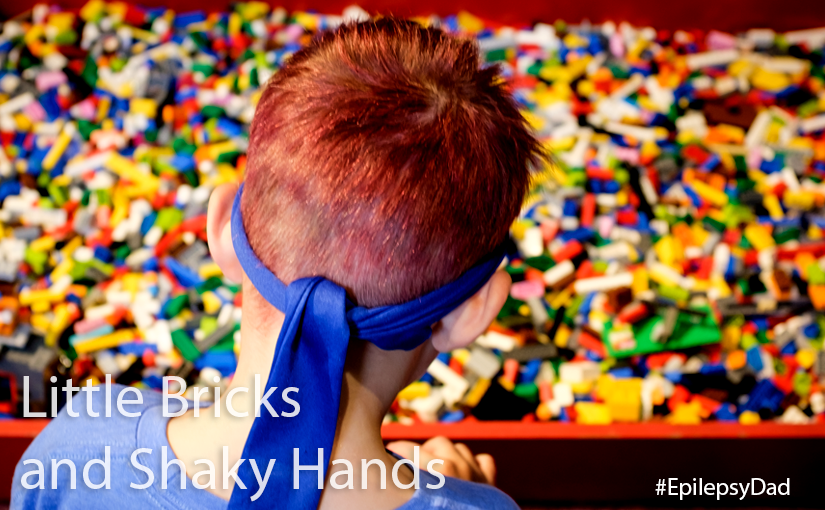
    Sometimes he’ll still ask for help with some of the smaller bricks because he has a hard time taking them apart. When I go to him, I see his little fingers struggle to grasp the tiny pieces. Especially when he is tired, his ataxia is more noticeable. His hands shake and make tasks that need fine motor control almost impossible. On his face, you can see the attention he is trying to give to his efforts. But his body’s instability wins out over his mind.

    epilepsy dad lego seizure ataxia shaky hands parenting fatherhood

    It’s frustrating and sad to watch. Compared to the occasional seizure or handful of pills he takes twice a day, the shakes are always there. They’re visible playing with Legos, trying to use a fork, and coloring and writing. They make learning new tasks difficult and they make playtime harder than it should be. I can’t imagine the mask he wears and how frustrated he feels inside when he tells me “I’m just a little shaky.”

    Those words cut through me. I can’t fix it. It’s hard to watch him struggle. These are some of the same activities he works on in therapy and the more he does them, the better he will get at them. But many of these tasks will never be easy for him. It’s hard to watch my son have a hard time with such basic tasks like using a fork. It’s hard to let him struggle through and not do something for him or let him take a shortcut and eat with his hands.

    I want to encourage that mindset of pushing through because I hope it will get better. He already has such determination and I want him to keep it. Even when it’s hard. Even when it’s unfair. Even when there are easier options. Why? Because that’s what is going to help him survive and succeed with the challenges he has ahead of him. My job as his father is to prepare him for what is ahead. Even if it means watching him struggle and shake. But I also want him to know that I am there for him should it get too hard. I want him to know that he is not alone.

    I’m struggling to find the right balance between helping and letting him keep trying. When is it helping and when is it cruel? It’s cruel what this disease has done to him. I worry that I’m being cruel too when I watch him suffer its effects when I could step in to help.

    How much of this is me hoping he’ll struggle through it and that there will be another side? What if there is no other side? What if it gets worse? What does that mean for when my wife and I are gone? I try to focus on the positive progress he has made since his condition was worse. But it’s hard to do when I’m looking at my child struggle because of his condition. The thought of this being the rest of his life is too much to think about with a seven-year-old.

    And there aren’t any answers, at least for now. His condition changes, his medicine changes, his body will continue to change. I try to remind myself to take each day as it comes and to take my son wherever he is that day. Doing that is one of the hardest things I have ever had to do in my life. But when I can do it, I see a little boy smiling as he creates something out of bricks. I see that sense of accomplishment on his face when he shows us what he made. And sometimes, I think things are going to work out okay.

    epilepsy dad lego seizure ataxia shaky hands parenting fatherhood

  • Windows, Light and Hope

    Windows, Light and Hope

    The last few months have been all about change. After a long search, I found and started a new job. We sold the house that we lived in when my son was born back in Colorado. And next month, we’re leaving the apartment we landed in when we moved to Philadelphia.

    This is the apartment we lived in when my son’s seizures and side effects were at their worst. The couch by the front window is where we held him for hours during his mood and behavior. I would sit on this couch and stare out the window at the street as he spat, and hit, and screamed terrible things. I would watch the people walk by, normal families with normal lives doing normal things. I wondered if that would ever be us again.

    I felt like the world was watching us from the other side of that window, too. We were in full view of the passersby who could see how ill-equipped and unprepared we were for what was in front of us. They saw us sitting on the couch reacting out of fear and desperation. They saw every mistake my wife and I made dealing with our son and with each other.

    The way our apartment is laid out, the window by the couch is the only source of natural light. In an otherwise dark apartment during a very dark time, there was no other place to go. So we sat in view of the world outside so that we could see it and let in whatever light we could. We traded agony and exposure for light.

    But sitting on that couch and in that light also gave us hope. No matter how dark our apartment and our life got, we could see that there was more. As our son fought against us, we could close our eyes and feel the light on our face and hope.

    After a seemingly endless struggle, hope won out. Our son came back to us. He was weathered, as we all were, and different, and stunted in some ways, but he was our boy. Instead of holding my son on that couch to protect him, he would sit next to me reading or playing on his tablet. Instead of me staring at the people walking by with envy or feeling judged by them, I felt like we could join them.

    Eventually, we did join them. And now, we’re taking the next step in our journey. We’re not moving to a new place with a blank slate. Our son still has seizures. He still suffers from the side effects of his medicine and the damage that they and his seizures did. We’re bringing our scars with us. But we’re bringing his progress, too. We’re bringing the lessons we learned and the closeness we feel from having survived it. And we’re moving into a place that is full of windows, and light, and hope.