Category: seizures

  • The Long Run

    The Long Run

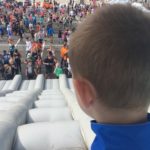
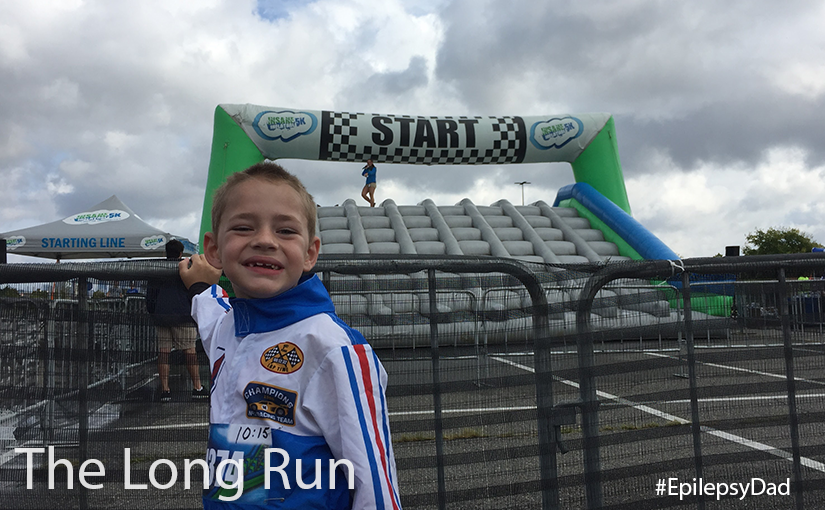
    My son stood on top of the first obstacle at the start of the race. He had just given an interview and talked about having seizures that had the crowd let out a collective “aww”. In his hand, he held the blowhorn that would signal the start of our wave. The emcee counted down then helped him push the button on the horn. It called out with its loud sound and the crowd cheered in response. The race had begun.

    By the time I had climbed the first obstacle to reach my son, he was already on to the next one. He thought he needed to lead our wave for the entire race, so I sprinted to reach him and told him to slow down. “It’s a long race, buddy,” I said. “This is only the beginning.”

    That is how my son approaches most things…head on and at full speed. It’s inspiring to see but also nerve-wracking. He’ll push himself beyond his limits without considering the consequences. For him, the consequence of physical exhaustion is seizures. My wife and I take on the role of the governor to regulate his unstoppable, unrelenting engine. That puts us in the middle of his desire to conquer the world and our desire to keep him safe. It’s an impossible balance and one that I rarely feel successful at. But I tried my best to pace him but also let him open up a little and have fun.

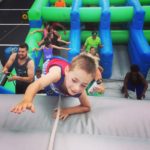
    He tackled each obstacle with a determined attitude and a beaming smile. There were people who saw his interview that ran by to cheer him on. He would wave in response as he eyed the next challenge. Another person came up and told him that she had epilepsy, too and that it wouldn’t stop either of them. I was proud of him, for how he was tackling the race, for talking about his epilepsy, and for that smile.

    If there were ever a metaphor for our life, it was that race. There will be obstacles that we need to face. There will be times that we need to be brave. There will be times we need to lean on and be grateful for the support around us. But there will also be fun and the sense of accomplishment that comes from doing things that are hard.

    As he came down the slide on the last obstacle, I could see a huge smile on his face. He put his completion medal around his neck and told everyone how he made it through each obstacle. Then, on the way home, he said he wasn’t feeling good. He went straight in for a nap and I could tell his body was shutting down. During his nap, he had a cluster of seizures, more than he has had in a while. That was the gut-wrenching part where I questioned whether I let him push himself too hard. I know that uncertain feeling too well, and it’s heartbreaking.

    As his body contorted against his will, I wondered whether it was worth it. The sense of accomplishment, the fun, and the experience. Was it worth what was happening to him? The lives of the people he touched when bravely stood on top of the first obstacle and told his story. The awareness he brought to epilepsy. The support he received from the people around him. Was that worth it?

    I used to think that was an impossible question, but maybe the answer is simple. What makes it worth or not it isn’t measured by finishes or medals or seizures. What makes it worth it is that feeling that, in spite of his epilepsy, he can do amazing things. What makes it worth it is knowing that we are in this together, for the good and the bad. What makes it all worth it, in the long run, is filling his life with moments that make him smile.


  • Starting From The Beginning

    Starting From The Beginning

    One of the truths about anyone new coming into our lives today is that they will never know how bad things were. Eventually, anyone that hangs around long enough will hear my son’s story. We will tell them how dark the times were and how sick my son got and how grateful we are to be where we are. But looking at my son today, it’s hard for most people to believe that things were that bad.

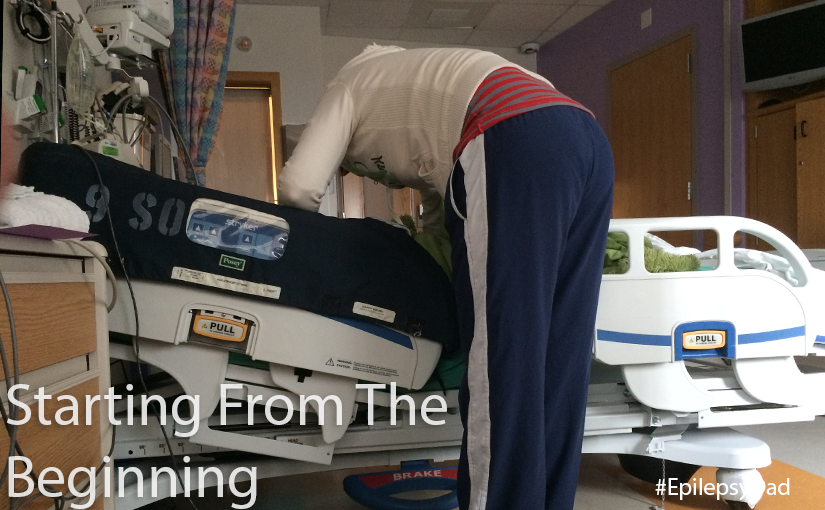
    That disconnect feels isolating. It’s a reminder that there aren’t many people in our lives from that time. We were largely confined to the hospital after moving to a new city. The only people we knew were the medical staff, but they were transitory. We rarely saw any with regularity. Instead, we repeated my son’s history to every new face we saw. But they moved on and we stayed trapped in our world scared, desperate, and alone in the dark. Every day, every week, every month.

    Sometimes, when you tell a story over and over again, it can dull the pain. The repetition has a numbing effect that makes it easier to deal with. But when you’re in the middle of it, that doesn’t work. Instead, it keeps the pain and the fear fresh and present. After months of unrelenting confrontation with our new reality, I wanted it to stop. I wanted one person, just one person, who I felt knew us, knew my son and could understand.

    After a long string of random faces, my wish was finally answered. One neurologist started coming back through on rotation. Instead of repeating our son’s entire history each time, we could give her updates. She provided consistency and stability through our endlessly repeating days. I began to feel like I was talking to someone who understood what we were up against. Someone who knew how bad things were. She cared about us. Without those connections, it’s hard to imagine anyone fighting as hard as we were to not go back to that place. But she did. And for the last three years, we’ve had her at our side every step of the way.

    Until now.

    The woman who in many ways saved my son is leaving. I’m trying to be stoic. I’m trying to be grateful for everything she did for us. I’m trying to be happy for her as she pursues more of a focus on epilepsy because of her experience with my son. I’m trying to think about the many more children she is going to be able to help. But I mostly feel afraid. Afraid to take these next steps without her. Afraid that no one is going to get us or my son like she did. Afraid that no one is going to fight as hard as she did because of how connected she was to our story. When there aren’t many people that can relate to what you are going through, the loss of one is significant.

    We’re at one of the best children’s hospitals in the country. Our new neurologist is one of the best in that hospital. But she didn’t see my son at his worst and I’m struggling with whether that matters. Whether she’ll fight as hard as she would if she had seen him back when this all started. Whether she will be personally invested in his outcome. Because I need that. I need his caregivers to have that connection to him. I need them to know and call him by his nickname. I need them to know how important he is. I need them to know who he is. He’s not just a patient, he’s my son.

    The thought of having to start over is stirring memories from when this all began. I’m afraid of having to start retelling my son’s story and reliving those dark and fearful days. But I’m also going to miss that light that lifted us from the darkness. I’m going to miss having her at our side.

    We tell our son to be brave. To be grateful. To try to find the positive. And I am trying, but right now I just feel scared, and alone, and sad.

  • Early Mornings And Coffee Spoons

    Early Mornings And Coffee Spoons

    It’s still dark outside, but I’m at my usual station, too early in the morning, writing. My son had a short seizure that woke me up. My wheels started turning and I couldn’t turn them off. The upside of him sleeping in our bed is that I don’t have to lose sleep wondering if the monitor is working. The downside is that his seizures are right in front of me, and its impossible to go back to sleep once they are over.

    At some point, he isn’t going to be able to sleep with us. He’ll be too old and too big to fit in our bed. If there were ever a reason to wish him to remain seven forever, that might be near the top of my list. Coming in a close second is the fear that his condition is going to get worse as he gets older. Our doctor is concerned about what happens at puberty. It’s another stage of brain development where seizures can change or be more severe. I thought it was impossible for things to get worse. Apparently, they can.

    Today, he’s only had epilepsy for a fraction of his existence, but by then, he’ll have had epilepsy for most of his life. We’ll long have lost count of seizures, and meds, and have long forgotten about the time before this began. It will be all we know and all he can remember.

    This is what happens to my unrested brain so early in the morning. It gets pulled into the stream and dragged wherever the current takes it, and there is no safe shore for my thoughts to land. The present is filled with seizures, medicine, side effects, and, presently, a lack of sleep. The future has too much uncertainty, doubt, and fear. The past is too painful. Remembering a time without epilepsy is getting harder and, if I try, it makes me sad. What we saw for our lives back then was not this life.

    My coffee sitting on the window sill does little to pull my unrested brain back to happier thoughts. But as I stare out onto the dark street, I can at least resist the urge to measure our lives with coffee spoons, in careful doses or as an observer. There is so much left to our journey, so much active living to do and so much of it is unknown that dwelling in any one place is fruitless toil.

    Instead of focusing on a when, I try to focus on my what. My what is my family that is together and, in many ways, stronger than ever. Most days are hard, but there is always something to be grateful for. We have a nightly routine where we call out something that we’re grateful for from our day. Even if we skip the rest of our routine, that one gets done. Because those things for which I am grateful are worth measuring, and I want to focus on adding as many of them as I can to this life.

    On that note, I’m going to sneak back into bed and lay next to my family. I’m going to do everything that I can to settle my mind and be present in that feeling of being together.

    And, maybe, I’ll actually sleep.

  • It Looks Like Rain

    It Looks Like Rain

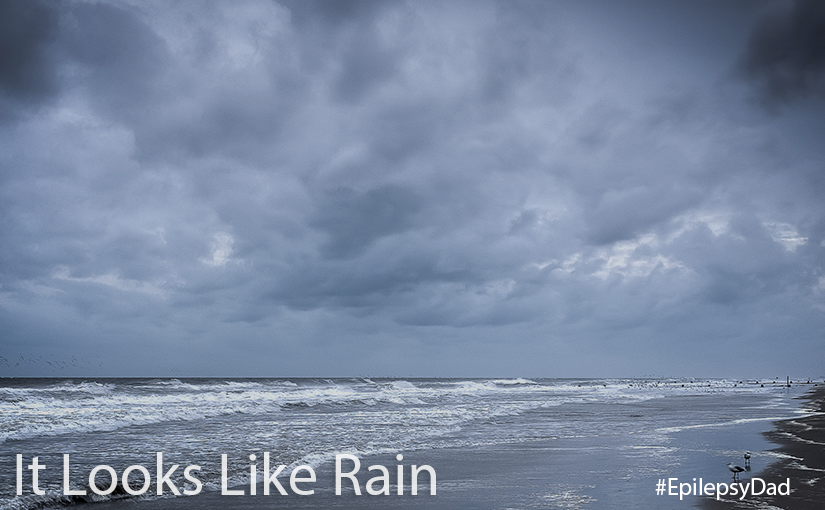
    When my son was at his worst, with relentless seizures and medicine flooding his body, he wasn’t our boy. He was uncontrollable and so, so angry. He would have fits for hours where he would try to hurt us and say terrible things. We’d spend those hours holding him, telling him that we love him, and waiting for the storm to pass.

    There were long stretches of weeks where we would only see glimmers of the boy that he was, like a break in the clouds. But, inevitably, the clouds would expand, find each other, and hide the light behind them.

    After too many months, the enormous storm that ravaged our lives started to break up. The seizures were more under control and we were able to reduce his medications to only a handful. We sought counseling for dealing with his condition and with each other. With a lot of hard work, we had more breaks in the clouds, more times where we saw the light from our boy shining on our lives.

    We spent a lot of time basking in that light. We were starved for it after so much time without it. There were still rumbles in the distance, a seizure or an outburst, that made the hair on our necks stand up. Occasionally, a storm would pop up, but it was usually brief and not as violent. Still, we remained on guard.

    Lately, the sound of thunder is getting louder.The hairs on my neck are standing up again. We’re seeing the tell-tale signs of a storm. There are times when he can’t control his body or regulate his emotions. There are days when he’s not there and when he’s not processing and not aware. There are more times when he gets angry and pushes everyone away. We’re adjusting his medicine again and these signs act as our barometer that tells us when the dose is too high.

    I know we have to adjust his medicine to keep the seizures in check, but I also know what that brings with it. I can see the clouds forming. It looks like rain.

  • Keeping The Door Open

    Keeping The Door Open

    If you believed the headlines, you might have thought that CBD was a miracle cure for epilepsy. After so many drugs failed to control my son’s seizures or burdened him with terrible side effects, I felt like we needed that miracle. But, in the end, CBD, like many other medicines, did not help to control his seizures.

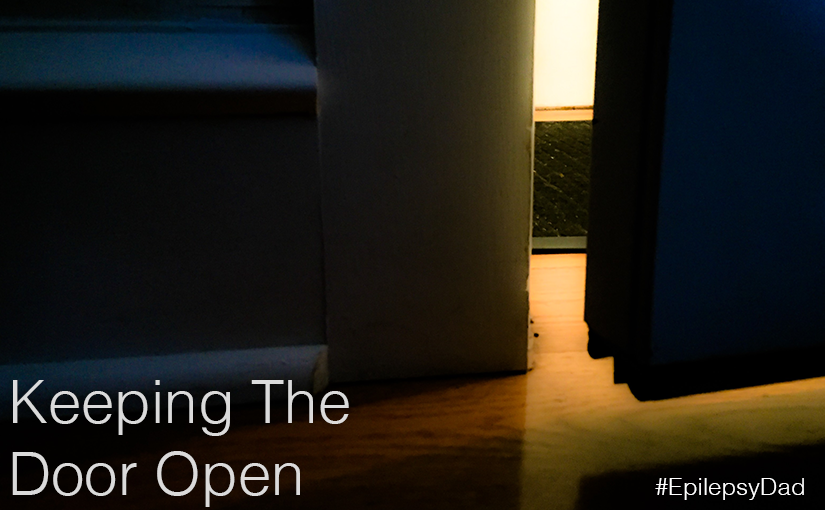
    This post isn’t about CBD. It isn’t about Keppra. It isn’t about dilantin, or topamax, or vimpat, or triliptol, or tegratol. It isn’t about any of them in particular but, in a way, it is about all of them. It’s about feeling like a door closes a bit more every time we stop another medication. There is still light on the other side because I can see it splashing through the opening onto the floor. But the beam is getting narrower. And no matter how I angle my head, I can’t actually see the source of the light. I have to trust that it is there.

    I’m frustrated that another thing that has worked for others didn’t work for us. I hoped it would live up to the hype and that we would be one of the success stories. I want desperately for something to work for my son. As hopeful as I am that he will wake up one day seizure-free, I’m not greedy. I’d settle for a magic pill that would allow us to stop his other medication and free him from their side effects. A pill that would let him stop the ketogenic diet so that he could have a slice of pizza or a piece of candy.

    The side effects. The ataxia. The attention. The unbalance. The learning difficulties. The feeling of being different. The loss of control of his mind and body. The lack of freedom. An uncertain future. I want that magic pill to take away these things, too.

    But there is no magic pill. As every parent of a child with epilepsy knows, some things work for some people but not for others. We happen to be in the unlucky camp of people for whom most things don’t work at all.

    The door hasn’t closed, though. I won’t let it. I jammed my foot between the door and the frame so that it can’t close. I’ve got one hand gripped on to the handle and the other with a firm grasp on the door, and I’m pulling as hard as I can.

    I won’t let that door close.

    There is too much at stake. When there is light, there is hope, and there is so much to be hopeful for.

    I won’t let that door close.

    If I have to, I’ll rip it right off its hinges.