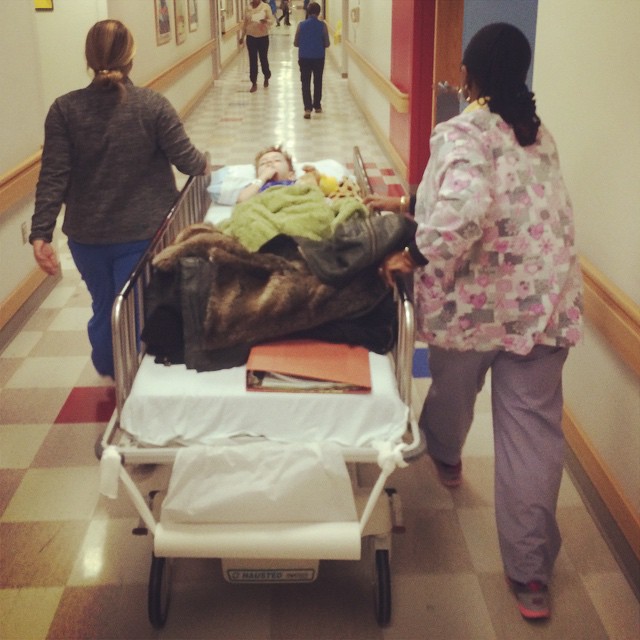
Tag: seizure

  • The Long Walk Home

    The Long Walk Home

    It was one of those nights when we had to decide between bringing him to his teeball practice or letting him skip it and rest. During the previous week, we had just gotten him back up to a functional dose of his medicine that once again helped stop his daytime seizures. But, after almost of week without them, the nighttime seizures returned. That day, he was spacey, and just “off”, which brought us to having to make this choice. Should we let him go play and do something that he hasn’t stopped talking about the entire week and risk him getting exhausted and more likely to have a seizure? Or should we keep him home, let him rest, and miss out on yet another activity?

    Some nights, the decision is easier. If he had a day of seizures, or if his behavior was off, or if he had those big, puffy, purple circles under his eyes, he would stay home. Or, if he had a great day, and a great nap, it would be an easy choice to head to the field.

    But on the in between nights, it’s hard to know what to do or what the repercussions might be. It’s like picking the mystery box in a game show. He could pep up and participate or he could lose complete focus and throw baseballs over the fence or somersault across the field.  We decided to open the mystery box and take our chances.

    With being tired and being surrounded by a gaggle of excited peers, there were a few moments where we had to remind him to stay focused, but overall he did great. Until, that is, towards the end of practice where he had a great hit but was tagged out. He insisted that he was safe, but he was not (by a mile), and what should have been a short discussion turned in to a battle and a long walk home.

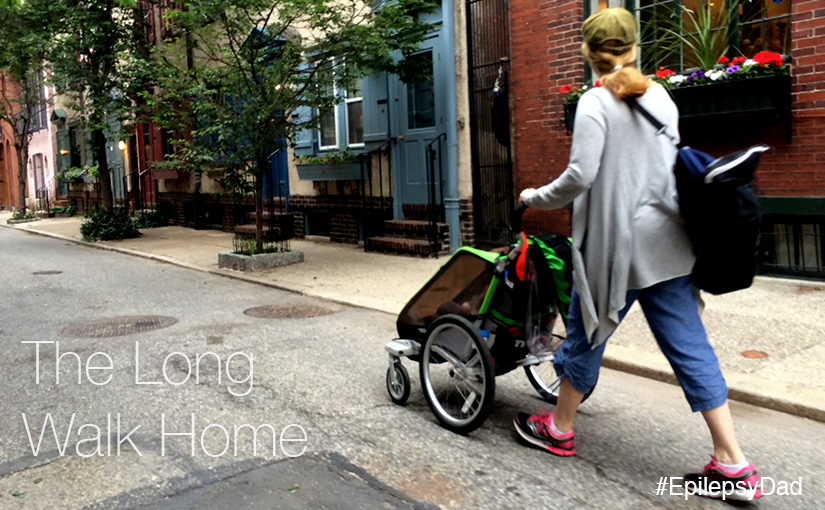
    He cried the entire way. There was no reasoning, and no real comforting. He was tired, and done, and he just wanted to cry. So we let him. My wife pushed the stroller and I carried the teeball bag on my back. We would occasionally tell him that we loved him, and that we were sorry he was so sad, but we mostly let him cry, his head tucked in his hands or his baseball hat, as the tears rolled down his face.

    When we got home, sniffling, he pulled himself out of the stroller, walked up the steps in to the house, and fell on the couch, crying as I helped him take off his shoes and jersey. I again reassured him, rubbing his head and kissing his forehead. As I started to stand, he calmed down and asked me to sit next to him, which I did.

    We are not strangers to these long walks home. Last year, they were angrier, with hitting, and spitting, and mean, angry words coming from a crying five-year old. There were days where he would stick his feet in the wheels and laugh, or jump out of the stroller and try to run away. There were attempted trips to the museum or the park that would end before they began with us turning around after only a block or two from our home. It’s hard when the threat of a thunderstorm looms over every outing and every activity. But better the risk of a long walk home after doing something than never leaving the house.


  • Always Running

    Always Running

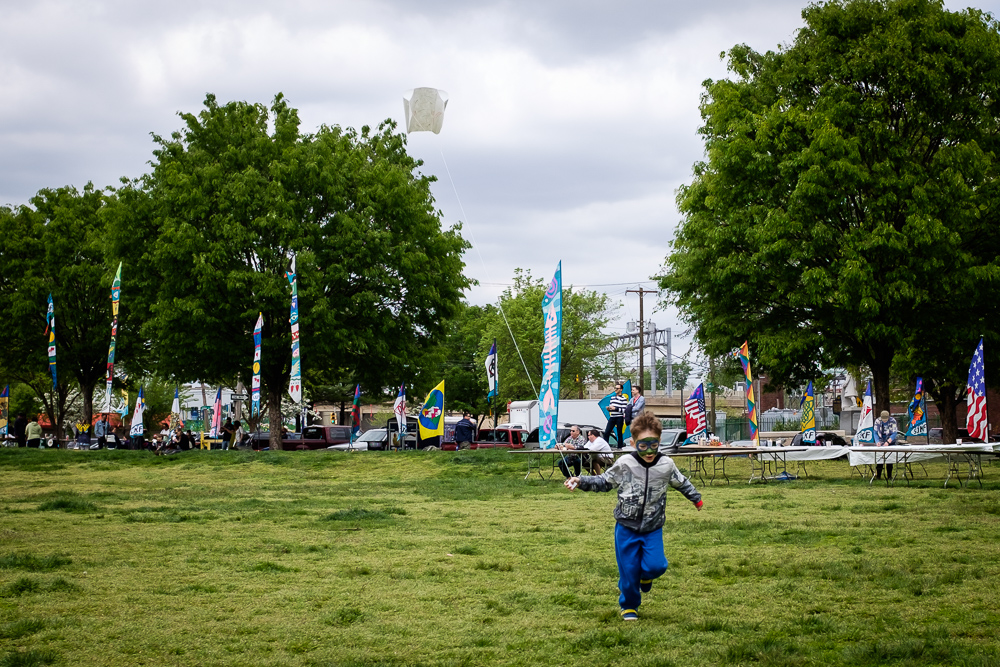
    Our new home city has a notable kite-flying history, and last weekend we went to the Philadelphia Kite Festival. Separated by only a few miles (and two hundred and fifty years) from where the festival was held, Benjamin Franklin performed his famous electricity experiment, as the story goes, with a kite, string, and a key.

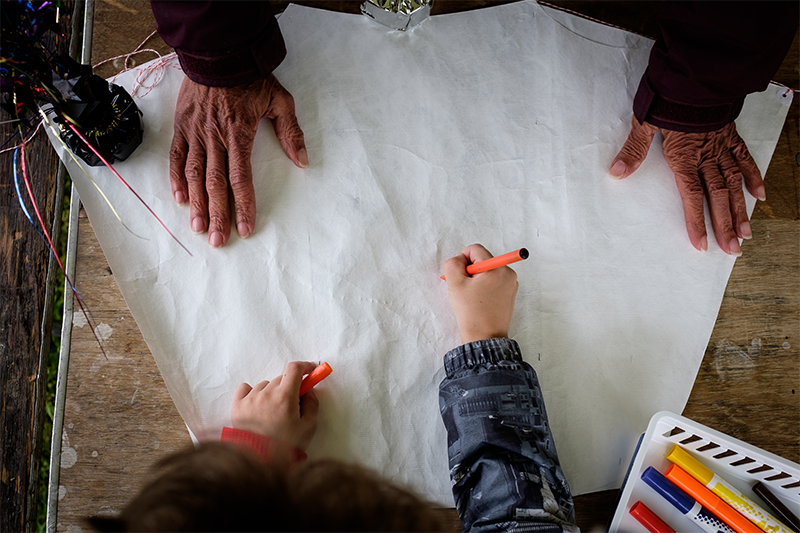
    Inspired by historical events, we forewent the store-bought kites and headed to the tent where visitors could decorate a simple paper kite. My son sat at one of the long, wooden tables, in front of a blank kite. A volunteer slid over, placing weights on the corners of the kite and handed my son a white, plastic basket of markers.

    epilepsy philadelphia kite festival

    Sticking with his go-to move, my son wrote his name in the center of the kite. Then he rotated through the markers and adorned his kite with lines and shapes and squiggles in every color. Only on one side, though. The volunteer explained that the side my son was decorating was the side that he would see when his kite was in the air. When she offered to flip the kite over so that he could draw on the other side, he told her that he was done.

    The volunteer took his kite and put on the finishing touches: a few folds and tape to create airfoils and string from wing to wing. As she did, she leaned over the table and gave my son a lesson in flying a kite. “Keep the wind at your back,” she said, brushing his hair from back to front with her weathered hands.  “Otherwise, it will fall to the ground.” He stood, listening intently, as if he were a pilot about to take the controls of an airplane for the first time.

    epilepsy philadephia kite festival

    After a few more pointers, my son grabbed his kite and headed to the field.  He placed his kite gently on the ground and unrolled a few feet of string. It was not a particularly windy day and most of the kites on the field sat limp on the ground. The breeze was barely enough to move the blades of grass and cause an occasionally flutter of the paper that comprised our hand-crafted kite.

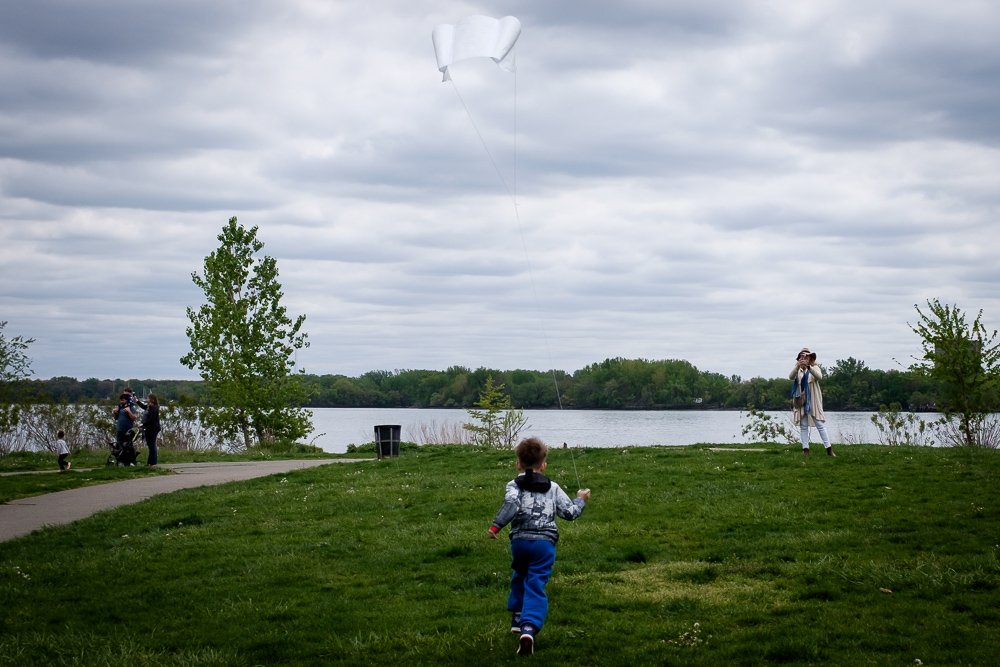
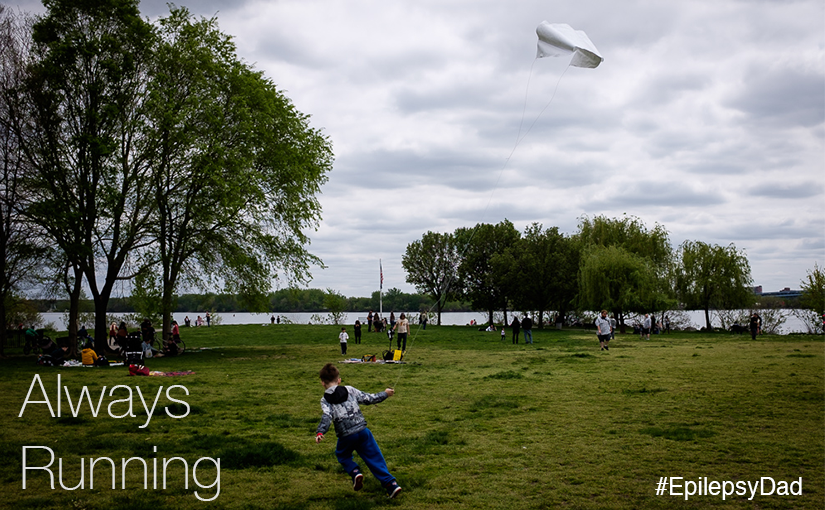
    “Go!” I told him. He held on to his roll of string and started to run. After a few feet, his kite lifted in to the air. He would turn to look at his kite high in the air but, as he did, it would start to sink slowly towards the earth below, so he would turn again and race across the field and his kite would climb back in to the sky.

    epilepsy philly kite festival

    My son and I took turns over the next half hour running across the field keeping his kite in the air before I called for a break. He stopped running, and his kite fell to the ground.

    We sat on a bench near the river, watching other people fly their kites, and I thought about how we have to keep running to keep everything up in the air. We are constantly running, adjusting and managing medicine, measuring everything he eats for his diet and cooking meals, making sure he’s not too tired, hunting for other triggers, and always observant, watching for seizures. We’re running and trying to normalize his day for school, and racing between appointments, and trying to give him as normal a life as possible. If we ever stop running, everything, like his kite, will come crashing back to earth.

    I wish so much for him to feel the wind at his back…to watch his kite fly in the air without the need to run so that he can lay back in the grass, watching his kite in the air, and simply enjoy the sun. My son didn’t complain because there was no wind or because he had to run across the field to keep his kite in the air. He doesn’t often complain about his seizures, or his medicine, or his diet. Through everything, my son has been a trooper.

    He runs because he doesn’t know or remember any other life.

    We run because he is our son, and we would do anything for him.

    epilepsy philly kite festival


  • Playing Teeball Again For The First Time

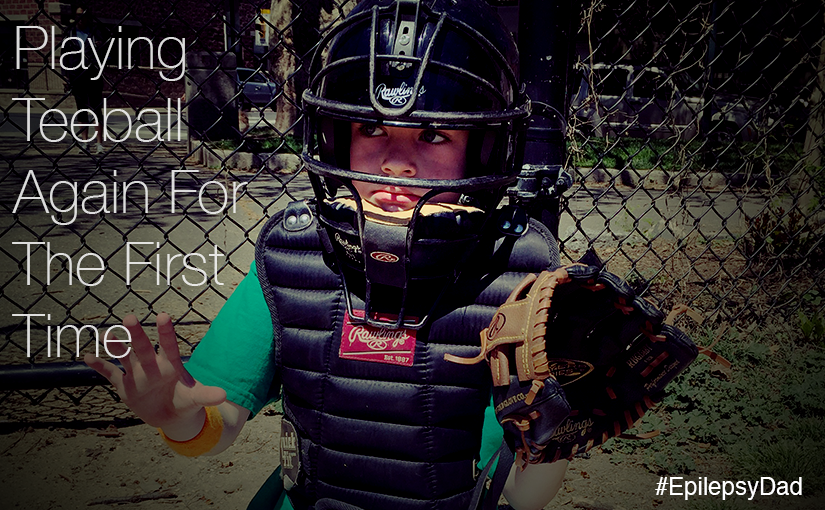
    Playing Teeball Again For The First Time

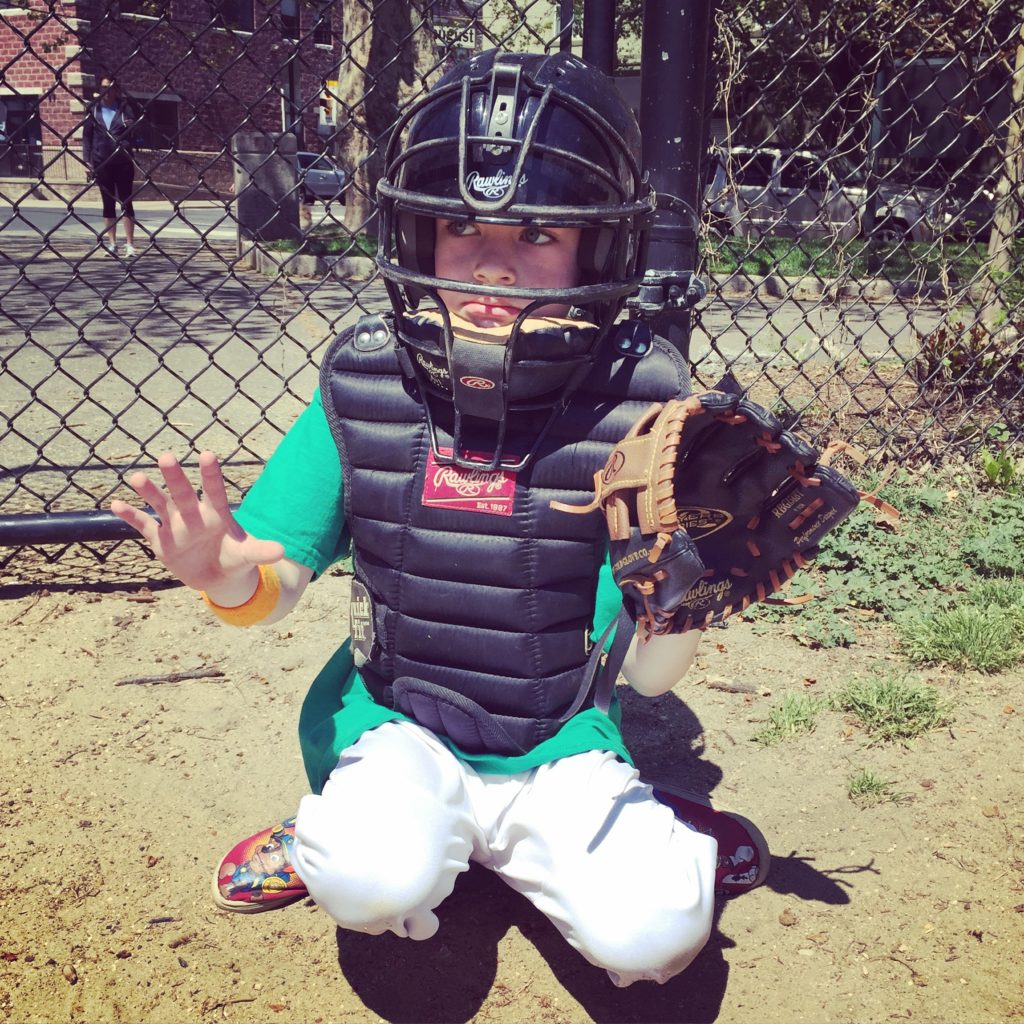
    Last year, we signed our son up for teeball. He was only out of the hospital for a few months and was still having seizures and suffering from severe ataxia and behavioral issues from the seizures and medicine, but we wanted to give him a bit of “normal”.

    There were times when he would be in the field, in the “ready position”, wobbly and shaking from the ataxia, and he would have a seizure…the audible cue, his body glove slumping down and his body sagging. These seizures were short, he would spring right back up, back in position and waiting for the ball. If we tried to get him to leave, he would say no so we would monitor him and he was usually able to finish the game.

    When the game was over, though, he would be so exhausted, and the exhaustion was sometimes followed by episodes of his extreme, angry behavior. We’d put him in the stroller to take him home, and he would be saying mean, hurtful things, or spitting, or hitting. We’d get him in to the house and hold him until the storm passed and he was able to calm down and take a nap.

    There were good moments, too. Towards the end of the season, the coaches used a pitching machine instead the tee. Most of the kids would go up and strike out since it was obviously their first time trying to hit a moving target. But I’ve been pitching to my son for years…the tee we had was too big so we just pitched it to him and he would hit it. So he would step up to the plate, ataxic and off-balance, like a drunk stumbling down the street. He would go through the motions to get his feet set, his hands around the bat that he would lift up to his shoulder, and sway back and forth waiting for the pitch to come. When it did, his soft, fluid motion would bring the bat in perfect contact with the ball and he would crush it, and the look on his face made every other thought disappear.

    It was a balancing act…trying to give him an opportunity to do something fun with other kids but managing his seizures and minimizing the behavioral issues. There was no right answer. I felt like I was a terrible parent for putting him in the situation, and I felt equally terrible on those days where we’d skip the games and he would sit inside, isolated, lonely, and just as angry and having just as many seizures.

    We’ve come a long way in the last year. My son is again playing teeball. His ataxia is better but still visible, but his behavior is much more under control. He’s cheering on the other batters and saying “Batter up!” and “Good job!” as the other team crossed the plate. There have not been any on-field seizures and, after our last game, he played at the park with his friends because we didn’t need to rush home because of seizures or to brace for the oncoming fatigue-induced anger.

    teeball epilepsy ataxia

    My son doesn’t remember much about his first year of teeball, one of many holes that was caused by the seizures and the medicine. There are times when I wish I could forget last year, as well. But even though he doesn’t remember, I saw moments of joy and a sense of accomplishment as he hit the ball or ran to a base, and those are the memories that I choose to think of when I look back. If any memories from that time do come back to him, I hope that is what he remembers, too.

    But if he never remembers last year, and if he only remembers his experiences this year, I’m grateful that we have this opportunity for him to play teeball again…for the first time.

  • Epilepsy And The Lack Of Freedom

    Epilepsy And The Lack Of Freedom

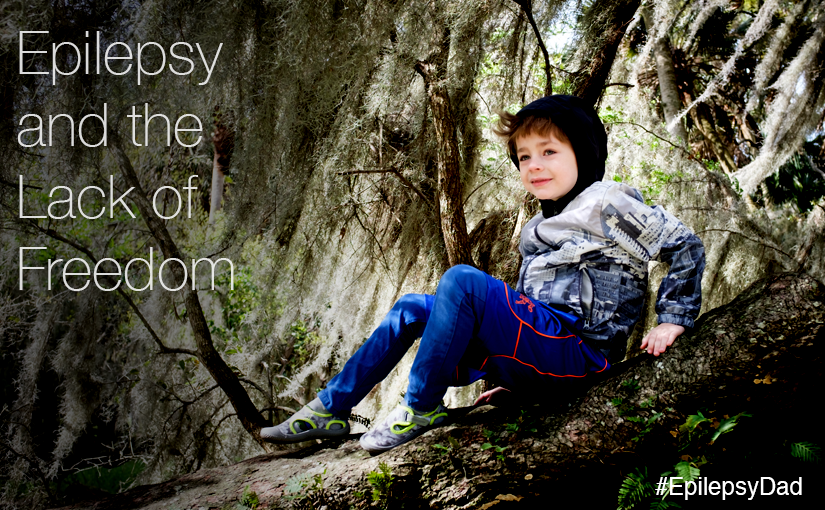
    One day last week, after I dropped my son off at school, I walked past the playground and the late kids being hurried by their parents across the street. The kids were a few years older than my son and, on the walk home, I began to think of when I was their age and lived in an apartment complex in Connecticut.

    I remember there was a common area between the apartments and the street that was covered in grass, with a big, green boulder that I used to climb, imaging it was the tallest mountain. My friends and I used to meet on the grass and play baseball, or tag, or ride our bikes on the sidewalk through the buildings.

    My sister was among the older kids that used to also congregate by the boulder, usually either ignoring or taunting their younger siblings. But there were no parents. Many of our parents, including my mother, were single parents or low income parents trying to make ends meet, so they were working or inside catching up on chores and other duties. So we were left to go outside, and play together, and to fill up our days with whatever we felt like doing.

    If the older kids got to be too much, my friends and I would grab our fishing poles and walk through the woods adjacent to the apartments to a small creek where we would catch frogs and small fish and where I swear I saw a river monster (which was probably actually something like a muskrat). There was a sledding hill on the other side of the complex, and patchy wooded areas that we could explore with plenty of trees to climb. Our ability to roam without parental supervision or babysitting by our older siblings made us feel very free.

    epilepsy dad lack of freedom

    We don’t have any spaces like that near our house, and living in a big city is a completely different environment than the area around those apartments when I was my son’s age, but I wondered if my son would ever get to experience that same sense of freedom that I had when I was living in those apartments. Even if there were places to roam and their weren’t busy streets to navigate, will his seizures prevent him from being able to run off and play without the watchful eye of my wife, me, or another caregiver? Will he always have to be around other people, particularly someone who knows what to do if he has a seizure?

    I’ve always said that I didn’t want epilepsy to make my son feel “less than”, or for it to keep him from doing anything he wants to. But the reality is that it might, especially if we continue to have such a hard time getting his seizures under control. He probably doesn’t notice it as much now, because he’s six and because he’s not supposed to venture out in to the world by himself. But as he gets older, and as he’s not able to experience the same freedom that his friends do, I’m going to need to find a way to make it okay.

  • How Far We Have Come

    How Far We Have Come

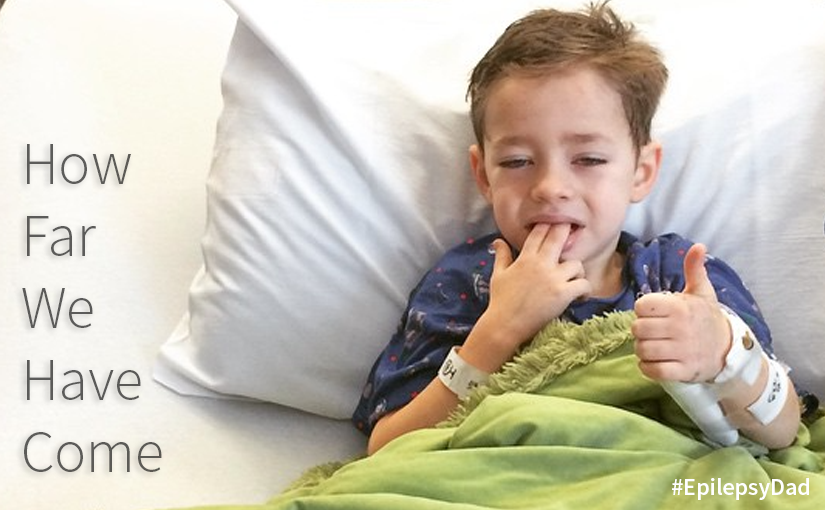
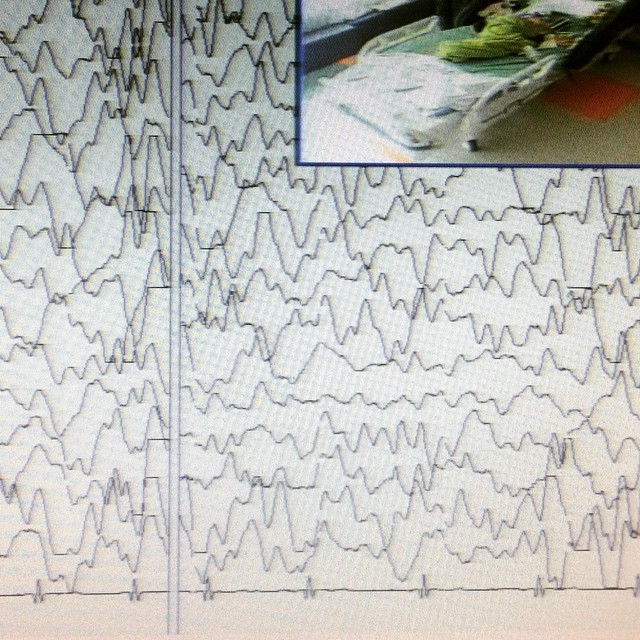
    A year ago, we sat next to our son’s bed in the hospital holding his hand and praying for his seizures to stop. That is when we learned what status epilepticus was, and we watched the monitor above the bed as the EEG machine that my son was hooked up to registered seizure after seizure after seizure. It takes a trained technician to truly understand the meaning of the spikes and waves that show up on the screen, but the Event counter kept climbing, and the increases coincided with what we saw happening to the body and mind of our little boy.

    dreaming eeg epilepsy seizure how far we have come

    I remember falling asleep next to him, only to be woken by the sound of another seizure. I’d tilt my head back to read the screen upside down and, even though I was only asleep a short time, the counter would have increased more than it should have. My wife or I would then have to get up and push the “we saw a seizure” button and record the seizure on a piece of paper, in the dark using the light of our phone or the EEG screen so that we could fill in another row on the seizure chart with the same short pencils that they hand out to record your score at a golf course. What an odd thought to have while scribbling the duration and characteristics of a seizure, but I was delirious, and scared, and lost, and at that moment, that pencil provided a fleeting, comforting place for my mind to wander.

    Thinking back to those nights, as out of control as everything seemed and as much as we felt as if we just kept falling, we had no way of knowing what would lie ahead. As dark as those first nights seemed, we were practically basking in daylight compared to the blackness that was to come.

    There would be many more nights connected to the EEG, more charts, more tests, more little pencils, and many, many more seizures. There would be a string of doctors, nurses, and medications, side effects and unbearable behavioral changes. There would be discharges and readmissions, and many questions, but very few answers.

    dreaming eeg epilepsy seizure how far we have come

    My son was not among the lucky (if there is such a thing) epileptics that could take one medicine and be under control. Instead, he’s in the very unlucky group that still struggles to find the right medicine and the right dose to stop the seizures that torment his brain. While his seizures are not completely under control, they are less frequent. He can walk, and run, and talk, and learn, and laugh, and he even has really, really good days.

    We have very few answers but, in spite of that, we’re making progress. Our year adrift in an angry sea has thrown us in every direction imaginable, but we’re hopefully headed towards calmer waters.

    How far we’ve come. But it feels like we still have very far to go.