Tag: epilepsy

  • The Hockey Diet

    The Hockey Diet

    When I first heard about the ketogenic, it was long before it would ever be recommended to us. My son was only just diagnosed with epilepsy, and the diet seemed like an extreme option, especially since he was just starting his first epilepsy medicine. But as his seizures got worse and as we moved from medicine to medicine to find one that would work, we eventually found ourselves that extreme situation where the diet became an option for us.

    Now, we’re one month away from starting the diet. Once we start it, for the foreseeable future we’ll be measuring everything he eats to a tenth of a gram. We’ll have to figure out how to tell a five-year old that he can’t have pizza. Or spaghetti. Or gum. Of course, all the measuring and the food restrictions are worth it if the diet works for him, especially if it means a better quality of life, less seizures, and less medicine.

    I was struggling with how to sell the diet to my son. Much like not wanting to change his room because of his seizures, I didn’t want to have to associate such a strict diet with his seizures, either. Then, during the orientation for the diet that the children’s hospital offers, a nurse told the story of how some parents put their daughter on “the princess diet”, and how that helped ease the transition on to the diet for her. At that moment, I knew that my son wasn’t going on the ketogenic diet. He was going on “the hockey diet.”

    ketogenic diet for epilepsy

    When I told him, he got excited. It doesn’t change that he’s going to miss a lot of his favorite foods, or that he’ll have to eat different food from his friends at school and at birthday parties. But by giving it a positive spin and turning it in to a diet for his favorite thing on the planet, we’re hoping it makes the transition even just a little bit easier.

  • Resisting The Inevitable

    Resisting The Inevitable

    When my son’s epilepsy diagnosis came, it came with a list of changes that we needed to make to our lifestyle. No more baths without supervision, no more swimming without someone else in the pool, and no bunk beds. The first two changes were precautions to prevent drowning, and the last one was to prevent falling out of bed during or after a seizure.

    A few months before his diagnosis, to help ease the transition for my son with our move from Colorado to Philadelphia,  we sprung for a new bedroom set for his new room. The bed? A loft bed with a slide, clearly not on the epilepsy-friendly list.

    epilepsy safety bed rail


    We really struggled with what to do. The diagnosis was new, and it was bad enough that our son was having seizures, we didn’t want this also to mean we had to start taking stuff away from him and changing his environment. Besides, we told ourselves, the medicine was doing its job, and he wasn’t having seizures anymore. So we let him keep his bed.

    As it turned out, his seizures weren’t under control. They were masked by the medicine and they evolved, happening early in the morning and shortly after he woke up…both times when having a bed that was five feet off the ground posed a serious danger. After our latest hospital stay, my wife and I finally had the conversation that we had been putting off and made the decision to create a safer environment for our son.

    Instead of ordering a new bed, we talked to our son about converting his fire station loft bedroom in to a ground level hockey bedroom and he was thankfully on board. Most of the time, he handles so much of this better than I do, and my fears about him resisting these changes or feeling like his epilepsy were going to ruin his life proved a much easier conversation, especially when we talked to him about the silver linings and making him a part of the process. He will get to help pick his sheets and blankets with his favorite teams. With the slide removed, there is more room to play hockey. And, probably most importantly, lowering the bed is the next step in to him being able to sleep in his own room again.

    The lesson is that safety should always come first, and that there are ways to make these transitions less traumatic. It just takes a little creativity and a lot of love, which our family has in spades.

    Oh, and by “converting” his bed, I broke out the circular saw…

    epilepsy safety environment seizure

    …and cut the legs down on his bad to a safer height.
    bed epilepsy safety seizure

    I wish taking away his seizures were as easy.

  • A New Normal

    A New Normal

    The idea of normal for me six months ago feels very different from it does today.

    Six months ago, none of this was happening. We were an ordinary family with an exceptional boy growing up in a normal way without seizures, without medicine, and without a diagnosis.

    Then the seizures came, and our normal changed. Normal was daily medication. Normal was carrying a rescue medicine with us where we went. Normal was explaining to caregivers and teachers what to do in case of a seizure when we barely knew ourselves.

    That was our normal for awhile. But then the seizures changed, and the medicine he was on also needed to change. Only, that medicine didn’t work, so our normal became more seizures, and hospital stays, and testing, and a search for answers.

    normal epilepsy lifestyle

    This last hospital stay, a bad reaction to one of the medicines caused something called ataxia, which means our son basically lost control of his body. Thankfully, when they stopped the medicine and he is slowly gaining back control of his body and his mind, but we’re left to wonder how fully he will recover

    Six months ago our normal was talking about how our son would be a hockey player when he grew up. Now we’re just hoping we can regain what was lost, and hopefully figure out a cause, or a treatment, or preferably both.

    We’re still in a place where we don’t know what our new normal is going to be. But whatever the future holds, there is one thing that will always be part of our normal, and that is making our son feel exception.

    Because he is.


  • The Waiting Is The Worst Part

    The Waiting Is The Worst Part

    I spend a lot of time waiting for explosions.

    These explosions come from different places and take many forms in my life. Lately, they’ve come in the form of seizures and an angry reaction to a new medicine.

    Each explosion creates a new crater on the landscape in my mind as I hunker down in the bunker waiting for them to subside. The snow outside tonight makes me think of the soldiers in World War II, freezing in foxholes in the dark night of the Ardennes Forest while the Germans shelled them, destroying trees, bodies, and spirits alike. The physical damage is easy to rationalize, and to justify, and to accept. The damage to the spirit is harder to quantify, and it brings with it the wonder when the explosions will come again.

    epilepsy explosion shellshock

    The waiting is always the worst part. Waking up to every sound at night wondering if it’s another seizure, especially when there were none the previous night. Wondering if the next episode of my child not listening will escalate in to biting, and spitting, and the horrible things that no child should ever have in their heart. Only, you know with what’s happening, that is not really your child. Except, it is. And there is nothing you can do about it except try to calm things down, and hope that it will be the last time. The last outburst. The last bad reaction.

    And that’s when the waiting starts…all over again.


  • The Illusion Of Time

    The Illusion Of Time

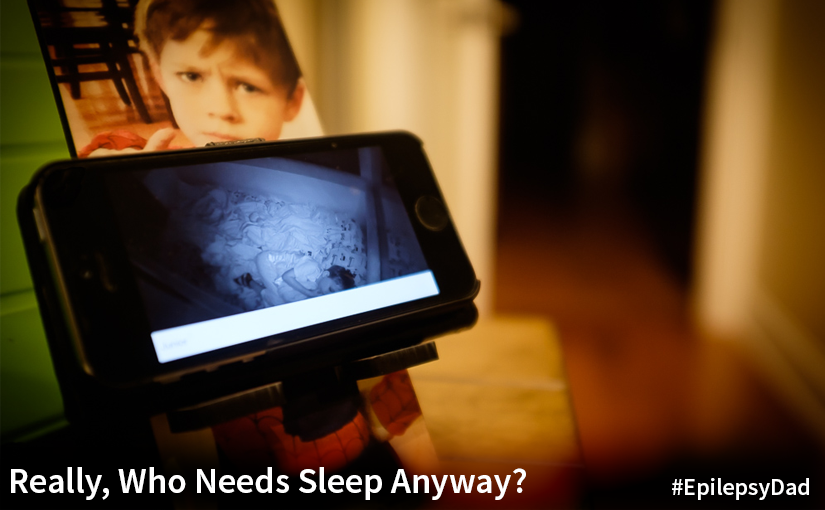
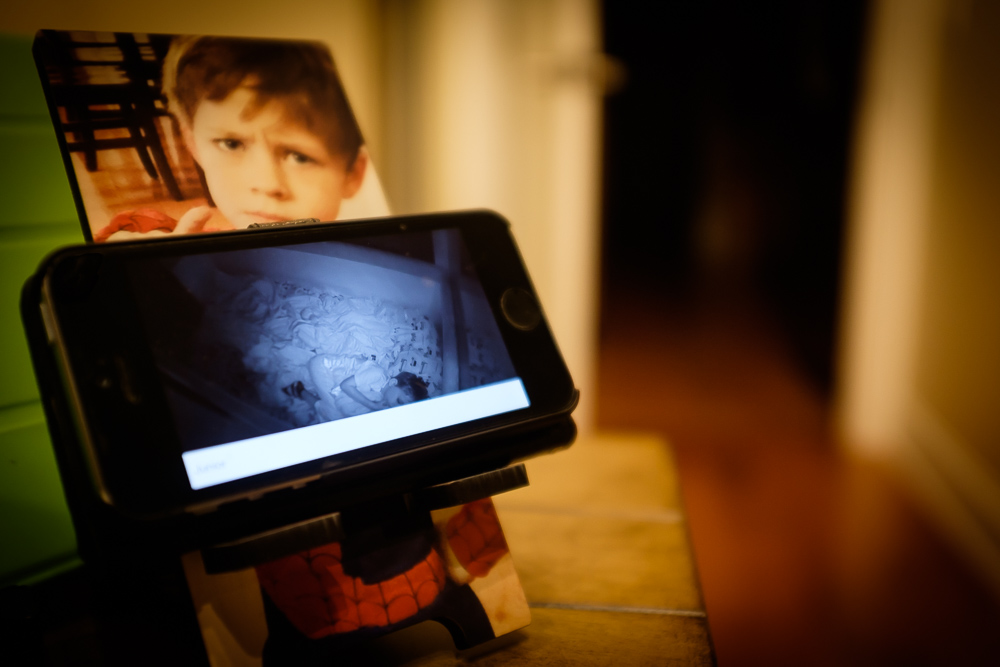
    It’s 4 in the morning and I’m sitting on the couch across from the hospital bed where my son is sleeping. Sleeping, finally, after having a cluster of seizures. The first one happened while I was lying in bed next to him. A quiet grunt announced the oncoming episode; a sound that would otherwise have gone unnoticed except for my newly acquired hyperaware sleep where I listen for any sound out of the ordinary.

    The first seizure lasted under a minute, followed by another, longer one. They repeated for the next two hours, various lengths with varying breaks for sleep in between. As each seizure started, I would focus on the digital screen showing an analog-style clock affixed to the wall trying to quickly find the thin seconds hand on its journey around the face of the display. As the seizure ended, I’d groggily make a mental note of the duration to pass along to the nurse. Just beyond, a team of doctors looked at the data.

    epilepsy dad doctor hospital diagnosis

    Robotic, calm, precise…all the things I wasn’t when he had his first seizure.

    If you’ve never seen a seizure, especially happening to your child, the first few always stretch time. For me, there was a phase of not knowing what was happening. I thought he was playing a game until he wouldn’t respond for what felt like an eternity. Then the frantic 911 call, the waiting for the ambulance, the not knowing the different phases of a seizure and when it began and when, or if, it would end. When the paramedics and later the doctor asked us how long the seizure lasted, we didn’t know. We had no reference. Our initial estimate was 10 minutes, but time in those circumstances, time is stretched and bent and irrelevant to a panicking parent. We didn’t know we were supposed to know how long they lasted, and so we made an impossible guess.

    Einstein said the “Time is an illusion”, that the passage of time is a psychological human condition, not a property of the universe. I don’t know about the universe. But as a parent, I know that sometimes time moves way too fast and, at other times like in the middle of a seizure or when you are waiting for an answer as to why this is happening at all, it moves too goddamn slow.