Tag: epilepsy

  • Making Moments Matter

    Making Moments Matter

    Last weekend, we were in Washington D.C. for the Epilepsy Foundation walk. We had planned the trip for months, and we tucked away some money to pay for the trip and activities while we were there. As it happened, there was a playoff hockey game in D.C. on Saturday night. It wasn’t something we planned on, and hockey tickets are expensive…playoff tickets more so.

    I called my wife and told her about the game. “We should do it,” she said.

    There was a time in my life where I would have argued. Where I would have tried to rationalize the cost, and crunch the numbers, and adjusted the budget. My wife tried for years to teach me the value in making moments matter, but I had a hard time listening or believing her until my son got sick.

    The past few years have been an endless struggle to control his seizures, switching medicines, managing side effects, and behavioral issues, a difficult diet, and the stigma of having epilepsy. Some days, he can’t control his body, or he seizures at night and has an accident. He wakes up some days wanting to give up, or comes home from school embarrassed because someone laughed at him for drinking oil with his lunch. It’s an impossible life for a six-year-old.

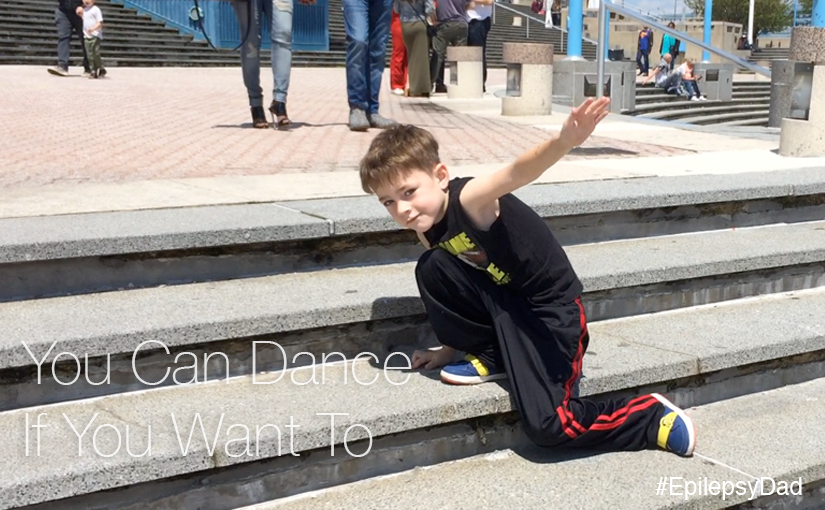
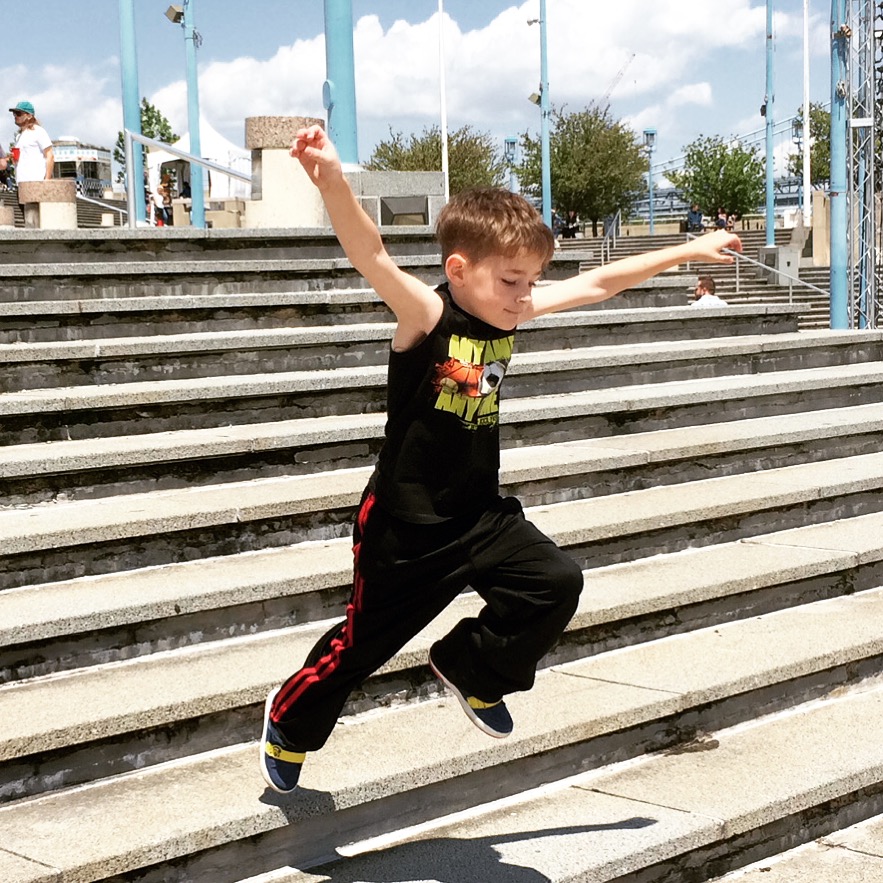
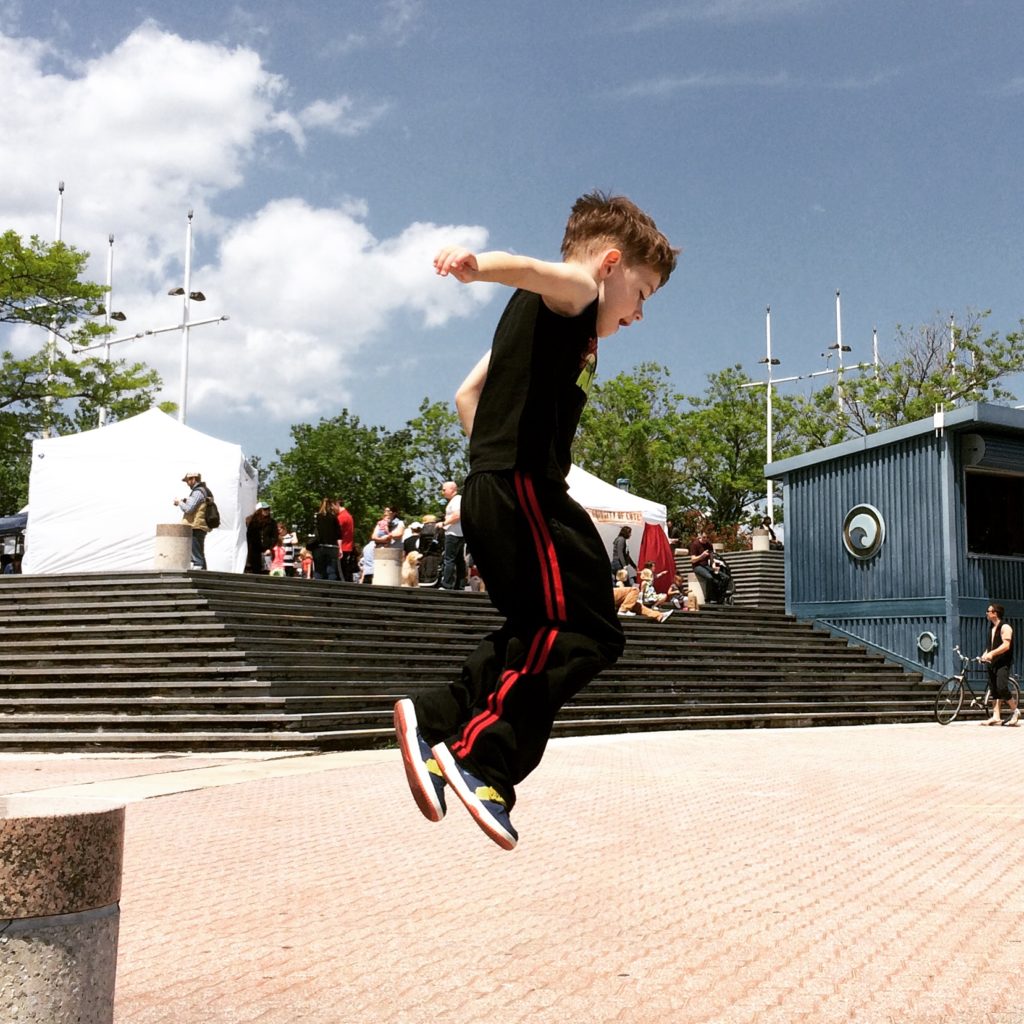
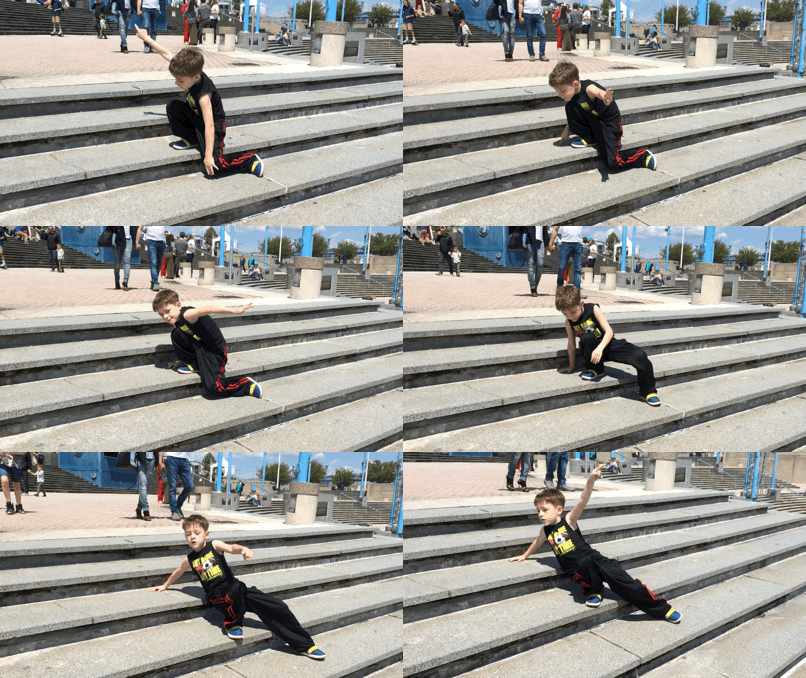
    Moments don’t need to be expensive or cost money at all. As we walked down the National Mall, he was just as happy playing tag and hide and seek on the grass, and doing the scavenger hunt in the hotel. I could have said I was tired, or that I wanted to see the sights.  But those little moments of playing his game and giving him an opportunity to feel normal and to simply have fun matter, too.

    making moments matter epilepsy

    But hockey is one of those things that my son hasn’t given up on, and the universe was sending me a message by putting a playoff game in the same city where we would be and, to be sure I wouldn’t miss the message, the game was also against our home team. We bought the tickets and surprised him with the game.

    making moments matter epilepsy

    Even though our team didn’t win, the home crowd appreciated his enthusiasm and pat him on his head as he cried in to his hands after another tough loss. As we walked out, he had a smile on his face and moved the home team up on his favorite team list.

    I’m grateful my wife has tried to teach me to make moments matter.

    And I’m glad I finally listened.


  • Epilepsy And The Lack Of Freedom

    Epilepsy And The Lack Of Freedom

    One day last week, after I dropped my son off at school, I walked past the playground and the late kids being hurried by their parents across the street. The kids were a few years older than my son and, on the walk home, I began to think of when I was their age and lived in an apartment complex in Connecticut.

    I remember there was a common area between the apartments and the street that was covered in grass, with a big, green boulder that I used to climb, imaging it was the tallest mountain. My friends and I used to meet on the grass and play baseball, or tag, or ride our bikes on the sidewalk through the buildings.

    My sister was among the older kids that used to also congregate by the boulder, usually either ignoring or taunting their younger siblings. But there were no parents. Many of our parents, including my mother, were single parents or low income parents trying to make ends meet, so they were working or inside catching up on chores and other duties. So we were left to go outside, and play together, and to fill up our days with whatever we felt like doing.

    If the older kids got to be too much, my friends and I would grab our fishing poles and walk through the woods adjacent to the apartments to a small creek where we would catch frogs and small fish and where I swear I saw a river monster (which was probably actually something like a muskrat). There was a sledding hill on the other side of the complex, and patchy wooded areas that we could explore with plenty of trees to climb. Our ability to roam without parental supervision or babysitting by our older siblings made us feel very free.

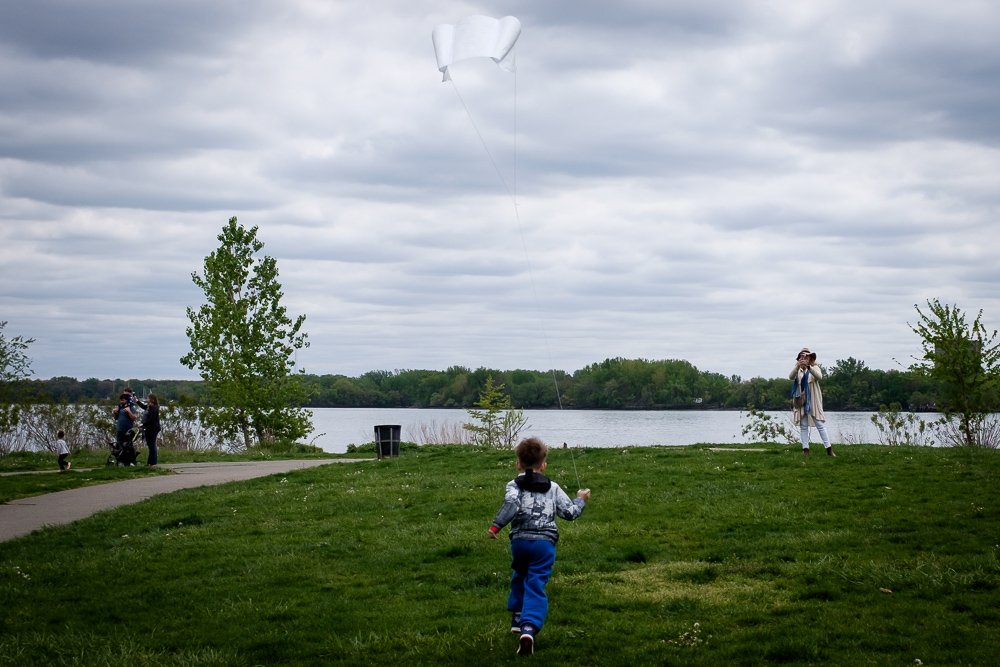
    epilepsy dad lack of freedom

    We don’t have any spaces like that near our house, and living in a big city is a completely different environment than the area around those apartments when I was my son’s age, but I wondered if my son would ever get to experience that same sense of freedom that I had when I was living in those apartments. Even if there were places to roam and their weren’t busy streets to navigate, will his seizures prevent him from being able to run off and play without the watchful eye of my wife, me, or another caregiver? Will he always have to be around other people, particularly someone who knows what to do if he has a seizure?

    I’ve always said that I didn’t want epilepsy to make my son feel “less than”, or for it to keep him from doing anything he wants to. But the reality is that it might, especially if we continue to have such a hard time getting his seizures under control. He probably doesn’t notice it as much now, because he’s six and because he’s not supposed to venture out in to the world by himself. But as he gets older, and as he’s not able to experience the same freedom that his friends do, I’m going to need to find a way to make it okay.

  • The Lonely Record – A Story Of Data In Epilepsy Diagnosis

    The Lonely Record – A Story Of Data In Epilepsy Diagnosis

    Somewhere in a cluster of servers in windowless rooms spread around the world, there is a Great Machine. On that machine, there lives a database. In that database, there is a table, and in that table, there is a record about my son. The 1s and 0s in that record contain an anonymous listing of a six-year-old boy. Those bits and bytes also contain data of expressed genes captured during an exome sequencing.

    In the same database, there are records of thousands of other children that have had their exome sequenced, too. Each individual record has at least one common attribute with all the other records…the child that the record represents has epilepsy.

    The goal of the exome sequencing is to identify one of the known genetic variations that is known to cause seizures. If that happens, patients can benefit from those that came before. A potential treatment plan identified by other patients with the same genetic condition might provide a more targeted approach for the newly matched patient. It might also offer some insight in to prognosis. For better or worse, it may at least give some answers.

    For the new records that are placed in to the database that are not matched to a known genetic cause, they sit unattached and alone. These records lack causation and, in their unjoined state, they also lack correlation. There are no patients that came before, no best practices or lessons learned. There is no prognosis. There are no answers.

    My son’s record is that way. It rests alone in a database, somewhere in the world, on a cold, metal server in a windowless room, waiting to be called. Waiting to be joined with another record. Waiting for correlation. Because with correlation, there can be association. With association, there can be coordination. With coordination, there can be answers.

    Every six months, the Great Machine tries to use new discoveries, new cases, to find patterns that were previously unseen or unknowable. It calls out to each record, looking to find those that it may bestow the gift of correlation. For most, there is no correlation, no gift, and they return to their lonely state until they are once again called upon.

    Maybe someday, my son’s record will find a partner. A commonality between another record in a database. A non-uniqueness in the universe. In all likelihood, the result of a match will not produce a cause for the seizures. It may, however, start to provide correlation between cases that can be studied further.

    To a lonely record, it’s at least something.


  • Exaptation And Innovation In Epilepsy

    Exaptation And Innovation In Epilepsy

    This post is part of the Epilepsy Blog Relay™, which will run from March 1 through March 31. Follow along and add comments to posts that inspire you!

    In evolution, the term exaptation refers to a trait that has evolved for one purpose but is subsequently used to serve another. The classic example is feathers, which evolved in birds as a way to regulate body temperature but were later adapted for flight.

    The same process is happening in technology, including technology related to seizures and epilepsy. Already this week, other bloggers writing about technology and innovation in epilepsy have described exapting technology developed for one purpose for the treatment of epilepsy. Whether it is how Whitney Petit described how she uses her fitness wearable to control her nocturnal seizures or how a sensor to measure the “fight or flight” response became part of the Empatica device indented to detect seizures, advances in general areas of technology are also spurring progress in the managing and controlling of seizures.

    I think a lot about technology. My day job is to identify trends in technology and peer into the future to try to predict where things will be in five years, ten years, or even further in to the future. I also think a lot about epilepsy. My six-year-old son has refractory epilepsy, which means it’s not controlled with medicine. Being a technologist and an engineer, my natural inclination is to turn to technology to help my son, even if it is not currently able to offer any answers.

    There is one trend that I have been focused on most recently, and that is the development, availability, and shrinking size and cost of sensors. For example, companies are putting gyroscopes that measure angles and tilt and accelerometers that measure acceleration in wearable devices simply because they can, because the sensors are so small and so inexpensive. There are already components smaller than a watch battery that can detect movement and relay information to another device. Smart textiles provide digital fabric that will allow sensors to be stitched seamlessly in to clothing.

    When I look in to the future, I see the ubiquitous nature of sensors in everything from watches and rings to shirts and shoes as manufacturers attempt to measure, collect, and report on our every step, breath, and literal heartbeat. I also see unlimited potential to repurpose these objects in ways that will make my son’s life better by helping him manage his epilepsy. The ultimate goal is to remove the friction imposed by requiring a specific device to be worn for the detection of seizures and to, instead, put that capability everywhere.

    There are challenges with making this happen. Manufacturers must open their platforms and allow communities to leverage the data or sometimes reprogram devices for new tasks, such as detecting seizures. Testing for medical devices is rigorous, necessary, and expensive. But, in many ways, the ground work will be done. The sensors and devices necessary to do the work will be out there already, and we will just need to find creative ways to take advantage of them.

    And that is where you come in. Even if you are not a technologist or an engineer, you are reading this post, most likely, because you or someone you know has epilepsy. In order to make the future happen, it will be up to people like you to create it. The next time you pick up a new gadget, ask yourself how it can be repurposed to solve a different problem. Instead of detecting how many steps you are taking, observe the physical characteristics of your child’s seizures and ask yourself how the accelerometer in that device might be able to detect a myoclonic seizure or a fall. The next time you read about how a new athletic top can measure the performance of an athlete, think about how those same measurements might be able to detect the increased heart rate or breathing rate that happens during a seizure.

    I think a lot about technology, and I want you to think a lot about technology, too. Because there is no one better equipped to find creative uses for this new technology in the treatment of epilepsy than those of you that are living it every day.

    NEXT UP: Be sure to check out Jade Dolby – The Art of Living with Epilepsy for more on Epilepsy Awareness.

  • Father Forgets

    Father Forgets

    Last week, I was listening to the audio book version of Dale Carnegie’s [easyazon_link identifier=”0671027034″ locale=”US” tag=”epilepsydad-20″]How To Win Friends & Influence People[/easyazon_link] on my way to work, and there is a chapter that includes a reproduction of a story by W. Livingston Larned titled “Father Forgets”.  By the time the narrator had reached the second paragraph of the story, I had moved myself to the inner edge of the sidewalk, out of the way, and found myself focusing intently on the words. The words that described how I feel most days after my son has gone to bed; the words that describe my interactions with my son and how I correct his every action and why he always seems to be apologizing when he is around me.

    It took everything I had to keep my composure as the words penetrated my ears and bounced around in my brain. When the story was over, I skipped back to the start and listened to it again. Then a third time. I was convinced that the story was written for me to hear and I wanted to absorb every syllable.

    Navigating this complicated, messy world of epilepsy continues to be a never-ending sequence of impossible situations. But my biggest challenge continues to be separating the condition and its effects from the boy and what is normal or expected at his age. He is so amazing in so many ways and I take that for granted, so I expect him to be amazing in every way and all the time. I forget that he is just a boy. I forget that he is still learning. I overreact hoping that I am curbing any appropriate behavior caused by his medicines or the wiring in his brain when all I am doing is making him feel inadequate and broken and flawed and like he is constantly disappointing me.

    In spite of this, he enthusiastically greets me every day when I come home from work. He’ll ask me to play hockey or baseball, or to have a tickle party, because we have fun together, even as I’m wrestling internally to not correct every little thing he does.

    I don’t want my son’s childhood to be a constant struggle for perfection. There are enough obstacles and unfair complications in his young life, and I don’t want him to look back on this time and have the happy memories colored with a sense of disappointment.

    It is with the most misguided of best intentions that I find myself at the end of the night finding flaws in my own performance and wishing I had done better. Wishing I had taken that deep breath before I replied with a criticism or adding a “but” to a compliment. The habit of finding fault is not an easy one to break.

    But the look on his face when I get home lifts my spirits. The laughter at the end of the night inspires me to try again the next day.

    Tomorrow, I will try to be a real daddy, too.

    Father Forgets

    Listen, son: I am saying this as you lie asleep, one little paw crumpled under your cheek and the blond curls stickily wet on your damp forehead. I have stolen into your room alone. Just a few minutes ago, as I sat reading my paper in the library, a stifling wave of remorse swept over me. Guiltily I came to your bedside.

    There are the things I was thinking, son: I had been cross to you. I scolded you as you were dressing for school because you gave your face merely a dab with a towel. I took you to task for not cleaning your shoes. I called out angrily when you threw some of your things on the floor.

    At breakfast I found fault, too. You spilled things. You gulped down your food. You put your elbows on the table. You spread butter too thick on your bread. And as you started off to play and I made for my train, you turned and waved a hand and called, “Goodbye, Daddy!” and I frowned, and said in reply,

    “Hold your shoulders back!”

    Then it began all over again in the late afternoon. As I came up the road I spied you, down on your knees, playing marbles. There were holes in your stockings. I humiliated you before your boyfriends by marching you ahead of me to the house. Stockings were expensive‐and if you had to buy them you would be more careful! Imagine that, son, from a father!

    Do you remember, later, when I was reading in the library, how you came in timidly, with a sort of hurt look in your eyes? When I glanced up over my paper, impatient at the interruption, you hesitated at the door. “What is it you want?” I snapped. You said nothing, but ran across in one tempestuous plunge, and threw your arms around my neck and kissed me, and your small arms tightened with an affection that God had set blooming in your heart and which even neglect could not wither.

    And then you were gone, pattering up the stairs. Well, son, it was shortly afterwards that my paper slipped from my hands and a terrible sickening fear came over me. What has habit been doing to me?

    The habit of finding fault, of reprimanding‐this was my reward to you for being a boy. It was not that I did not love you; it was that I expected too much of youth. I was measuring you by the yardstick of my own years.

    And there was so much that was good and fine and true in your character. The little heart of you was as big as the dawn itself over the wide hills. This was shown by your spontaneous impulse to rush in and kiss me good night. Nothing else matters tonight, son. I have come to your bedside in the darkness, and I have knelt there, ashamed!

    It is feeble atonement; I know you would not understand these things if I told them to you during your waking hours. But tomorrow I will be a real daddy! I will chum with you, and suffer when you suffer, and laugh when you laugh. I will bite my tongue when impatient words come. I will keep saying as if it were a ritual: “He is nothing but a boy‐a little boy!”

    I am afraid I have visualized you as a man. Yet as I see you now, son, crumpled and weary in your cot, I see that you are still a baby. Yesterday you were in your mother’s arms, your head on her shoulder. I have asked too much, too much.

    -W. Livingston Larned