At the start of tenth grade, I assumed my son would go into school late. That’s how we’d finished ninth grade, so we started the new year the same way. The first week, I woke him up around nine. Waking him was hard. He always seemed to be in a deep sleep, and then he’d seem so tired.
It seemed like a combination of things. Some of it was just being a teenager. I’ve read that early mornings work against a teenager’s nature. Some of it was seizures in the morning, and he was postictal after them, the recovery period after a seizure.
For him, tired matters. We know from experience how it goes. When he’s tired, he has more seizures. The seizures make him even more tired, which brings even more seizures. It’s a downward spiral, and we have to try to get the seizures under control so we don’t end up in the hospital.
So I settled into a routine. I’d start work at home, in my office, and let him wake up when he woke up.
I sat there with no music, no podcasts, no audiobooks. Just the sound of typing on the keyboard and clicking the mouse. Then I’d hear the echo of a seizure down the hall. I’d pause what I was doing, walk to his room, and then go back and pick up where I left off.
I’m trained to hear seizures. It had become routine.
It’s a skill I developed. Life interrupts. It interrupts my sleep, and it interrupts my work. His seizures stop whatever I’m doing, and then I have to get back to it. Back to sleep, or back to an email or a presentation. I compartmentalized. I had to see him, make sure he was okay and get him settled, so I could let myself focus. If I didn’t check, I’d be distracted, wondering. I needed to see him.
I still listen before the alarm he sets goes off. But last year some seizures came later in the morning, too, and I’d stop and go check on him. The mornings were unpredictable. I was always aware of when I got to work, and when I had to leave for pickup.
This year, he wanted to start school with everyone else. I think it was partly his new friends, and partly that he was in the headspace of doing the full day. I don’t know what else is different. He might be having fewer seizures. He’s definitely on fewer meds. Or maybe he’s just older. I was worried he was forcing it, that it would lead to exhaustion and bad things. But I remember using an alarm to wake up when I was his age. And we’re careful about bedtime. We listen to his body.
The first morning of this school year, I was so proud of us. It was a different routine, and we’d gotten out of the house the way we meant to. I went down the checklist: teeth, deodorant, lunch, meds. He said yes to all of them, but the meds one came out hesitant, almost like a question.
I had everything: lunch, clothes, the routine stuff. I just hadn’t double checked the most important part.
I went home, and he hadn’t taken them. I put them in a ziplock and drove back, and walked up to the teachers who greet the kids from the bench out front before school starts. I told them these were his morning meds. One of them said he’d take them to the nurse.
The next day, the nurse was out front on the bench with the teachers. We had a good laugh about almost nailing the first day. I’m glad I went home instead of straight to work.
Now I get up, work out, pack our lunches, and make coffee. At seven, I hear his alarm through the wall of my home office. It’s a biohazard horn. Not a ring, not a chime, a horn. He knows it’s loud and annoying, and he thinks it’s hilarious. Sometimes I’m in the zone, it goes off, and I jump. He likes that. He likes the idea that it scares me.
Every morning, my first thought is: how is that not a traumatic way to wake up? Then I remember it’s just routine now.
A few minutes later he comes into the office, still drowsy, still working on waking up. There’s a recliner in the corner, usually with a dog on it. The dog jumps down when he walks in, and he sits. The dogs go back and forth between him and me, and Viktor does it the most. When my son walks in, Viktor grabs a toy and shoves it against his legs. I swivel my chair around to face him.
I watch his face. If his eyes are too droopy or he’s moving too slowly, I notice. Sometimes it looks like the way he looks after a seizure, that exhausted look. If he’s slow to answer, I notice that too. But usually after a few minutes in the recliner, talking, he looks more alert. We joke, or we talk about last night’s Avalanche hockey game, and I pull up the replay of a goal on my computer. Then he goes down to breakfast.
I shower and pack up my laptop. By then he’s gotten everything ready, grabbed my keys, and gone to sit in the car so his phone can connect to CarPlay and he can pick the music. The first time he did that, I had no idea where he was. Now I know to look there first.
At school, the parking lot is emptier than I’m used to. A few teachers sit on the bench by the entrance and greet the kids. I wave and say good morning. Then I head to work, where the lot is mostly empty too. It’s very different from last year, when we got there late.
Listening to his body can look like a lot of things. Sometimes it’s lying in bed watching videos on his phone instead of playing Rocket League or working on a project. Sometimes it’s a “power nap,” as he calls them, which is a big change for a kid who was aggressively anti-nap for years. He’d give a fierce “no way” at even the suggestion. Now he rests after school when he needs to, and on the weekends.
It’s been about two months. He’s still starting school with everyone else. I haven’t seen a noticeable increase in seizures, and I’m still watching for the fatigue. It’s a slow burn sometimes. A few of these last days have been harder, but that was sadness, not tiredness.
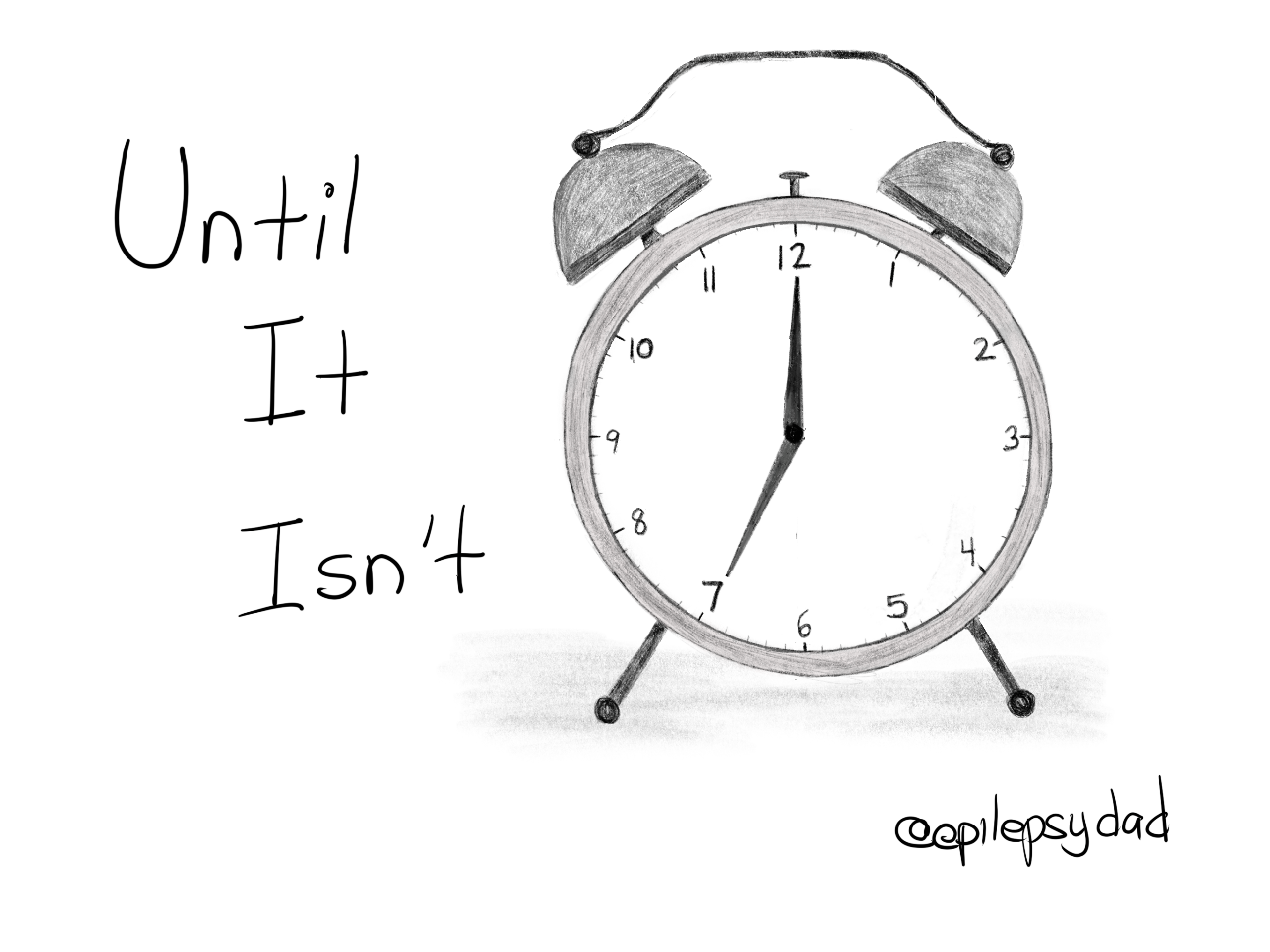
Otherwise, this is just our new routine. For now. Until it isn’t.
Leave a Reply