Category: epilepsy

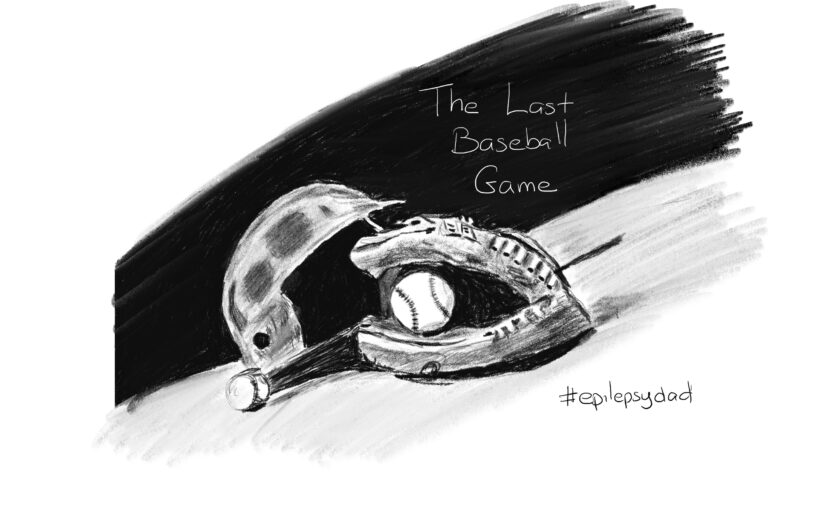
  • The Last Baseball Game

    The Last Baseball Game

    The baseball was hit high to right field, where my son was playing. I watched as he tracked the ball and positioned himself under it. His feet were planted. His glove was up. He was ready to make the catch.

    Then, the ball slipped past his glove and bounced off the top of his head.
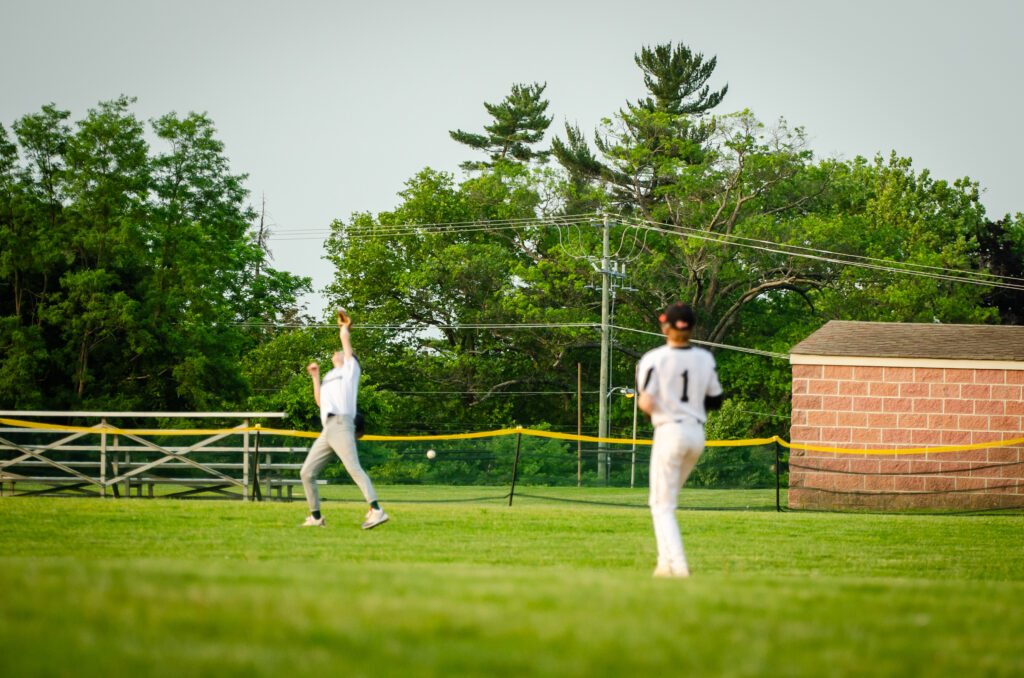
    There was a moment of panic as he put his hand on his head where the ball had struck. Then, with his hand still on his head, he started chasing the ball.
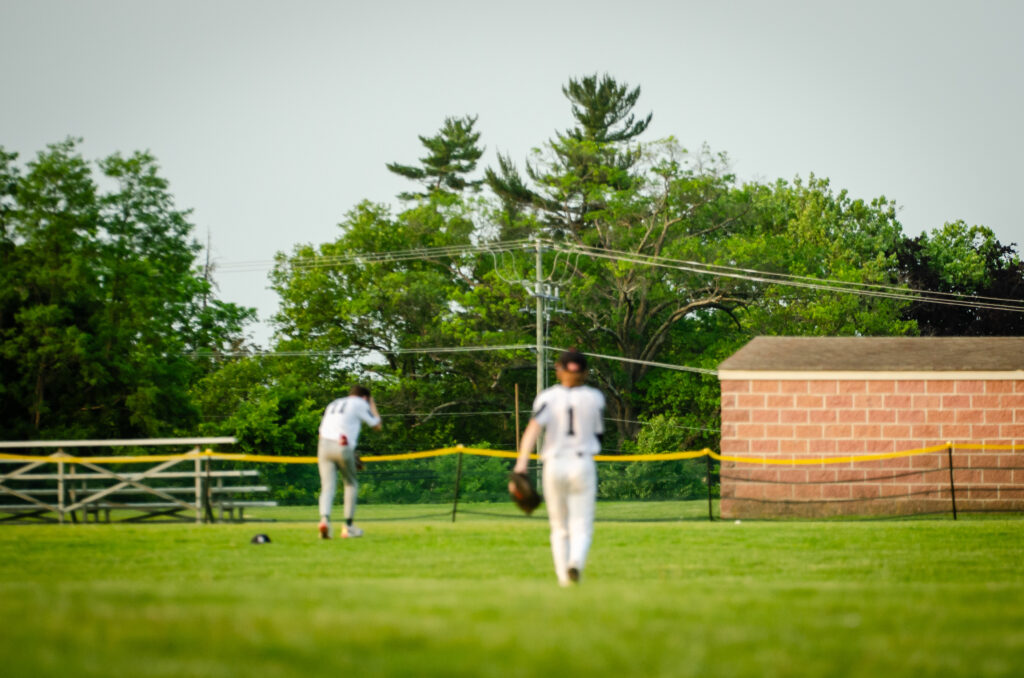
    The coaches from both teams were calling for the play to stop. The base runners slowed their advance as the coaches and my son’s teammates headed to the outfield. All eyes were on him as his coach checked him out. After a few minutes, they guided him off the field and onto the bench.
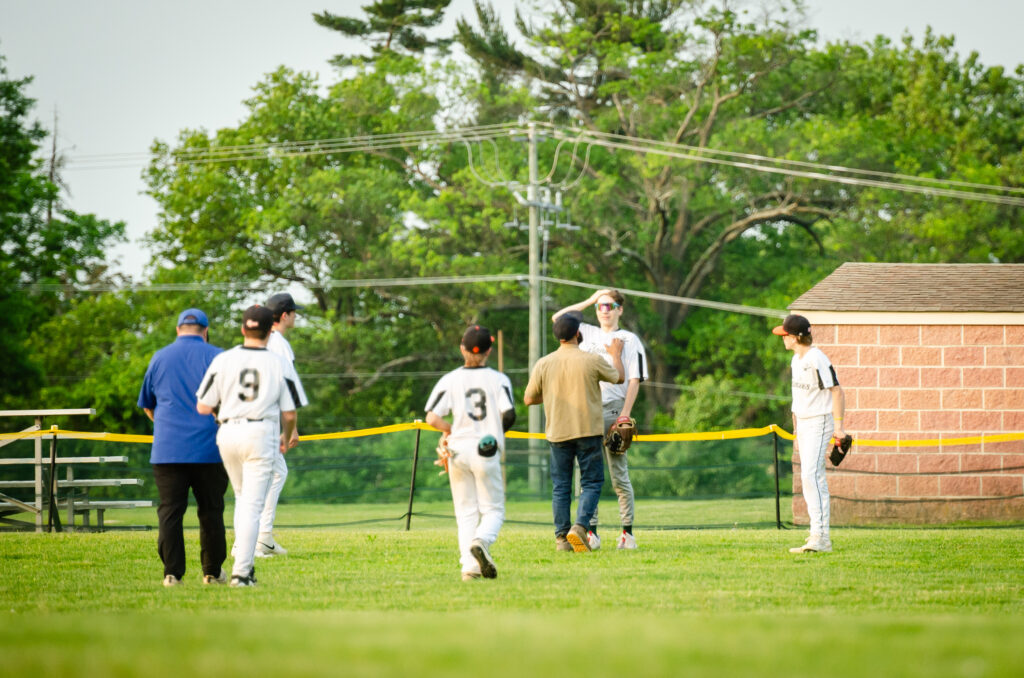
    epilepsydad baseball

    That will likely be the last play of my son’s baseball career.

    We knew going into this season that it would likely be my son’s last. He was going to end his career last season, but the opportunity came up for him to play with his best friend, so he decided to play another year.

    And it was a great year. We had one of the best coaches—the same one we had two years ago. The same coach who rushed to the field when my son got hit. The same coach who gave him multiple opportunities to play and even pitch, experiences that my son likely wouldn’t have gotten with anyone else.

    I’ve written a lot about baseball over the years. Although we started as a hockey family, epilepsy and my son’s health had other plans. The stamina and balance required for hockey were challenging, and even with a helmet, a fall to the ice or crashing into the boards was extremely risky.

    Baseball, though, has always had a more manageable pace and physical requirements. In the field, he mostly stood around, and, in between innings, he sat on the bench until it was his time to bat. There were enough kids that he could rest for a few innings on his worst days, but still participate however he was able.

    There were teeball games, back when we were still trying to get his seizures under control, where he’d have a seizure on the field, stand back up, and be ready to make a play. There were games where the side effects of his medication made him wobbly or angry, and we would sit and hold him in the grass to see if it would pass.

    As he got older and his seizures were more controlled, he was able to play more innings. His processing and motor skills were still challenging, but those were awkward years for most of the kids, so he fit right in.

    In the last few years, however, the gap in skill between my son and most of the kids has widened. He still gets hits when even stronger players strike out, and he makes great fielding plays to get an out. His hits don’t go as far, and his throws aren’t as sharp as his teammates’. But still, he shows up, steps onto the field, and enters the batter’s box, ready to do his job and contribute to his team.

    His heart always made up for any gaps in his skills.

    It was his heart that drove him to chase down the ball after taking it off his head. He had a job to do, and he didn’t want to let his team down. While it would be easy to focus on the missed catch, this play best demonstrates who my son is as I think about his time playing baseball. It’s who he has always been.

    Despite his challenges and the odds against him, he shows up.

    He does his best.

    And he never gives up.

    If you like baseball, I’m reading a wonderful book called “Why We Love Baseball” by Joe Posnanski. It’s filled with some of the best plays in baseball, including the story of Jose Canseco taking a ball off the top of his head, too, with an unexpected result.
  • Fine.

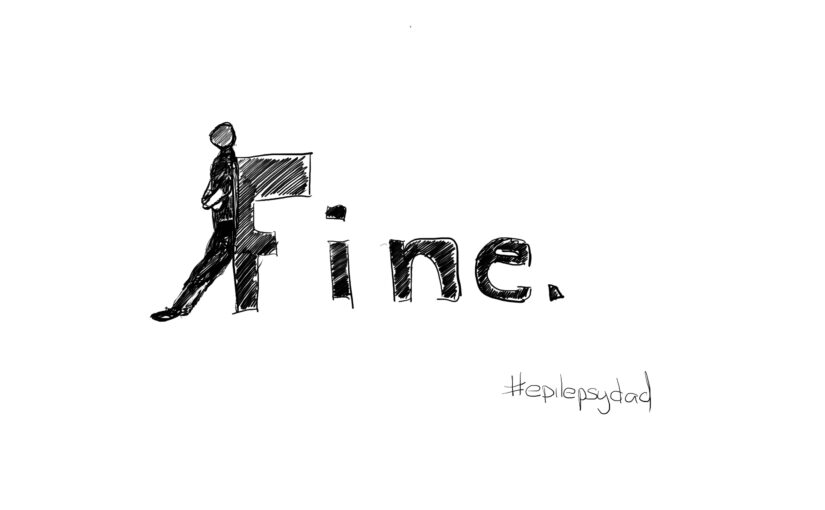
    Fine.

    On days when I work from home, I like to pick my son up from school. I sit in the line of cars slowly making their way to the exit and wait for the teacher to send him out.

    As he walks toward the car, he looks exhausted most days. School asks more of him each year—more performance, more endurance, more emotional regulation, and more social navigation.

    He throws his backpack into the back of the car and plops down in the front passenger seat.

    “Hi, pal. How was school?” I ask.

    “Fine.”

    That’s it.

    Fine. One word. One syllable. Full stop.

    “Well, what did you do in…” and I’ll rotate through his subjects.

    Sometimes I get a short answer, but most of the time he says he doesn’t remember.

    As a parent, it’s frustrating. I can see that he’s tired, but I don’t want him to think that—by not asking how his day went—I don’t care. I genuinely want to know how his day was, what he did, and what he learned. I’m curious about his experiences and want to understand more about what he does and how he sees the world.

    Additionally, my son struggles with his memory, so I feel pressure to ask the question right away—for a chance to hear any details before they fade. If I don’t get an answer, it feels like I’ve lost the opportunity to connect with him. It becomes an unmet need when his answer feels like it shuts the door.

    But that’s my need.

    His need, after working so hard all day just to get through it, is not to engage in that moment.

    I recently read an article about how school is harder for kids today, and something clicked.

    It may seem simple, but a genuine answer to the “how was school today” question requires considerable effort and decision making to synthesize information from a busy day.

    When my son gets in the car, he’s not just carrying books in his backpack. He’s carrying the weight of every demand he had to meet. He’s carrying the exhaustion from seizure-disrupted sleep. He’s carrying the side effects of his medication. He’s used up every bit of energy just to make it through the day.

    “Fine” isn’t a brush-off. It’s an exhausted plea for peace.

    The article offered a simple but powerful suggestion:

    Consider the purpose. Ask yourself whether you want to gather information or simply connect with your child.

    As much as it feels urgent to gather information about his day—as a way to connect—it often does the opposite. It leaves me frustrated and leaves him more drained, trying to process my question, reach into his memory, and find the right words. Instead of connecting, in those moments, we drift farther apart.

    My goal, always, is to connect with him.

    I want him to know I’m happy to see him. I want him to know that I feel lucky to be able to pick him up. I want him to know that I see him. I want him to know that I appreciate how hard he worked to make it through the day and that I hope he’s proud of himself, because I am.

    Instead of starting with a question that requires him to do more work, maybe I will start with a statement. Maybe one of those.

    Or maybe I’ll just tell him how lucky I am to be his dad.

  • Setting My Son Up for Failure

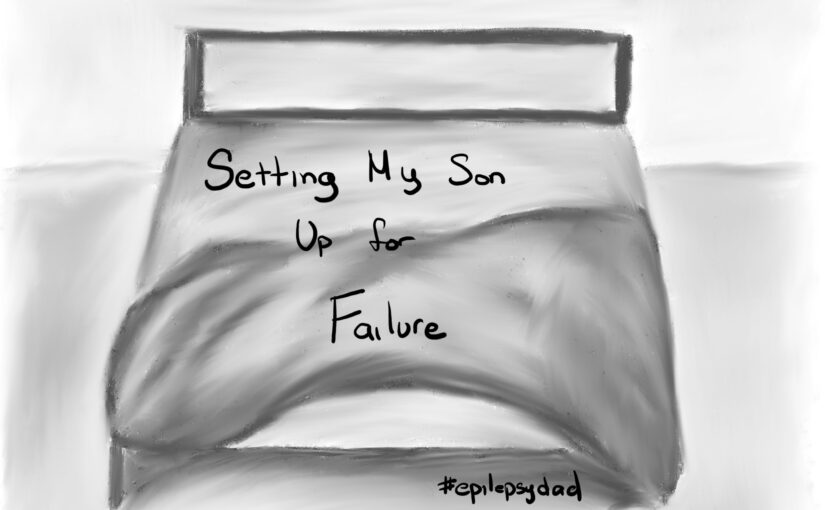
    Setting My Son Up for Failure

    The other day, I stepped into my son’s room.

    As part of his daily routine, he’s supposed to make his bed, clear off his floor and desk, put away clean clothes, and bring his dirty cups and laundry downstairs. In my head, it’s a simple list—something that should only take a few minutes if he stays on top of it. After all, I’ve been doing those chores and more for a long time.

    So when I walked in and saw his bed unmade, things scattered on the floor, and dirty clothes thrown into the closet, I became frustrated. I pointed out what he missed and left him to fix it.

    This has become the pattern more often than not. Sometimes, I go back into the room two or three times to point out what still isn’t done. My frustration builds each time.

    The thing is, I know he’s not lazy, and I know he’s trying. He has trouble staying focused and on task. So when I leave him to figure it out on his own and keep coming back with corrections—even if I think I’m helping—I’m creating a spiral. He winds up feeling frustrated, too. Worse, it can make him feel like a failure.

    Part of the world we’re navigating is learning to manage our expectations. In areas where we know he struggles—like reading—we’ve been given guidance on how to set the bar. We can offer support, recognize his effort, and celebrate what he accomplishes.

    But I forget to apply that same mindset when a task seems “simple” to me or when I think it’s something he should be able to do. That’s especially true with everyday life skills like tidying up, cleaning after himself, or remembering to shower. I get so caught up in what it might mean if he can’t do those things that I lose sight of how it must feel to him that they’re difficult in the first place.

    My experiences aren’t his experiences. What seems easy or hard to me doesn’t always match how he perceives the same task. And when I forget that, my intention to “teach him responsibility” ends up doing more harm than good.

    It’s easy to celebrate accomplishments when the expectations are clearly set—or when he does something I know I couldn’t do myself. When he solves a difficult math problem, or stands in the box with two strikes and gets a hit, we cheer him on and pat him on the back.

    It’s much harder to pause my fear and frustration in the everyday moments. But those moments matter, too. Because even if we’re quick to celebrate his wins, how we respond to his struggles will shape how he sees himself. That’s one of my experiences I explicitly don’t want to pass on to him.

    But, as they say, awareness is the first step.

    That day, after I saw what was left undone, I didn’t just point it out again. I sat on his bed and asked him to sit next to me. The look on his face told me everything.

    “It must be really frustrating,” I said, “when I come in here and tell you the room’s not done, and then leave you to figure it out.”

    “Yes.” His head and shoulders sank lower.

    “I’m really sorry I didn’t recognize that sooner. How’s this: What if we do your room together? Every day, after school, you and I will come in here and get it done. That way, you’ll see what I mean when I ask you to clean it, and you won’t be left alone to figure it out. Would that help?”

    His head lifted, and I saw him breathe a little easier. “Yes,” he replied.

    “Let’s do it,” I said as I stood and helped him to his feet.

    It hasn’t been long, but I can already see the difference in his attitude when we do it together. The task may still be hard—but he’s not doing it alone.

    It’s not about lowering the bar. It’s about meeting him where he is. And that makes all the difference between setting him up for failure and setting him up for success.

  • Shame, Consequences, and Leading with Love

    Shame, Consequences, and Leading with Love

    “Come with me,” the security guard said.

    I was ten years old.

    My friend and I had ridden our bikes to a department store a few miles from my house and walked in with a brown paper bag. We headed to the toy aisle and filled our bag with Transformers and other loot, unaware that the security cameras were tracking us the whole time.

    It was just as I stepped onto the pressure pad to open the automatic door that our heist was thwarted, and we were escorted back into the store, up a stairwell, and into the security office.

    The security guard, an off-duty cop, rewound the security tapes and showed us his view of our activities. I watched myself from multiple angles walk shelf to shelf, pick an item, and place it in the bag. It was terrifying and embarrassing.

    The guard asked us for our information and, when he heard my last name, he paused. “Wait, ” he said. “Is your dad a cop?”

    My heart stopped. Every muscle in my body froze, but I managed to eke out a soft “Yes, sir.”

    My captor let out a hearty laugh. “Oh, he’s going to love this,” he said, as he picked up the phone to call the police.

    My friend and I were taken to the police station in the back of a police car, our bikes tucked away in the trunk. I thought about what my father would say. I thought about having to tell my mother and my stepfather. I thought about going to jail. It was and still is the longest car ride of my life.

    At the station, my friend and I were separated into different interrogation rooms. I’m not sure if it was intentional, but the lighting allowed me to see the silhouette of my father on the other side of the one-way mirror. The officer in the room with me asked me questions and created a very Scared Straight experience that had its intended effect.

    My father didn’t say much to me as he drove me home. I remember him telling me to have my mother call him as I stepped out of the car, and I walked up the stairs to face the consequences. Except no one was home, and I had to wait an agonizingly long time, staring out the front window, until I saw her car pull into the driveway.

    Immediately, every emotion spilled out of me, and when the door from the garage opened, so did a stream of words explaining what had happened.

    At the time, the consequences were predictable, if exaggerated. I couldn’t hang out with my friend again. I was grounded and lost some privileges for an unspecified amount of time. But the worst consequences were the feelings of guilt, shame, and fear that permeated every cell in my body.

    I wasn’t told that I wasn’t a bad person, or that people make mistakes. I wasn’t made to feel like my actions wouldn’t define how I felt about myself for the rest of my life. I wasn’t comforted, and my feelings weren’t acknowledged.

    Instead, those feelings of guilt, shame, and fear were amplified. My parents were mad and disappointed. It was one of the worst things that I could do to them. Their feelings were the only ones that mattered, and I was left to hold and figure out mine. I felt very alone.

    At ten years old, figuring out my emotions by myself wasn’t possible, and so I carried that guilt, shame, and fear for the rest of my life. To this day, I’ll sometimes swing a bag of purchases through the metal detector ahead of me so that, if it does alert, everyone will know it was the bag and not me.

    I think about that experience when my son makes a bad choice. I try to find that line between consequences, learning, and growth, without internalizing a destructive self-image filled with guilt and shame. Most days, it seems impossible, even without considering his mental and emotional challenges. And I can’t help but see myself at his age when I look at him, and that fear of doing it wrong and causing damage to him makes me feel unsure and indecisive.

    But seeing him that way also makes me think about what my younger self needed in those moments when I was teetering on the edge of emotional collapse. What did I need? What do I wish my parents had done? Can I do that for my son now?

    Often, it comes down to seeing him and asking more questions instead of projecting more statements that make the situation only about me and my feelings. It involves understanding that each of these moments has the potential to help him learn and make better decisions in the future, or shame him into destroying his sense of worthiness and self-compassion. Simply, it involves leading with love.

    Remembering that can be difficult in those big, emotionally charged moments, especially considering how they played out for me. But I keep trying. I try to quiet the echoes of my own childhood long enough to truly see my son—not just his behavior, but his needs, his struggles, his heart. And in those moments, when I push past fear and into empathy, I find the thing I needed most when I was ten.

    Not punishment. Not shame.

    Just someone who was willing to stay beside me in the mess.

    Someone who believed I was still good.

    Someone who was leading with love.

  • Here We Go Again

    Here We Go Again

    Here we go again
    Same old stuff again
    Marching down the avenue
    Six more weeks and we’ll be through
    I’ll be glad and so will you
    U.S. Army Marching and Running Cadence

    I was never much of a runner. I had the look of one. Tall and skinny, with long legs that should have made running easier. I was even a fast sprinter. But anything longer than the size of a football field, and my brain would scream at every one of my moving parts to stop.

    Imagine how much fun I had when I joined the army, where nearly everything involved…you guessed it…running. We’d wake up early every morning, head downstairs, and fall into formation. Our drill sergeant and his team would stand in front, bark out a few orders, and then my fellow soldiers and I would turn and follow our leaders, matching the rhythm of our steps to theirs, for however many miles we’d run that day.

    A few minutes into the run, one of the sergeants would begin calling out a cadence. Military cadences are rhythmic chants used during marches and runs to maintain a consistent pace, foster teamwork, and boost morale. They help synchronize movements, improve endurance, and build unit cohesion.

    They were magic. They kept me focused on the rhythmic call and response rather than the fact that I hated running, that my lungs and legs hurt, and that I should stop. Because I couldn’t stop. I couldn’t let my squad down. I couldn’t let myself down. I had to push through.

    One of the cadences, “Here We Go Again,” summed up basic training perfectly: the same grueling routine, day after day. Wake. Run. Eat. March. Train. Eat. March. Train. Eat. Chores. Bed. Every day, for 8 weeks, the same thing.

    Anytime I find myself repeating a pattern, especially a challenging one, I think of those early morning runs. I think of that need to push through, to not let my squad and myself down.

    Here we go again
    Same old stuff again

    We’re approaching one of those times. Toward the end of the school year, our son is always exhausted. He’ll have a harder time waking up in the morning and randomly fall asleep in the afternoon. Around the same time, baseball, one of the few non-school activities he still enjoys, starts demanding more energy and mental bandwidth. We also start figuring out what the following school year will look like, scheduling IEP meetings, and talking with his school and the district about our son’s challenges, needs, and potential. It’s mentally, physically, and emotionally draining on the entire family.

    Six more weeks and we’ll be through.

    Six more weeks until the school year ends. Six more weeks to push through. Six more weeks of having a routine, structure, and certainty. Six more weeks until the story that has been written ends, and there are only blank pages unless we can write down a new plan before then.

    It’s exhausting. It’s like those basic training marathon runs, where somehow we’d run in a circle but only be running uphill, defying physics, logic, and any sense of fairness. It tests our endurance and commitment. Parts of my brain are screaming to just stop.

    But we can’t stop. We can’t let our son down. We can’t let ourselves down. We have to keep going. We have to fill those pages with a plan for the next year, until we find ourselves again six weeks from the end of the school year with the same cadence echoing in my head.

    Here we go again.

    Same old stuff again.