Tag: side effects

  • A Childhood In The Clouds

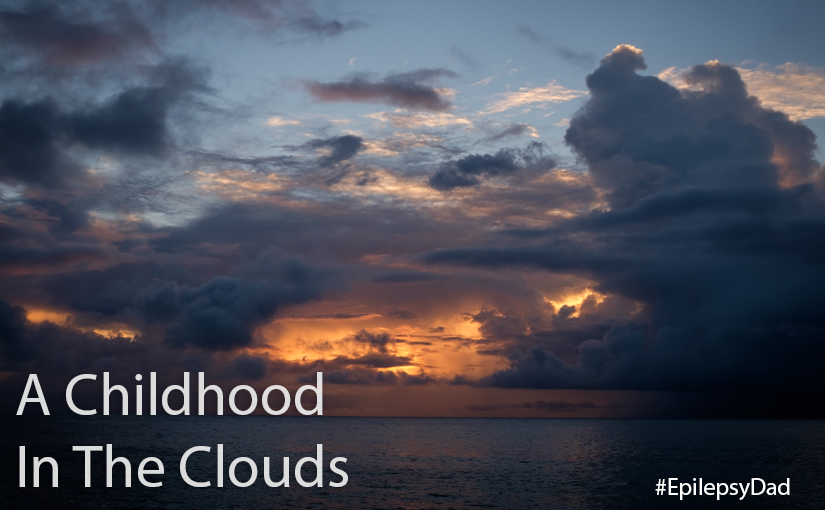
    A Childhood In The Clouds

    I wonder how my son is going to remember his childhood. Sometimes, I wonder if he is going to remember it.

    My son and I watched a Philadelphia Eagles game and we saw a player that my son had met at the hospital. I asked if he remembered meeting him and he said that he didn’t. We met the player almost two years, so at first, I chalked it up to my son being too young to remember. But he was also in the hospital because he was having more seizures and because we needed to adjust his medication.

    Like other medicines, epilepsy medications have a long list of side effects. But medicine that controls seizures targets the source of those seizures, the brain. As a result, the side effects show up in those areas that the brain controls, which is everywhere. We have sees these side effects alter his mood and behavior and impact his motor control. As he gets older, we’re also seeing how much they affect his ability to learn and his memory. Those side effects were likely there all along, hidden beneath the surface. But now that those skills are being tested, the latent effects are being revealed.

    We’ve passed the three year mark of my son taking medicine for his seizures. Three years of my son’s brain in a constant fog. Three years of struggling to form solid shapes around thoughts and ideas. Three years of a childhood spent in the clouds.

    Three years of exerting all his energy to focus on one task at a time. Three years of that focus sapping all his energy. Three years of wondering if there is enough energy or will left inside of him to enjoy an experience.

    The more we explore, the more gaps we find. Milestone events never happened. People erased from existence. It’s impossible to tell whether the failure is storing the memory or recalling it. The result is the same, though. A void where a childhood should be.

    My wife and I repeat stories of our adventures to him, and we show him the albums of pictures we’ve taken. I’m hoping by continuing to expose him to those memories that he will have something to remember. I don’t know if it will be because we’re unlocking old memories or creating new ones through our stories. I’m hoping his brain doesn’t know the difference. I’m hoping that when he looks back on this time in his life, he’ll have something to find.
  • Little Bricks And Shaky Hands

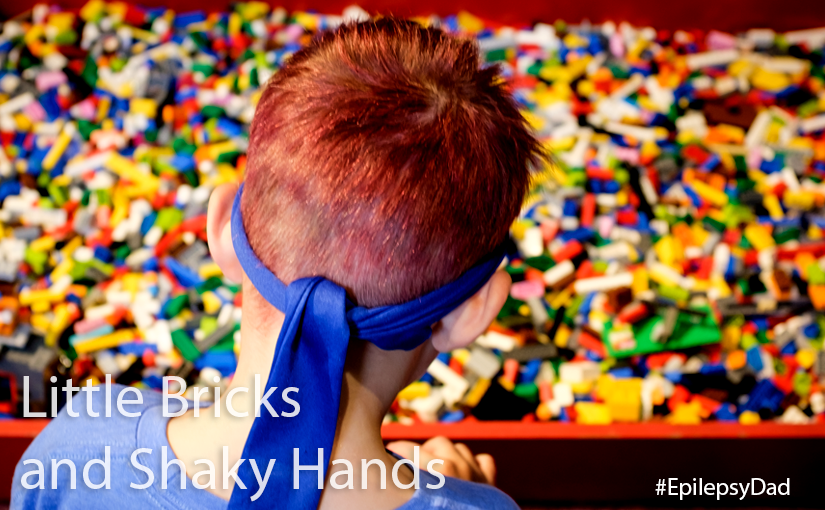
    Little Bricks And Shaky Hands

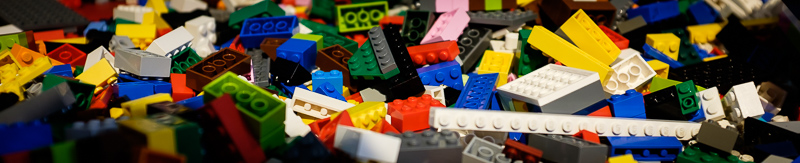
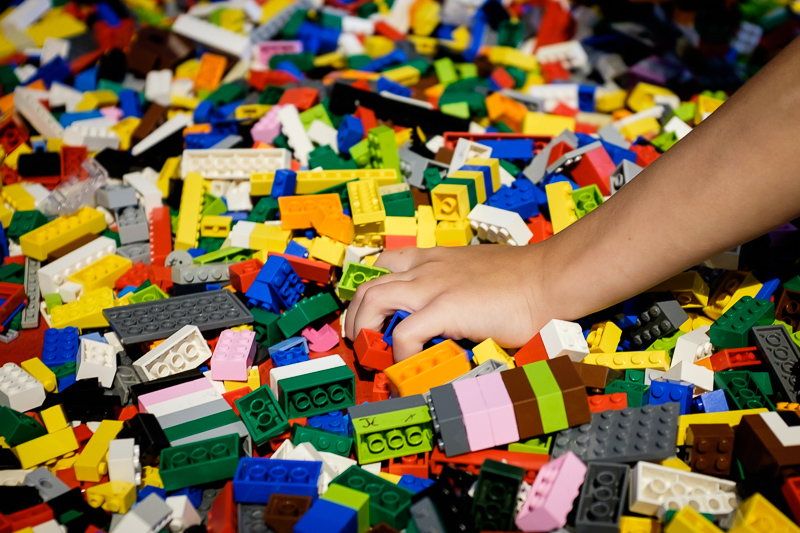
    When I was young, I loved playing with Legos. At my grandparents’ house, my favorite toy was a box of loose bricks. I would turn them into houses, or animals, or fighter jets. I remember “upgrading” to the more advanced Technic set when I was about ten. It felt like a right of passage. You’re born, learn to walk and talk, play with kid Legos, then hit that milestone of playing with Technic. From there, it’s all downhill and the only things left are to do are learn to drive, marry, have kids and, finally, die.

    My son has developed his own affinity for the little plastic toys. Late last year, he needed less of my help to assemble the kits. It’s one of those moments that both made me proud for his accomplishments and sad for my loss of usefulness. Now, he is putting more complicated sets together mostly by himself. He’ll spend hours working through the instructions until he reveals his masterpiece.

    Sometimes he’ll still ask for help with some of the smaller bricks because he has a hard time taking them apart. When I go to him, I see his little fingers struggle to grasp the tiny pieces. Especially when he is tired, his ataxia is more noticeable. His hands shake and make tasks that need fine motor control almost impossible. On his face, you can see the attention he is trying to give to his efforts. But his body’s instability wins out over his mind.

    epilepsy dad lego seizure ataxia shaky hands parenting fatherhood

    It’s frustrating and sad to watch. Compared to the occasional seizure or handful of pills he takes twice a day, the shakes are always there. They’re visible playing with Legos, trying to use a fork, and coloring and writing. They make learning new tasks difficult and they make playtime harder than it should be. I can’t imagine the mask he wears and how frustrated he feels inside when he tells me “I’m just a little shaky.”

    Those words cut through me. I can’t fix it. It’s hard to watch him struggle. These are some of the same activities he works on in therapy and the more he does them, the better he will get at them. But many of these tasks will never be easy for him. It’s hard to watch my son have a hard time with such basic tasks like using a fork. It’s hard to let him struggle through and not do something for him or let him take a shortcut and eat with his hands.

    I want to encourage that mindset of pushing through because I hope it will get better. He already has such determination and I want him to keep it. Even when it’s hard. Even when it’s unfair. Even when there are easier options. Why? Because that’s what is going to help him survive and succeed with the challenges he has ahead of him. My job as his father is to prepare him for what is ahead. Even if it means watching him struggle and shake. But I also want him to know that I am there for him should it get too hard. I want him to know that he is not alone.

    I’m struggling to find the right balance between helping and letting him keep trying. When is it helping and when is it cruel? It’s cruel what this disease has done to him. I worry that I’m being cruel too when I watch him suffer its effects when I could step in to help.

    How much of this is me hoping he’ll struggle through it and that there will be another side? What if there is no other side? What if it gets worse? What does that mean for when my wife and I are gone? I try to focus on the positive progress he has made since his condition was worse. But it’s hard to do when I’m looking at my child struggle because of his condition. The thought of this being the rest of his life is too much to think about with a seven-year-old.

    And there aren’t any answers, at least for now. His condition changes, his medicine changes, his body will continue to change. I try to remind myself to take each day as it comes and to take my son wherever he is that day. Doing that is one of the hardest things I have ever had to do in my life. But when I can do it, I see a little boy smiling as he creates something out of bricks. I see that sense of accomplishment on his face when he shows us what he made. And sometimes, I think things are going to work out okay.

    epilepsy dad lego seizure ataxia shaky hands parenting fatherhood

  • Windows, Light and Hope

    Windows, Light and Hope

    The last few months have been all about change. After a long search, I found and started a new job. We sold the house that we lived in when my son was born back in Colorado. And next month, we’re leaving the apartment we landed in when we moved to Philadelphia.

    This is the apartment we lived in when my son’s seizures and side effects were at their worst. The couch by the front window is where we held him for hours during his mood and behavior. I would sit on this couch and stare out the window at the street as he spat, and hit, and screamed terrible things. I would watch the people walk by, normal families with normal lives doing normal things. I wondered if that would ever be us again.

    I felt like the world was watching us from the other side of that window, too. We were in full view of the passersby who could see how ill-equipped and unprepared we were for what was in front of us. They saw us sitting on the couch reacting out of fear and desperation. They saw every mistake my wife and I made dealing with our son and with each other.

    The way our apartment is laid out, the window by the couch is the only source of natural light. In an otherwise dark apartment during a very dark time, there was no other place to go. So we sat in view of the world outside so that we could see it and let in whatever light we could. We traded agony and exposure for light.

    But sitting on that couch and in that light also gave us hope. No matter how dark our apartment and our life got, we could see that there was more. As our son fought against us, we could close our eyes and feel the light on our face and hope.

    After a seemingly endless struggle, hope won out. Our son came back to us. He was weathered, as we all were, and different, and stunted in some ways, but he was our boy. Instead of holding my son on that couch to protect him, he would sit next to me reading or playing on his tablet. Instead of me staring at the people walking by with envy or feeling judged by them, I felt like we could join them.

    Eventually, we did join them. And now, we’re taking the next step in our journey. We’re not moving to a new place with a blank slate. Our son still has seizures. He still suffers from the side effects of his medicine and the damage that they and his seizures did. We’re bringing our scars with us. But we’re bringing his progress, too. We’re bringing the lessons we learned and the closeness we feel from having survived it. And we’re moving into a place that is full of windows, and light, and hope.

  • It Looks Like Rain

    It Looks Like Rain

    When my son was at his worst, with relentless seizures and medicine flooding his body, he wasn’t our boy. He was uncontrollable and so, so angry. He would have fits for hours where he would try to hurt us and say terrible things. We’d spend those hours holding him, telling him that we love him, and waiting for the storm to pass.

    There were long stretches of weeks where we would only see glimmers of the boy that he was, like a break in the clouds. But, inevitably, the clouds would expand, find each other, and hide the light behind them.

    After too many months, the enormous storm that ravaged our lives started to break up. The seizures were more under control and we were able to reduce his medications to only a handful. We sought counseling for dealing with his condition and with each other. With a lot of hard work, we had more breaks in the clouds, more times where we saw the light from our boy shining on our lives.

    We spent a lot of time basking in that light. We were starved for it after so much time without it. There were still rumbles in the distance, a seizure or an outburst, that made the hair on our necks stand up. Occasionally, a storm would pop up, but it was usually brief and not as violent. Still, we remained on guard.

    Lately, the sound of thunder is getting louder.The hairs on my neck are standing up again. We’re seeing the tell-tale signs of a storm. There are times when he can’t control his body or regulate his emotions. There are days when he’s not there and when he’s not processing and not aware. There are more times when he gets angry and pushes everyone away. We’re adjusting his medicine again and these signs act as our barometer that tells us when the dose is too high.

    I know we have to adjust his medicine to keep the seizures in check, but I also know what that brings with it. I can see the clouds forming. It looks like rain.

  • Keeping The Door Open

    Keeping The Door Open

    If you believed the headlines, you might have thought that CBD was a miracle cure for epilepsy. After so many drugs failed to control my son’s seizures or burdened him with terrible side effects, I felt like we needed that miracle. But, in the end, CBD, like many other medicines, did not help to control his seizures.

    This post isn’t about CBD. It isn’t about Keppra. It isn’t about dilantin, or topamax, or vimpat, or triliptol, or tegratol. It isn’t about any of them in particular but, in a way, it is about all of them. It’s about feeling like a door closes a bit more every time we stop another medication. There is still light on the other side because I can see it splashing through the opening onto the floor. But the beam is getting narrower. And no matter how I angle my head, I can’t actually see the source of the light. I have to trust that it is there.

    I’m frustrated that another thing that has worked for others didn’t work for us. I hoped it would live up to the hype and that we would be one of the success stories. I want desperately for something to work for my son. As hopeful as I am that he will wake up one day seizure-free, I’m not greedy. I’d settle for a magic pill that would allow us to stop his other medication and free him from their side effects. A pill that would let him stop the ketogenic diet so that he could have a slice of pizza or a piece of candy.

    The side effects. The ataxia. The attention. The unbalance. The learning difficulties. The feeling of being different. The loss of control of his mind and body. The lack of freedom. An uncertain future. I want that magic pill to take away these things, too.

    But there is no magic pill. As every parent of a child with epilepsy knows, some things work for some people but not for others. We happen to be in the unlucky camp of people for whom most things don’t work at all.

    The door hasn’t closed, though. I won’t let it. I jammed my foot between the door and the frame so that it can’t close. I’ve got one hand gripped on to the handle and the other with a firm grasp on the door, and I’m pulling as hard as I can.

    I won’t let that door close.

    There is too much at stake. When there is light, there is hope, and there is so much to be hopeful for.

    I won’t let that door close.

    If I have to, I’ll rip it right off its hinges.