Tag: parenting

  • Lost in the Story

    Lost in the Story

    Recently, we started watching Stranger Things.

    For most families, that means settling into the couch, grabbing snacks, and diving into the next episode. For us, it means something different.

    In between episodes, I have to remind him of what happened last time—who the characters are, what they’re trying to do, how the story left off. Even when we watched it the day before. Sometimes the same day.

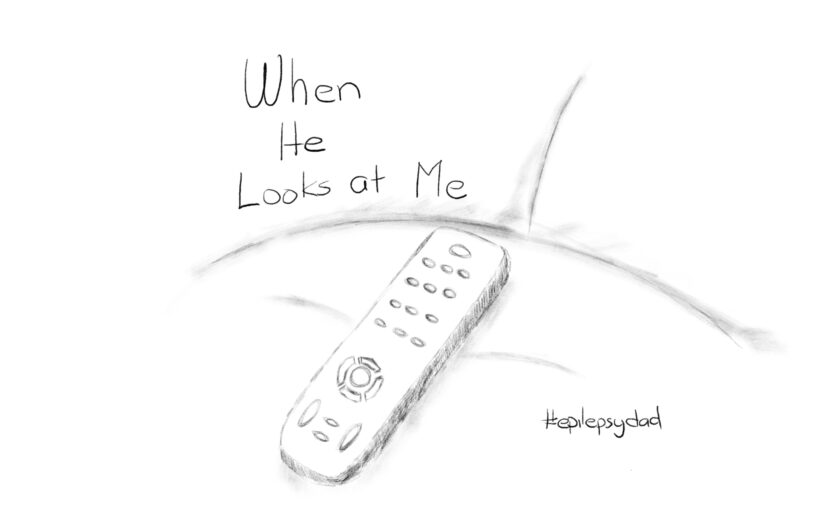
    And when the new episode starts, I keep the remote close.

    Not to skip the scary parts.

    Not to turn up the volume.

    But to pause.

    To explain.

    To anchor him to what’s happening on the screen and how it connects to what came before.

    Sometimes it’s a quick reminder. Other times it’s a full recap: “That’s Will’s mom. Remember, she’s the one who put up all the Christmas lights. And these guys are going into the Upside Down. It’s like that dark world we saw last episode.”

    Sometimes he nods.

    Sometimes he asks more questions.

    Sometimes the explanation drifts away as quickly as it landed.

    It’s like this with every show. Every movie. A remote in one hand, a thread of the story in the other, trying to keep him connected to something that keeps slipping through his fingers.

    A few weeks ago, I read Still Alice, the book about a woman losing pieces of herself to Alzheimer’s. There’s a moment where her husband brings home movies because books have become too hard—too much to hold onto, too much to follow. Movies were supposed to be easier. But even those became confusing when scenes blurred together and storylines couldn’t be kept straight.

    She could no longer follow the thread of the plot or the significance of characters who weren’t in every scene. She could appreciate small moments but retained only a general sense of the film after the credits rolled.

    She wouldn’t understand why her family reacted the way they did to something on the screen, so she matched their expressions and faked the same reaction to protect them from how lost she was.

    Watching movies made her keenly aware of how lost she was.

    That part stopped me because it felt uncomfortably familiar.

    My son is not losing memories the way Alice was. His brain works differently for different reasons. But the impact is similar. He can’t follow all the threads. He struggles to remember the significance of characters who aren’t in every scene.

    And yet, he wants to watch these shows. He wants to enjoy them. He loves the characters, the action, the mystery. He wants to be part of the story.

    This is where the questions start to land heavy for me. I wonder if he is aware of how lost he is. I don’t know if he knows any different. But he probably sees that not everyone is lost. He knows that I am not lost.

    Does he think this is a common thing for kids his age? Does he believe you need to be a grown-up to follow the threads? Or does he know, somewhere inside, that this confusion is something uniquely his?

    I don’t have those answers. But I do know that every time I reach for the remote, I am not just pausing a show. I am trying to make sure he never feels like he has to fake understanding to keep up. I am trying to meet him where he is, in the spaces between the story he wants to follow and the story he is able to hold.

  • Learning to Separate Grades and Self-Worth

    Learning to Separate Grades and Self-Worth

    I love my son’s school. I’m grateful every day for what they’ve done for him. He’s had many of the same teachers for years, and this is the first year the school expanded to 10th grade. My son is part of that first cohort, which made our first 10th-grade parent–teacher conference feel like a milestone.

    When his homeroom teacher started talking, something tightened in my chest—because she wasn’t talking about grades at all. She was talking about him.

    I don’t remember my mom going to conferences when I was growing up. What I do remember is bringing home my report card, as if I were handing over a verdict. Straight As weren’t celebrated—they were expected. Anything less felt like disappointment and shame, from both the people around me and myself. The focus was always on performance.

    That pressure fed my perfectionism. At school, and then at work, it felt like I was constantly being graded—on every email, every meeting, every interaction. It wasn’t about getting better; it was about avoiding failure. Anything less than perfect wasn’t “something to improve next time.” It was proof that I wasn’t enough.

    My son’s school feels like the opposite of that. They use grades to track progress, but grades aren’t the focus. He is.

    And with the right support, he’s thriving. He’s doing math. Writing paragraphs. Learning skills we weren’t sure he’d ever be able to do until we found this place—this environment that encourages him, believes in him, and helps him believe in himself. He feels capable.

    His new homeroom teacher told me how he encourages other students. How he volunteers to show them they can do it. How he asks thoughtful, timely questions on their community field trips. She said he feels like a leader.

    Hearing that felt like healing something in me I didn’t even know was still hurting.

    My son is proud when he gets good grades, but he’s just as proud when he gives his best effort, even if the grade isn’t perfect. He sees value in trying. I never learned that. I tied my worth to my performance. Anything less than perfect felt like failure. And letting myself be proud felt like giving up on perfection.

    Watching him, I’m learning—slowly—to separate my performance from my identity. To recognize that being imperfect doesn’t make me a failure. That I can be a good, caring person even when I make mistakes. That disappointment doesn’t have to become a shame spiral reinforced by old messages from my childhood.

    My son is learning what I didn’t learn until adulthood: that effort matters, growth matters, and who you are is more than any grade. And I’m learning it, too, because of him.

  • When Help Isn’t Helping

    When Help Isn’t Helping

    It’s great to have people in your life who want to help. I know how lucky I am to have friends and family who care, who check in, who ask what they can do. I am very fortunate.

    But when you’re already overwhelmed, even the offer of help can add to the weight. Suddenly, instead of just managing my own list, I’m trying to come up with something for someone else to do so they feel helpful, because they genuinely want to be helpful. And that becomes one more responsibility, one more set of feelings to consider.

    The other day, my mom offered to help. I told her I’d let her know if something came up. She gently pushed back and said I needed to find something for her to do—some way for her to contribute—because she needed to feel like she was helping.

    And in that moment, my stress level doubled. What was meant as support felt like another to-do. Another thing to figure out. Another emotional dynamic to manage. The offer wasn’t helping; it was giving me more to carry.

    I know some of this is me. I’ve never been good at asking for or accepting help. Maybe it’s because I don’t want to put anyone out. Maybe it’s because I feel like I should be able to handle it on my own. Maybe it’s because I don’t always feel worthy of the help being offered. Or maybe it’s that the help being offered doesn’t match the help I need in that moment, and then I feel guilty for not having a task ready.

    There are so many obstacles in my way—my sense of responsibility, my discomfort, my self-doubt. I don’t want people to think I’m ungrateful. I don’t want them to think I don’t need them. I don’t want them to stop offering.

    And sometimes, the truth is that what helps isn’t a task at all. Sometimes it’s just knowing someone is thinking of us. Sometimes it’s an invitation to grab a coffee or play tennis or step away from everything for an hour. Sometimes the help is simply the reminder that we’re not doing this alone.

    But so often, help doesn’t feel like help. It feels complicated.

    Maybe that’s because I don’t yet have a healthy relationship with accepting help. Maybe there’s something I need to learn about receiving care instead of only giving it.

    Because the reality is: my son will likely always need support. I want him to grow up knowing he can ask for help without shame. I want him to feel worthy of help. I want him to see that needing support doesn’t mean he’s a burden.

    I want to model that for him.

    But I’m still figuring out how to do that while shielding him from the stress and overwhelm that comes with being the one who needs help. I’m still learning how to receive help without turning it into another source of pressure.

    Maybe the lesson starts with accepting that I can’t do everything alone. And maybe the next step is allowing others—genuinely, openly, imperfectly—to help lighten the load in the ways they can.

    Even if that means learning how to let help actually help.

  • Getting Used to It

    Getting Used to It

    I’ve been on this epilepsy journey with my son for more than ten years. Ten years of seizures, medications, side effects, appointments, therapies, surgeries, sleepless nights, and the fear and instability that come with having uncontrolled seizures.

    After ten years of anything, most people assume you’d eventually get used to it. Like living next to a railroad track long enough that the passing trains become background noise, or becoming so accustomed to planes overhead that you stop noticing them entirely. They imagine that after a decade of this life, the shock would soften, the fear would fade, and that somehow repetition would dull the edges.

    But it never does.

    Each seizure still stops the room, stops my thoughts, and stops whatever sense of normalcy I’ve managed to build. You don’t get used to it. You just get better at pretending you’re not breaking inside while you find a way to keep going on the outside.

    That ability so many of us develop — to keep going, to go to work, the grocery store, the pharmacy, to keep the house clean, to pay the bills — can create the illusion that we’ve somehow normalized it all simply because it’s familiar. It can make it look easy from the outside, as if what we live with has become background noise to an otherwise ordinary life.

    But it’s not background noise. It’s deafening. It drowns out everything else, and it takes effort — real, constant effort — to strain past that noise and hear the rest of the world. It takes effort to juggle routine tasks with the medical needs that keep my son going. It takes effort to reorganize an entire day of obligations when he has more or longer seizures that require rescue medication.

    The reality is that there is no getting used to it. And that truth reveals itself over and over again.

    Not after ten years, not after a thousand seizures, not after all the appointments, therapies, and sleepless nights. I’ve been walking this epilepsy path with my son for more than a decade, and still, every seizure cuts through whatever calm I’ve managed to create.

    Time doesn’t dull the impact; it just teaches you how to carry it.

  • The D Word

    The D Word

    At a recent appointment, my son brought up the topic of driving. Even though we had talked about how he wouldn’t be able to get a license while he was still having seizures, I knew that, once he turned 16, we would have to revisit the conversation.

    I remember getting my driver’s license shortly after my 16th birthday. I had been working since I was 14 and saved up enough money to buy a car. It was a white Hyundai Excel with a manual transmission, air conditioning, and a sunroof. It wasn’t the flashiest car, but it was mine, and it gave me freedom to go where I wanted when I wanted. I started driving to school instead of taking the bus. I drove to work instead of riding my bike. I could go where I wanted and get there faster. The car gave me more range, speed, and independence.

    I know that feeling is something my son wants, especially as some of his friends will soon be getting their learner’s permits or licenses. In all likelihood, though, he won’t be able to drive. Even if we manage to keep him seizure-free for six months, despite never going more than a day without a seizure since they started, the responsibility of having a license and driving isn’t something he’s ready for today.

    His challenges with executive functioning and slower processing are a dangerous combination behind the wheel of a two-ton moving rocket. The coordination required to operate a vehicle physically and the focus needed to mentally navigate safely on the streets and around obstacles are both areas where he struggles every day.

    He needs reminders to stay on task, whether it’s chores or homework. He has learned to make a few basic microwave meals, but even then, we’ve learned first-hand what happens to the mac and cheese in the microwave when you forget to add water.

    When he brings up driving, I can feel the weight of what he’s really asking — not just Can I drive?, but Will I ever be able to? Will I ever be like everyone else?

    That’s the part that breaks me.

    Driving represents so much more than transportation. It’s independence, choice, and self-direction. It’s being able to decide where to go and when. And for him, it’s a symbol of everything that still feels out of reach.

    Because the truth is, driving isn’t just about safety. It’s about trust — trust in his body, his brain, and the world. And right now, none of those things is reliable enough to hand him the keys.

    When I think about him behind the wheel, I imagine all the things that could go wrong. The seizures, the split-second decisions, the distractions. The danger is obvious. But underneath that fear is a quieter one — that he’ll never have the kind of independence that comes so easily to other kids his age. That he’ll always need someone — me, or someone after me — to help him navigate the world.

    That thought terrifies me more than anything else. Because as much as I want to keep him safe, I also want him to have a life that’s his. I want him to feel capable, to feel like he belongs in the world, not just protected from it.

    So for now, we’ll keep talking about driving — what it means, what it represents. Maybe someday he’ll be able to drive, maybe not. But my hope is that he still finds his own kind of freedom, one that doesn’t depend on a license or a steering wheel. One that lets him move through the world in his own way, with confidence and joy.

    Even if he’ll always need help getting there.