Tag: keto

  • The Ketogenic Diet Is A Family Affair

    The Ketogenic Diet Is A Family Affair

    On the morning of New Years Eve, my wife and I got a head start on our healthy new year resolution and went for a run. We left our son sitting on the couch watching his iPad with my mother-in-law sleeping in the next room.

    Over the past few months, my son (who is on the ketogenic diet for epilepsy) has been sneaking food, so we took the precaution of hiding any tempting holiday treats on top of the refrigerator. Before we left, I looked my son in the eye and told him that we would be right back and to stay on the couch. He nodded in agreement and nestled comfortably in to the corner with his blanked.

    When we returned, he was still on the couch. When I asked him, he confirmed that he hadn’t moved but he wouldn’t look at me when he answered. I glanced in to the kitchen and noticed that the step stool that we have under the counter had been moved. On top of the fridge, I could see empty containers of leftover deserts.

    I looked back at my son and his head was down. “It was me, ” he said softly.

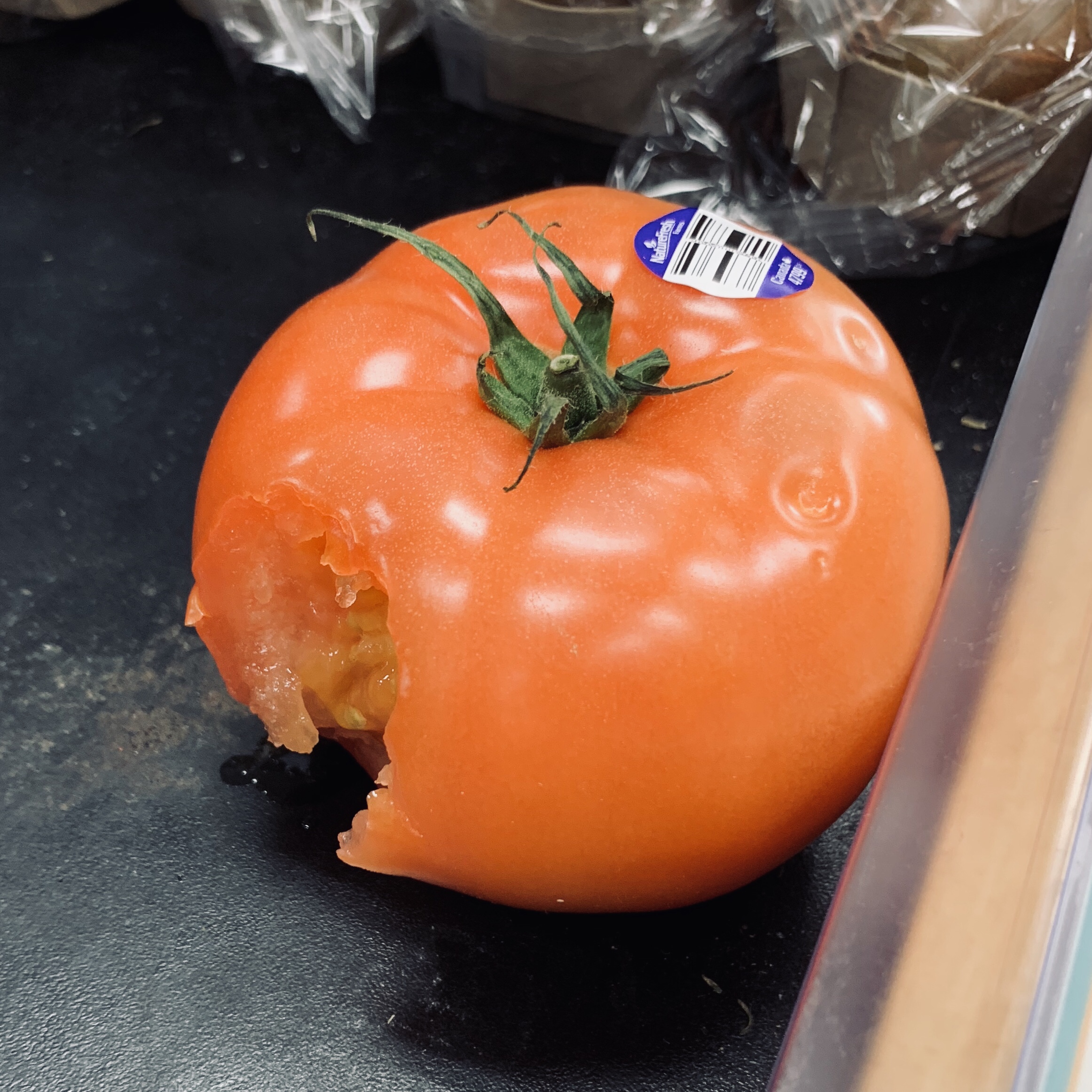
    There has been a lot of this lately. He’ll sneak crackers from the pantry or leftover spaghetti from the fridge. A few weeks ago, he took a bite out of a tomato at a grocery store.
    epilepsy dad ketogenic diet seizures

    I am both heartbroken and frustrated. I’m heartbroken because of how restrictive the diet is for a 9-year old boy who sees the people around him eating whatever they want. As his father, I’m frustrated because his initial instinct is to lie and the foundation of our family is built on love and honesty. But I’m also frustrated because I know I have a hand in making the environment tempting for him by keeping unhealthy food in the house when the stakes are so high. Where a typical kid would just get an upset stomach from eating too many cookies, my son falls out of ketosis which could lead to an increase in seizures.

    He’s been on the diet for more than 3 years. That’s a long time, and these recent incidents of sneaking food are starting to grind down my resolve. I’ve gone from thinking that the diet partly helped saved my son’s life to questioning whether it helped at all or if he still needs to be on it with his new medications and his VNS. I’m collecting evidence to support my theory but deep down I know it’s tainted with confirmation bias because I don’t want the diet to be working.

    I want there to be an easy way out. It’s would be easier if there were a clear indicator that the diet was making a difference. It would be easier to stop the diet to remove the strain we are feeling instead of figuring out what other modifications we can do to make the diet more tolerable. But like so many things that come with an epilepsy diagnosis, it’s not that easy. It’s also not easy as a parent to feel like your child is missing out on something when his life is already so hard.

    But there are things we can do to not make it harder. We can make better dietary choices ourselves and not have the tempting food in the house. We can make a big deal out of eating better and stressing the importance of diet for our health, the same way his diet is important to his health. We can be his parents, and take on some of the burden ourselves to alleviate some of his. Because if we can’t make it all go away, we should at least show that we are in it together.
  • No Free Lunch

    No Free Lunch

    Early one morning, I was sitting in the living room writing when I heard my son leave his room and go in to the bathroom. He was in there longer than usual and I could hear the muffled sound of banging. After a few more minutes, he came out of the bathroom and I asked what had happened. He explained that he was washing the bucket we had given him the night before when he told us he had an upset stomach. He had thrown up in the middle of the night.

    This wasn’t the first time this had happened. My son has been on the ketogenic diet for more than two years. The “keto” diet is a high-fat diet used to treat hard to control epilepsy and it’s hard on his stomach. In addition to his seizure medication, the diet forces him to also take vitamin supplements and medicine for reflux, constipation, and acidosis. Constipation, diarrhea, cramping, and vomiting have been frequent visitors since my son was on the diet.

    It’s not only hard on his body, it’s hard mentally, too. He can’t eat what we do or, if he does, he has to have a shot of oil or some other fat on the side. And he generally can’t have more of any one thing without adding more oil. He can’t have a slice of pizza. He can’t have a bowl of cereal or a bag of chips. When he’s at a birthday party, he can’t have a piece of cake or candy. We make modifications, like bringing along a “keto cupcake”, but it’s not the same. Because he is who he is, he endures with little complaint.

    We make a handful of meals that he likes where the fat is hidden in the recipe. A soy flour and mayonnaise crust for pizza is one of his favorites. With that, there is fat in the crust and oil mixed in with the tomato sauce so he doesn’t need to have oil on the side. But we don’t have many of those meals, so we’ve been repeating the ones we do have for months.

    To add dietary variety, the doctors want him to eat more “real” food. But for that we need a source of fat, which is generally a oil. And that’s what we did for dinner the night before that led to the bucket and the early morning cleanup.

    We’ve lowered his ratio over the last year so that he needs less fat, but his diet is still more fat than not. I want to get him off the diet completely, but the doctors say it is working. It’s not enough to stop his seizures, but they think it’s helping his overall brain function and raising his seizure threshold higher than it would be off the diet. I’m less convinced, but I’m also the one that sees how hard the diet is for him every day. And there are certain rights of passage with food that I went through as a child. Eating an entire box of Lucky Charms. Folding a real piece of pizza in half and devouring it. Trying things at the farmer’s market. He’s missing out on all of it.

    There is an acronym I remember from my economics classes that was also used in the Robert A. Heineken story The Moon Is A Harsh Mistress. TANSTAAFL, or “there ain’t no such thing as a free lunch,” is the idea that you can’t get something for nothing.

    When we started the diet, we saw it as an alternative to more seizure medicine. It was supposed to be the prescription that helped his seizures without the side effects. It was supposed to give him a better quality of life. Maybe compared to another pharmaceutical, it did. But it didn’t come without its own downside.

    Because everything comes at a price.

  • My Little Miracle

    My Little Miracle

    When my son was first diagnosed with epilepsy, I didn’t think we needed a miracle. At first, we simply hoped that the seizure he had would be his only one, but it wasn’t. Then we hoped that the medicine they put him on would prevent more seizures, but it didn’t. Still, I believed in the science and the medicine and I thought the doctors would figure out what was causing his seizures and they would consult the great book of diagnoses and prescribe a way to make the seizures stop. But they couldn’t.

    The first time I sat next to my son’s bed in the hospital while he was in status epilepticus, I started to lose hope. Or maybe I needed more than hope. I watched the EEG on the screen above his bed spike and flash a constant red alert. The seizure count continued to climb. I thought about racing against the power meter on the side of my grandmother’s house. My cousin and I used to race to see if we could make it around the house before the reading on the meter ticked up to the next number. I was fast in those days, but as I looked up at the counter on the screen, it was moving too fast even for me.

    The doctors did the best they could to slow the frequency of the lightning strikes in my son’s brain. A barrage of medicine did more harm than good, leaving him toxic and unable to move. There were a lot of sleepless nights, sitting up on the purple, uncomfortable foam bed as I watched a team of doctors circle around my son’s bed. The wires, many times reattached, that went from my son’s small head to the Great Machine carried signals of coordinated chaos that mirrored the activity by the doctors scrambling to find an answer.

    As our time in the hospital continued to accumulate, so did the seizure count on the screen. The technicians reset the system a few times. They said to make sure they were getting good readings, but I wondered if it was to hide how high the seizure count was going. As bad as it is to see the number increasing, it’s probably worse to see the equivalent of an odometer rolling back to zero from too much mileage.

    By the second month in the hospital, I started to lose hope. The science and the medicine weren’t finding the answer and my son was still seizing and my sweet boy turned into an unrecognizable, angry creature trapped inside an unstable shell. The child we brought into the hospital was not the one we were taking home. With my hope faltering and no end to my son’s agony in sight, I turned to finding a miracle.

    Out of difficulties grow miracles. ~Jean de la Bruyere

    I always thought of a miracle as one big thing. I thought a miracle meant that we would wake up one day and my son would be healed. When we sat in the class about the ketogenic diet and heard of miracle stories of children that were seizure free on the diet and were able to wean off their medication, I wanted that miracle. When we were finally able to try CBD, after seeing the stories in the news of the miracles that it had done with children that had hundreds of seizures a day, I wanted that miracle for my son, too. But none of these miracles visited us in the way that I hoped. Or maybe, not in the way that I expected.

    epilepsy dad miracle

    Sometimes a miracle is not one big thing but, instead, a lot of little things. While the pills or the diet or the CBD alone did not provide relief for my son, a combination of them slowed and occasionally stopped the rampant storm inside his brain. Dedicated and persistent teams of doctors didn’t give up finding a working dose of medicine and the therapists worked impossibly hard to restore his mind and body. My son is alive, in school and learning, dancing, laughing, and playing. He’s back with us in ways that I began to think were impossible. I was so focused on the lack of one small, discrete defining miracle that I almost missed the larger one that was slowly revealing itself.

    It’s easy to give up on miracles when we don’t wake up to find a healed child, a rich bank account, or a clear purpose for our own life. We think we don’t deserve a miracle because of something we did in our past that cannot be forgiven. Or we pray harder or channel our anger at God and the universe when we continue to see someone we love struggle or suffer and they do not intervene. But the secret isn’t praying harder for the miracle that we think we want. The secret is being open to the miracles that happen around us every day.

    Miracles are a retelling in small letters of the very same story which is written across the whole world in letters too large for some of us to see. ~C.S. Lewis


  • Things No Child Should Get Used To

    Things No Child Should Get Used To

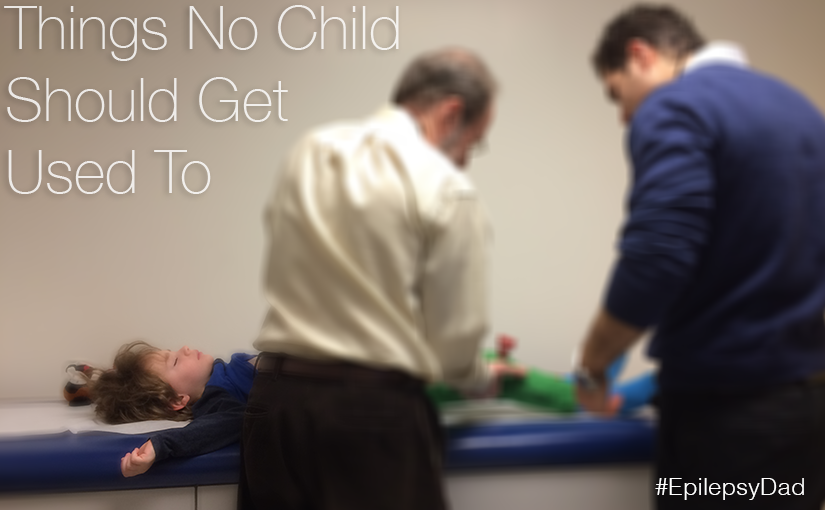
    A few weeks ago, we went to the children’s hospital for an appointment. We walked through the large, automatic doors and up to reception where my son said hello to Mary (they’re on a first-name basis), who commented that she liked his red hair. Without needing to ask, she pulled our family up from memory on the computer and printed our visitor badges.

    Check-in completed, my son led us up the main staircase to the second floor. At the top of the stairs, he turned left and headed down the long hallway towards neurology. He knows his way around the hospital and which building to go to for neurology, or speech, or another test. As I followed him down the hall, it made me sad to realize how well my son knows his way around that place. A child should know his way around a toy store, not a hospital.

    As we turned the corner, we passed phlebotomy. There were nervous parents and children in the waiting room, and seeing them sitting there made me think of the times we were in those chairs. The first few times, we were nervous, too, but after too many visits, we got used to it. Now, my son likes to talk to the phlebotomist as she prepares the needles. He politely says “No, thanks” after she invites him to look away, and he watches as the needle pierces his skin. “I never cry”, he says, which is almost true in the hundreds of times he has been pricked and pierced. “You should come here more often to show our other patients how to do it,” we’ve heard more than once. “Ok, ” my son replied, “I’m really good at it.” As I remembered him saying that, I felt sad. That’s not something a child should be good at.

    He knows the routine of the physical exam, not because he has had years of exams under his belt, but because he has had so many in the short time he’s had epilepsy. These doctor visits, the trips to one of his therapists, the emergency room visits, they’re part of his routine, those things he’s done so many times now that he just does them because, well, that’s what he does. All these things are now just part of our lives, are part of his life, like eating, and breathing, and going to the park. He wakes up and takes a handful of pills, and another handful at night, without question, because that is what he has to do. He doesn’t get to eat the food that his friends do, and he can’t just have a snack, it has to be weighed and measured because that’s how it is and he’s used to it. He doesn’t look at a restaurant menu because he knows he can’t order from it, and he’s used to that, too.

    He’s getting used to having seizures. He’s crying less after he has one in the middle of the night and more regularly just putting himself back to sleep. If he forgets to put on a pull-up and needs to change, I’ll often catch him on the floor halfway through the process by the time I get to his room. He’s getting more aware of his seizures, too. He had one on the basketball court the other day. When I asked him if he was okay and if he knew what happened, he replied, “I had a seizure, but I’m ok.” It rolled off his tongue so casually it was as if he was describing a shot that he missed or if he had tripped on a rock and fell.

    On one hand, I’m grateful that he has accepted these restrictions and these changes in his life so easily. I am not sure that I have the strength to constantly explain to him why he has to do these things when I am still struggling with my own questions. Why is this happening to him? Was it something that came from me? Is this our lives forever?

    On the other hand, if I think about the things that he has gotten used to, it breaks my heart. This condition has taken away too many things from the one person who I desperately wanted to open the world for, and I’m having a hard time resolving that discrepancy.

    I try to think about the positives in this situation, but most of the time I just see a little boy who has gotten used to too many things that he shouldn’t have had to.


  • The Impossible Choice And The VNS

    The Impossible Choice And The VNS

    There are still days when I think that this is all temporary and that my son will someday outgrow his condition. The medicine, and the side effects, and the diet are all short-term measures that we are only doing until his brain sorts itself out, and then we can stop them altogether. These inconvenient years can become a distant memory.

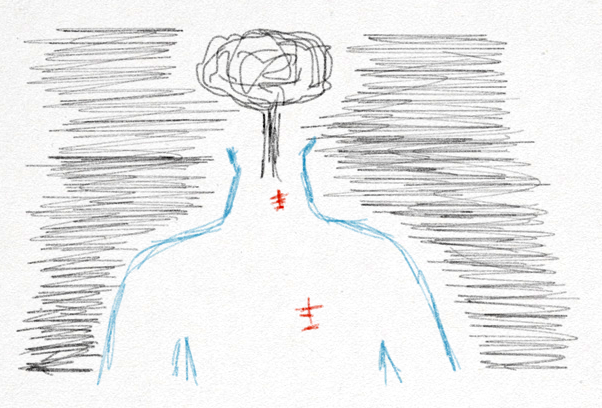
    Holding on to that fantasy is partly what made me reluctant to agree to VNS surgery for my son. Vagus nerve stimulation (VNS) is a technique used to treat epilepsy that involves implanting a pacemaker-like device that generates pulses of electricity to stimulate the vagus nerve. In theory, this stimulation can be tuned to disrupt my son’s brain’s bad habit of firing all its neurons at the same time in uncontrolled bursts, which is what causes a seizure.

    There is a sliding scale of expectations with the VNS. Best case, it helps manage his seizures and we can revisit his medications and the ketogenic diet. Next best case, it helps regulate the break-through seizures he is still having. Worst case is the same worst case as every new treatment we try…nothing happens. Except, of course, for a list of new risks and side effects, both from the surgery and from the stimulation. Tingling, numbing, an altered voice, headaches, difficulty swallowing or breathing, just to name a few.

    epilepsy dad vns sketch

    But it wasn’t just the risks that made the decision difficult. The surgery feels more permanent. They’re going to cut in to my son and insert a box with tiny wires wrapping around a nerve that leads to his brain. Once they cut him, he cannot be uncut. Even if we remove the box and wires because the seizures do go away some day or because it doesn’t work, he will have a scar to remind him of the hardships that he had to endure at such a young age. There will be no room for denial or pretending that none of this happened.

    Because it is happening.

    Whether we have the surgery or not, whether it works or not, this is our reality. As I struggled with my decision, another epilepsy dad told me that we should do whatever we can to help our children. Whether it works or not, if there is a chance that it can make their lives better, it’s worth it.

    epilepsy dad VNS decision

    In the end, that has to be enough. To keep hoping for a better life and to keep trying things, even following failure after failure. Accepting the idea and agreeing to the surgery is another in a long list of impossible choices.

    We scheduled the surgery, but I wake up every day wanting to call it off. To keep my son whole. Time and his condition, however, are quickly taking aware that option.