Tag: epilepsy

  • Taking A Chance Or Playing It Safe

    Taking A Chance Or Playing It Safe

    I should have known there was something wrong when my wife texted me that our son had a seizure in school. Seizures during the day are rare for him, but I thought that maybe we wore him out sightseeing with his cousin who was visiting over the weekend. That was an especially bad day to break from his nocturnal seizure pattern because that afternoon he was supposed to be back on the ice for his first hockey class since his seizures started more than two years ago.

    When we lived in Colorado, hockey was all this kid wanted to do. We played hockey on the floor since he could walk. We even made a movie about it.

    He started skating when he was around three, and he started his first hockey class just before we moved to Philadelphia, which also happened to be the time his seizures started. With how bad things got, hockey and skating were out of the question. Taking away something he loved so much was one of the cruelest things that epilepsy did to him.

    It took almost a year, but once he started to regain his balance and stamina, we found him a coach to do off-ice drills with him. We continued to play hockey on the floor or at the park, but he would always ask when he could get back on the ice. I didn’t have an answer.

    After nearly eighteen months, we let him back on the ice. It was only for short periods of time because his balance, stamina, and attention issues still prevented anything too rigorous, but it was something. To a kid that loves hockey more than anything else, though, it’s just skating. There is something different about doing it in full pads, with a hockey stick, and surrounded by other hockey players and we weren’t there yet, although that was about to change if he was well enough to go to this new class. After more than two years, he was about to return to where he was before the seizures started, which is why the timing of the daytime seizure was extremely unfortunate.

    We decided to see how the rest of the day went. After school, he took a nap and my wife said that he seemed fine after he rested. We took the chance and she brought him to the rink and I left work to meet them. As I walked in, I saw my son scan the room and realize that he was in a locker room, surrounded by other hockey players. He was so excited that he trembled as he put on his gear. By the time I got there, he flashed a smile and asked me to help him finish getting dressed. Apparently, mommy didn’t know the order things had to be put on in and he had to keep taking something off in order to first put on the thing that should have gone before.

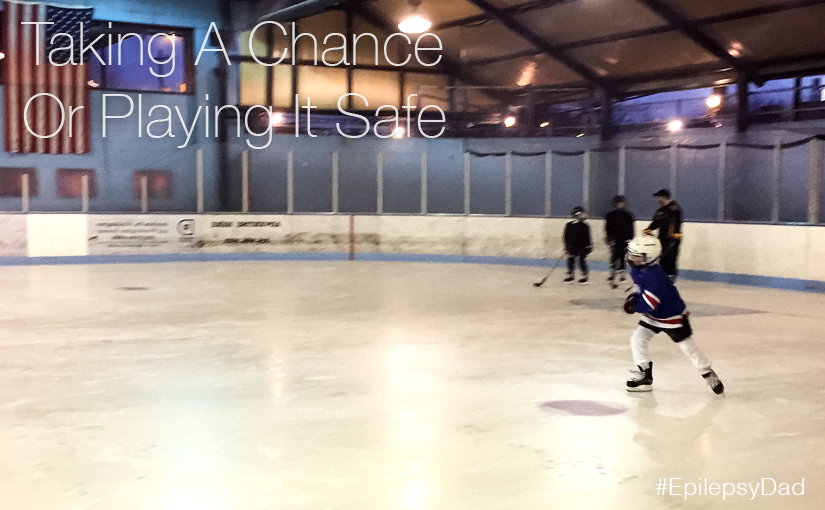
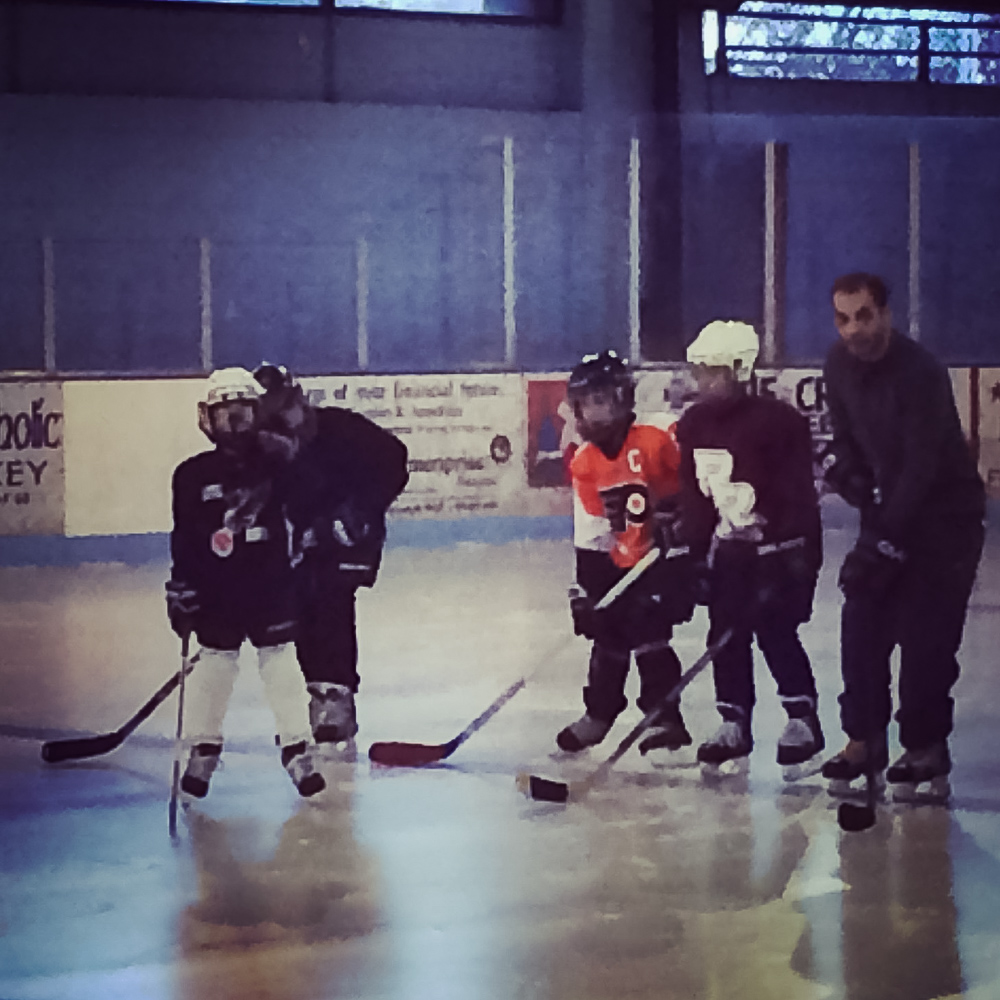
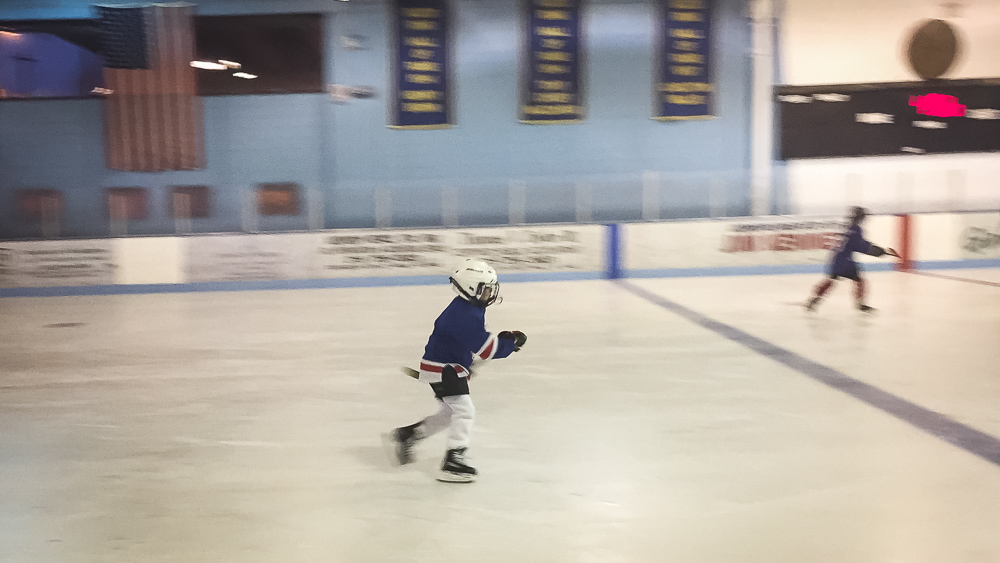
    Finally dressed, he tucked his mouth guard into his toothless smile, grabbed his stick, and headed to the ice. It took all he had to not sprint, and he would have if the ice were further away. But he walked up the steps, past the bench, through the door and, finally, onto the ice. He skated around for a minute to get a feel for the ice and then skated over to his coach with the rest of the team.
    epilepsy dad parenting hockey risk

    It took all I had to not burst into tears on the bench. My heart was filled with such joy to see my son so happy. We do a lot of cool stuff as a family, but my son also does a lot of stuff that other kids don’t have to. Dealing with seizures, doctor’s appointments, therapy, an impossible diet, more therapy, more testing. He doesn’t have much control over even basic things that his peers do and, for a while, epilepsy had taken from him the one place where he could be himself and do something that he loved to do for himself. But there he was, on the ice, smiling and sending me an occasional thumbs up (which is really difficult to do with a hockey glove on) as he did the drills with (and better than) the rest of the kids.
    epilepsy dad parenting hockey risk

    Halfway through practice, though, from across the ice, I heard the sound that I dread every morning and I saw my son slump forward onto the ice. The coach moved towards my son and I yelled, “He’s having a seizure.” “When?” the coach asked. “Right now, ” I replied. As the coach knelt down, my son rose to his feet. I motioned to the coach and he had an assistant help my son to the bench. We sat him down and went through the protocol. “Do you know what happened? Do you know where you are? How are you feeling? Which way is your brain going?”

    I told the coach that my son was okay and that he needed a break. The coach mentioned that he’s a nursing student and just happened to start reading about seizures and epilepsy medication. Serendipity. After awhile, my son told me he was ready to go back on the ice. As a parent, I felt faced with an impossible choice. Should I put him back on the ice on a day where he is clearly having more seizures and risk him getting injured? Or should I play it safe and take him home and take away the joy he was feeling? I glanced at my son who was watching the other kids on the ice and I made the heavy choice to let him rejoin his team. As he skated towards the coach, my heart raced and I watched his every move without blinking. Every fall was agony. Did he just fall or did he have another seizure? Thankfully, he would pop right back up each time and rejoin the drill. When class ended, I let out a huge sigh of relief as my son skated over to me, gave me a fist bump, and stepped off the ice.

    By this time, he was exhausted but he took off his gear and I helped him put it back in the hockey bag. His eyes were a bit droopy, and I could tell that he wasn’t really there. He had given everything he had to be on the ice and his body and mind were starting to give in. It’s a blessing and a curse that my son wills himself through the things he wants to do and the things we ask him to do. I wish life were easier for him.

    When we got home, I put him on the couch and made him dinner. He ate quietly and watched a little television before bed. As I went to get his evening medicine, I noticed that his morning doses were still in the pill dispenser. I asked my wife if she had given him his meds. It turns out, she didn’t. The daytime seizures, the exhaustion…we found the culprit.

    Mistakes happen. It’s a lot to juggle four doses of multiple medications a day, a special diet, seizures and the normal chaos that comes with a seven-year-old boy. I felt terrible that the first time back on the ice, his head must have been going haywire. He had seizures. He had to come off the ice. He wasn’t really present. He barely remembered being there. All because we made a mistake on the day that he was finally able to go back to his first love. The poor kid can’t catch a break.

    We gave him his medicine and the next day he was thankfully back to normal. I’m still not sure if we made the right call keeping him on the ice, and I suspect that we’re going to have a lot of similar decisions to make in the future. But that’s just part of managing epilepsy, and trying to give my kid as many things back that his condition has tried to steal from him. He won’t get it all back, but every little bit counts.
     

  • The Absence Of Obligation

    The Absence Of Obligation

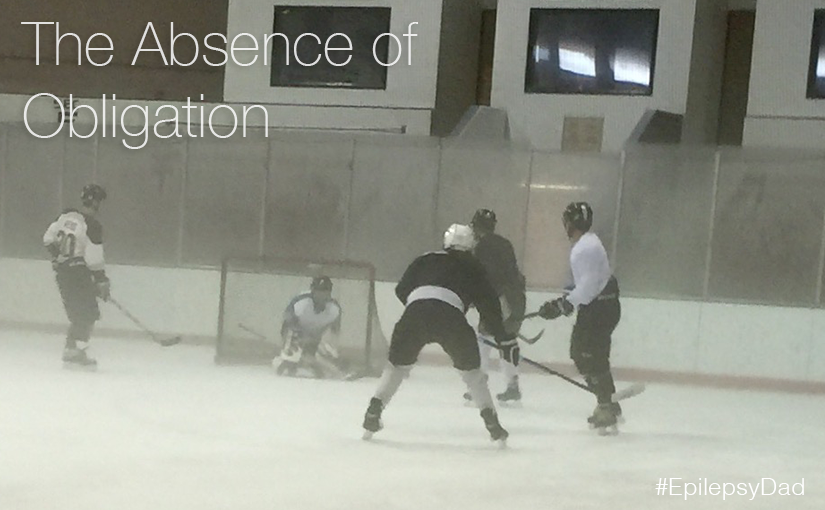
    The music pumped through my earbuds and filled my ears and mind as I crossed the bridge towards University City. A heavy bag of gear laid across my back. With each step, the skates that were tied together and draped around my neck swung left and right across my chest. Two sticks were pressed together in my left hand as my right tugged on the bag strap around my shoulder. The walk took less than fifteen minutes.

    The walk took less than fifteen minutes. I descended the stairs and saw my destination. A few more steps and I pushed through the doors and turned the corner to a door with a faded white “4” on it. I rested my sticks against the wall and pushed the door open with my foot and slid into the musty locker room. There were already people, mostly college kids, getting changed. I found an open spot on the bench, dropped my bag to the floor with a thud, sat down, and began the ritual of getting dressed.

    Lower body first…jock, knee pads, garter, breezers and socks. Skates are always next, then a big, deep breath to try to shake the butterflies. Upper body…shoulder pads, elbow pads, and jersey. I stuffed my gloves into my helmet, grabbed my water bottle, and walked towards the ice, grabbing my sticks on the way.

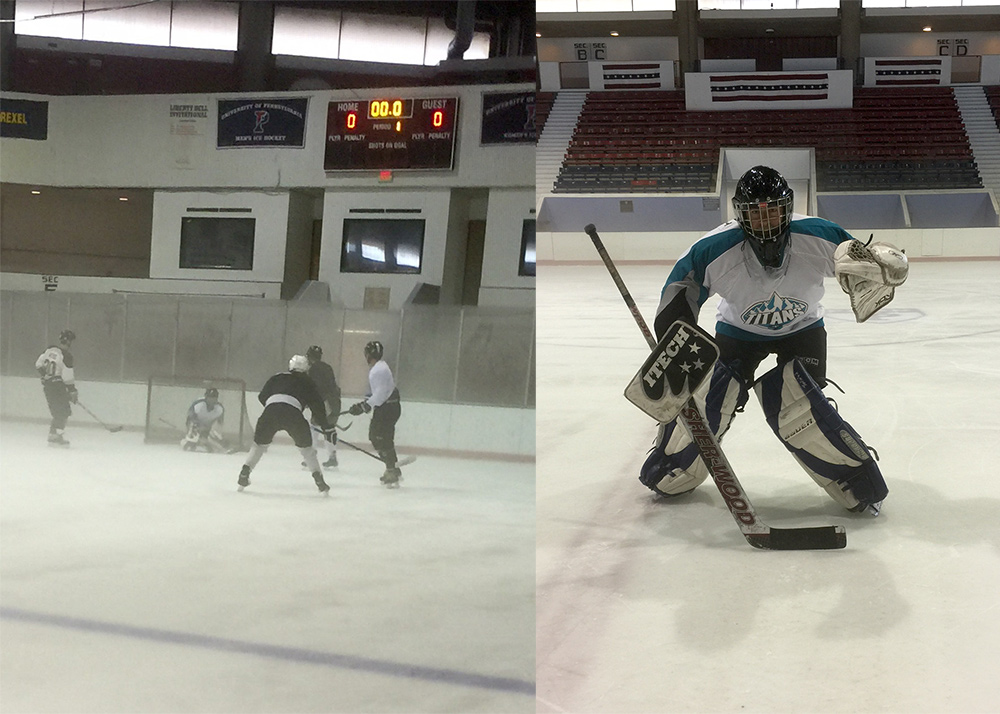
    At the bench, I finished the routine. Mouth guard in and helmet snapped on. One stick on the bench, the other in my hand as I slid my left leg over the boards and pulled myself up to sit on the edge. A slight shift and I felt my skates make contact with the ice and, without hesitation, I pushed myself forward and picked up a puck with my stick. The butterflies were gone, replaced by excitement and a huge, grateful smile.

    epilepsy dad hockey absence of obligation

    In a previous post, I wrote about the importance of taking care of myself so that I can take care of those around me. Playing hockey a few times a month is one of the things that I do for myself. I exercise at least three days a week but, usually, it is with the mindset of keeping myself healthy…a “have to” instead of a “want to”. While I enjoy the benefits and the feeling of a good run after it’s over, exercising is generally a chore instead of something that I honestly look forward to. Hockey, though, goes on the calendar, not on the to-do list, and I count down the days until I play again like it’s Christmas.

    It’s hard to make the time to do things for myself. I feel so responsible for my family that I feel like I either need to be spending time with them or doing things for them and there is no room in that mindset for anything else. But I also largely walked around burned out after my son was diagnosed with epilepsy. I was scared, and frustrated, and overwhelmed and those feelings came out when I interacted with my family. I was distant, and irritable, and resentful. I wasn’t able to truly be present and connect with the most important people in my life when it mattered most.

    I knew something had to change. I needed to find time to not be surrounded by the enormous responsibility I feel all the time. I needed an outlet to relieve the pressure. On the ice, I am able to focus on my game. I needed to find better coping skills to handle the pressure, so I found someone to talk to that is helping me develop those skills. I write as a way to process my thoughts and most of it is done without the expectation of being published. The absence of an obligation to do these things and to, instead, feel like I am doing them for myself is liberating. These activities help me breathe and to be more present so that when I return to my family, it is hopefully as a better husband and a better father.

    If you’re reading this, you can probably relate to the feelings of being overwhelmed, and the feeling that there is no time to do anything for yourself because of the obligations that come with caring for someone that needs more attention and keeping everything afloat. I want you to know that that is not a sustainable situation. You will burn out. You will get resentful. You will find yourself further away from the same people who you are sacrificing for, and you owe it to them and to yourself to find something that you can do for yourself, free of obligation, to refresh, recharge, and to persevere.

    What things do you do for yourself that are free from obligation? Share with the community by leaving a comment with an activity that you do for yourself.


  • Take Care Of Yourself To Take Care Of Others

    Take Care Of Yourself To Take Care Of Others

    I’ve racked up a lot of airline miles in my day. I’m such an expert traveler that I can recite the different safety speeches from the different airlines. Sometimes I’ll sit in my seat with my headphones on and think the words to myself as the flight attendants demonstrate the safety features of whatever Boeing or Airbus metal tube we’re about to push into the sky. “In the event of a loss of cabin pressure, yellow oxygen masks will deploy from the ceiling compartment located above you.” The flight attendant will reach across to the middle seat to the left and the right and let their sample mask drop from their hands and suspend from a rubber tube above the captive audience member.

    “Reach up and pull a mask towards you. Place it over your nose and mouth, and secure with the elastic band that can be adjusted to ensure a snug fit. The plastic bag will not fully inflate, although oxygen is flowing.” The snap of the rubber band secures the mask to the painted face and perfect hair of the actors in the repetitive play before the big life lesson is revealed.

    “Secure your own mask first before helping others.”

    Boom. Mic drop. Well, except for the part about where the emergency exits are. And the safety lighting. And the raft. And I’m sure a loose microphone rolling around the plane is a safety hazard. But that statement about securing your own mask before helping others…that’s the one that gets all the press. But why? It goes against everything we’re taught. It’s selfish to think of yourself first. “I need to save my [insert anyone other than myself]!” “There will be time to put my mask on after I save everyone else.” “Think of the children!” Such a contradiction in a statement that is made thousands of times a day around the world in a hundred different languages but also one that is as relevant on the ground as it is at 30,000 feet.

    I’m not the first person to write about the importance of taking care of yourself so that you can take care of those around you. I’ve read the articles, too. They sounded great in theory. But in practice, it’s easy to forget to do it or to realize that you’re not doing it. There’s always so much that needs to be done and no one else to do it or no time to do it all. There are jobs and obligations and doctor appointments and seizure days and batches of keto cooking to do. There are the day-to-day operations of keeping a family in the air and safe and together. There are the “have to” with little time for the “want to”.

    In an airplane, there are sensors that detect the loss of cabin pressure and trip the release of the oxygen masks from the cabin. That’s a pretty clear sign that something is wrong. In life, there are no sensors. There are no oxygen masks. Most of the time, you don’t know that your cabin pressure has been lost until it’s too late. Instead of passing out from the lack of oxygen and unable to help those around you, you find yourself in a hole, alone, and distant from those that need you the most. In both cases, it is impossible to breathe.

    I’m finding myself in that place again. I feel myself pulling away from those around me. My wife is hinting that she’s feeling alone in the quagmire. I’ve dropped the things from my list that are just for me, things that refuel me, and I’m feeling drained. These are my warning lights, telling me that I’m not taking care of myself and that it’s impacting my ability to take care of my family.

    It is time for me to find my own mask and to put it on.

  • Nothing Can Prepare You

    Nothing Can Prepare You

    When I was ten or eleven, my parents brought home our first computer. It was a Mattel Aquarius (yes, that Mattel) and it changed my life. I was fascinated by the games and the things I could do with a computer and I spent a lot of time figuring it out. My next computer was a Commodore 64, and that’s when I started programming. When I was fifteen, I got a job in a television repair shop where I spent part of my time on the work bench and part on the sales floor selling computers. In the Army, I was the resident computer expert and helped develop update archaic systems to bring them into the modern age.

    When I left the Army, I got a job as a computer programmer with a large financial firm. At the time, it was unheard of to get a job in a company like that without a college degree, but I already had much more hands-on, practical experience than most of my peers exiting college. The challenges I faced, the solutions I developed, and my understanding of the practical applications of technology started me on my path as a career technologist.

    When I look back, I’ve spent most of my life preparing myself for my life in technology. I read books and magazines and copied the code from their pages, inspected every line, and made improvements. I joined user groups and surrounded myself with people who understood computers and technology and absorbed everything I could. I build and repaired computers and honed my troubleshooting skills to a sharp point and thrust it into every problem that I could. I had fifteen years to prepare and acquire the skills that I needed to land that first job that eventually turned into a career in technology and a gift that I could share with my son.

    epilepsy dad technology parenting fatherhood

    I was less prepared to be a parent. I had a lot of negative lessons about what a parent should not be or do, but few role models or experiences for the type of father I wanted to be. Part of me hoped that the lack of guidance would present an amazing opportunity to be any type of father that I wanted to be but the darker part highlighted my own insecurities and made it difficult to believe that I could do the right thing. I read books and took the classes that the hospital offered, but the there wasn’t enough time to absorb everything there was to know about being a parent or to practice any of the skills that I would need to raise a child. Still, I was as prepared as I could be and made educated guesses as I tried to navigate the complexities of keeping this young life alive and teaching him about the world around him. Prepared, maybe. Proficient, not even close. But I held on to the belief that, even though I fumbled, that’s what parenting is, and as long as I love my son and show him and try to be a good role model, I’m ahead of the game.

    None of the parenting books or classes, though, prepared me for the path my son’s life took with epilepsy. At least when he was born, I had a nine-month lead time to start gathering some information and make an attempt at getting myself ready. The first seizure came out of nowhere. The second, a few months later, felt like someone pushed us down an infinitely deep, pitch black hole without warning. in the beginning, I felt desperate, out of control, and helpless. I couldn’t see and didn’t know what was happening around me. There was no preparation for the descent, and I was afraid of the dark, of falling, of not being able to right myself and save my wife and my son. It was terrifying. It is terrifying.

    Even though there wasn’t anything that could have prepared me for what is happening, there are resources available that give us back some control in an otherwise uncontrollable fall. In the years since his diagnosis, we are finding people and information that offer some light in the darkness, just enough light to see that we are not alone.

    Most importantly, my family is in this together and we’re finding each other, too. These lessons that I am learning and these feelings that some days overwhelm me have forced action on my part to face these fears, to find what is most important, and to open up to my wife and my son and to show them that I am here and I am present.

    Somewhere in that darkness, in the falling, in the fear, I felt a hand, so I reached out for it and I found my wife. I reached out again into the emptiness and I found my son. As I pulled them closer to me, I had one thought:

    “Don’t let go. Don’t ever let go.”

  • Epilepsy Awareness In The School – The 504 Plan

    Epilepsy Awareness In The School – The 504 Plan

    This week, my wife and I are meeting with my son’s school to update his 504 plan. A 504 plan is intended to ensure that a child with a disability has access to learning and receives accommodations to help them succeed academically. In my son’s case, his plan outlines breaks, seating placement, a shortened school day, and special assistance for attention and behavioral issues. The plan is put together collectively by the parents, nurse, teacher, and school district with input from my son’s medical team and support services and it is meant to be a “living document” that will change as my son’s condition or capabilities change.

    This is our first year with a 504 plan. Even though we’re only a few months into the school year, we are pulling the team together to make adjustments. Some changes are good, such as lengthening his day since his endurance has improved. We also have a better sense of how he handles the day, so instead of basing his breaks strictly on a time, we can place them after harder tasks so that he can spend more time in the classroom with his peers. But we also need to address some issues that many parents of children with epilepsy face when trying to get the right services for their child.

    Looks Can Be Deceiving

    Most of the time, if you look at my son, he looks like a normal, healthy kid. I am extremely grateful for that, but it makes requesting services for him difficult because he doesn’t look “look sick”. Epilepsy is included in the class of conditions called “invisible disabilities”. While a seizure itself might be external, many of the effects surrounding epilepsy are internal. Fatigue, depression, and problems with attention and cognition are just some of the issues that my son deals with every day. On the outside, he might look like a normal 7-year-old boy and it’s easy to want to treat him that way. Too many times my son doesn’t get a break that he needs because he “looks fine” but, by the end of the day, he’s so physically exhausted that, not only is he not actually learning anything, he has more seizures that night and the next morning that cause him to start the next day already exhausted. It’s only after

    Epilepsy is included in the class of conditions called “invisible disabilities”. While a seizure itself might be external, many of the effects surrounding epilepsy are internal. Fatigue, depression, and problems with attention and cognition are just some of the issues that my son deals with every day. On the outside, he might look like a normal 7-year-old boy and it’s easy to want to treat him that way. Too many times my son doesn’t get a break that he needs because he “looks fine” but, by the end of the day, he’s so physically exhausted that, not only is he not actually learning anything, he has more seizures that night and the next morning that cause him to start the next day already exhausted. It’s only after a few days following seizure-filled nights that my son physically fits the “sick kid” profile.

    Not All Epilepsy Is The Same

    Epilepsy covers a broad range of seizure disorders. A teacher mentioned that she had a student with epilepsy that would have a seizure, sleep at her desk, then wake up and be fine. When she described that experience, she did so in a “don’t worry, I clearly know epilepsy so I’ve got this” tone that raised the “you don’t got this” alarm bells in my head.

    Epilepsy is more than just seizures and there are an infinite number of variables surrounding the seizures that make each case unique. My son rarely has seizures during the day, but depending on how tired he is, he may have more at night and in the early morning hours, which affects how rested he is going into the next day which perpetuates the problem. The state of his brain at any given moment dictates his behavior and his ability to retain and recall information. His head is constantly swimming in medication and the side effects of those medicines are exacerbated depending on his cognitive load, seizure burden, and his physical condition. So not only are not all cases of epilepsy the same, but people with epilepsy can show a wide range of symptoms and effects on any given day.

    Not Everything That Looks Like “Normal Behavior” Is

    “All kids his age…” Anytime someone starts a sentence with that phrase, I know that I’m going to have to break out the soapbox. First, “all kids” don’t do the same thing. But most importantly, the behavior that looks like the “normal” attention problems of a first grader are actual misfirings of the neurons in my son’s brain that are preventing him from recalling any information. The glassy eyes and the “no one is home” look could be the result of a seizure or the way that his medicine is affecting him today so his extra-slurred speech and his frustration trying to piece together a complete thought are not normal development problems, either, especially when they vary throughout the day.

    Even with the best intentions, treating something as “normal” has both the risk of setting my son up to feel like a failure because he can’t control what is happening to him and prevents the identification of what is actually causing the behavior and the ability to address that cause.

    Things You Can Do

    We are very new to this world, but we are extremely grateful to have a wonderful support network around us and to have had many people go before us and share their lessons. To continue on in that spirit, here are a few of the lessons that I have learned that may help you navigate this long, difficult road.

    Have The Conversation

    Balancing my desire to have the world treat him as a “normal” kid and making him feel like a normal kid with the reality that he has special needs is a challenge I face every day. Not everyone else does or has a reference for what that means. Having a dialog with the teachers and the school district and talking about their perceptions is an important piece of having everyone on the same page. “It’s great that you have seen a seizure, but here is how my son is different from that other student.” As the teachers have more interactions with my son, and as we continue to talk about what they have seen and what things we are seeing at home, we’ll all have a better picture and be able to adjust the plan to better suit my son’s needs as they continue to change.

    Have The Information

    My wife and I have talked leading into this meeting about what is working with his current plan and what isn’t working. We’ve talked about what things we need to bring up, how to bring them up, and what documentation we need to provide to support our position, and we will have that documentation available. Doctor’s reports, neuropsychological tests, reports from wraparound services. Perceptions are hard to change but the best way to support the request for services that your child needs is with data.

    Have A Support Network

    One of the best resources that we have available to us is our support network. Other parents that work tirelessly to navigate the system, social services through the hospital and the state, and epilepsy groups such as the Epilepsy Foundation of Eastern Pennsylvania that have programs to bring epilepsy education into the classroom. This network provides the guidance and information we need to ensure that we are asking the right questions and asking for the right services for our son. In some cases, we’ve brought people from this network into these meetings. In the end, we have built a team that we can leverage to do what is best for my son.

    Have The Courage To Fight

    If you’re averse to conflict like I am, get over it. It may seem like the system is set up to oppose these special services. They cost money, they disrupt the normal flow and structure of the school day, and especially with an “invisible disease”, the system may try to convince you that your child doesn’t need these services. As we’ve been told many times, there is no one that will be a bigger advocate for our son than us. Be that voice. Partner when you can. Fight when you must.

    Additional Information

    There is a lot of good information about what to ask for in a 504 plan, and I wanted to share these links that I found useful. If you have other suggestions or resources to share to help other parents going through this process, please share them in the comments.

    http://www.greatschools.org/gk/articles/section-504-2/

    Sample 504 plan for epilepsy: http://www.epilepsynorcal.org/wp-content/uploads/2015/07/Sample_504.pdf

    NEXT UP: Be sure to check out the next post tomorrow from Eisai/Sean at livingwellwithepilepsy.com for more on epilepsy awareness. For the full schedule of bloggers visit livingwellwithepilepsy.com. And don’t miss your chance to connect with bloggers on the #LivingWellChat on November 30 at 7PM ET.