• Shame, Consequences, and Leading with Love

    Shame, Consequences, and Leading with Love

    “Come with me,” the security guard said.

    I was ten years old.

    My friend and I had ridden our bikes to a department store a few miles from my house and walked in with a brown paper bag. We headed to the toy aisle and filled our bag with Transformers and other loot, unaware that the security cameras were tracking us the whole time.

    It was just as I stepped onto the pressure pad to open the automatic door that our heist was thwarted, and we were escorted back into the store, up a stairwell, and into the security office.

    The security guard, an off-duty cop, rewound the security tapes and showed us his view of our activities. I watched myself from multiple angles walk shelf to shelf, pick an item, and place it in the bag. It was terrifying and embarrassing.

    The guard asked us for our information and, when he heard my last name, he paused. “Wait, ” he said. “Is your dad a cop?”

    My heart stopped. Every muscle in my body froze, but I managed to eke out a soft “Yes, sir.”

    My captor let out a hearty laugh. “Oh, he’s going to love this,” he said, as he picked up the phone to call the police.

    My friend and I were taken to the police station in the back of a police car, our bikes tucked away in the trunk. I thought about what my father would say. I thought about having to tell my mother and my stepfather. I thought about going to jail. It was and still is the longest car ride of my life.

    At the station, my friend and I were separated into different interrogation rooms. I’m not sure if it was intentional, but the lighting allowed me to see the silhouette of my father on the other side of the one-way mirror. The officer in the room with me asked me questions and created a very Scared Straight experience that had its intended effect.

    My father didn’t say much to me as he drove me home. I remember him telling me to have my mother call him as I stepped out of the car, and I walked up the stairs to face the consequences. Except no one was home, and I had to wait an agonizingly long time, staring out the front window, until I saw her car pull into the driveway.

    Immediately, every emotion spilled out of me, and when the door from the garage opened, so did a stream of words explaining what had happened.

    At the time, the consequences were predictable, if exaggerated. I couldn’t hang out with my friend again. I was grounded and lost some privileges for an unspecified amount of time. But the worst consequences were the feelings of guilt, shame, and fear that permeated every cell in my body.

    I wasn’t told that I wasn’t a bad person, or that people make mistakes. I wasn’t made to feel like my actions wouldn’t define how I felt about myself for the rest of my life. I wasn’t comforted, and my feelings weren’t acknowledged.

    Instead, those feelings of guilt, shame, and fear were amplified. My parents were mad and disappointed. It was one of the worst things that I could do to them. Their feelings were the only ones that mattered, and I was left to hold and figure out mine. I felt very alone.

    At ten years old, figuring out my emotions by myself wasn’t possible, and so I carried that guilt, shame, and fear for the rest of my life. To this day, I’ll sometimes swing a bag of purchases through the metal detector ahead of me so that, if it does alert, everyone will know it was the bag and not me.

    I think about that experience when my son makes a bad choice. I try to find that line between consequences, learning, and growth, without internalizing a destructive self-image filled with guilt and shame. Most days, it seems impossible, even without considering his mental and emotional challenges. And I can’t help but see myself at his age when I look at him, and that fear of doing it wrong and causing damage to him makes me feel unsure and indecisive.

    But seeing him that way also makes me think about what my younger self needed in those moments when I was teetering on the edge of emotional collapse. What did I need? What do I wish my parents had done? Can I do that for my son now?

    Often, it comes down to seeing him and asking more questions instead of projecting more statements that make the situation only about me and my feelings. It involves understanding that each of these moments has the potential to help him learn and make better decisions in the future, or shame him into destroying his sense of worthiness and self-compassion. Simply, it involves leading with love.

    Remembering that can be difficult in those big, emotionally charged moments, especially considering how they played out for me. But I keep trying. I try to quiet the echoes of my own childhood long enough to truly see my son—not just his behavior, but his needs, his struggles, his heart. And in those moments, when I push past fear and into empathy, I find the thing I needed most when I was ten.

    Not punishment. Not shame.

    Just someone who was willing to stay beside me in the mess.

    Someone who believed I was still good.

    Someone who was leading with love.


  • Here We Go Again

    Here We Go Again

    Here we go again
    Same old stuff again
    Marching down the avenue
    Six more weeks and we’ll be through
    I’ll be glad and so will you
    U.S. Army Marching and Running Cadence

    I was never much of a runner. I had the look of one. Tall and skinny, with long legs that should have made running easier. I was even a fast sprinter. But anything longer than the size of a football field, and my brain would scream at every one of my moving parts to stop.

    Imagine how much fun I had when I joined the army, where nearly everything involved…you guessed it…running. We’d wake up early every morning, head downstairs, and fall into formation. Our drill sergeant and his team would stand in front, bark out a few orders, and then my fellow soldiers and I would turn and follow our leaders, matching the rhythm of our steps to theirs, for however many miles we’d run that day.

    A few minutes into the run, one of the sergeants would begin calling out a cadence. Military cadences are rhythmic chants used during marches and runs to maintain a consistent pace, foster teamwork, and boost morale. They help synchronize movements, improve endurance, and build unit cohesion.

    They were magic. They kept me focused on the rhythmic call and response rather than the fact that I hated running, that my lungs and legs hurt, and that I should stop. Because I couldn’t stop. I couldn’t let my squad down. I couldn’t let myself down. I had to push through.

    One of the cadences, “Here We Go Again,” summed up basic training perfectly: the same grueling routine, day after day. Wake. Run. Eat. March. Train. Eat. March. Train. Eat. Chores. Bed. Every day, for 8 weeks, the same thing.

    Anytime I find myself repeating a pattern, especially a challenging one, I think of those early morning runs. I think of that need to push through, to not let my squad and myself down.

    Here we go again
    Same old stuff again

    We’re approaching one of those times. Toward the end of the school year, our son is always exhausted. He’ll have a harder time waking up in the morning and randomly fall asleep in the afternoon. Around the same time, baseball, one of the few non-school activities he still enjoys, starts demanding more energy and mental bandwidth. We also start figuring out what the following school year will look like, scheduling IEP meetings, and talking with his school and the district about our son’s challenges, needs, and potential. It’s mentally, physically, and emotionally draining on the entire family.

    Six more weeks and we’ll be through.

    Six more weeks until the school year ends. Six more weeks to push through. Six more weeks of having a routine, structure, and certainty. Six more weeks until the story that has been written ends, and there are only blank pages unless we can write down a new plan before then.

    It’s exhausting. It’s like those basic training marathon runs, where somehow we’d run in a circle but only be running uphill, defying physics, logic, and any sense of fairness. It tests our endurance and commitment. Parts of my brain are screaming to just stop.

    But we can’t stop. We can’t let our son down. We can’t let ourselves down. We have to keep going. We have to fill those pages with a plan for the next year, until we find ourselves again six weeks from the end of the school year with the same cadence echoing in my head.

    Here we go again.

    Same old stuff again.


  • Bit of Both

    Bit of Both

    There’s this great line from the Marvel Guardians of the Galaxy movie where one of the characters asks his team what they should do next.

     Peter Quill: What should we do next? Something good? Something bad? A bit of both?

    Gamora: We’ll follow your lead, Star-Lord.

    Peter Quill: Bit of both.

    At a recent appointment with our neurologist, we were giving her an update on our son’s quality of life. As I listed the highs and lows, that line from the movie popped into my head because it perfectly captures where we are on our journey with epilepsy.

    For so long, it felt like we were chasing a single definition of “better.” Fewer seizures. Better focus. More sleep. But over time, I’ve learned that progress rarely shows up in a straight line. It comes in fragments stitched between setbacks.

    Even with the medication changes, VNS, and DBS, our son still has seizures most days. But they’re mostly when he sleeps and hasn’t had a daytime seizure in a long time. The seizures affect his sleep and rest, and he’s tired a lot. But we’ve been able to manage his exhaustion and prevent it from escalating and increasing his seizures.

    Because of his morning seizures, he often goes to school later, but he makes it through the day. He still struggles with his memory and executive functioning, but he is able to complete tasks and problem-solve. He’s behind socially, but he has a best friend. When we thought we should only expect regression in his cognitive abilities, we saw progress in math and other subjects.

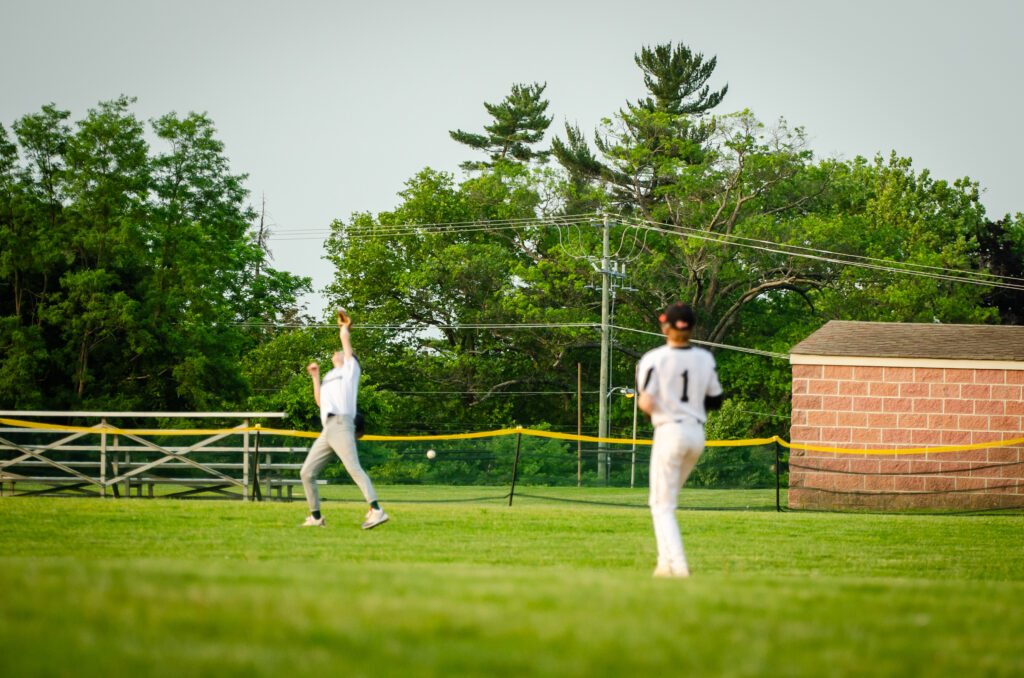
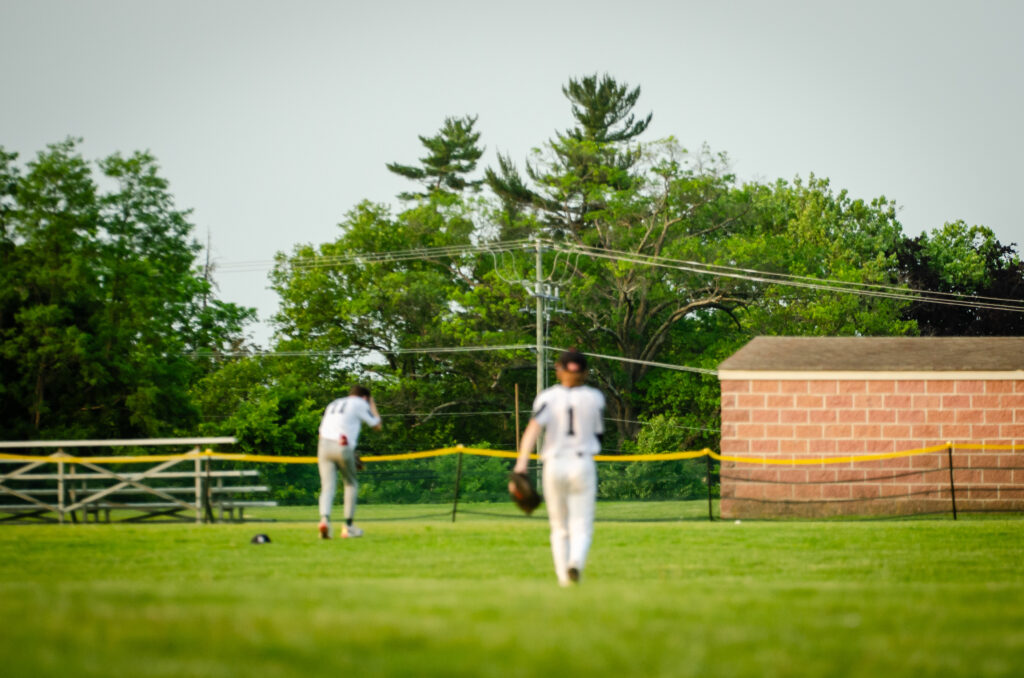
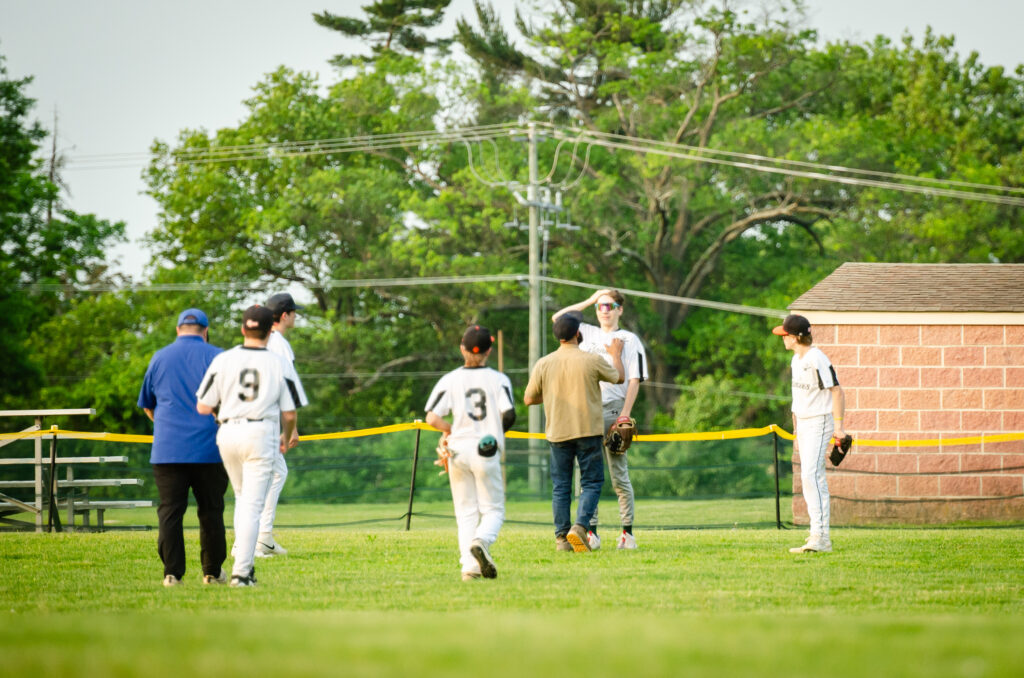
    When the neurologist did the “finger-to-nose” test to assess his upper body movement and coordination, she observed some tremors and dysmetria. But he also plays baseball and can hit a fastball and throw a pitch. His reaction time is slow, but his coaches adapt their style to help him contribute. The team consists mainly of neurotypical teens who go to school together and socialize outside of baseball, but they treat my son kindly. This season, the coach even drafted his best friend onto the team.

    Last week, I wrote about embracing the bittersweet. Moments are never just one thing, and I sometimes struggle to find the good in bad ones, but I look for the bad when the moment is good.

    In the middle of sadness, there is love. In struggle, there is strength. In the hardest days, there is light.

    Life isn’t one thing, either. It’s a collection of moments and experiences stitched together over time. It’s natural to apply the same pessimistic lens to the collection as to each individual moment and get stuck in the pattern of only seeing the negative. But in life, just as it is with each moment, it’s important to see both.

    Maybe I won’t always find it right away. Maybe some days the sorrow will feel heavier than the joy. But if I can hold space for both, if I can remember that they live side by side, then maybe I can stay a little closer to hope.

    Maybe I won’t always recognize it immediately. Some days, the bad will feel bigger than the good. But if I can step back, hold space for both, and remember that neither tells the whole story on its own, I can keep moving forward.

    Holding space might mean celebrating a hit in baseball even if the rest of the day was hard, or letting my son’s laugh take up the room without immediately wondering how long it will last. It’s giving each part its due without rushing past the good or getting swallowed by the bad.

    That’s not just something to look forward to — it’s something to hold onto.

    So, what comes next? Something good? Something bad?

    Bit of both.


  • Embracing the Bittersweet

    Embracing the Bittersweet

    Life with epilepsy, like life itself, is never just happy or sad. It’s bittersweet. Every milestone, every setback, every quiet moment holds a mixture of both. Joy is sweeter because of the battles we fought to reach it. Sorrow runs deeper because it reminds us of what we love most.

    The deeper that sorrow carves into your being, the more joy you can contain.
    Is not the cup that holds your wine the very cup that was burned in the potter’s oven?
    And is not the lute that soothes your spirit, the very wood that was hollowed with knives?
    When you are joyous, look deep into your heart and you shall find it is only that which has given you sorrow that is giving you joy.
    When you are sorrowful look again in your heart, and you shall see that in truth you are weeping for that which has been your delight.

    Kahlil Gibran, The Prophet

    Joy and sorrow are inseparable. They are two sides of the same coin. Fate flips the coin and decides which side comes out on top.

    Gibran writes that when you are sorrowful, it’s because joy once filled that same part of you, and now it is carved out. The more sorrow shapes you, the more space it creates inside you for future joy. Love, loss, happiness, and grief are woven together. You can’t have deep joy without knowing deep sorrow, because they define and expand each other.

    At times, their connection makes it hard to have a truly joyous moment because the sorrow it replaced lingers and is never truly gone. There is a subtle awareness that the other is still there, waiting for the next toss of Fate’s coin.

    For a long time, knowledge prevented me from experiencing the joy because I was too focused on remembering the past and worrying about the future. In those moments when the coin came up sorrow, I would be too focused on the present, forgetting the joy we had experienced and that we would have again.

    I’m trying hard to find the balance between the two…to embrace the bittersweet. When my son has a good moment in a baseball game or is proud of an assignment he completed at school, I want to stay in that moment with him and not compare him to his peers or pull in moments where his challenges kept him from feeling more successful. And when he struggles at a task, has a hard time staying focused, or when his body or mind betray him, I want to remember that it isn’t always that way, and it won’t always be that way, either.

    Even as I wrote those words, it felt like a daunting task. It was hard to find any positivity in those times when he struggles, and I don’t feel like I’m far enough along on my journey where the positive comes naturally. But I did write them, and I will leave them, because that is who I want to be. Fake it until you make it, as they say.

    That’s why I like the word bittersweet. It feels like an anchor that will keep me from drifting too far away from the duality of these experiences when I focus only on the negative. Bittersweet reminds me that no moment is ever just one thing. It acknowledges that life is not all good, and it’s not all bad. It’s both, sometimes in the same breath.

    In the middle of sadness, there is love. In struggle, there is strength. In the hardest days, there is light. Maybe I won’t always find it right away. Maybe some days the sorrow will feel heavier than the joy. But if I can hold space for both, if I can remember that they live side by side, then maybe I can stay a little closer to hope.


  • The Other AI: Autonomy and Influence

    The Other AI: Autonomy and Influence

    My son has been asking more frequently about living by himself. We’ll have a talk about independence and responsibility, and loosely talk about goals to help him move in that direction. But I also watch as he struggles to remember whether he had taken his medication, or put on deodorant, or pull his sheets up when he makes his bed.

    As I watched him try to piece it together, I thought about the technology that I work with and whether it could help him.

    I’ve been involved with computers and technology for most of my life, building products with bits and bytes of code and data. For the past ten years, I’ve worked in the evolving field of artificial intelligence (AI).

    I recognized early on that AI could potentially transform my son’s life. As the technology matured, I watched it advance the state of medicine and healthcare.

    Today, AI algorithms power diagnostic tools, accelerating the time to detect, identify, and treat complex medical conditions. AI is accelerating drug discovery, helping researchers identify promising treatments faster than ever before. It is also being used to examine genetic data to identify the right medication and dosage for individual patients.

    AI could improve his quality of life in ways that weren’t possible only a few years ago. Pattern recognition can alert us when he misses a medication or a meal. Personal assistants can provide reminders, keep him on task, and communicate with him in a way that he understands. Self-driving cars will give him mobility and access to a wider world. AI-driven tools can assist him with complex tasks, help him communicate ideas, and give him greater autonomy and independence.

    That’s the promise and the potential.

    But here’s the problem. We live in a world where AI is already causing harm.

    Inherent challenges with the technology, especially with generative AI (e.g., ChatGPT), result in hallucinations where the algorithm makes things up. The black-box nature of these algorithms makes them unpredictable and impossible to test fully, resulting in harmful behavior. And these algorithms are owned by corporations who control the data, usage, and output and can tune it to fit their agenda.

    Beyond technology, people have been using these tools for nefarious purposes. It’s easy to create a false but believable story and share it on social media. It’s also easy to create completely believable but fake images and videos to mislead viewers. These bad actors are using the technology to push false narratives and generate mistrust and dissent in society.

    My son struggles with memory and executive functioning. It impacts his ability to reason and determine whether what he is reading is fact or opinion, truth or lies. While I think society at large has lost its ability to thing critically, people like my son are especially susceptible to these false narratives and the harm they can cause.

    So while I’m building the future with AI, I’m also guarding the present for my son. I want him to have access to all the promise this technology offers — the support, the independence, the chance to live on his own — without falling victim to its dangers. I have to be his guide, his filter, and his advocate.

    Because while AI might one day help him remember his medication or build a career, it won’t teach him who to trust, what’s real, or what truly matters. It’s my job to walk beside him, protect him, and help him make sense of a world that’s changing faster than any of us can keep up with.


New posts on Tuesdays.
Follow along.

About

I’m Dave. I write about raising a son with refractory epilepsy.
Read more.

Recent Posts