Category: seizures

  • Fatherhood And Preparing My Son For A Future With Epilepsy

    Fatherhood And Preparing My Son For A Future With Epilepsy

    This post is part of the Epilepsy Blog Relay™ which will run from June 1 through June 30. Follow along and add comments to posts that inspire you!

    Today is Father’s Day.

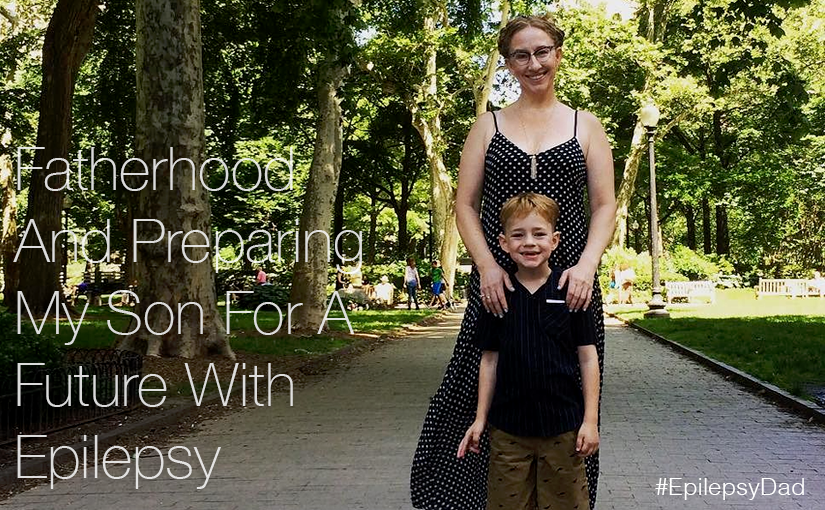
    This morning, like most weekend mornings, I’m going to wake up to the sound of my son pushing the door to our room open, the squeaky hinges announcing his arrival. I’ll open my eyes and watch him toss his green and white blankets and a few of his stuffed animals on to the bed, climb over me and lie down in between my wife and I. He’ll put his fingers in his mouth, close his eyes, and snuggle up next to us, the sound of him sucking his fingers right next to my ear keeping me from returning to sleep. I don’t mind, though. This is how most weekends go, and I wouldn’t want it any other way.

    epilepsy dad stigma fatherhood parenting

    It’s in these early morning hours, as I lie awake in bed next to my family, that I sometimes think big thoughts. When I was a new father, still overwhelmed with idea of being responsible for another life in this world, I would have grand thoughts about the type of world my son would live in. Would there be enough food and water for everyone? Should I be recycling more? What about clean air? Should I get a more fuel-efficient car? Should I bike to work?

    As he got older, and as I settled in on the idea that he’s more durable than I had assumed children would be, those early morning thoughts turned to more hopeful things. What number would he wear on his jersey in the NHL? How old would he be the first time he saw the earth from space? How often would they let me visit him in the White House?

    For the past two years, after my son was diagnosed with epilepsy, I started asking different questions. These questions were shaped by our experiences struggling to control his seizures, managing his medicine and the ketogenic diet, and trying to normalize his life as much as possible. Would he ever be seizure free? Will he be able to live on his own one day? How can I best prepare him for the challenges ahead? How can I teach him to love himself and believe in himself against the stigma that comes with having epilepsy?

    The last question is one that I’ve been thinking about more lately. He’s only in kindergarten, but there have already been incidents where he has been made to feel different because he has epilepsy. Questions about why he misses so much school and leaves early, or the snickers from classmates that come from his bizarre ketogenic lunch that sometimes includes taking a shot of oil, I can see him starting to pull away. He’ll sit by himself, or he’ll tell us he doesn’t want to bring a lunch to school. This is already happening, and he’s only in kindergarten.

    The more involved I become with the epilepsy community, the more I get a glimpse of the challenges ahead for my son. I read the callous, insensitive tweets from the uninformed, misguided people who post messages about “being glad that they don’t have epilepsy” or how a video or light show “almost gave them epilepsy”. I read the messages of sadness and despair from those living with epilepsy and the stories of discrimination, and about how epilepsy “isn’t being a real thing” because there aren’t any visible signs.

    There are many mornings when I’m lying next to my son and I get scared. I don’t want that world to squash the light inside the little boy who is so brave and who cares so much for those around him and who loves and who dreams incredible things. I’m worried that I am not equipped to help my son navigate that world, and that I will fail him…fail at the greatest thing that I will ever do, and that is being a dad.

    On those days, when I seem to need it most, he will roll over and puts his arm around me. I instantly feel better. I remember that the most important thing I can do for my son is to love him unconditionally, which I do in abundance.

    I think about that community where I have seen so much sadness and I remember the overwhelming feelings of support and hope that are much more common. They share their stories, many of whom you may read as part of this blog relay, and I, too, am hopeful and inspired to lend my voice to the choir…to sing with them the stories of what it means to be the dad of a child with epilepsy, the struggle, the joy, and the lessons that I learn along the way.

    Maybe it will be this morning, when I won’t be awoken too early by the sound of a creaking door, or him sucking his fingers. Maybe I’ll feel confident that I’m doing my part by advocating for my son, and I’ll think about how far we have come, and that I’m leading with love and helping build a foundation in him that will help him face the challenges that will be ahead. Maybe this morning I will be able to fall back asleep, only to be awoken a few hours later by the four most magic words that will remind me how lucky I am and how hard I will fight.

    “Happy Father’s Day, Daddy.”
    NEXT UP: Be sure to check out the next post tomorrow by Whitney Petit at Changing Focus: Epilepsy Edition for more on Epilepsy Awareness. For the full schedule of bloggers visit livingwellwithepilepsy.com. And don’t miss your chance to connect with bloggers on the #LivingWellChat on June 30 at 7PM ET.
  • Keeping The Lid On

    Keeping The Lid On

    We had a few good weeks. After a year on the ketogenic diet and what seemed like the constant juggling of medicine, we were only seeing an occasional seizure in the early morning. The behavioral issues leveled out, even if the problems with attention and ataxia did not. But we felt stable enough that the conversation with our neurologist turned to talks of lowering one of my son’s medicines.

    There was one medicine, in particular, that we started last year while we were living on the neurology floor of the hospital. It was one of the rounds on the bombardment of medicines that my son was given to battle the endless onslaught of seizures attacking his brain. After the smoke cleared, we left the hospital with a long list of prescriptions that included a few pills of questionable effect. Now that we were relatively stable, we decided to lower the dose of the first medicine to see if it was working and hopefully lessen any its side effects that were burdening my son.

    The first reduction (with every medicine, there is a gradual weaning, not an abrupt stoppage) was uneventful. We did not see an increase in seizures, but we also did not see a reduction of side effects. After the second reduction, though, we started to see a change. Instead of confining themselves to the early morning hours, we started to see seizure activity during the day, as well. The myoclonic jerks that, in hindsight, acted as our canary in the epileptic mine slowly came back. At first, there were only a few…so few that we probably missed them initially. But then there were more, and they were hard to ignore. Then the tonic-clonic seizures also crept in to the daytime. Then the most telltale signs of a problem returned…the exhaustion, the uncontrollable sadness, slurring and having a hard time finding words, and the anger.

    Our neurologist scheduled an EEG that confirmed that the subclinical seizures were also back and his EEG background was a mess. The report showed that the medicine that we suspected wasn’t helping had been working, so we again adjusted course and started raising the dosage.

    Unfortunately, it was too late. By the time we realized that the medicine was working, the seizures were already cascading through my son’s brain, and it would take days before the increased dose would have an effect. We had taken the lid off the pot and it was boiling over.

    As the seizures continued and the effects of each seizure lingered longer, we used our rescue medicine to buy us some time until the increase in dosage kicked in. We made it through the night, but the next morning the seizures and my son’s exhaustion and processing difficulties continued. “My brain is still going backwards,” my son said, which was his way of communicating that something was still wrong. We contacted our neurologist and by that night, we found ourselves admitted to the neurology floor.

    The technicians hooked him up to an overnight EEG and within an hour our neurologist came in to tell us that his readout was still a mess. The plan was to monitor him to determine if we needed to introduce a temporary medicine to hold us over until we were back up to our working dose of his regular medicines, but the bridge medicine was one that, while it worked for seizures, brought with it rage.

    We spent the night watching the EEG screen, pushing an alarm for each seizure we saw and calling out in to the night which type of his many seizures we were reporting. That night was a combination of a lack of sleep, concern for our son, and dreading the threat of the temporary medicine. By early morning, my son had gone a few hours without a seizure and I fell asleep next to him on his bed.

    We woke up the next morning and my son started to feel better. The doctors came in and said, while his EEG still wasn’t great, it was trending in the right direction and that we could go home. While it seemed terrifying to leave while things were still “not great”, we learned last year that a positive trend is enough to go home with.

    As we left the hospital, I knew, like I do every time, that this wouldn’t be our last time there. While this episode seemed like it was caused by a dosage change, there is always the concern that an illness will cause more seizures, or that a medicine stopped working, or that it’s a progression of my son’s condition.

    We seem to be just trying to keep the lid on his seizures and the side effects of the medicine we use to try to control them, when all we really want is for someone to turn down the heat.


  • Always Something There To Remind Me

    Always Something There To Remind Me

    Epilepsy has infiltrated every aspect of my son’s life, from the time before he wakes up to when his head hits the pillow at the end of the day and beyond. Every new day brings with it reminders of his condition, and every interaction, every task, every breath carries inside of it a burden that he must overcome.

    reminders of epilepsy seizure

    Before my son even leaves his bed, there is an occasional seizure streaming from the camera we installed in his room to the iPad at my bedside. When he comes out of his room, his first stop is in the kitchen so that he can take his first handful of pills of the day. We spend some time together, constantly evaluating his behavior to see if his brain is firing properly, looking for those signs to see if he is going to have a good day or a bad day. Every morning is filled with these little reminders of his condition.

    From there, it’s on to breakfast. Usually once a week, we spend a few hours making batches of pancakes so that he can have a keto pancake with a small amount of fruit. The diet has a high-fat requirement that, if we can’t incorporate the fat in to the food itself, needs to come from a straight shot of oil. My son likes the pancakes because they incorporate all the fat and don’t require any extra oil. If there are no pancakes, breakfast, like most of his other meals, involves looking up each component to find the ketogenic exchange rate, cutting and weighing everything to within a tenth of a gram including, unfortunately, oil.  Every meal is measured this way, so every meal becomes another reminder of the challenges he faces and the things he must do to manage his epilepsy.

    Many other tasks during the day involve helping him stay focused, or breathing to keep his body under control, or sleeping to recover from the exhaustion that is always present on his face…all reminders, every time we look at him, about how present and real and exhausting epilepsy is.

    Before he goes to bed, he counts out another handful of medicine before making his way in to his room with just enough energy to brush his teeth, put on his pajamas, and crawl in to bed. The wash of fatigue that swallows him as he is finally able to just switch off his brain serves as the final reminder of how much effort it takes him to make it to through his daily challenges.

    As he drifts off to sleep, I know that we have to do it all again the next day.

    There is more, though, to our day than just these negative reminders of my son’s epilepsy. There are also the reminders of how lucky we are.

    Those pills that he takes, his first and last activities of the day, are keeping his seizures under control. The magic diet, with all the extra effort and measuring and restrictions, also helps his seizures and cognition. That he is able to read, and is learning at all, shows how much he continues to improve.

    Every morning that he is able to get up and go to school, and the fact that his body is strong enough to ride his scooter to school, is nothing short of a miracle. That he has friends in school and that the kids are sincere when they say goodbye to him fills my heart with such gratitude, as does him having individual support in school and an essential, loving aid when he gets home. He has regained much of his physical ability, allowing him to ice skate and play hockey in the basement, two of his favorite things. Every time he puts on his skates or scores a goal in his stocking feet downstairs, it’s a reminder that epilepsy has not taken everything from him.

    reminders of epilepsy seizure

    Tucking him in, these reminders and milestones make me grateful that we had another day together, and grateful that we get to do it all again tomorrow.

  • How Far We Have Come

    How Far We Have Come

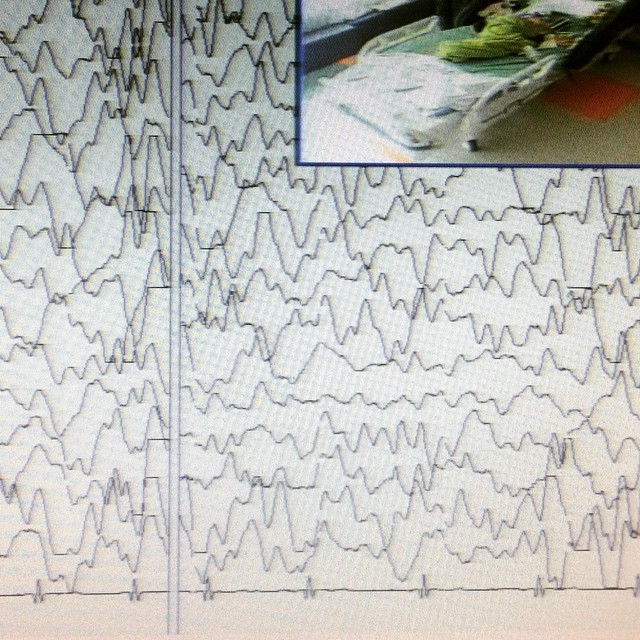
    A year ago, we sat next to our son’s bed in the hospital holding his hand and praying for his seizures to stop. That is when we learned what status epilepticus was, and we watched the monitor above the bed as the EEG machine that my son was hooked up to registered seizure after seizure after seizure. It takes a trained technician to truly understand the meaning of the spikes and waves that show up on the screen, but the Event counter kept climbing, and the increases coincided with what we saw happening to the body and mind of our little boy.

    dreaming eeg epilepsy seizure how far we have come

    I remember falling asleep next to him, only to be woken by the sound of another seizure. I’d tilt my head back to read the screen upside down and, even though I was only asleep a short time, the counter would have increased more than it should have. My wife or I would then have to get up and push the “we saw a seizure” button and record the seizure on a piece of paper, in the dark using the light of our phone or the EEG screen so that we could fill in another row on the seizure chart with the same short pencils that they hand out to record your score at a golf course. What an odd thought to have while scribbling the duration and characteristics of a seizure, but I was delirious, and scared, and lost, and at that moment, that pencil provided a fleeting, comforting place for my mind to wander.

    Thinking back to those nights, as out of control as everything seemed and as much as we felt as if we just kept falling, we had no way of knowing what would lie ahead. As dark as those first nights seemed, we were practically basking in daylight compared to the blackness that was to come.

    There would be many more nights connected to the EEG, more charts, more tests, more little pencils, and many, many more seizures. There would be a string of doctors, nurses, and medications, side effects and unbearable behavioral changes. There would be discharges and readmissions, and many questions, but very few answers.

    dreaming eeg epilepsy seizure how far we have come

    My son was not among the lucky (if there is such a thing) epileptics that could take one medicine and be under control. Instead, he’s in the very unlucky group that still struggles to find the right medicine and the right dose to stop the seizures that torment his brain. While his seizures are not completely under control, they are less frequent. He can walk, and run, and talk, and learn, and laugh, and he even has really, really good days.

    We have very few answers but, in spite of that, we’re making progress. Our year adrift in an angry sea has thrown us in every direction imaginable, but we’re hopefully headed towards calmer waters.

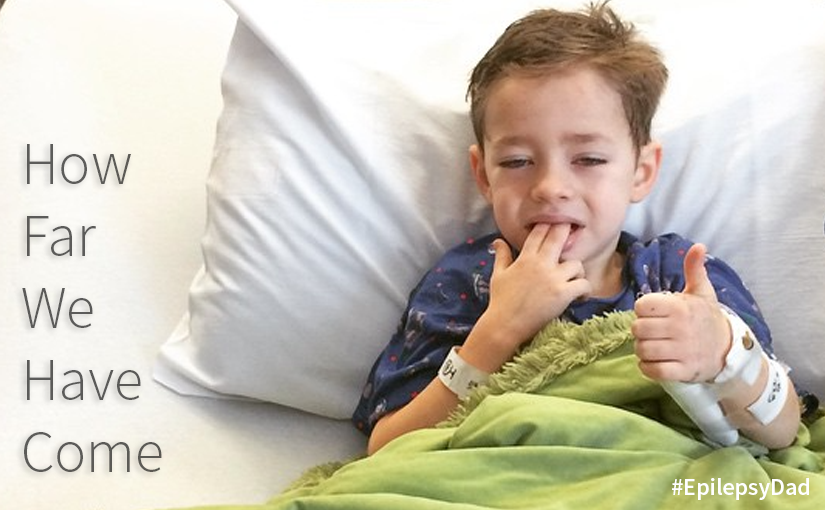
    How far we’ve come. But it feels like we still have very far to go.

  • Advocating For My Special Needs Child

    Advocating For My Special Needs Child

    By the time my son started kindergarten, we had gotten him off another toxic medicine and he started to settle in to the ketogenic diet and a new medication. His behavior began to level off and his seizures happened mostly at night. He still needed assistance during the day, special needs coming from a combination of seizures, behavior, and attention, but the district found him a one-on-one aide that could start the first day of school. Everything seemed to come together just at the right time.

    His one-on-one was not specifically trained. I’m not sure she knew what the details of the job were before the first day, so we basically told her that she should keep our son safe, watch for seizures, and help keep him on task if he has a hard time focusing or demonstrating a lack of impulse control. After a week or two, we started to receive feedback from the teacher that the aide wasn’t going out to recess with him, a time where having a seizure would leave him most vulnerable. We also learned that she was making him sit by himself during lunch on those days where his stomach was having a hard time with the fat in his diet and he didn’t bring food, leaving him to sit at the end of the table away from his friends.

    Instead of bringing it up to the district, we wrote a list of “expectations” with my son’s teacher and gave them to the one-one-one. She did better for a time, but it was clear that working with children was not her thing and that she was just showing up for the paycheck. There was no warmth, no compassion, and no attempt to get to know our son, but we let it go because at least she was doing something, and our son was doing so much better.

    His teacher and the class aide also did what they could, but in a class of 29 children, my son could only receive so much special attention. But again, he seemed to be doing so much better, so we thought, between the teacher, aide, and the extra body that was his one-one-one, that our son was getting enough support because he was in school, making friends, and learning. Things were on cruise control, and we let a lot of things slide.

    Last week, though, our son got sick. We already learned early on that epilepsy and sickness don’t play nice together. It was actually the flu that brought us to the emergency room the first time things got bad with my son’s seizures, and where we saw first-hand the increase in seizures that come along with the sneezing, coughing, and runny nose. This time, though, we had a good base of medication and diet, so we weren’t seeing a big increase in seizures, but we were seeing more attention, focus, and impulse control issues.

    This happened to be the same week where my son’s one-on-one took a different job. I was told by my six-year-old that his helper’s last day was the previous Friday. No one told us (or his teacher) the the aide had left, so my son was left to find his way in a classroom during a week where he most needed the help.

    The episode was our wake up call. The nurses and social workers told us before we started school that, especially with public schools that are desperate for funding, we would need to be our son’s most vocal advocates. But we got comfortable because things were going better than we could have imagined a few months ago. We let ourselves drift in to a state of dangerous complacency because of how well our son was doing and we stopped pushing for what our son needed.

    I haven’t been doing it that long, so I’m still learning what it means to be the parent to a child that has special needs. It’s hard enough to watch my son struggle with his epilepsy and related side effects. It’s exhausting to think about the level of effort that will be necessary to stay vigilant and ensure he is getting even the most basic services, nevermind what he needs to succeed. But like the many other parents that struggle every day to navigate the complicated, messy, and difficult world surrounding a special needs child, I’ll be loud and fight for what my son needs. Because if I don’t, no one else will.