Category: lifestyle

  • Not Having To (Always) Say You’re Sorry

    Not Having To (Always) Say You’re Sorry

    I grew up thinking that everything had to be perfect. Between the nuns at my Catholic school and my parents at home, I walked a very thin rope of perfection, calculating each step so as not to fall and raise the ire of either side. I wasn’t perfect, of course, and I probably spent just as much time suffering the consequences as I did running from them. Today, the legacy of that rigid black-and-white right-and-wrong upbringing causes me to be extremely hard on myself.

    A few weeks ago, we were putting ornaments on the Christmas tree. My son was enthusiastically picking up ornaments from the pile we made for him and rushing to place them on the tree. Inevitably, one of the fragile glass bulbs slipped from his tiny hands as he rushed to stand and it crashed and broke on the floor. “I’m sorry”, he said. I told him that he should be more careful and slow down, and he apologized again.

    epilepsy behavior sorry

    Lately, I feel like I’m always on my son and that he spends most of his time with me apologizing. It’s a terrible feeling for me, and I can only imagine what it feels like for him. What makes it worse is that there are many times when he can’t control his body. When he’s tired, there is a disconnect between his brain and his body that exacerbates the gap that is already present in an average six-year-old.

    I have gotten so used to dealing with him when the side effects of the medicine and seizures took away his ability to reason and control his body and I needed to catch everything before it escalated. Now, I can’t step back and let him explore and make mistakes.

    He must feel helpless to avoid my disapproving gaze and constantly feel like he’s disappointing me. “I’m not mad, honey, I’m just disappointed” is classically the worst sentence in the history of parenting, and I feel as if I’m delivering it with every dissatisfied glance.

    I’m not suggesting that there shouldn’t be any rules or consequences. Now that we’re back among the general population, I see other kids going without boundaries as their parents ignore them, and that’s the other extreme. It’s my job to teach him right and wrong, acceptable and unacceptable. But my response needs to be in proportion to the behavior, and I’m having a hard time letting go of those feelings I had when things were at their worst.

    One of our therapists offered a piece of advice that I am trying to put in to practice. She said that if he’s not doing something unsafe, and if what he is doing is not the end of the world, then take a deep breath and ignore it. Especially when an innocent action now feels like one that he did when his behavior was out of control, it makes sense that my alarms would be firing. But that doesn’t mean that every action needs a response. If he is being unsafe, or if he is breaking a house rule (no hitting, for example), then address it. But if he’s flopping on the ground, or his laughs turn in to a scream, then I should take that breath.

    I don’t want my son spending his childhood always having to say he’s sorry. What he is going through is hard enough, and I don’t want to contribute to squelching the bright, special light that is inside his heart by making him feel like he needs to be perfect. It’s my job to help guide him along the way to stay on the right path, but it’s also my responsibility to help him be happy and free.


  • Advocating For My Special Needs Child

    Advocating For My Special Needs Child

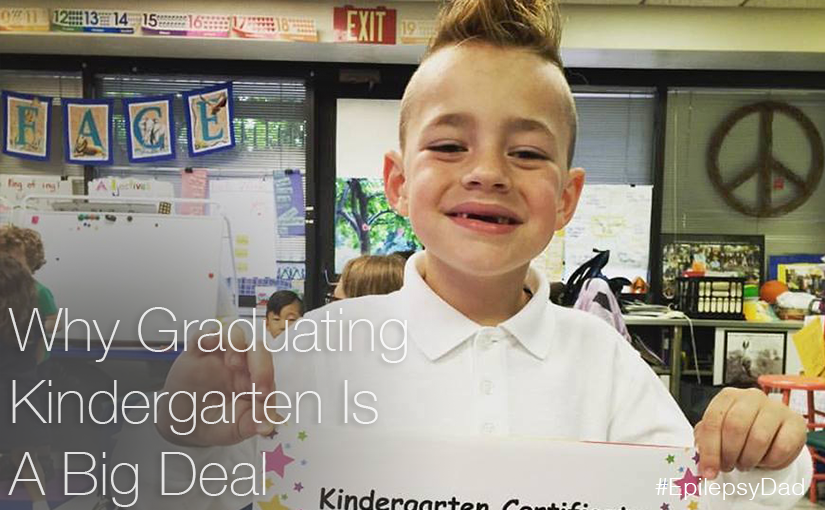
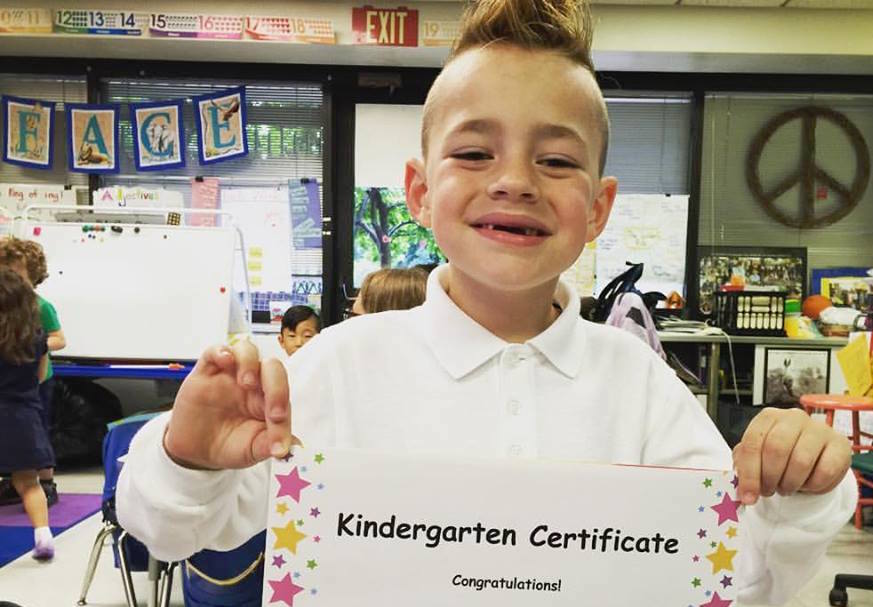
    By the time my son started kindergarten, we had gotten him off another toxic medicine and he started to settle in to the ketogenic diet and a new medication. His behavior began to level off and his seizures happened mostly at night. He still needed assistance during the day, special needs coming from a combination of seizures, behavior, and attention, but the district found him a one-on-one aide that could start the first day of school. Everything seemed to come together just at the right time.

    His one-on-one was not specifically trained. I’m not sure she knew what the details of the job were before the first day, so we basically told her that she should keep our son safe, watch for seizures, and help keep him on task if he has a hard time focusing or demonstrating a lack of impulse control. After a week or two, we started to receive feedback from the teacher that the aide wasn’t going out to recess with him, a time where having a seizure would leave him most vulnerable. We also learned that she was making him sit by himself during lunch on those days where his stomach was having a hard time with the fat in his diet and he didn’t bring food, leaving him to sit at the end of the table away from his friends.

    Instead of bringing it up to the district, we wrote a list of “expectations” with my son’s teacher and gave them to the one-one-one. She did better for a time, but it was clear that working with children was not her thing and that she was just showing up for the paycheck. There was no warmth, no compassion, and no attempt to get to know our son, but we let it go because at least she was doing something, and our son was doing so much better.

    His teacher and the class aide also did what they could, but in a class of 29 children, my son could only receive so much special attention. But again, he seemed to be doing so much better, so we thought, between the teacher, aide, and the extra body that was his one-one-one, that our son was getting enough support because he was in school, making friends, and learning. Things were on cruise control, and we let a lot of things slide.

    Last week, though, our son got sick. We already learned early on that epilepsy and sickness don’t play nice together. It was actually the flu that brought us to the emergency room the first time things got bad with my son’s seizures, and where we saw first-hand the increase in seizures that come along with the sneezing, coughing, and runny nose. This time, though, we had a good base of medication and diet, so we weren’t seeing a big increase in seizures, but we were seeing more attention, focus, and impulse control issues.

    This happened to be the same week where my son’s one-on-one took a different job. I was told by my six-year-old that his helper’s last day was the previous Friday. No one told us (or his teacher) the the aide had left, so my son was left to find his way in a classroom during a week where he most needed the help.

    The episode was our wake up call. The nurses and social workers told us before we started school that, especially with public schools that are desperate for funding, we would need to be our son’s most vocal advocates. But we got comfortable because things were going better than we could have imagined a few months ago. We let ourselves drift in to a state of dangerous complacency because of how well our son was doing and we stopped pushing for what our son needed.

    I haven’t been doing it that long, so I’m still learning what it means to be the parent to a child that has special needs. It’s hard enough to watch my son struggle with his epilepsy and related side effects. It’s exhausting to think about the level of effort that will be necessary to stay vigilant and ensure he is getting even the most basic services, nevermind what he needs to succeed. But like the many other parents that struggle every day to navigate the complicated, messy, and difficult world surrounding a special needs child, I’ll be loud and fight for what my son needs. Because if I don’t, no one else will.

  • In Good Times And In Bad Times

    In Good Times And In Bad Times

    I needed to clear up some space on my computer today, so I pulled up a list of the biggest files on my computer. Near the top of the list were a group of movie files with generic names. I clicked on the first one, and it was a video of my son that we made to document his behavior when it was at its worst.

    behavior side effects medicine seizure epilepsy father fatherhood

    I wasn’t prepared to see the video, and it really unsettled me. Even now, hours later, I’m thinking about the video and how desperate and scared we were. There were no answers for why he was acting the way he way. It could have been side effects of the medicine, or damage from the seizures, or a combination of both, or something else entirely. No one could tell us why it was happening, and no one could tell us if it would get any better.

    behavior side effects medicine seizure epilepsy father fatherhood

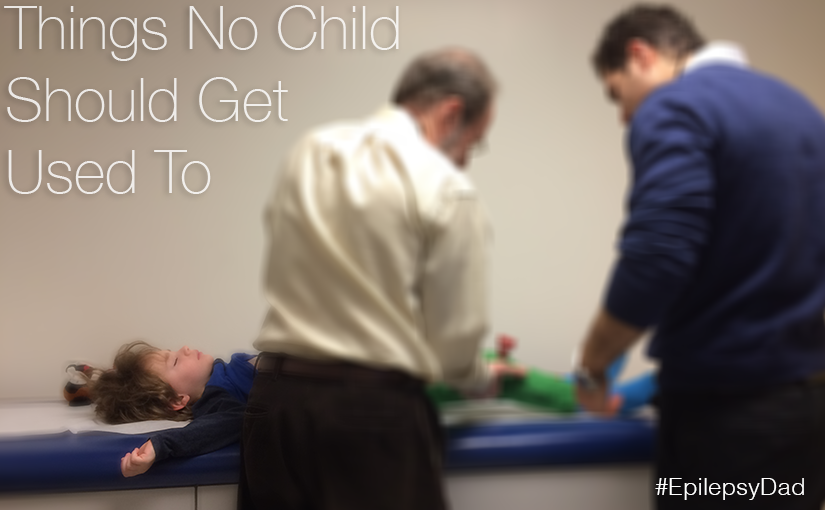
    In the video, he was having one of his typical outbursts. I say typical, but they were typical for where he was, but not typical for the almost five years of life he had before his seizures started. His brain would “go backwards”, as he eloquently put it during one of his lucid moments, and he would start hitting, scratching spitting, and screaming. The picture above was another symptom where his body would take control and he would somersault or flop around on the couch or the floor. The image at the top of this post was of him throwing a toy at me while I filmed the outburst.

    On a good day, we would only have a few, short episodes. On a bad day, we’d spend hours holding him down at bedtime. It was agonizing as a parent to see that happen to my child, especially when the outbursts ended with him expressing such remorse for what his body did and, I suspect, terrified that he wasn’t able to control it.

    Watching that video, the thoughts that I had lost my son and that his life was going to be nothing more than managing one uncontrollable outburst after another for the rest of his life came rushing back. The feeling of desperation, the praying that there would be some relief, some help for him, some help for us, came back, as well. After a few seconds, I was so overwhelmed that I clicked stop, a luxury I have now that I wish I had back when this was actually happening.

    When I got home, I told my wife that I had pulled up the video and that it upset me, and she comforted me like she always does. She asked if I had deleted the videos. I told her I didn’t, but I didn’t tell her why because I didn’t know myself. Am I keeping them to remind me of how hard it was so that I can appreciate where we are now? Are they clinical files incase someone, years from now, can explain to me what they were and why they happened? Do they matter, or should I just wipe them from my hard drive and let Time do the same thing for my memories?

    Tonight, I don’t know what I should do with those videos, but I did know what I should do with my son, which is the same thing I’ve done since he was born, in good times and in bad. I laid next to him listening to him suck his fingers as he started to drift off to sleep. I kissed him on the forehead and told him that I loved him more than anything, and that I was lucky to be his father.


  • My Son Has Epilepsy, And It’s OK To Talk About It

    My Son Has Epilepsy, And It’s OK To Talk About It

    A few weeks ago, a representative from the Epilepsy Foundation visited my son’s kindergarten class to talk to them about epilepsy.

    When the school year started, my wife and I had a conversation with my son’s teacher, setting expectations and filling her in on his condition. One suggestion that his teacher made was talking to the other kids about epilepsy. My wife thought it was a good idea (she knows kids way better than I do), but I was hesitant.

    I was worried that calling attention to his epilepsy would make my son will feel different and that talking about his epilepsy would announce to his class that something was wrong with him. I wanted to hide his epilepsy so that he could just be a kindergartener, and make friends, and just be a normal kid. Subconsciously, maybe I felt that if we didn’t talk about epilepsy that it would somehow magically go away.

    I was traveling for work so I wasn’t able to be in class when the coordinator talked to the kids. But on the other side of the country, the fallout that I dreaded from exposing my son’s not-so-secret never came. My wife told me that my son sat up in front of the class, in full view of his peers, as they asked simple, fundamental questions that my son helped answer. Why doesn’t he always eat lunch? Why does he leave early? Do seizures hurt? Can I catch epilepsy from him?

    And then that was it. After they were done asking questions, they went back to their school day. They didn’t treat my son any differently and, perhaps, they had a better understanding of the situation because they got answers to those questions that they didn’t know they could ask.

    epilepsy foundation talk at school

    I know that not every conversation about epilepsy is going to be that easy. There will be people that are curious, or confused, or unaware of his condition. There will be bullies that will use my son’s condition as ammunition to attack him. But the answer isn’t to hide it away and pretend it’s not there, it’s to talk about it, to help people around him understand, and to help him feel confident in himself. Hiding bring shame, and the last thing I want is for him to be ashamed of anything about himself.

    Not talking about epilepsy isn’t going to make it go away. But maybe by talking about it, other people will be more comfortable talking about it, too. Then it becomes a conversation and, through conversation, we can have understanding and compassion.


  • Miles To Go Before I Sleep

    Miles To Go Before I Sleep

    Last week, I traveled for work. As much as I was going to miss my family, a piece of me was looking forward to the possibility of sleeping through the night.

    After we were able to stabilize (but not eliminate) our son’s seizures, we moved him back down to his room, and we’ve gone through a number of devices to be able to see and hear him at night. Our house is made of brick and metal, and the wireless signal is terrible, so most solutions that we’ve tried have been spotty. I still wake up in the middle of the night to find that an app has crashed or that the monitor has lost contact with the camera. My engineering autopilot kicks in, and I reach over and reset the monitor. I always joked that I could, but now find myself literally troubleshooting in my sleep. After the link is back up, I get back in bed and stay just awake enough to make sure I can hear the crackle from the monitor’s speaker before I drift back to sleep.

    The first night on the road, my habits stuck. I woke up because it was too quiet and reached for a monitor that wasn’t there. By the third night, I almost slept through until morning…almost. Still, it was the best sleep I’ve had in months. I awoke feeling guilty because I wasn’t home at my digital post keeping my promise to watch over my son.

    The night I returned home, I walked in to the house around midnight. I dropped off my bags in the living room and made my way in to the bedroom. I put on my pajamas, brushed my teeth, and made my way in to bed. I was so exhausted that I didn’t realize that my son was also in our bed, sprawled out and taking up most of the space. I climbed in, taking only enough room as to not tumble on to floor. My son woke up, only briefly, enough to say “daddy” with the flash of a smile, before moving closer to me and falling back asleep. I soon followed.

    The woods are lovely, dark and deep,
    But I have promises to keep,
    And miles to go before I sleep,
    And miles to go before I sleep.
    ~ Robert Frost