Category: epilepsy

  • Why I’m Running The Philadelphia Half Marathon 2017

    Why I’m Running The Philadelphia Half Marathon 2017

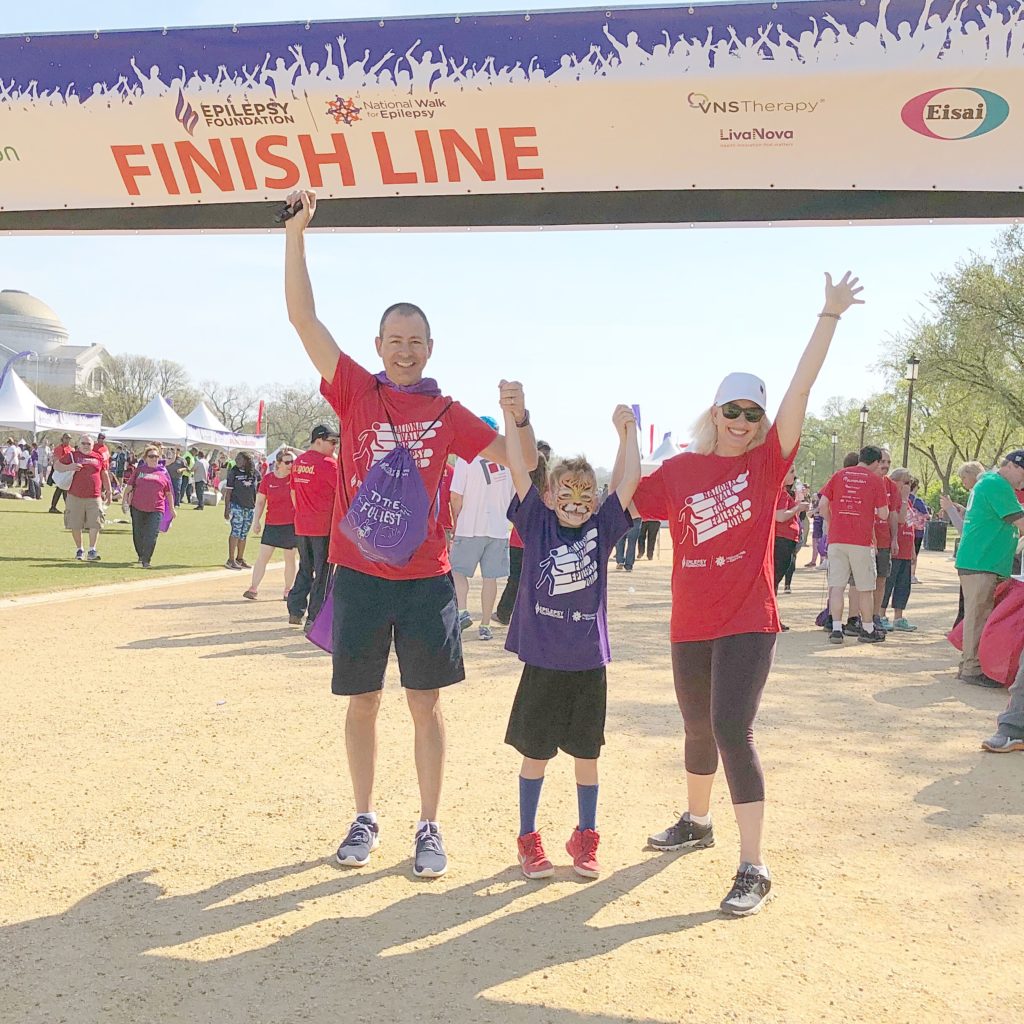
    Today, I’m re-sharing a post I did last year ahead of the Philadelphia Half Marathon. I’m running it again this year as part of the #AthletesVsEpilepsy team to raise awareness about epilepsy and to run for those that can’t.


    I used to hate distance running. Growing up, I was a sprinter. The act of running was confined to short, powerful bursts, and it was over before my brain could register what was happening and commanded me to stop. That style of running served me well in sports and in getting away from my sister.

    When I joined the Army, I knew there would be running but I felt misinformed as to how much running there would actually be. On the first morning at 0-dark-30, I discovered another level of distance running. I also learned that you could run up the same hill multiple times without ever running downhill. That experience challenged my sense of physics as well as my body every day for eight weeks. Filling up the rest of the day was running between buildings and tasks any time we were in a hurry and, in the Army, you’re always in a hurry. While the amount of running went down after basic training, there were still physical fitness tests that included a two-mile run at a pace that caused my lungs to burn. I wish had a fitness wearable to track all those miles. I would have rolled the digital odometer more than once.

    When I left the Army, I couldn’t escape the running. I worked in an office of young, single twenty-somethings and there was always a 5K on the beach to support the whales, or the dolphins, or the turtles, or a 5K to support people that run 5Ks. After doing so many charity runs, I just kept running until running had become a core part of my workout routine.

    I’m still not very good at it and it’s rare that I do a distance greater than a few miles, but the mental block that prevented my younger brain from enjoying the experience seems to have faded and my 5-mile jog along the water in Seattle has become a favorite tradition when I visit.

    Five miles, though, is considerably shorter than the 13.1 miles that I’ll need to do to cross the finish line in November. When I think about how far I will have to run, I get nervous. When I look at the calendar and when I see that there are only a few weeks left, I get discouraged and negative. There’s not enough time left to train. I can’t do this. I start to question my life choices. Well, at least the one about signing up for the event.

    Why, then, did I sign up?

    Sometimes after a hard run, maybe it felt longer or I stopped more times than I wanted to, those fears and doubts come rushing in. But as I painfully climb my way up the four steps to our apartment, when I use whatever energy I have left to push the door open, I’ll hear “Daddy, how was your run?”

    No matter how far I ran or how hard it was, I’m instantly energized. I don’t think about the pain or the negativity or the nerves. I think about my son and why I am running.

    My son wakes up every day and takes a handful of pills. He may have already had a few seizures that disturbed his sleep. He has to will himself to get ready for school. He eats his high fat, mayonnaise, and soy flour donuts and drinks his vitamins that sometimes upset his stomach. The drugs kick in and his brain swims in mind-altering medicine. His school is crowded, loud, and hard, but he walks through those doors and up those stairs and waves back at us as he passes through the glass atrium with a smile.

    epilepsy dad half marathon philly athletes

    I’m running for my son. I’m running for that smile. I wanted to do something hard because he runs a marathon every day. I want to see my son at the finish line and tell him that I did it for him.

  • The World Outside

    The World Outside

    I’m lying in bed next to my son who I haven’t seen all week. With my right hand on my laptop, I reach my left hand over and rest it on his back, making sure he is still there. I can feel his breathing, my hand rising and falling with each of his breaths.

    On the other side of him is my wife, who I was also missing. The last few weeks have been a whirlwind. A new job. A new house. A new school year for my son. A new medication for his seizures. A new outlook. A new focus.

    With so many changes going on, I’d been so consumed with my life that I hadn’t looked up to see the world outside. When I finally did, I wished I hadn’t. The world kept turning. Things kept happening. Hurricanes, mass shootings, fear, and hatred. Human beings being cruel to each other and using their power to silence their victims. It seemed that the world had been uglier than usual in the time that I’ve been away. I felt both selfish and grateful to be away from it. To not experience it. To not get involved. To focus on my life and to shut out the world.

    But that couldn’t last. The world seeped in, overflowing an already stressed situation. The combined strain tested the strength of that connection to my anchor. Our stressful lives during a chaotic time in an especially cruel world. Survival became about pursuing the path of least resistance. It was easier to hide from the world than it was to be a part of it. It was easier to not write than it was to write. It was easier to use the excuse of being too busy in life to avoid being a real part of it.

    I pushed myself away from the world but I had nowhere to go. My family is my anchor, and I was thousands of miles away in every meaning of that phrase. A cross-country trip that followed added physical distance to the emotional. But on the plane ride back, I could feel the weight of the last few weeks lifting. The world in conflict sped below me as I looked out the window from a familiar, distant perspective. But it wasn’t the world I was eager to get back to. It was my family that was pulling me back, and I couldn’t get to them fast enough.

    And so here I am, restlessly lying in bed next to my family in our new home. My obligations to our new life and the workday ahead steal my focus. But my son’s breath serves as a metronome that brings my attention back to this room. The cadence of his breathing and the rising and falling of my hand on his chest connect me to him. I find my wife’s hand in the same place, so we’re all connected together once again. The world outside and my insecurity conspire to keep the attention of my head and my heart. In this moment, though, I know that it will be my family that gets me through.

  • Early Morning

    Early Morning

    Lying in bed, I opened my eyes in the early morning and stared at the ceiling. My son’s arm was draped across my chest and his head rested on my shoulder. Ahead of our move, he’s been sleeping with us. The chaos of our lives and the distance to his room has become increasingly problematic. Until we move into our new place, it’s a concession we made so that we can all be together and so we can monitor his seizures.

    I brought my free hand up and rubbed his head. Usually, my wife is the recipient of his slumbery affections. I get the other end with a face-full of feet as he turns horizontally on the bed. But not that morning. That morning, I looked down to see my the beautiful face of my boy sleeping peacefully. I remember smiling as I made minor adjustments to my position and was once again comfortable. I closed my eyes, my hand still rubbing his head, and enjoyed the moment.

    It’s in these early morning hours that I’ll catch my son talking in his sleep. Sometimes the words are decipherable. He has had unconscious conversations about baseball and hockey. Once he talked about his iPad, which I’m pretty sure is a sign that we let him use it too much. Other times, his voice is too low or the words are too jumbled but it’s still clear that he’s having a conversation.

    Sometimes, his hands or legs will twitch. It’s like watching a dog dream of running and watching its limbs move in response. We had a cat once that would dream of drinking and we would watch him lap at the air as we laughed quietly so as not to wake him. It’s impossible to tell what activity my son was trying to do in his sleep, but it still made me smile. Dreaming at seven looks very different from dreaming at forty.

    That morning, though, a different and unfortunately familiar sequence began. It started with a tensing of his muscles. As he laid at my side, I could feel his body start to stiffen and elongate. I adjusted my position to give his body room the room it needed. The room went quiet. The only sound was me telling him that everything was going to be okay as I kept my hand on his head.

    At its apex, his body is rigid and long like a piece of wood. His body continued to squeeze, forcing the air from his lungs. The audible moan also started as his body expelled air past his vocal chords and out his mouth. His body relaxed before tensing up again, the rhythmic jerking of a myoclonic seizure. Every pulse of his body made me feel more and more helpless, but there was nothing to do but wait it out. So in the early morning darkness, that’s what I did.

    A few seconds more and the seizure was over, but the postictal state began. Like he usually does, my son sat up, smacking his lips and looking at the world through squinted eyes. I continued to console him and let him know what he was safe until he gathered enough of his faculty to know where he was. Then I helped him lay back down and get comfortable. I draped his warm, green blanket over his shoulders and pulled it down to cover his feet. He put his two fingers that he likes to suck on in his mouth, closed his eyes and drifted back to sleep.

    I could not go back to sleep. I struggled to not have my thoughts drift to all the negative possibilities. I should have gotten up to distract myself but I wanted to be near him in case he had another seizure. So, instead, I listened to his breathing and returned my gaze to the ceiling.

  • Little Bricks And Shaky Hands

    Little Bricks And Shaky Hands

    When I was young, I loved playing with Legos. At my grandparents’ house, my favorite toy was a box of loose bricks. I would turn them into houses, or animals, or fighter jets. I remember “upgrading” to the more advanced Technic set when I was about ten. It felt like a right of passage. You’re born, learn to walk and talk, play with kid Legos, then hit that milestone of playing with Technic. From there, it’s all downhill and the only things left are to do are learn to drive, marry, have kids and, finally, die.

    My son has developed his own affinity for the little plastic toys. Late last year, he needed less of my help to assemble the kits. It’s one of those moments that both made me proud for his accomplishments and sad for my loss of usefulness. Now, he is putting more complicated sets together mostly by himself. He’ll spend hours working through the instructions until he reveals his masterpiece.

    Sometimes he’ll still ask for help with some of the smaller bricks because he has a hard time taking them apart. When I go to him, I see his little fingers struggle to grasp the tiny pieces. Especially when he is tired, his ataxia is more noticeable. His hands shake and make tasks that need fine motor control almost impossible. On his face, you can see the attention he is trying to give to his efforts. But his body’s instability wins out over his mind.

    epilepsy dad lego seizure ataxia shaky hands parenting fatherhood

    It’s frustrating and sad to watch. Compared to the occasional seizure or handful of pills he takes twice a day, the shakes are always there. They’re visible playing with Legos, trying to use a fork, and coloring and writing. They make learning new tasks difficult and they make playtime harder than it should be. I can’t imagine the mask he wears and how frustrated he feels inside when he tells me “I’m just a little shaky.”

    Those words cut through me. I can’t fix it. It’s hard to watch him struggle. These are some of the same activities he works on in therapy and the more he does them, the better he will get at them. But many of these tasks will never be easy for him. It’s hard to watch my son have a hard time with such basic tasks like using a fork. It’s hard to let him struggle through and not do something for him or let him take a shortcut and eat with his hands.

    I want to encourage that mindset of pushing through because I hope it will get better. He already has such determination and I want him to keep it. Even when it’s hard. Even when it’s unfair. Even when there are easier options. Why? Because that’s what is going to help him survive and succeed with the challenges he has ahead of him. My job as his father is to prepare him for what is ahead. Even if it means watching him struggle and shake. But I also want him to know that I am there for him should it get too hard. I want him to know that he is not alone.

    I’m struggling to find the right balance between helping and letting him keep trying. When is it helping and when is it cruel? It’s cruel what this disease has done to him. I worry that I’m being cruel too when I watch him suffer its effects when I could step in to help.

    How much of this is me hoping he’ll struggle through it and that there will be another side? What if there is no other side? What if it gets worse? What does that mean for when my wife and I are gone? I try to focus on the positive progress he has made since his condition was worse. But it’s hard to do when I’m looking at my child struggle because of his condition. The thought of this being the rest of his life is too much to think about with a seven-year-old.

    And there aren’t any answers, at least for now. His condition changes, his medicine changes, his body will continue to change. I try to remind myself to take each day as it comes and to take my son wherever he is that day. Doing that is one of the hardest things I have ever had to do in my life. But when I can do it, I see a little boy smiling as he creates something out of bricks. I see that sense of accomplishment on his face when he shows us what he made. And sometimes, I think things are going to work out okay.

    epilepsy dad lego seizure ataxia shaky hands parenting fatherhood

  • Windows, Light and Hope

    Windows, Light and Hope

    The last few months have been all about change. After a long search, I found and started a new job. We sold the house that we lived in when my son was born back in Colorado. And next month, we’re leaving the apartment we landed in when we moved to Philadelphia.

    This is the apartment we lived in when my son’s seizures and side effects were at their worst. The couch by the front window is where we held him for hours during his mood and behavior. I would sit on this couch and stare out the window at the street as he spat, and hit, and screamed terrible things. I would watch the people walk by, normal families with normal lives doing normal things. I wondered if that would ever be us again.

    I felt like the world was watching us from the other side of that window, too. We were in full view of the passersby who could see how ill-equipped and unprepared we were for what was in front of us. They saw us sitting on the couch reacting out of fear and desperation. They saw every mistake my wife and I made dealing with our son and with each other.

    The way our apartment is laid out, the window by the couch is the only source of natural light. In an otherwise dark apartment during a very dark time, there was no other place to go. So we sat in view of the world outside so that we could see it and let in whatever light we could. We traded agony and exposure for light.

    But sitting on that couch and in that light also gave us hope. No matter how dark our apartment and our life got, we could see that there was more. As our son fought against us, we could close our eyes and feel the light on our face and hope.

    After a seemingly endless struggle, hope won out. Our son came back to us. He was weathered, as we all were, and different, and stunted in some ways, but he was our boy. Instead of holding my son on that couch to protect him, he would sit next to me reading or playing on his tablet. Instead of me staring at the people walking by with envy or feeling judged by them, I felt like we could join them.

    Eventually, we did join them. And now, we’re taking the next step in our journey. We’re not moving to a new place with a blank slate. Our son still has seizures. He still suffers from the side effects of his medicine and the damage that they and his seizures did. We’re bringing our scars with us. But we’re bringing his progress, too. We’re bringing the lessons we learned and the closeness we feel from having survived it. And we’re moving into a place that is full of windows, and light, and hope.