Category: community

  • Epilepsy Awareness In The School – The 504 Plan

    Epilepsy Awareness In The School – The 504 Plan

    This week, my wife and I are meeting with my son’s school to update his 504 plan. A 504 plan is intended to ensure that a child with a disability has access to learning and receives accommodations to help them succeed academically. In my son’s case, his plan outlines breaks, seating placement, a shortened school day, and special assistance for attention and behavioral issues. The plan is put together collectively by the parents, nurse, teacher, and school district with input from my son’s medical team and support services and it is meant to be a “living document” that will change as my son’s condition or capabilities change.

    This is our first year with a 504 plan. Even though we’re only a few months into the school year, we are pulling the team together to make adjustments. Some changes are good, such as lengthening his day since his endurance has improved. We also have a better sense of how he handles the day, so instead of basing his breaks strictly on a time, we can place them after harder tasks so that he can spend more time in the classroom with his peers. But we also need to address some issues that many parents of children with epilepsy face when trying to get the right services for their child.

    Looks Can Be Deceiving

    Most of the time, if you look at my son, he looks like a normal, healthy kid. I am extremely grateful for that, but it makes requesting services for him difficult because he doesn’t look “look sick”. Epilepsy is included in the class of conditions called “invisible disabilities”. While a seizure itself might be external, many of the effects surrounding epilepsy are internal. Fatigue, depression, and problems with attention and cognition are just some of the issues that my son deals with every day. On the outside, he might look like a normal 7-year-old boy and it’s easy to want to treat him that way. Too many times my son doesn’t get a break that he needs because he “looks fine” but, by the end of the day, he’s so physically exhausted that, not only is he not actually learning anything, he has more seizures that night and the next morning that cause him to start the next day already exhausted. It’s only after

    Epilepsy is included in the class of conditions called “invisible disabilities”. While a seizure itself might be external, many of the effects surrounding epilepsy are internal. Fatigue, depression, and problems with attention and cognition are just some of the issues that my son deals with every day. On the outside, he might look like a normal 7-year-old boy and it’s easy to want to treat him that way. Too many times my son doesn’t get a break that he needs because he “looks fine” but, by the end of the day, he’s so physically exhausted that, not only is he not actually learning anything, he has more seizures that night and the next morning that cause him to start the next day already exhausted. It’s only after a few days following seizure-filled nights that my son physically fits the “sick kid” profile.

    Not All Epilepsy Is The Same

    Epilepsy covers a broad range of seizure disorders. A teacher mentioned that she had a student with epilepsy that would have a seizure, sleep at her desk, then wake up and be fine. When she described that experience, she did so in a “don’t worry, I clearly know epilepsy so I’ve got this” tone that raised the “you don’t got this” alarm bells in my head.

    Epilepsy is more than just seizures and there are an infinite number of variables surrounding the seizures that make each case unique. My son rarely has seizures during the day, but depending on how tired he is, he may have more at night and in the early morning hours, which affects how rested he is going into the next day which perpetuates the problem. The state of his brain at any given moment dictates his behavior and his ability to retain and recall information. His head is constantly swimming in medication and the side effects of those medicines are exacerbated depending on his cognitive load, seizure burden, and his physical condition. So not only are not all cases of epilepsy the same, but people with epilepsy can show a wide range of symptoms and effects on any given day.

    Not Everything That Looks Like “Normal Behavior” Is

    “All kids his age…” Anytime someone starts a sentence with that phrase, I know that I’m going to have to break out the soapbox. First, “all kids” don’t do the same thing. But most importantly, the behavior that looks like the “normal” attention problems of a first grader are actual misfirings of the neurons in my son’s brain that are preventing him from recalling any information. The glassy eyes and the “no one is home” look could be the result of a seizure or the way that his medicine is affecting him today so his extra-slurred speech and his frustration trying to piece together a complete thought are not normal development problems, either, especially when they vary throughout the day.

    Even with the best intentions, treating something as “normal” has both the risk of setting my son up to feel like a failure because he can’t control what is happening to him and prevents the identification of what is actually causing the behavior and the ability to address that cause.

    Things You Can Do

    We are very new to this world, but we are extremely grateful to have a wonderful support network around us and to have had many people go before us and share their lessons. To continue on in that spirit, here are a few of the lessons that I have learned that may help you navigate this long, difficult road.

    Have The Conversation

    Balancing my desire to have the world treat him as a “normal” kid and making him feel like a normal kid with the reality that he has special needs is a challenge I face every day. Not everyone else does or has a reference for what that means. Having a dialog with the teachers and the school district and talking about their perceptions is an important piece of having everyone on the same page. “It’s great that you have seen a seizure, but here is how my son is different from that other student.” As the teachers have more interactions with my son, and as we continue to talk about what they have seen and what things we are seeing at home, we’ll all have a better picture and be able to adjust the plan to better suit my son’s needs as they continue to change.

    Have The Information

    My wife and I have talked leading into this meeting about what is working with his current plan and what isn’t working. We’ve talked about what things we need to bring up, how to bring them up, and what documentation we need to provide to support our position, and we will have that documentation available. Doctor’s reports, neuropsychological tests, reports from wraparound services. Perceptions are hard to change but the best way to support the request for services that your child needs is with data.

    Have A Support Network

    One of the best resources that we have available to us is our support network. Other parents that work tirelessly to navigate the system, social services through the hospital and the state, and epilepsy groups such as the Epilepsy Foundation of Eastern Pennsylvania that have programs to bring epilepsy education into the classroom. This network provides the guidance and information we need to ensure that we are asking the right questions and asking for the right services for our son. In some cases, we’ve brought people from this network into these meetings. In the end, we have built a team that we can leverage to do what is best for my son.

    Have The Courage To Fight

    If you’re averse to conflict like I am, get over it. It may seem like the system is set up to oppose these special services. They cost money, they disrupt the normal flow and structure of the school day, and especially with an “invisible disease”, the system may try to convince you that your child doesn’t need these services. As we’ve been told many times, there is no one that will be a bigger advocate for our son than us. Be that voice. Partner when you can. Fight when you must.

    Additional Information

    There is a lot of good information about what to ask for in a 504 plan, and I wanted to share these links that I found useful. If you have other suggestions or resources to share to help other parents going through this process, please share them in the comments.

    http://www.greatschools.org/gk/articles/section-504-2/

    Sample 504 plan for epilepsy: http://www.epilepsynorcal.org/wp-content/uploads/2015/07/Sample_504.pdf

    NEXT UP: Be sure to check out the next post tomorrow from Eisai/Sean at livingwellwithepilepsy.com for more on epilepsy awareness. For the full schedule of bloggers visit livingwellwithepilepsy.com. And don’t miss your chance to connect with bloggers on the #LivingWellChat on November 30 at 7PM ET.
  • EFEPA Walk for Epilepsy – Thank You

    EFEPA Walk for Epilepsy – Thank You

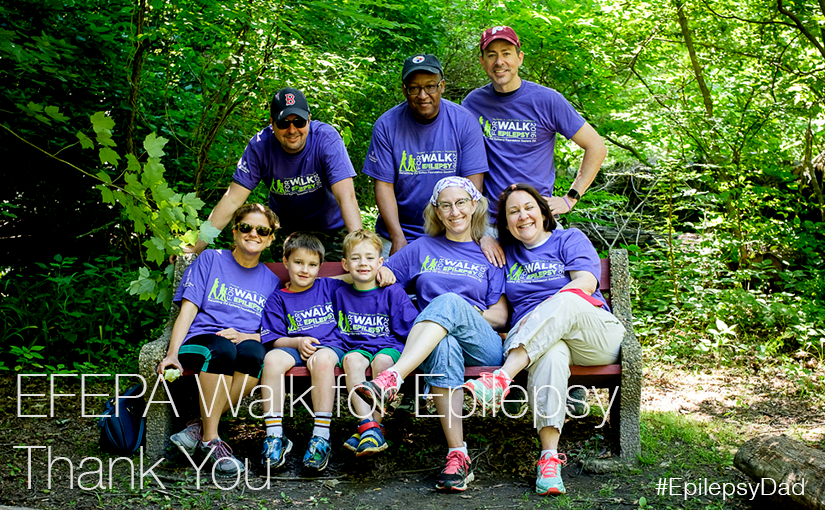
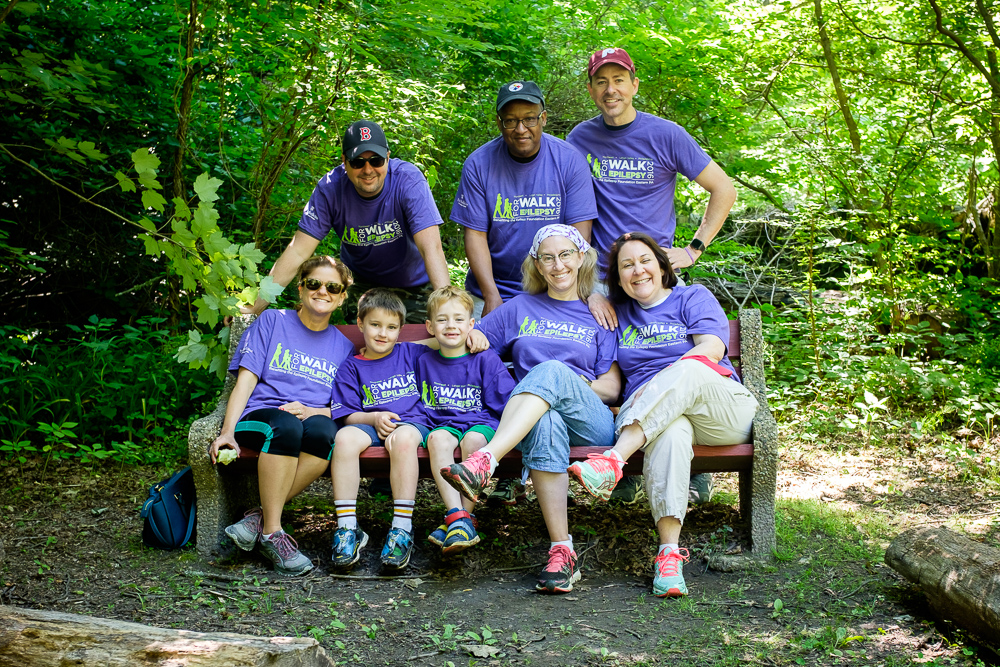
    This week, I wanted to simply thank everyone that supported our team for the Epilepsy Foundation Eastern Pennsylvania’s Walk for Epilepsy. Not only did we receive donations from our loving family and friends, we received contributions from people who have never met my son and only heard stories about our journey. We also had a larger team participating in the walk this year, with our friends joining us in supporting the cause.

    epilepsy dad efepa walk for epilepsy
    Team “Epilepsy Dad” – EFEPA Walk for Epilepsy

    I am truly humbled by the show of support that my son has received and to, in turn, be able to support an organization that has welcomed us and provided us with guidance and encouragement.

    If you would like more information about epilepsy or would like to learn how you can help, visit the Epilepsy Foundation Eastern Pennsylvania’s website at http://www.efepa.org/.

  • Fatherhood And Preparing My Son For A Future With Epilepsy

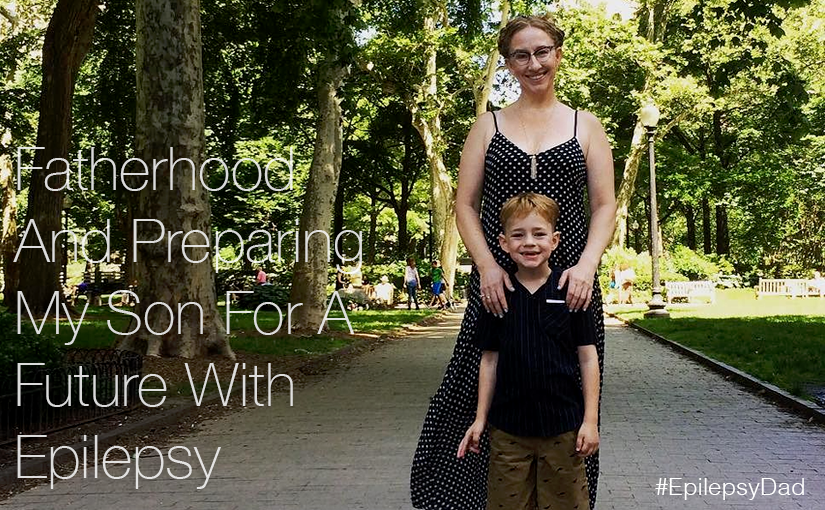
    Fatherhood And Preparing My Son For A Future With Epilepsy

    This post is part of the Epilepsy Blog Relay™ which will run from June 1 through June 30. Follow along and add comments to posts that inspire you!

    Today is Father’s Day.

    This morning, like most weekend mornings, I’m going to wake up to the sound of my son pushing the door to our room open, the squeaky hinges announcing his arrival. I’ll open my eyes and watch him toss his green and white blankets and a few of his stuffed animals on to the bed, climb over me and lie down in between my wife and I. He’ll put his fingers in his mouth, close his eyes, and snuggle up next to us, the sound of him sucking his fingers right next to my ear keeping me from returning to sleep. I don’t mind, though. This is how most weekends go, and I wouldn’t want it any other way.

    epilepsy dad stigma fatherhood parenting

    It’s in these early morning hours, as I lie awake in bed next to my family, that I sometimes think big thoughts. When I was a new father, still overwhelmed with idea of being responsible for another life in this world, I would have grand thoughts about the type of world my son would live in. Would there be enough food and water for everyone? Should I be recycling more? What about clean air? Should I get a more fuel-efficient car? Should I bike to work?

    As he got older, and as I settled in on the idea that he’s more durable than I had assumed children would be, those early morning thoughts turned to more hopeful things. What number would he wear on his jersey in the NHL? How old would he be the first time he saw the earth from space? How often would they let me visit him in the White House?

    For the past two years, after my son was diagnosed with epilepsy, I started asking different questions. These questions were shaped by our experiences struggling to control his seizures, managing his medicine and the ketogenic diet, and trying to normalize his life as much as possible. Would he ever be seizure free? Will he be able to live on his own one day? How can I best prepare him for the challenges ahead? How can I teach him to love himself and believe in himself against the stigma that comes with having epilepsy?

    The last question is one that I’ve been thinking about more lately. He’s only in kindergarten, but there have already been incidents where he has been made to feel different because he has epilepsy. Questions about why he misses so much school and leaves early, or the snickers from classmates that come from his bizarre ketogenic lunch that sometimes includes taking a shot of oil, I can see him starting to pull away. He’ll sit by himself, or he’ll tell us he doesn’t want to bring a lunch to school. This is already happening, and he’s only in kindergarten.

    The more involved I become with the epilepsy community, the more I get a glimpse of the challenges ahead for my son. I read the callous, insensitive tweets from the uninformed, misguided people who post messages about “being glad that they don’t have epilepsy” or how a video or light show “almost gave them epilepsy”. I read the messages of sadness and despair from those living with epilepsy and the stories of discrimination, and about how epilepsy “isn’t being a real thing” because there aren’t any visible signs.

    There are many mornings when I’m lying next to my son and I get scared. I don’t want that world to squash the light inside the little boy who is so brave and who cares so much for those around him and who loves and who dreams incredible things. I’m worried that I am not equipped to help my son navigate that world, and that I will fail him…fail at the greatest thing that I will ever do, and that is being a dad.

    On those days, when I seem to need it most, he will roll over and puts his arm around me. I instantly feel better. I remember that the most important thing I can do for my son is to love him unconditionally, which I do in abundance.

    I think about that community where I have seen so much sadness and I remember the overwhelming feelings of support and hope that are much more common. They share their stories, many of whom you may read as part of this blog relay, and I, too, am hopeful and inspired to lend my voice to the choir…to sing with them the stories of what it means to be the dad of a child with epilepsy, the struggle, the joy, and the lessons that I learn along the way.

    Maybe it will be this morning, when I won’t be awoken too early by the sound of a creaking door, or him sucking his fingers. Maybe I’ll feel confident that I’m doing my part by advocating for my son, and I’ll think about how far we have come, and that I’m leading with love and helping build a foundation in him that will help him face the challenges that will be ahead. Maybe this morning I will be able to fall back asleep, only to be awoken a few hours later by the four most magic words that will remind me how lucky I am and how hard I will fight.

    “Happy Father’s Day, Daddy.”

    NEXT UP: Be sure to check out the next post tomorrow by Whitney Petit at Changing Focus: Epilepsy Edition for more on Epilepsy Awareness. For the full schedule of bloggers visit livingwellwithepilepsy.com. And don’t miss your chance to connect with bloggers on the #LivingWellChat on June 30 at 7PM ET.
  • Inside The Circle

    Inside The Circle

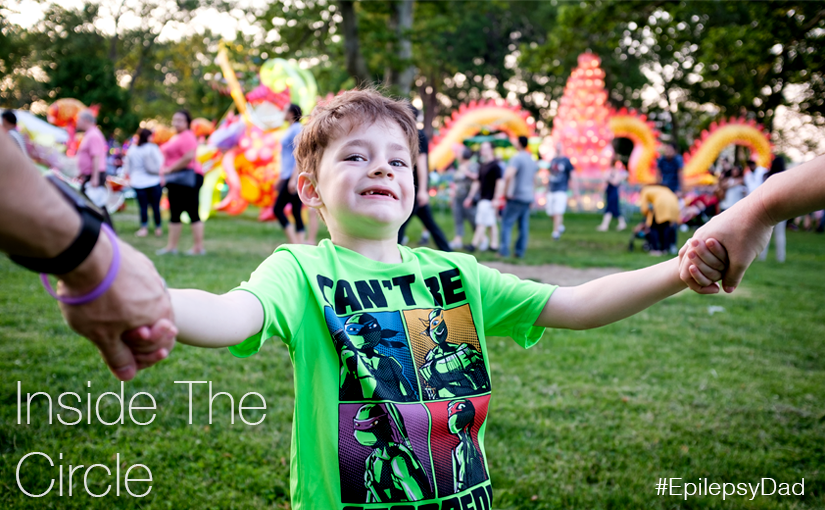
    To the outside world, we look like an average urban family. I’m the aging dad, high (I’m still not calling it “receding”) hairline, close-cropped hair wearing city-chic because my wife dresses me. My wife, beautiful, hip with her too-cool-for-school (I realize no one says that anymore) sunglasses strutting down the sidewalk. And my son, wearing a Captain America helmet and catching air off the uneven sidewalk on his scooter.

    We stop at our local market to pick up ingredients for dinner, because that is how normal, city-people shop. The shop keeper greet us with a friendly, welcoming smile and we exchange pleasantries that show that we’re local and are recognized as such. We stroll through the park to play catch and we see Jafar, the musician, and Mike, the juggler, whose names we know because we are locals. We pass them with a wave and they smile back with a hint of recognition.

    There are two groups of people in our lives, those that are outside the circle and those that are inside the circle. Most of the world exists outside the circle, and they do not see the impact that epilepsy has on our lives or the complexities that we struggle with every day. When we buy those groceries, the shop keeper doesn’t know that the ingredients are only for my wife and I because my has epilepsy and is on a special diet. The other park goers don’t know that we are there only for a short time or for the first time in days because my son has enough energy to play that day.

    For someone who writes a blog about being the father of a child with epilepsy, it may seem strange that I struggle with who to let inside the circle. As public as this blog is, it is still difficult to talk about what is happening with the people in our lives. How can I explain the heartache of helplessly watching my son have a seizure at the breakfast table? How do talk about why he keeps missing school? Or why he can’t do certain things or why we have to decline birthday parties and events that happen in the afternoon because he needs a nap?

    Those outside the circle can never truly know us or our son because my son’s epilepsy is such a big part of our every day. Maybe I am worried about people judging him or judging us. I don’t understand how or why this is happening, maybe I’m so worried that they won’t understand that can’t let them in. It’s hard to overcome those fears, and to be open to sharing that piece of ourselves. It’s hard to trust other people, to be vulnerable, and to take that risk.

    I am finding, though, that the more willing I am to take that risk and to share a glimpse of that part of who we are, the bigger that our inner circle becomes. His teeball team ask about him at every game that he misses.  People at my office, friends and acquaintances that have met my son and seen him struggle react with kindness. They ask about him and pass along their well wishes. They donate when the call goes out for a charity event. This terrible condition that burdens my son and weighs heaving on our family has also revealed the gifts that come from having more people inside the circle that care.


  • A Message Of Hope

    A Message Of Hope

    I was nervous walking up to the doors of the classroom. I put my hand on one of the door handles, leaning in close, hoping to hear the conversations in the room. I turned slightly and could see in to the room through the gap between the two doors.

    The tables were arranged in a “U”. The door that I was hiding behind was in the back of the room, so I saw the face of the presenter and the backs of the heads of some of the attendees. Shifting left and right, I could see the sides of the faces of those seated on the sides. I took a deep breath, turned the handle, and quietly walked in to the room.

    As I came through the doors, the presenter at the podium and other staff smiled and greeted me quietly and warmly. A few of the attendees…parents…turned briefly to look at me and then back to the presenter.

    As I moved to a seat in the back of the room, the presenter said  “…and you will hear from one of our parents shortly” and gestured towards me. I sat, flashed a smile and casually nodded as I made eye contact with the other parents that were now looking in my direction.

    I pulled open my laptop, pretending to make last minute changes to my slides (that were actually not mine, they were my wife’s). I wasn’t ready for eye contact. I took a few deep breaths and tried to calm my nervous energy.

    I had been in this room before. Just over a year before, I sat where the other parents were sitting, learning about the ketogenic diet. Like these parents, I was there because I had a child with epilepsy that was not responding well to medicine. Like them, I was scared…about epilepsy, about the future, about how scary and terrible and daunting the diet seemed to be. Like them, I was there trying to find hope.

    The keto team at the hospital puts on these information sessions once a month, giving the dirty details of the ketogenic diet as a treatment for epilepsy. The day is filled with the history and the application of the diet. There are demonstrations of how a meal is measured. The social worker talks about support during the journey. And at the end, the grand finale, a parent of a keto kid takes the stage.

    On that day, that parent was me.

    My mind kept going back to when I was in the class. We had only been out of the hospital for a month or two, and my son was still seizing, still not responding to medicine, and still having side effects from the medicine that he was on. I was still reeling from the trauma of his ongoing condition. My wife had to stay home with my son, so I went to the class alone…cared, overwhelmed, and alone.

    I remember being more buried by the information that was being presented. The diet works for some people, not for others. The diet is hard work. Thoughts of what was happening to my son mixed with the sad possibility that the diet wouldn’t work, or that it would but he wouldn’t be able to scarf down a bag of potato chips or eat a candy bar. By the time the parent speaker, Amy, stepped up, I was raw.

    Amy talked about her son who was on the diet for two years. She talked about how the diet worked for them, and that it was hard at first, but became easier. She shared some of her tips, and she brought her son in with her and he sad quietly eating his snack…a snack that looked like a normal snack, except for the shot of oil at the end. After the class, I talked to her, and we talked about what was happening with us, and I asked if my wife could contact her. She said yes. Because, as I’ve learned, we’re all in this together, and we need to support each other, because no one understands what we’re going through like other people going through the same thing.

    I thought about Amy, and about how I felt sitting on the other side of the table, as I nervously walked up to the podium. I made a checklist in my head of the things I wanted to talk about. I wanted to talk about how scared and overwhelmed I was, and how hard the diet was at first. I wanted to talk about my son, and how much better he was doing since we started the diet. But mostly, I talked about hope, the thing that I went to the class desperate to find a year before, and the thing that I most wanted them to leave with.

    I scanned the room. One mom who was too overwhelmed and had left the room was making her way back to her seat. The other parents looked exhausted after a long day. And now, they were looking at me.

    “Hi, I’m David, ” I began, “and just over a year ago, I was sitting right where you are.”