Tag: future

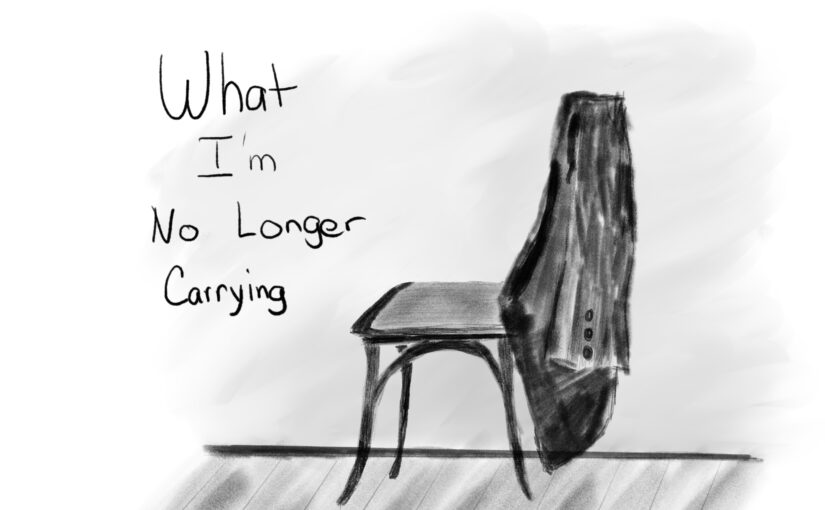
  • What I’m No Longer Carrying

    What I’m No Longer Carrying

    For a long time, I carried things because someone had to.

    That was the logic. If something was falling apart, if someone was overwhelmed, if the situation felt fragile, I stepped in. I absorbed it. I adjusted. I stayed alert. I made room. I told myself that this was responsibility—that this was what showing up looked like.

    Some of that was true.

    Some of it wasn’t.

    Over time, the line blurred between what was mine to carry and what I had simply gotten used to holding. Emotional states. Unspoken expectations. Outcomes I couldn’t control but still felt responsible for. There was a constant, ambient tension—always needing to be ready for the next shift, the next reaction, the next thing that might go wrong. Being “on” stopped being situational and became the default.

    It didn’t happen because I wanted control. It happened because I wanted stability. I wanted things to hold together, and for a while, carrying more felt like the only way to keep everything from tipping.

    But carrying everything has a cost.

    It erodes attention and narrows patience. It leaves no space for rest that actually rests. Even when the day ended, nothing was really finished. I was still holding the weight of what might come next.

    Learning what’s enough forced a reckoning with that pattern. Not everything I was carrying was necessary. Not everything was sustainable. And not everything was actually helping, even if it felt like it was. Some things were never mine to begin with.

    I can care deeply without carrying everything. I can show up without absorbing the full emotional weight of every situation. I can be responsible without being the shock absorber. That distinction matters now.

    I’m no longer carrying the need to fix what I can’t fix, or outcomes that don’t belong to me, or the expectation that being available means being endlessly available. Putting those things down doesn’t make me indifferent. It makes me more grounded.

    What I’m carrying now is smaller—heavier in some ways, but clearer about where it belongs. Showing up for my son. Being present for my goddaughter. Keeping the day honest and contained. Doing what’s in front of me, and letting the rest stay where it is.

    I still feel the pull to pick everything back up. Old habits don’t disappear quietly. But I’m learning to notice that urge for what it is—a reflex from a time when carrying more felt like survival.

    It isn’t anymore.

    I’m not done learning where the boundaries are. I still misjudge sometimes. I still overreach. But I’m paying attention now, and that changes things. What I’m no longer carrying isn’t gone forever—it’s just no longer automatic.

    And that feels like a different kind of strength.

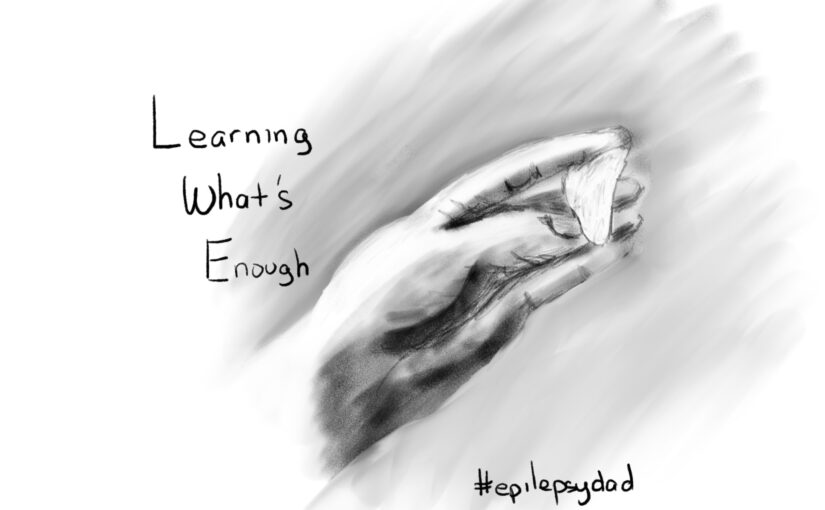
  • Learning What’s Enough

    Learning What’s Enough

    Enough used to feel like settling.

    Like lowering the bar. Like admitting I couldn’t handle more. Enough was what you accepted when the bigger version of your life didn’t work out the way you planned.

    After a year of loss, and at the beginning of a year of transition, that definition doesn’t hold anymore.

    Now, enough feels different.

    Enough doesn’t mean the days are easy. Most days, I still end them depleted. I give what I have, and there usually isn’t much left afterward. But the exhaustion feels proportionate now. It matches the effort. I end the day tired, not defeated.

    Before, I was always behind. No matter how much I did, it never felt like enough. There was always another emotional demand waiting, another situation to manage, another moment where I had to stay alert. I was never really off. Even rest required vigilance.

    Now, the days still ask for everything I have. But when they end, I can tell myself the truth: I showed up. I did what needed to be done. I’m not carrying the constant sense that I failed simply because I ran out of capacity.

    Enough isn’t having energy left over.

    Enough is being able to stop without guilt.

    It’s not about having fewer responsibilities. It’s about having responsibilities with edges. They’re clearer now. Narrower. More specific. Showing up for my son. Being present for my goddaughter. Keeping the day moving forward without asking it to carry more than it can.

    Enough isn’t ambitious. It isn’t impressive. It doesn’t photograph well.

    Enough is when the weight of the day matches the strength I have available to carry it.

    That balance used to feel like compromise. Now it feels like alignment.

    I still want things. I still imagine futures that look different from this one. But I’m no longer measuring the present against a version of life that no longer exists. I’m measuring it against reality.

    Enough doesn’t mean I’m done growing. It means I’m done chasing the wrong scale.

    Some days, enough is patience.

    Some days, it’s endurance.

    Some days, it’s simply making it through without feeling like I failed.

    Enough will change. It has to.

    But learning what enough feels like has given me something I didn’t have before: a way to recognize when a day actually fits.

    And for now, that’s enough.

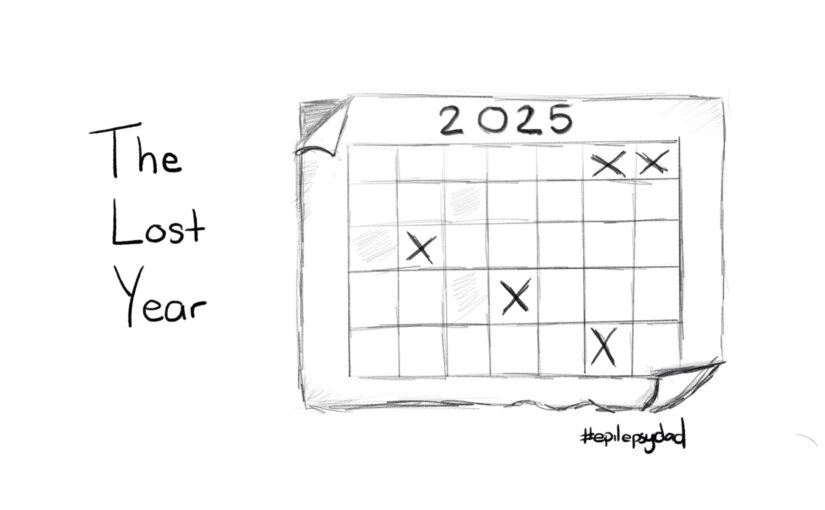
  • The Lost Year

    The Lost Year

    This has been an extremely difficult year.

    Not difficult in a single, dramatic way.

    Difficult in the slow accumulation of loss.

    The kind that doesn’t arrive all at once, but keeps showing up until you realize you’re standing in a year that no longer resembles the one you started in.

    My father passed away this fall.

    It was slow, and then it was fast. Months of watching a body fail, followed by an ending that still came as a shock. His world had grown smaller. His body no longer cooperated. His mind, at times, betrayed him. He was unhappy in ways that couldn’t be fixed.

    His death brought grief. And guilt. And the familiar questions that arrive uninvited:

    Should I have spent more time? Should I have been more patient? Should I have done something differently?

    It also brought relief. And that’s harder to admit out loud. Relief that he wasn’t trapped in a body that no longer worked. Relief that the suffering had ended. Relief that the waiting was over.

    I am grateful that we moved him closer. Grateful that my son got to know him. That he saw my son play baseball. That he showed interest in my son’s life, even as his own was narrowing. Those moments matter. They don’t cancel the loss, but they soften its edges.

    Work added its own quiet weight this year.

    For much of the year, I was in a role that wasn’t a good fit. The frustration built slowly, then all at once. Fear kept me there longer than I should have stayed. Responsibility did too. The job search dragged on, heavy with uncertainty. I eventually landed somewhere new, which brought some relief—but even that has continued to shift. The year ends without the sense of stability I hoped for.

    My son still hasn’t seen the benefits we were hoping for from DBS. In fact, he’s having more seizures now than he was at the beginning of the year. When you’ve lived with uncertainty for this long, you’d think it would lose its power. It doesn’t. Each setback still lands hard.

    My goddaughter’s health has changed as well, requiring more care, more attention, more presence. The needs don’t slow down just because you’re already stretched thin.

    There have been other changes this year, too. Big ones. The kind that rearrange the shape of your life without asking permission. The kind that leave you trying to find your footing in a version of the future you didn’t expect to be standing in.

    This year can’t end soon enough.

    It feels like a year of subtraction. A year where things were taken faster than they could be replaced. A year where even gratitude felt heavy, like another thing I was supposed to hold carefully and do “right.”

    And still, some things remain.

    My son.

    My goddaughter.

    My dogs.

    My health.

    A few friends.

    A job. Insurance. Shelter.

    I don’t list these things to balance the scales. They don’t erase what was lost. They just exist alongside it.

    I’ll carry them into the new year. I’ll keep showing up for the kids. I’ll keep working toward better outcomes where I can, and accepting limits where I can’t. I’ll keep looking for steadier ground.

    This year feels like the floor.

    Not the ceiling.

    Next year isn’t about rebuilding what was lost. Some things can’t be rebuilt. Some things shouldn’t be.

    Next year is about making something new.

  • Another Milestone He Cannot Reach

    Another Milestone He Cannot Reach

    We sat in the exam room, waiting for the doctor.

    It was his regular follow-up with his neurologist. She has managed his care for almost ten years. She has been with him through keto, multiple surgeries, and the rollercoaster of physical and emotional effects that his condition has had on my son.

    This appointment, in particular, was one I had been dreading ever since my son brought up the topic of driving with his therapist. She suggested that he ask his neurologist about it at his next appointment.

    This was that appointment.

    There was a significant buildup between his first mention of driving and this appointment. I know it was on his mind, so it was on my mind, too. It wasn’t the anticipation of the question or the uncertainty of what the answer might be. The mounting pressure came from the finality of that answer when it was given.

    The pressure built up slowly as the days went on. But the morning of the appointment, it spiked. Asking that question was the only thing on my son’s mind. He brought it up when we left the house. He brought it up when we got to the hospital. He brought it up to me when our appointment started, even before the pleasantries were done. I motioned for him to wait.

    After his exam, his doctor asked if he had any questions.

    I looked at my son and nodded, indicating it was time for his question.

    He looked at the doctor and asked the seven-word phrase that he had been holding onto for weeks.

    “Will I ever be able to drive?”

    The pressure that had built up finally exploded, pushing the air out of the room.

    I looked from my son to the doctor as she formulated her answer. I saw her shoulders lower as she took a breath. Careful, concerned, and compassionate. But also direct.

    “Probably not,” she said. “No.”

    I looked back at my son. I couldn’t judge his reaction. He sat there, taking a punch to the gut and not even flinching. He knew what the answer was going to be. And then he heard it. And then… nothing.

    I knew what the answer was too, and it’s not like I was hoping for a different answer. I just hoped it wouldn’t hurt. I hoped it wouldn’t matter.

    I finally took a breath. I wanted to just hold him. I wanted to find a positive spin. I wanted to not think about how his condition has taken so many things from him.

    My heart was on the floor. I was gutted.

    “I will always tell you the truth,” his doctor added.

    The appointment ended soon after, but the weight of that moment stayed with me. I could see him turning it over quietly, the way he processes most big things. A few days later, I checked in with him to see how he was feeling.

    “I’m ok,” he offered.

    That is usually his first response to questions about his feelings. I gently pressed, trying not to project what I thought he must be feeling after hearing from his doctor.

    We landed on disappointed and resigned. Having the answer helped quell the uncertainty, even if the answer wasn’t what he wanted.

    Moments like this remind me of something I live with every day: he faces losses most teenagers never even consider. They arrive quietly, in small conversations and clinical truths, and I know they won’t be the last. There will be more moments like this in his future, more things he has to let go of. But we will keep living our lives around what he can do, not just what he can’t.

    And no matter what lies ahead, I’ll be right beside him.

  • The D Word

    The D Word

    At a recent appointment, my son brought up the topic of driving. Even though we had talked about how he wouldn’t be able to get a license while he was still having seizures, I knew that, once he turned 16, we would have to revisit the conversation.

    I remember getting my driver’s license shortly after my 16th birthday. I had been working since I was 14 and saved up enough money to buy a car. It was a white Hyundai Excel with a manual transmission, air conditioning, and a sunroof. It wasn’t the flashiest car, but it was mine, and it gave me freedom to go where I wanted when I wanted. I started driving to school instead of taking the bus. I drove to work instead of riding my bike. I could go where I wanted and get there faster. The car gave me more range, speed, and independence.

    I know that feeling is something my son wants, especially as some of his friends will soon be getting their learner’s permits or licenses. In all likelihood, though, he won’t be able to drive. Even if we manage to keep him seizure-free for six months, despite never going more than a day without a seizure since they started, the responsibility of having a license and driving isn’t something he’s ready for today.

    His challenges with executive functioning and slower processing are a dangerous combination behind the wheel of a two-ton moving rocket. The coordination required to operate a vehicle physically and the focus needed to mentally navigate safely on the streets and around obstacles are both areas where he struggles every day.

    He needs reminders to stay on task, whether it’s chores or homework. He has learned to make a few basic microwave meals, but even then, we’ve learned first-hand what happens to the mac and cheese in the microwave when you forget to add water.

    When he brings up driving, I can feel the weight of what he’s really asking — not just Can I drive?, but Will I ever be able to? Will I ever be like everyone else?

    That’s the part that breaks me.

    Driving represents so much more than transportation. It’s independence, choice, and self-direction. It’s being able to decide where to go and when. And for him, it’s a symbol of everything that still feels out of reach.

    Because the truth is, driving isn’t just about safety. It’s about trust — trust in his body, his brain, and the world. And right now, none of those things is reliable enough to hand him the keys.

    When I think about him behind the wheel, I imagine all the things that could go wrong. The seizures, the split-second decisions, the distractions. The danger is obvious. But underneath that fear is a quieter one — that he’ll never have the kind of independence that comes so easily to other kids his age. That he’ll always need someone — me, or someone after me — to help him navigate the world.

    That thought terrifies me more than anything else. Because as much as I want to keep him safe, I also want him to have a life that’s his. I want him to feel capable, to feel like he belongs in the world, not just protected from it.

    So for now, we’ll keep talking about driving — what it means, what it represents. Maybe someday he’ll be able to drive, maybe not. But my hope is that he still finds his own kind of freedom, one that doesn’t depend on a license or a steering wheel. One that lets him move through the world in his own way, with confidence and joy.

    Even if he’ll always need help getting there.