Category: lifestyle

  • Always Running

    Always Running

    Our new home city has a notable kite-flying history, and last weekend we went to the Philadelphia Kite Festival. Separated by only a few miles (and two hundred and fifty years) from where the festival was held, Benjamin Franklin performed his famous electricity experiment, as the story goes, with a kite, string, and a key.

    Inspired by historical events, we forewent the store-bought kites and headed to the tent where visitors could decorate a simple paper kite. My son sat at one of the long, wooden tables, in front of a blank kite. A volunteer slid over, placing weights on the corners of the kite and handed my son a white, plastic basket of markers.

    epilepsy philadelphia kite festival

    Sticking with his go-to move, my son wrote his name in the center of the kite. Then he rotated through the markers and adorned his kite with lines and shapes and squiggles in every color. Only on one side, though. The volunteer explained that the side my son was decorating was the side that he would see when his kite was in the air. When she offered to flip the kite over so that he could draw on the other side, he told her that he was done.

    The volunteer took his kite and put on the finishing touches: a few folds and tape to create airfoils and string from wing to wing. As she did, she leaned over the table and gave my son a lesson in flying a kite. “Keep the wind at your back,” she said, brushing his hair from back to front with her weathered hands.  “Otherwise, it will fall to the ground.” He stood, listening intently, as if he were a pilot about to take the controls of an airplane for the first time.

    epilepsy philadephia kite festival

    After a few more pointers, my son grabbed his kite and headed to the field.  He placed his kite gently on the ground and unrolled a few feet of string. It was not a particularly windy day and most of the kites on the field sat limp on the ground. The breeze was barely enough to move the blades of grass and cause an occasionally flutter of the paper that comprised our hand-crafted kite.

    “Go!” I told him. He held on to his roll of string and started to run. After a few feet, his kite lifted in to the air. He would turn to look at his kite high in the air but, as he did, it would start to sink slowly towards the earth below, so he would turn again and race across the field and his kite would climb back in to the sky.

    epilepsy philly kite festival

    My son and I took turns over the next half hour running across the field keeping his kite in the air before I called for a break. He stopped running, and his kite fell to the ground.

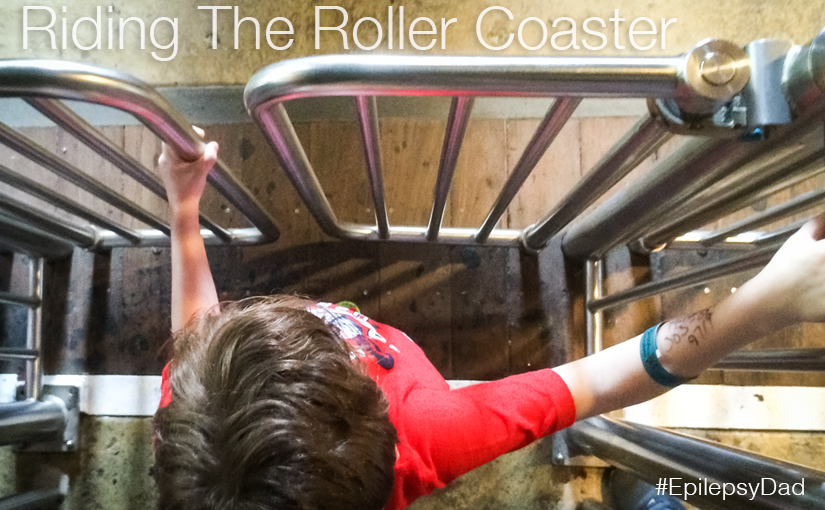
    We sat on a bench near the river, watching other people fly their kites, and I thought about how we have to keep running to keep everything up in the air. We are constantly running, adjusting and managing medicine, measuring everything he eats for his diet and cooking meals, making sure he’s not too tired, hunting for other triggers, and always observant, watching for seizures. We’re running and trying to normalize his day for school, and racing between appointments, and trying to give him as normal a life as possible. If we ever stop running, everything, like his kite, will come crashing back to earth.

    I wish so much for him to feel the wind at his back…to watch his kite fly in the air without the need to run so that he can lay back in the grass, watching his kite in the air, and simply enjoy the sun. My son didn’t complain because there was no wind or because he had to run across the field to keep his kite in the air. He doesn’t often complain about his seizures, or his medicine, or his diet. Through everything, my son has been a trooper.

    He runs because he doesn’t know or remember any other life.

    We run because he is our son, and we would do anything for him.

    epilepsy philly kite festival


  • Playing Teeball Again For The First Time

    Playing Teeball Again For The First Time

    Last year, we signed our son up for teeball. He was only out of the hospital for a few months and was still having seizures and suffering from severe ataxia and behavioral issues from the seizures and medicine, but we wanted to give him a bit of “normal”.

    There were times when he would be in the field, in the “ready position”, wobbly and shaking from the ataxia, and he would have a seizure…the audible cue, his body glove slumping down and his body sagging. These seizures were short, he would spring right back up, back in position and waiting for the ball. If we tried to get him to leave, he would say no so we would monitor him and he was usually able to finish the game.

    When the game was over, though, he would be so exhausted, and the exhaustion was sometimes followed by episodes of his extreme, angry behavior. We’d put him in the stroller to take him home, and he would be saying mean, hurtful things, or spitting, or hitting. We’d get him in to the house and hold him until the storm passed and he was able to calm down and take a nap.

    There were good moments, too. Towards the end of the season, the coaches used a pitching machine instead the tee. Most of the kids would go up and strike out since it was obviously their first time trying to hit a moving target. But I’ve been pitching to my son for years…the tee we had was too big so we just pitched it to him and he would hit it. So he would step up to the plate, ataxic and off-balance, like a drunk stumbling down the street. He would go through the motions to get his feet set, his hands around the bat that he would lift up to his shoulder, and sway back and forth waiting for the pitch to come. When it did, his soft, fluid motion would bring the bat in perfect contact with the ball and he would crush it, and the look on his face made every other thought disappear.

    It was a balancing act…trying to give him an opportunity to do something fun with other kids but managing his seizures and minimizing the behavioral issues. There was no right answer. I felt like I was a terrible parent for putting him in the situation, and I felt equally terrible on those days where we’d skip the games and he would sit inside, isolated, lonely, and just as angry and having just as many seizures.

    We’ve come a long way in the last year. My son is again playing teeball. His ataxia is better but still visible, but his behavior is much more under control. He’s cheering on the other batters and saying “Batter up!” and “Good job!” as the other team crossed the plate. There have not been any on-field seizures and, after our last game, he played at the park with his friends because we didn’t need to rush home because of seizures or to brace for the oncoming fatigue-induced anger.

    teeball epilepsy ataxia

    My son doesn’t remember much about his first year of teeball, one of many holes that was caused by the seizures and the medicine. There are times when I wish I could forget last year, as well. But even though he doesn’t remember, I saw moments of joy and a sense of accomplishment as he hit the ball or ran to a base, and those are the memories that I choose to think of when I look back. If any memories from that time do come back to him, I hope that is what he remembers, too.

    But if he never remembers last year, and if he only remembers his experiences this year, I’m grateful that we have this opportunity for him to play teeball again…for the first time.

  • Making Moments Matter

    Making Moments Matter

    Last weekend, we were in Washington D.C. for the Epilepsy Foundation walk. We had planned the trip for months, and we tucked away some money to pay for the trip and activities while we were there. As it happened, there was a playoff hockey game in D.C. on Saturday night. It wasn’t something we planned on, and hockey tickets are expensive…playoff tickets more so.

    I called my wife and told her about the game. “We should do it,” she said.

    There was a time in my life where I would have argued. Where I would have tried to rationalize the cost, and crunch the numbers, and adjusted the budget. My wife tried for years to teach me the value in making moments matter, but I had a hard time listening or believing her until my son got sick.

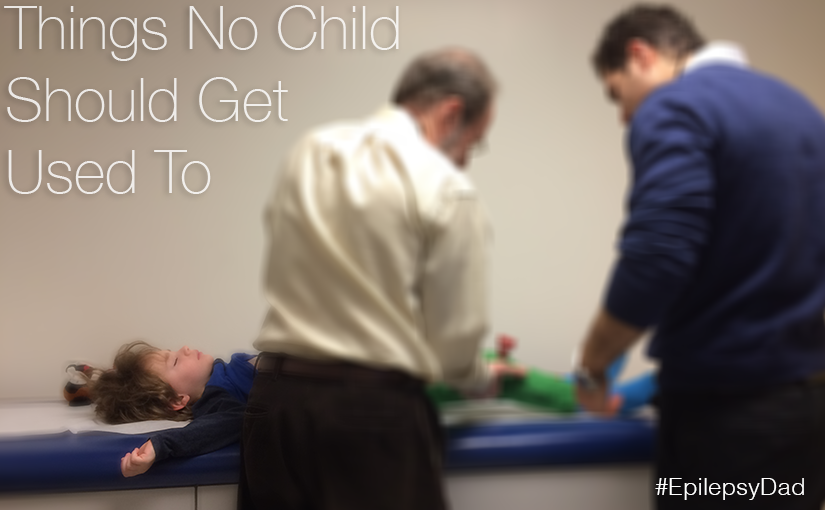
    The past few years have been an endless struggle to control his seizures, switching medicines, managing side effects, and behavioral issues, a difficult diet, and the stigma of having epilepsy. Some days, he can’t control his body, or he seizures at night and has an accident. He wakes up some days wanting to give up, or comes home from school embarrassed because someone laughed at him for drinking oil with his lunch. It’s an impossible life for a six-year-old.

    Moments don’t need to be expensive or cost money at all. As we walked down the National Mall, he was just as happy playing tag and hide and seek on the grass, and doing the scavenger hunt in the hotel. I could have said I was tired, or that I wanted to see the sights.  But those little moments of playing his game and giving him an opportunity to feel normal and to simply have fun matter, too.

    making moments matter epilepsy

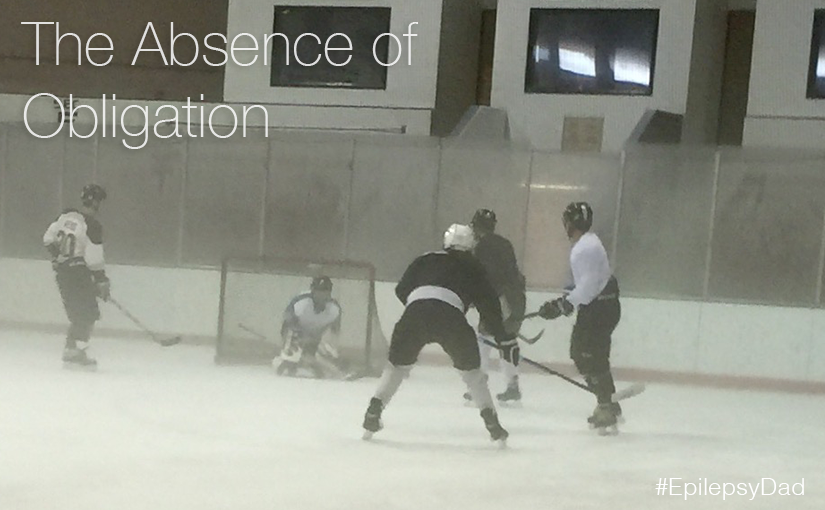
    But hockey is one of those things that my son hasn’t given up on, and the universe was sending me a message by putting a playoff game in the same city where we would be and, to be sure I wouldn’t miss the message, the game was also against our home team. We bought the tickets and surprised him with the game.

    making moments matter epilepsy

    Even though our team didn’t win, the home crowd appreciated his enthusiasm and pat him on his head as he cried in to his hands after another tough loss. As we walked out, he had a smile on his face and moved the home team up on his favorite team list.

    I’m grateful my wife has tried to teach me to make moments matter.

    And I’m glad I finally listened.


  • Epilepsy And The Lack Of Freedom

    Epilepsy And The Lack Of Freedom

    One day last week, after I dropped my son off at school, I walked past the playground and the late kids being hurried by their parents across the street. The kids were a few years older than my son and, on the walk home, I began to think of when I was their age and lived in an apartment complex in Connecticut.

    I remember there was a common area between the apartments and the street that was covered in grass, with a big, green boulder that I used to climb, imaging it was the tallest mountain. My friends and I used to meet on the grass and play baseball, or tag, or ride our bikes on the sidewalk through the buildings.

    My sister was among the older kids that used to also congregate by the boulder, usually either ignoring or taunting their younger siblings. But there were no parents. Many of our parents, including my mother, were single parents or low income parents trying to make ends meet, so they were working or inside catching up on chores and other duties. So we were left to go outside, and play together, and to fill up our days with whatever we felt like doing.

    If the older kids got to be too much, my friends and I would grab our fishing poles and walk through the woods adjacent to the apartments to a small creek where we would catch frogs and small fish and where I swear I saw a river monster (which was probably actually something like a muskrat). There was a sledding hill on the other side of the complex, and patchy wooded areas that we could explore with plenty of trees to climb. Our ability to roam without parental supervision or babysitting by our older siblings made us feel very free.

    epilepsy dad lack of freedom

    We don’t have any spaces like that near our house, and living in a big city is a completely different environment than the area around those apartments when I was my son’s age, but I wondered if my son would ever get to experience that same sense of freedom that I had when I was living in those apartments. Even if there were places to roam and their weren’t busy streets to navigate, will his seizures prevent him from being able to run off and play without the watchful eye of my wife, me, or another caregiver? Will he always have to be around other people, particularly someone who knows what to do if he has a seizure?

    I’ve always said that I didn’t want epilepsy to make my son feel “less than”, or for it to keep him from doing anything he wants to. But the reality is that it might, especially if we continue to have such a hard time getting his seizures under control. He probably doesn’t notice it as much now, because he’s six and because he’s not supposed to venture out in to the world by himself. But as he gets older, and as he’s not able to experience the same freedom that his friends do, I’m going to need to find a way to make it okay.

  • The Internet Is Not A Doctor

    The Internet Is Not A Doctor

    My son’s epilepsy diagnosis came with words that I didn’t know. Status epilepticusRefractory. Subclinical. I had a lot of questions about these words and what they meant for my son, so I turned to the same place I always turn when I have complicated medical questions.

    The Internet.

    Sure, our doctor would also have been a good source since, usually, she is the one using the foreign words. But being in the doctor’s office after a long exam and a long day is overwhelming, and being a web-savvy-engineer-type, the Internet is my happy place. Besides, nothing bad every happens on the Internet.

    Turns out, that’s not true.

    I’m one of those people who search for symptoms on WebMD, the place where a stuffy noise quickly escalates from common cold to incurable cancer.

    epilepsy dad webmd research

    Searching for the words surrounding my son’s diagnosis quickly leads, after a few clicks, to truly terrible conditions, none of which could my son possible have. But the seed of despair gets planted and, after a few more clicks, somehow his epilepsy also gave me an incurable disease. I don’t (as far as I know) have a disease, but I do have cyberchondria (one of my new, favorite words).

    Hello, Internet, my old friend. I’ve come to search WebMD again.
    ~ Simon and Garfunkel (98% sure)

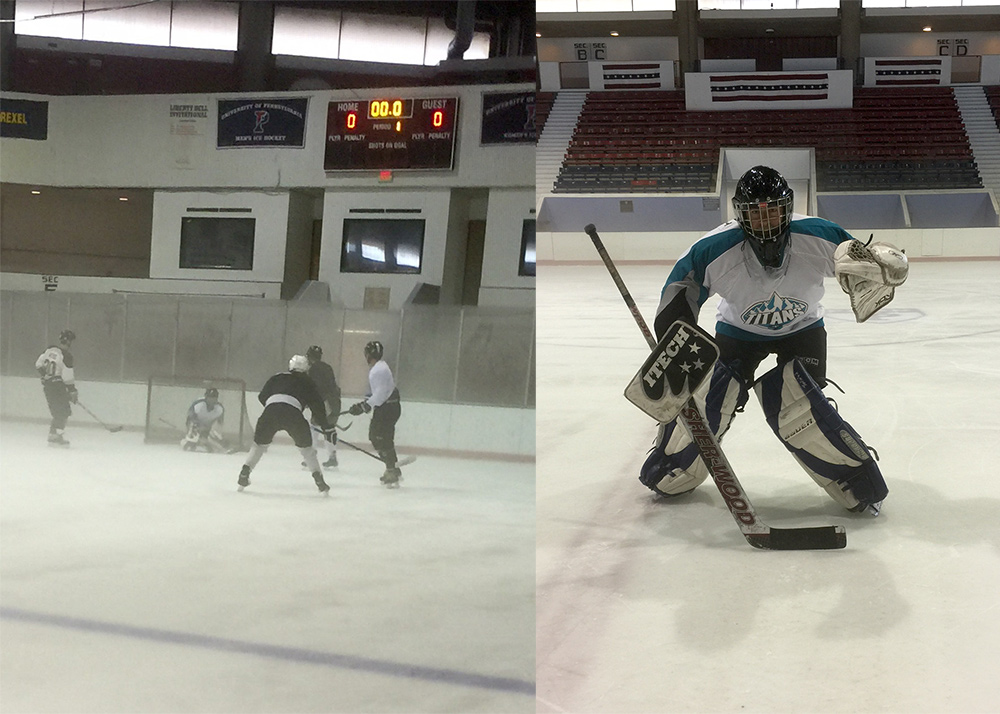
    Once I was able to tear myself away from WebMD, I pulled up Google. I had more questions that weren’t related to solving the riddle about why my son had epilepsy but, instead, were about what his life would be like with epilepsy. Since he was a baby, he wanted to be a hockey player. I searched for “hockey players with epilepsy”.

    google hockey epilepsy

    The results that came back were not promising. Wait, I thought, can he even play hockey with epilepsy? Another Google search.

    google hockey epilepsy

    More unsatisfying answers just led to more questions. Soon I found myself sucked down another rabbit hole, this one less about clarifying a diagnosis and more about what type of possible future my son would have, even before we knew enough to even guess at what his future would be like. Looking at my browser history, it revealed a pattern of creating limitations in my head about what my son could ever hope to accomplish. Worse, I was arming myself with information that I could use to project those same limitations on to him, which is the opposite of what my search was meant to achieve.

    The Internet is an amazing tool. It has the power to connect people, to share information, and maybe one day to help find a cure for epilepsy. It can inform patients and parents afflicted with a condition and provide a common vocabulary for the exchange of ideas. But it can just as easily overwhelm and do more harm than good, particularly with a new diagnosis and especially when the cause of the condition is still unknown.

    My excursion to the dark side of the Internet left me with these two thoughts that I try to remember when I find myself lost on the information superhighway.

    The Internet is not a doctor.

    In the future, everything is possible.