Tag: keto

  • Easier, But Not Easy

    Easier, But Not Easy

    We’re two months in to the ketogenic diet. The doctors say that it’s working. We’ve been able to go down on meds without a significant increase in seizures, although the reduction was more due to my son being toxic on the meds rather than the gradual weaning of meds that sometimes follows the diet. But we also haven’t been admitted to the hospital in months, which admittedly is a pretty low bar.

    His behavior is better, but it’s still bad. There is less screaming, and the outbursts don’t last as long, but they still happen. And his impulse control is still nonexistent. We’ve had to add a chain lock to our front door to prevent him front running out on the street, which he did. We can still see it in his eyes, when his brain gives up on making any decision and following natural impulses that, for a 5-year-old, involve flipping, and running, and hitting.

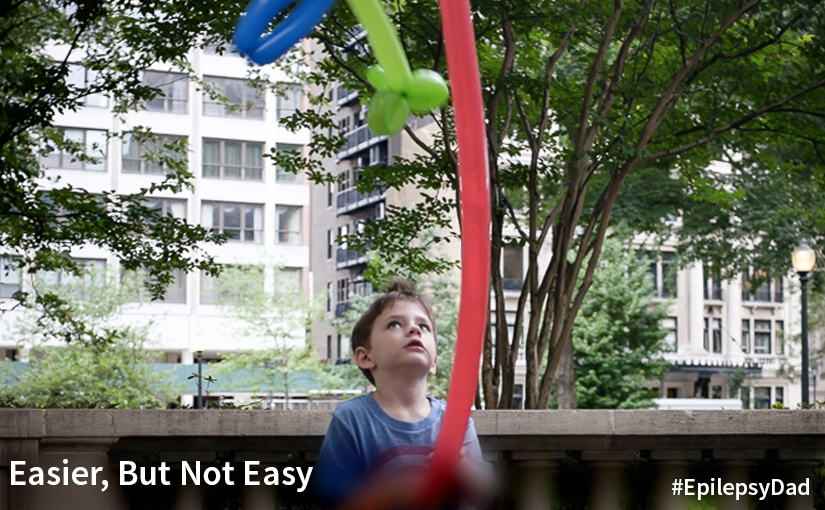
    It’s still hard to look at him and to see him struggle. It’s still hard to do something fun only to have it end with a seizure because his body gets too tired to prevent it. This picture was taken at a festival in the park next to our house. About 30 minutes after it was taken, he was on the ground having a seizure, concerned bystanders offering to help.
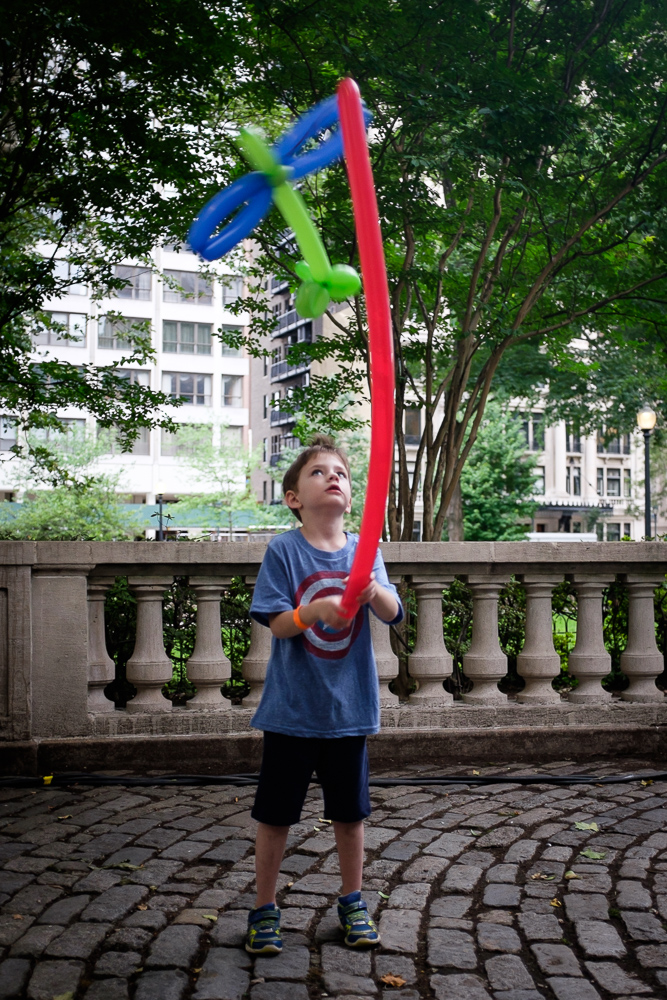
    easier but not easy epilepsy seizure ketogenic diet

    In the past month, we’ve gotten help to come during the day. We’re also getting additional services through the hospital and through the state. We are getting better at managing. Managing his routine. Managing his seizures. Managing his behavior. The help and structure have made the day-to-day easier.

    Easier, but not easy.

    Like I imagine so many other families are dealing with, epilepsy has its own gravity that forces everyone to exert much more energy to keep moving. Every step is harder to take. Everything takes longer. Even the simplest things are exhausting. I wish I could grab my wife and son, strap on some rocket boosters, and break free from the unrelenting pull of gravity, but so far, we continued to get pulled back by more seizures or other complications.

    Easier, but not easy.

    There are families that don’t get easier or easy, and I’m grateful for the progress that we have made and for the support that we continue to receive. I’m still hopeful that all this will somehow, magically go away and that we won’t talk about the year when my son was five and he had all those seizures. We’ll skip ahead from his Disney World fifth birthday party to whatever we do for him when he’s six, and forget everything in between. Short of a magic wand to make it go away, I wish I had a remote control to fast forward to that time.

    That would be easy.
     

  • A Sound To Break The Silence

    For the past eight nights, our house has been silent. Our son has gone to bed and woken up without a seizure, without a sound. For the last few months, he has a string of seizures in the early morning, echoing their call throughout the house. But for just over a week, shortly after starting the ketogenic diet, his seizures had stopped, and I had just begun to forget that sound. I had just begun to stop expecting that sound.

    But then, a day after he moved back in to his own bedroom, a sound carried up the stairs and down the hall. At first, I thought it was my wife singing in the bedroom, or the call of the fans rumbling through the hockey game on the television. But after my wife shut the door, and after I muted the television, the sound once again filled the room. Down in his room, our son was having more seizures.

    epilepsy seizure

    I got ready for bed and headed down to his room. Our monitors are still not here, and as much as our bodies resent the lack of sleep that came with having him staying in our bed, I wasn’t ready to trust that his seizures were temporary and that they wouldn’t cluster. So I found a space in the corner of his twin bed, and I laid with my son until he fell asleep. I listened as he had another handful of seizures, and another few in the early morning.

    Although we are still very much struggling with some lingering issues during the day, I was eager to return to a quiet house at night and to a restful sleep. I was ready to assume that the noise I heard at night was my wife watching some terrible show on CBS or a drunken neighbor stumbling home after a night out. But for now, I must still keep that part of my brain active that can pick up every sound and distinguish Madam Secretary from a myoclonic seizure, from knowing which is damaging a brain in my house and which is just a seizure.

    There are days like today when I wonder if I will ever sleep soundly again. I wonder whether I will over not worry that every sound I hear is my son having a seizure and whether I need to rush down to his room to make sure he has recovered. Living on the edge, all day and all night long, is taking a toll.

    There is so much uncertainty, so much to react to, so much to be cautious about. But I am hopeful for the day when the worst thing that I will hear at night is another show on CBS.


  • Going Keto

    Going Keto

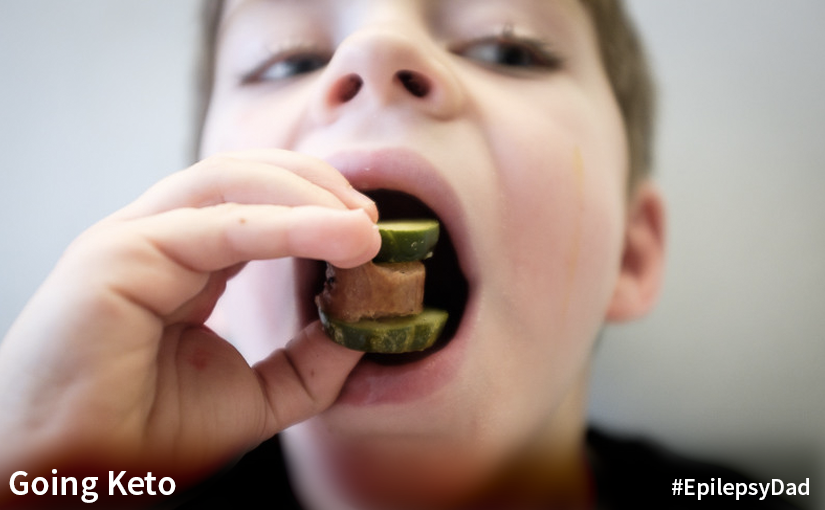
    Last week, we were inpatient at the Children’s Hospital of Philadelphia transitioning on to the ketogenic diet. If you’ve never heard of it, the keto diet (as those of us that are “in the know” call it) is a high fat, low carb diet that has shown to have benefits for kids with difficult epilepsies. The diet was codified in the 20’s, but it’s basically based on all those accounts of fasting doing amazing things for people thousands of years ago, including those stories in the Bible. Fasting causes your body to burn fat. When your body uses fat for energy, it produces ketones in the blood. Those ketones making it to the brain helps with seizures for some people. The diet basically mimics the fasting process by giving the body only enough carbs and protein as it needs to develop but otherwise giving the body only fat to burn for energy, producing ketones.

    Different hospitals have different protocols for getting people on the diet, but CHOP does a week of inpatient training to make sure the parents are ready to support their child on the diet. It’s a lot of measuring, a lot of math, some cooking, and all geared towards making the diet as successful as possible.

    This slideshow covers our week of admission. Learning to draw blood, cooking in the kitchen, meeting an Ultimate Frisbee Team and a professional NFL player. Bone scans, hair nets, IVs and food. It was a lot to process, and even writing this post took days after admission to craft.

    This slideshow requires JavaScript.

    The diet doesn’t work for everyone. For those it does work for, some people have claimed a benefit during admission, others showed progress weeks or months after admission. However long it takes and whatever we need to do, we’re going to do everything we can to.

  • The (Super) Hero’s Journey

    The (Super) Hero’s Journey

    There is a common pattern in stories from two thousand years ago in Greek mythology and more recent stories like Star Wars and Superman. It’s often called “The Hero’s Journey” or the “monomyth”, popularized by Joseph Campbell in his book The Hero with a Thousand Faces.

    In a monomyth, the hero begins in the ordinary world, and receives a call to enter an unknown world of strange powers and events. The hero who accepts the call to enter this strange world must face tasks and trials, either alone or with assistance. In the most intense versions of the narrative, the hero must survive a severe challenge, often with help. If the hero survives, he may achieve a great gift or “boon.” The hero must then decide whether to return to the ordinary world with this boon. If the hero does decide to return, he or she often faces challenges on the return journey. If the hero returns successfully, the boon or gift may be used to improve the world. ~Wikipedia

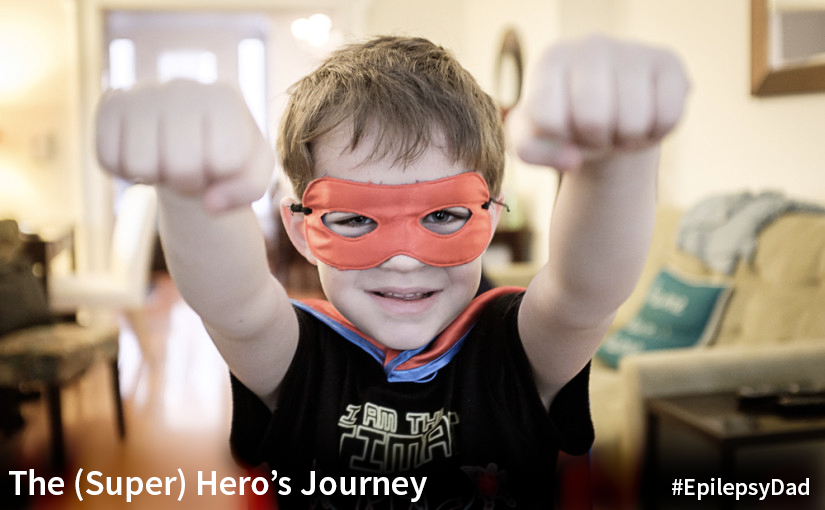
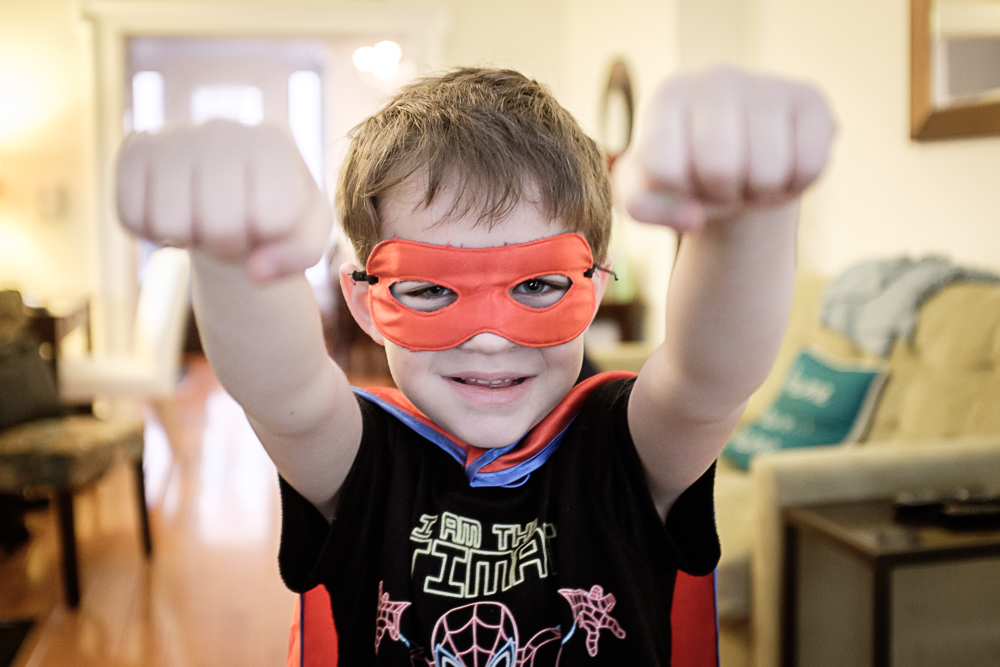
    This is my hero.

    epilepsy seizure keto ketogenic diet

    He’s on his own journey. His ordinary world was back in Colorado, where he lived a relatively stress free, normal life. His call to adventure came from our opportunity to move to Philadelphia where he would have to enter a strange world to make new friends and face the other trials that normally come along with moving to a new city. His severe challenge now is the epilepsy that has altered his life so much in such a short time.

    In the monomyth, the hero may get help on his journey, and my son’s journey is no different. We are grateful to have the help and prayers of our friends, our family, and of the doctors, nurses, therapists, and everyone else that is giving of themselves to help my hero face his challenge.

    My hero is very much in the middle of his journey, but I know that my hero will return successfully from it, and I have no doubt that he will also find a way to improve the ordinary world, just like he improves mine.