Tag: family

  • We All Have Needs

    We All Have Needs

    We need joy as we need air.
    We need love as we need water.
    We need each other as we need the earth we share.

    Maya Angelou

    In psychology, Maslow’s Hierarchy of Needs depicts a five-tiered model of human needs: physiological, safety, love/belonging, esteem, and self-actualization. It’s often depicted as a pyramid with the idea that lower-level needs must be satisfied before higher-order needs can be fulfilled.
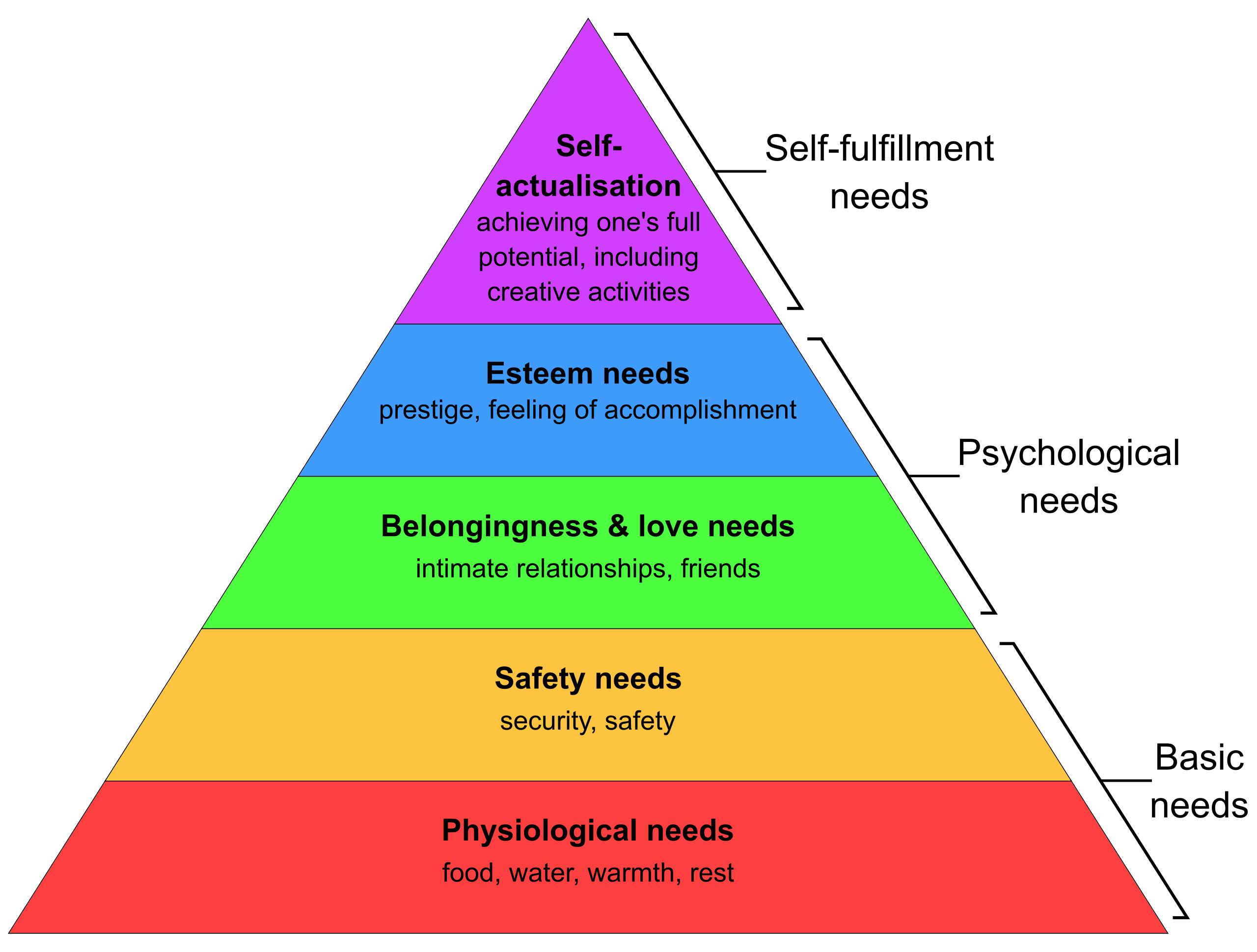
    Source: https://en.wikipedia.org/wiki/Maslow%27s_hierarchy_of_needs

    Growing up, my physiological needs were largely met. I had food, drink, and shelter. I was clothed with the finest sneakers from the grocery store and mismatched Underoos from Goodwill.

    The next level, safety, is about order, predictability, and control. There wasn’t much of this in my childhood. I grew up in a different time, surrounded by a system that still believed in corporal punishment and people who were angry, frustrated, and mean. The lack of control, the fear of being punished, and the unpredictability of my environment made it impossible to feel safe.

    If I was sad or scared and expressed my needs through crying, I never knew if I would be comforted, ignored, or told, “I’ll give you something to cry about.” The people around me couldn’t handle their feelings; mine were often too much, inconvenient, or wrong.

    My safety level was never fully satisfied, so there was little hope for anything above that. My desire for love and belongingness conflicted with my need for safety, especially within my family. This is especially common with children and why people cling to abusive parents or partners. I had friends but never friendships, and giving and receiving love was confusing and dangerous.

    Esteem is about the desire to be accepted and valued by others. It’s hard to feel worthy when you don’t feel like you belong, and it’s impossible to achieve self-actualization, the top level of needs, when you don’t believe you have any potential to become anything of significance.

    Over the years, I tried many ways to make my needs important to have them met. I would put other’s needs above my own and do my best to satisfy them in hopes that they would do the same in return, but the people I surrounded myself with were only interested in having their needs met. If I did find someone willing to consider my needs, my programming reminded me that it was dangerous and that they wouldn’t be met anyway, so it would be better not to express them to avoid disappointment. I had a therapist who once told me that in a healthy relationship, there is room on the shelf for both persons’ needs, but I operated as if there was only room for one, and the needs on the shelf weren’t mine.

    I’ve seen more and more how I interact with the world determines how my son interacts with the world. Whether it’s his desire to show his mother he loves her by heading straight to the flower section when we go to the grocery store or his unfortunate habit of not knowing when to stop a joke, I see what I do in him. I also know how the things that I don’t do but should do are absent from his behaviors.

    I think about the example I am setting for my son. Even if he didn’t have special needs, I would want him to feel comfortable putting his needs out there and being surrounded by people who are willing and capable of meeting them. He deserves to know what a healthy relationship is and feel like an equal partner in these relationships rather than unworthy or afraid like I did. The reality is that he does have special needs, and he will be more dependent on others and will most likely be less able to navigate the world alone.

    Change is hard, but there are so many ways in which our journey has already made me a better husband, better father, and better role model for my son. He already has the biggest heart and is sensitive to the needs of the people around him. I want to ensure he knows his needs are just as important and that he is worthy of having them met, too.
  • Thank You. That’s True.

    Thank You. That’s True.

    I think, as parents, we all have ideas of doing better than our parents did.

    We want to pass along what we think our good qualities are to our children and not project our bad qualities on them.

    I have a hard time accepting compliments. I don’t let them in. I minimize their effect on me by deflecting. I smile, but I filter them. I minimize them by deflecting credit. Or by telling myself that the person is wrong. I know the other person is wrong. They don’t know all the details. If they did, they wouldn’t have complimented me. I punish myself with the words. Pride is a sin.

    I shrink when someone compliments me. My son grows. When we praise him, I see him get bigger. I see him smile. He likes for me to tell other people the story of him doing something well, a good choice he made on the baseball field, or something cool he did playing Fortnite.

    I’ve been trying to follow my son’s lead and let compliments in. My therapist suggested, rather than trying to convince the complimenter why they are wrong (even if I only do it in my head), I instead respond with “Thank you. That’s true.”

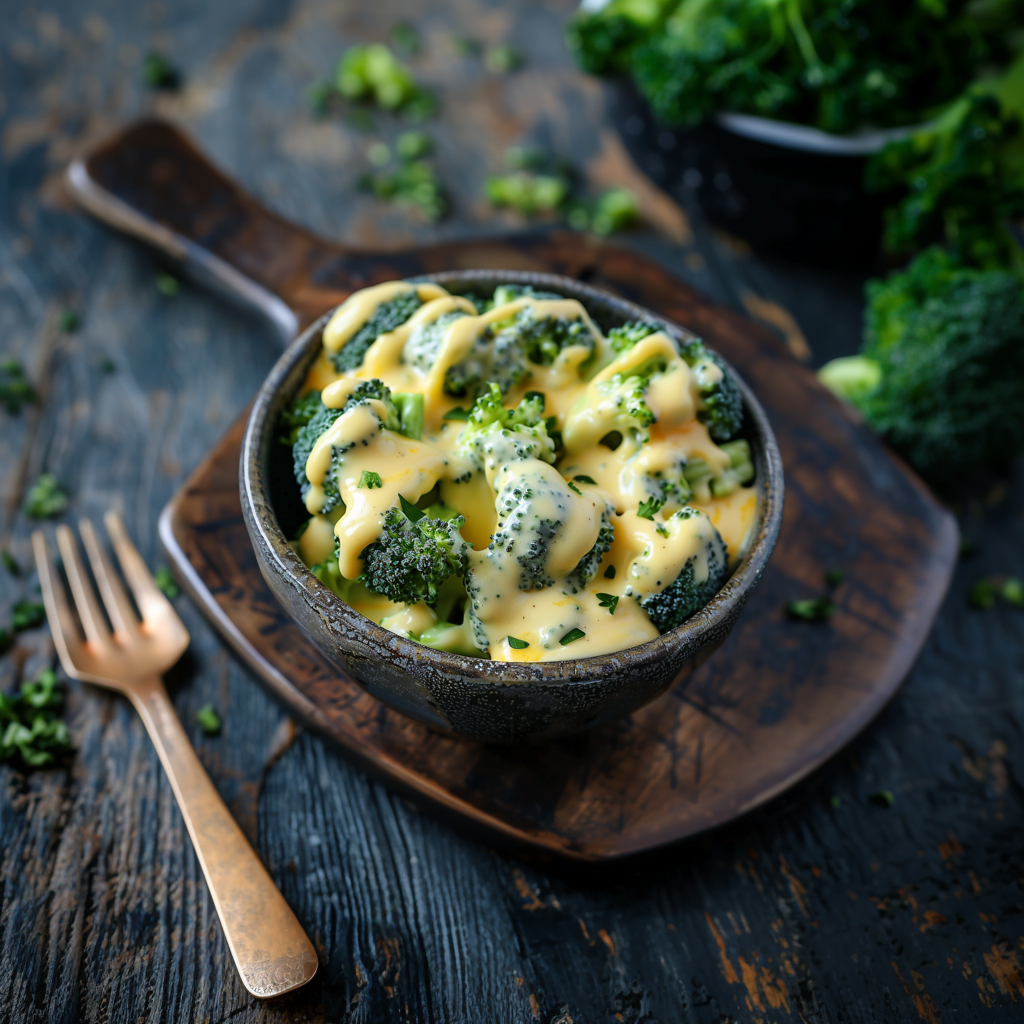
    At first, I practiced with my wife, and the words were coated with so much sarcasm that they were unrecognizable. The words were fighting so many years of programming that I needed to cover them with something to get them through. It was like dipping broccoli in cheese to get a child to eat healthy food.

    Compliments are my broccoli. Sarcasm is my cheese.

    thank you. that's true. epilepsy dad

    While it’s a fine way to start, the hope is that eventually, the child doesn’t mind or may even like the taste of broccoli. I’m at the stage where I don’t need as much cheese, but it’s not no cheese. The positive messaging is taking over the negative programming that has controlled my reactions for most of my life, and it’s showing up in my relationship with my family and myself.

    My therapist noticed the change and complimented my progress. So has my wife.

    Maybe I’ll try to take the compliment.

    Thank you. That’s true.

  • Why I Don’t Drink Alcohol

    Why I Don’t Drink Alcohol

    A while ago, I wrote about getting therapy and how it allowed me to understand and change my patterns and behaviors so that I could have a healthier life and be more present with myself and my family. That awareness sparked another change that I made in my life a few years ago.

    I stopped drinking alcohol.

    For many people, alcohol is a “slippery slope” topic. I loved a glass of wine with dinner. The aroma, the taste, and how it is paired with a meal unlocked a different aspect of food. But as our life got harder, I found that I was turning to that glass of wine more as a way to dull the pain and fear and to escape. It fed into my tendencies to go inside myself or avoid dealing with issues. It also made it more difficult to continue and sustain the progress that I was making with my mental health. Many people can do both, but it was clear that I couldn’t. So I stopped.

    It wasn’t easy at first. It meant I wasn’t trying to escape and forcing myself to be more present in our situation. However, the work that I was doing with my therapist and with my family made me stronger and more capable of doing that. Even though it was hard, the more present I was, the more progress I saw in rebuilding those relationships.

    Eventually, the desire to escape with a drink went away, but there were still temptations outside the house that I needed to contend with, so I didn’t want to fall back into my old pattern. The culture of my industry is filled with happy hours and entertainment. When everyone else ordered an alcoholic beverage, and I ordered a club soda, there were questioning looks. But eventually, those looks disappeared, and it stopped being a thing. Mostly, it’s only weird if you make it weird. I didn’t have to go into the details with anyone on why. It just became a fact that I didn’t drink, and I avoided situations where I knew the drinking would make me uncomfortable.

    That was more than four years ago. Of course, no one change fixes everything. My son still has seizures. Our life is still stressful. But the point of getting help and not drinking isn’t to force me to only live in the stress and to be fully present all the time. It’s to be capable of being more deeply present when I need to be, to break the habit of running away when things get too big, and to replace the unhealthy behaviors with healthier ways to wind down and disconnect from the stress, both with my family and friends and also by myself.

    I am sometimes asked if this choice is permanent or if I’ll have a drink someday. I can honestly say that I don’t know. I am human, and life is unpredictable. But I know that, if and when I do, it will be on my terms.

  • Reacting vs Responding

    Reacting vs Responding

    Growing up in Florida, I played a lot of tennis. Even though I lived near one of the best tennis schools in the country, I never took any lessons. My friends and I would bring our rackets and a can of balls to an open court and play for hours.

    I wasn’t the best player, but I was able to present a good challenge. My untrained backhand had a severe backspin, making it difficult for my opponents to reach. My serve was chaotic but fast, so it was hard to return in the rare instances when it went in. But the main reason why I was a tough opponent was that I was fast and could get to balls anywhere on the court.

    I started playing more tennis when we moved to the suburbs a few years ago. At first, I took a few lessons and clinics, then leaned in and played a few hours a week. I’ve slowly progressed in my technique, but I still have speed. I can still react. But reacting is exhausting.

    Reacting is instinctive. It’s fast. It’s unconscious. Reacting is about survival, but that can get me into trouble. I might keep the match going, only to put myself in a worse position than before. Reacting begets reacting, which, in tennis, means a lot of running around.

    Responding is intentional. It’s slower, but that intention can create more space. Responding keeps the match going and aims to put me in a better position for the next shot. That looking ahead and control is more efficient and effective.

    When our epilepsy journey first began, all we did was react.

    Seizure. React. Status. React. Medications. React. Side effects. React. Ataxia. React. New seizures. React. New medications. React. New side effects. React.

    There was no time to think, no time to plan, no time to be intentional. There was no space. Every time we reacted, we’d hit the ball back over the net only to have our opponent easily smash it back across the court and force us to rush to reach it. Our opponent was trying to win the match, and every desperate reaction we had was to keep our son alive.

    This went on for years until his condition stabilized, and we could finally catch our breath. Initially, the feeling of not having to react was foreign and unsettling. We had been reacting for so long that I had forgotten there was another way, and I had no reference for what that other way looked like when it came to epilepsy and our son.

    After a while, though, we began adjusting to this new way. The ability to introduce intention into our decision-making has given us the space to catch our breath and make choices that move us forward. Rather than sending him to a school that couldn’t accommodate him, we could take the time and find a school that was right for him. Rather than being afraid to schedule activities, we began living our lives.

    That’s not to say that we don’t still react. Epilepsy is a crafty opponent that can catch us off guard and force us to scramble. But reacting is not the only thing we do, which makes a big difference.

  • My Wife Is A Superhero

    My Wife Is A Superhero

    This summer, my wife and I attended a concert at an outdoor venue outside the city. It was a warm night, the sun beating down on us as we stood in line to enter.

    I scanned the crowd. The energy was good. I noticed a family sitting on the ground towards the end of the line. I didn’t think much of it, other than that the lines must have gotten long enough to reach where they had decided to sit.

    Moments later, there were screams.

    “Daddy!” a young voice yelled.

    I looked over and saw the father of that family lying on the ground. People started to pull away and a small circle formed, watching.

    “Daddy!”

    I turned to see, as everyone else was backing up, my wife dashing towards the sound.

    Security arrived and started moving everyone back. Enough space cleared to see that the man was beginning to come around. My wife was on the ground with a young girl who was crying and calling for her dad and a young boy who stood frozen, watching as people arrived to attend to his father.

    I watched as my wife comforted the children, surrounded by the commotion and chaos of the crowd, watching and whispering as the staff pushed them back. Eventually, the father was sitting up, and I could see that he was talking. A wheelchair arrived. The man made it into the chair, and a medic pushed him through security with his wife at his side. My wife followed, holding the hands of the two children as she continued to calm their distress.

    This wasn’t the first time that I saw my wife step up in this way. She’s done it for our son hundreds of times, reacting to the sound of our son having a seizure and rushing to his aide. She’s done it for her students over the years. And she’s done it when we are out in public, and the need arises. It’s always instinctual, it’s always kind, and it’s always genuine.

    It’s always inspiring.

    The world needs more of that. We’re afraid to step in. We’re indifferent. We’re so eager to attack anyone in our space and to not accept help. We’re too selfish to be altruistic. We’re too polarized to have empathy for the “other.” Stories like this are anomalies, which is why they get so much attention when they happen. Kindness is so rare that stories and videos showing it are treated as curiosities, like catching sight of an endangered species.

    I sometimes take it for granted that not everyone is capable of giving or receiving kindness and empathy. I see my wife’s example and how she instills that same kindness in our son. Because of her, I notice it in the other people in our lives, as well.

    Maybe someone who saw my wife jump in will feel compelled to do the same the next time they see someone who needs help. Perhaps they’ll be inspired to demonstrate even a small act of compassion, understanding, and love. We are capable of such wonderful things, but without more empathy and kindness, we will eventually become the endangered species ourselves.

    After we entered the venue, we grabbed some food and sat on the lawn that overlooked the city. People slowly strolled up the path past us to start finding their seats.

    “There she is!” A familiar voice led my eyes to a little girl with her family in the distance who was pointing at my wife. Her face beamed as she waved. I saw the mother mouth “thank you” to my wife as they slowly made their way along the sidewalk. The father cast a glance of deep appreciation to my wife as they continued on their way. My wife waved back, and I could see her eyes water as she took a deep breath.

    I know superheroes exist because I married one, but we need more of them. If we can find them, or if we can become them, maybe there is hope.