Tag: epilepsy

  • What Can’t Be Seen

    What Can’t Be Seen

    Earlier this year, we bought a stroller for our 5-year-old son. After his condition deteriorated in the hospital, he came home with very little physical or mental stamina. Every exhaustive mental activity drained him, and ever labored step sapped his energy. Since we live in the city, getting anywhere involves walking, so we found ourselves isolated in our apartment. With no social interaction, no friends, and no sunshine, our confinement raised the tension in an already strained situation, which was not good for our family or for his recovery. The stroller gave us a way of getting out of the house without having to carry him so that we could rejoin the world outside.

    Our son is tall and weighs 45 pounds, so we bought the biggest, most durable stroller we could find. Even so, he barely fits inside with a small bend of the knees and his head is a bit taller than the top of the canopy, but he is comfortable and the stroller lets us get to where we need to go without completely exhausting him.

    what cant be seen epilepsy

    One day, we headed across town to the market. As we turned up a street, I saw a woman sitting on a bench on the sidewalk. She was looking at us as we approached. It’s the city, so of course I know not to make eye contact. But as we passed, she pointed to the stroller and blurted out “Why is that boy in a stroller? Is there something wrong with him?”

    We didn’t respond and continued past her as she raised her voice. My son didn’t hear her, or he didn’t understand what she was asking.  Her question didn’t sound curious. It came across as accusatory, a reaction to seeing a big kid being pushed around in a stroller that was almost too small for him. It was the tone that is used to admonish a parent that is spoiling their child, not one of compassion for a difficult situation or even an innocent inquiry in to a situation that she didn’t understand.

    I read a related story a few weeks ago about the family of a disabled girl having a note left on their car for parking in the handicapped spot because “they didn’t look handicapped”. The girl actually has a brittle bone condition, invisible to anyone that doesn’t know her story, hidden on the inside, behind a curtain of skin.

    My son doesn’t look disabled, either. Unless you know him, you might not notice his drooping eyes that reveal his exhaustion. You might not know that his exhaustion comes from seizing all night long or that, in an unforgiving cycle, the exhaustion also leads to an increase in seizures. You might not see his behavior or psychological issues that come from an uncontrollable seizure cluster or the side effect of a medicine that he is taking to keep his seizures just barely on the side of control. You wouldn’t know about the nights that he has been so overtired that it took us hours to calm him down so that he would sleep.  You wouldn’t know that the dark circles under our eyes are from the endless watching of the baby monitor and waking on every sound that comes from his room.

    As I was writing this post, I shared it with my wife. I was struggling to find its meaning and the lesson that I hoped to share. In response, she posed a number of questions. Do I wish people wouldn’t judge my son for what they cannot see? Do I wish my son would learn to accept this judgement and not let it bother him? Do I want my son to learn from their mistakes and not do the same to other people?

    Of course, I want all those things. I want my son to not be made to feel different, even though he is. I want him to understand that the world is filled with ignorant and callous people who will judge him for being different, and I want for their comments to bounce off him, even though I know that they will always hurt.

    I want him to remember what it feels like to be made to feel different by people who don’t know him or his situation. Even if he can’t change the people around him, he can remember that feeling and can choose to be a person that leads with compassion instead of an ignorant judgement.

    I’m just as guilty of rushing to judgement as the woman on the street. I make assumptions and use my own biases lunging in to situations without stopping to consider the entire story. Maybe the person that is angry on the other side of the phone just lost a loved one or is having a problem at home. Maybe the dad that snapped at his kid isn’t a bad father but is frustrated with something going on at work or is trying to deal with behavior issues stemming from side effects of an epilepsy medication.  Having gone through those situations, I know how much a little empathy would have meant to me. Maybe the lesson is that if my son can lead with compassion and understanding, then so can I.

    On second thought, maybe the lesson is that if he is going to do it, then so should I.

  • Learning To Be Brave From My 5-Year-Old With Epilepsy

    Learning To Be Brave From My 5-Year-Old With Epilepsy

    A few weeks ago, before school started, my son was invited to a play date with other kids that were going to his new school. It was a good opportunity for us to meet the parents and for our son to meet his future classmates, and he was excited, even though he was having more seizures in the days prior. The day of the play date, he took a nap, woke up, and had another big seizure as he was getting dressed. With eyes full of tears, he said that he didn’t want to go anymore. I sat down on the floor next to him, held him and rubbed his back, and I asked him why. “Was it because of the seizure?” Initially, he said yes, but then he said that it was because he was nervous.

    I let him know that it was okay to feel nervous, and that everyone gets nervous. I told him we didn’t have to go, or we could go and leave if the playground became too overwhelming. He cried for another minute, then he took a deep breath, put on a very stern face, and said out loud “I can do it.” He stood up and finished getting dressed. I checked in with him a few more times as we packed up his stroller, giving him probably too many opportunities to change his mind, but he was committed and we headed down the street to the park.

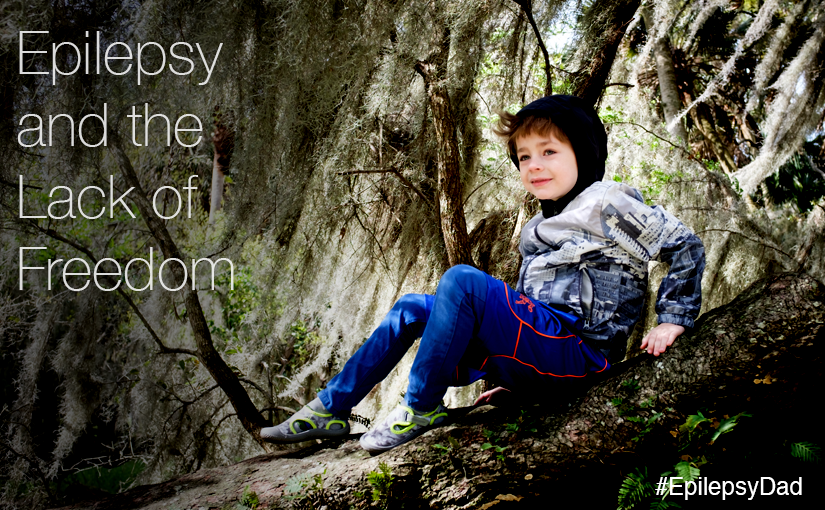
    When we got to the park, he stayed by my wife and I initially, but he introduced himself to the other children. Eventually, one of them led him over to a tree that they were climbing, and my son eagerly joined in. He would climb the tree, maneuver to a branch, and drop down, Ninja Warrior-style.

    IMG_5001

    On one of his climbs, he had a seizure. I saw his body stiffen and heard the tell-tale sound that accompanies his seizures, so I grabbed him and gently lowered him to the ground.

    Once the seizure stopped, my mind started to race. Did the other kids see? Would they cast him aside? He wet his pants during the seizure. Did the other kids see that? Would they make fun of him? I questioned whether we should have brought him to the park at all and why I convinced him to put himself out in front of these new people when I knew he was already having a bad seizure week.

    As he started to regain his composure, I asked my son if he was alright, and if he wanted to go home. “No,” he said. “I want to stay.” After a few more minutes, he stood back up. We dusted him off and did an inspection. His pants weren’t that wet and, aside from being a little hazy, we couldn’t see anything wrong. I asked what he wanted to do, thinking that running away and going home was the best option. “Climb the tree,” he said, as he walked back over to the tree. He grabbed a think branch with both hands, put his foot on the trunk, and pulled himself up.

    I was never very brave, and I struggle to not project my fear on my son. I want so desperately to not poison his bravery with my overbearing desire to protect him from the world.  I was different as a kid. I was awkward, and uncomfortable, and afraid. I know what it is like to be picked on for being different. The world can be a cruel place when you are different.

    My son has epilepsy. He has seizures. That makes him different, too. There will be times where those differences are on full display, in front of his friends and his peers. I don’t want him to feel shame for who he is or because he has epilepsy, so my natural tendency is to hide. But he is teaching me that the right answer isn’t for me to encourage him to run away when he has a seizure or when he falls down. It’s my job as his dad to encourage him to put himself out there, even on those days when it’s hard. It’s my job to encourage him to get back in to that tree and climb.


  • The First Day Of Kindergarten

    The First Day Of Kindergarten

    Last week, we had another happy milestone: the first day of kindergarten.

    epilepsy seizure first day of kindergarten

    The week before, my wife, son, and I went in to meet his teacher for the first time. I left work and met my wife and son at the school…a big, square, old building with dark bricks and small windows. We walked through the tired playground, past the worn jungle gym, and up to the entrance in the back. I pulled the heavy door open, a door that showed much more wear up close, and we entered the lobby. The door landed heavy against the frame as it closed behind us, echoing against the painted cinder block walls of the empty school. We entered the front office to sign in. The dim fluorescent lights that hung overhead did little to brighten the dark brown walls and dark wooden furniture.

    In Colorado, our son was in a new charter school, where everything was freshly painted, where the walls and the books and the toys were new and clean. When we came out to Philadelphia, he started in a bilingual French school that was small and tucked away on the first level of an office building, but that school was also relatively new. Those schools were everything that this school, an inner city public school, was not. But this school had one important thing going for it. It had the services that our son needed.

    Our teacher came in to greet us in the office and brought us to her classroom. The special education teacher, who my wife had also spoken to on the phone, came to join us, as well. After a few minutes, the conversation went from pleasantries to epilepsy and our son’s history, and we could see his teacher start to tense up. She obviously didn’t get the message that my wife had sent giving her a heads-up, and she was slowly being squeezed by the overwhelming pressure that one of her twenty-eight students had such significant issues. Twenty eight kids with only one aide is daunting enough.

    I took our son to the shelves of heavily used books and read while my wife filled in more of the story for the teachers.  We’re sensitive to have too many of those conversations while our son is listening. He could probably recite his history by himself, but there have been too many days when his epilepsy history is the only conversation people have about him, and it’s usually about him but not with him.

    After a length discussion, his teacher looked less like she was ready to run away, and that was our cue to return. With the one-on-one assistance request, the shortened school day, and the other medical accommodations explained, and I led my son back to her desk. He reintroduced himself to his teacher, and she spent the next few minutes testing him on his kindergarten readiness…numbers, shapes, and letters. The overachiever, he read more letters and counted higher than she had asked him, although in all honesty, it was most likely because he has a hard time following directions, not because he was showing off. But she smiled and said that he was more than ready to start kindergarten.

    When she said those words, it was hard to not be emotional. Since we moved to Philadelphia and since his seizures started, my son had probably only gone to school for a few months, scattered out around the times when he wasn’t seizing, or too sick, or in the hospital. He hadn’t gone long enough to develop many bonds, or to just be around other kids, or people who weren’t his parents or a doctor or nurse. In that moment, when his teacher said those words, there was hope…something that was so hard to hold on to in the last year. But here it was, back again, filling the room and my heart with possibility.

    The night before his first day, my son was as excited as I had seen him in a while. We packed his clothes, supplies, and a keto lunch. Rightfully so, it took him longer to fall asleep, but he finally did and we weren’t far behind.

    When he got up the next day, I was still at home so we made a big fuss, and a sign, and took some pictures. He was still tired…I’m not sure how much he actually slept the night before.

    epilepsy seizure kindergarten

    Probably because he was so tired, he had a seizure shortly after breakfast, something that would have rocked us only a few months ago, but he quickly recovered and went right back to getting ready. I had to head in for an early meeting, but I constantly checked my phone as my wife texted me the details of the drop-off and his excitement. He didn’t have any more seizures that morning, and he had lunch and recess with his classmates.

    After recess, I was there to pick him up and take him home for his nap. As we started to leave the classroom, his teacher told the class that Junior was going home, and they all said goodbye to him as he left the classroom. “Bye,” he said. “See you tomorrow.” We headed out the door, down the dark, cinder block hallway, past the dim office, back through the heavy, brown doors and through the tired, aged playground. And the day could not have been any brighter.

    epilepsy seizure first day of kindergarten

  • Balancing Seizures And Side Effects

    Balancing Seizures And Side Effects

    Shortly after my son wakes up each morning, I walk with him in to the kitchen. I open up the basket that sits on the counter and grab his weekly pill organizer, popping open the compartment for the day.  I use my finger to push around the pills and find the morning dose of anti-epileptic medication, pulling out six pills and placing them on the counter. My son, still groggy, rubs his eyes as I fill up a cup with water from the fridge and hand it to him. His little fingers struggle to pick each pill up from the counter, but he gets them all, puts them in his mouth and swallows them with the water. “Good job, buddy,” I say, as I rub his head and walk with him in to the living room.

    This is how we start every day. Some days, it’s my wife that goes through the routine, some days it is me. But every day, it’s my son that wakes up and starts each morning with a cocktail of medication, and ends each day the same way.

    epilepsy seizures side effects

    Borrowing a term from my corporate life, getting onboarded in to the epilepsy lifestyle, one learns that 60-70% of people are seizure-free with the first anti-epileptic drug (AED). If the first medicine doesn’t do the job, there is a less than 10% chance of becoming seizure-free with another AED. After 3 failed AEDs, there is less than a 5% chance of becoming seizure-free with another AED. We’ve tried at least 7 medications, not including the short-term ones that were used in the hospital when my son went in to status or the behavior and sedative medications. With each medicine came a dwindling amount of hope but a compounding list of side effects.

    Medication Side Effect
    Kepra “Kepra Rage”; behavior
    Trileptal Exacerbated myoclonic seizures.
    Depakote Stopped along with dilantin because of toxicity.
    Dilantin Toxic, sever ataxia, other bad stuff.
    Zonegran Behavior, ataxia
    Onfi Suspect behavior, attention, balance
    Depakote (Again) Toxic (again)
    Lamictal TBD

    The behavioral side effects are the hardest to endure…watching the chemicals that keep my sweet, funny son’s brain from seizing turn him in to something else. We fed him medication that caused hours of having to hold him down and avoid the spitting and punches and hurtful, angry words in order to reduce the number of seizures he was having.  After two, three, or four hours, he might come back to us and we would watch him cry because he truly couldn’t control what his body and his brain were doing. It’s impossible to explain to a five year old what just happened, so we would hold him, and comfort him, and wait for the next barrage.

    In the last few months, partly because we started the ketogenic diet, we have removed a number of medicine from his cocktail, and his behavior has greatly improved. But his neurologist added Lamictal last month to help with an increase in nocturnal seizures and to hopefully wean him off Onfi, which might still be causing some behavioral and attention-related side effects. There should be fewer behavior-related side effects with Lamictal, but getting the medication up to an effective dose takes time…what Lamictal lacks in terms of behavioral side effects, it more than makes up for with physical side effects of introducing it too quickly. Fortunately (knocking on wood), we have yet to see any signs of a reaction, so we will stay the course and hope for the best.

  • Celebrate Things Big And Small

    Celebrate Things Big And Small

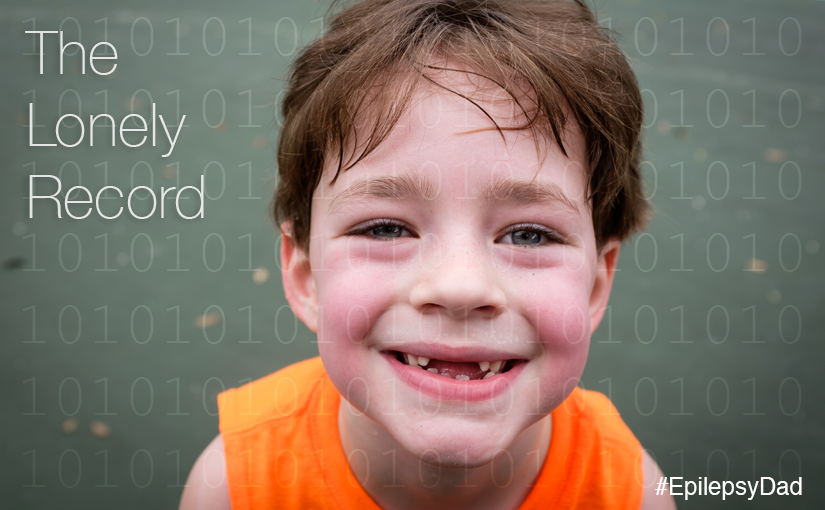
    Last week, we were visiting my parents in Florida. My wife and son were in the bathroom getting ready for bed when I heard my wife’s voice start to go up in a combination of nervousness and excitement before she let out a huge cheer. My son came running from the bathroom, mouth dripping with blood exclaiming “I lost my first tooth!” My wife followed, beaming, with the tooth wrapped up in tissue paper.

    I stood up and gave him a big hug. Grandma and Grandpa came in to the room and congratulated him, and we all set about making the necessary preparations for the long anticipated tradition. Grandma brought in an envelope, which my son addressed to the Tooth Fairy (with love) and slid his tiny tooth inside. He finished getting cleaned up and rushed in to bed, eager to fall asleep so that he could wake up to see the bounty that the Tooth Fairy had traded for his precious pearly white.

    epilepsy normal life seizures

    During the last year, my son has dealt with so many obstacles that most kids will never deal with, but that night he experienced something that most kids get to experience. There was no cloud of epilepsy hovering over the event, no addition of the disclaiming phrase “because he has epilepsy” that sometimes accompanies other milestones. There was just a kid, my son, mouth bloodied with his tooth in an envelope, excited about the Tooth Fairy.

    A few weeks before our trip, there was another rite of passage when my son rode his bike for the first time without training wheels. A great achievement, for sure, but amplified by the knowledge that there was a period in February when he couldn’t walk or talk, followed by months of severe ataxia where he would shake and wobble and fall. Those first ten feet of training wheel-less peddling reminded me of my agile two-year old boy zipping around our neighborhood on his balance bike, long before we had any knowledge of seizures and epilepsy and ataxia. My wife and I cheered for him as he traversed the park, found his balance, learned how to stop, and looped around trees. A couple near us that was watching him commented at how amazed they were that it was his first time. To them, he was just a normal boy out doing normal boy things. If they only knew. But for a few moments, we felt exactly the same way.

    epilepsy riding bike seizures ataxia

    There will be many challenges in my son’s life, some because of his epilepsy, some not. There will be times when even good moments will have attached to them a caveat about his condition. It’s hard, very hard, to be present in those moments and not think about the past before any of this happened, or the future and its possible limitations. But it is my responsibility and my privilege to be present, to let my son know that I am there for and with him, and to celebrate all things, big and small.