Tag: epilepsy

  • Back On The Field

    Back On The Field

    I thought we were going to be a hockey family. I grew up watching the Hartford Whalers and would pretend to play hockey on the frozen ponds when I was a child. When I moved back to Florida after my military service, the Whalers were no more, so I latched on to the Tampa Bay Lightning and started taking hockey classes at a nearby rink. When I moved to Colorado, I joined a recreational team and played for years until the late nights became too much, and I settled for playing the occasional drop-in game.

    My son and I started playing floor hockey as soon as he could walk. He was on the ice taking skating lessons when he was two, and by the time he was four, he started hockey clinics. When we would go to a hockey game, my son would make me keep my phone handy in case the Colorado Avalanche needed him. It was awesome.

    Around that time, we moved to Philadelphia. By then, my son had had his first seizure, but it was only one, so we still looked for ice rinks in the area for him to continue skating. But, by that winter, things had taken a turn for the worse, and he would wind up being in and out of the hospital for the next few months.

    By the spring, we were out of the hospital, but his seizures were still not under control. We were in a new city with no friends, no family, and the only support we had was at the hospital. We had just spent months isolated in the hospital and wanted to give him something to do. Skating wasn’t an option, at least until he became more stable, but we found a tee-ball league nearby and signed him up.

    That first season was rough. There were wonderful moments watching him play with the other kids as he learned to hit and throw and play the game. But there were constant reminders that we hadn’t yet figured out what was wrong. We would watch as my son stood on third base and slumped over because of a seizure, only to pop back up and try to get back into the game. Sometimes he could; other times, we’d rest and hold him on the sideline as his tiny body recovered, watching the other kids continue to play. It was heartbreaking. But he loved being on the field, so we made it work.

    Eventually, and after he stabilized a bit more, we signed him up for some skating lessons and a hockey clinic. They taxed his body and brain, and we had at least one seizure on the ice, but he was happy. Again, though, his seizures and the side effects of his medication took over, and skating was too much for him. For a while, we tried working on hockey skills on a concrete rink, but even that was too much. We still loved going to games and playing on the tennis courts in the park. My son still dreamed of a career in the NHL, but skating and being on the ice took too much out of him to be able to do it consistently.

    Baseball, though, was different. Each spring, we would sign up, even though we didn’t know how much our son would be able to handle. Each spring, I would fill out the signup forms and list his condition and make notes to warn his coaches about his issues with stamina and attention. Each season, my son would show up on the field and work hard to be a part of the team.

    Through the years, we were lucky with the teams he was on and especially the coaches. The experience the coaches created for him was exactly what he needed, and it gave him a bit of normalcy during a very unstable time. And the coaches were good people, too. One year, his coaches attended our local Epilepsy Foundation gala, donating their time and money to a cause so important to our son and family.

    When the pandemic hit, we missed those moments. When the weather permitted, we would go to a field as a family and play. As fun as that was, it wasn’t the same. Just as the world was beginning to open up and we were going to register for the upcoming season, we uprooted and moved out of the city and missed the registration for our new community, and missed out on another season.

    This spring, though, we signed him up as soon as registration opened. Again, I filled out the forms and felt nervous filling out the “Medical Conditions” section. I was worried that we had found a bubble of support in our previous league where the coaches knew my son and that this new league wouldn’t be as positive. He’d be surrounded by entitled suburban kids and parents who have known each other for years. I was worried he wouldn’t fit it because it’s easier to do when everyone is new, but here he would be the only new kid coming in, and it had been years since the last time he played. I was worried that this experience would take away something that he loved to do.

    I suppose it could have gone that way. But shortly before the season started, I receive this message from his coach:

    Immediately, I felt better. That simple gesture lifted the worry and fear I had been carrying from the time I signed him up. The conversation that followed was sincere and kind and set my son up to have a positive experience on the team. We continued to communicate as we figured out where my son was physically and what he was capable of (which turned out, as always, to be much more than I assume he is).

    Even though many of the other kids had been playing together for years, my son felt like a part of the team. The players celebrated hits, and solid fielding plays. They cheered for each other and got to know each other…Fortnite was a popular topic and something that my son had in common. A few kids from our neighborhood were on different teams, so my son also developed connections across the league. I couldn’t help but smile as I saw the kids chat and mingle during batting practice before a game, like professional baseball players getting ready to hit the field.

    A highlight for me was during a day of celebration that the league puts together for the kids that raises money to support the organization. One of the events was a Home Run Derby for the 12-year-olds who would be “graduating” from their division. Only a few kids could hit the ball over the fence, but there was a point system for hitting deep balls that allowed everyone to participate.

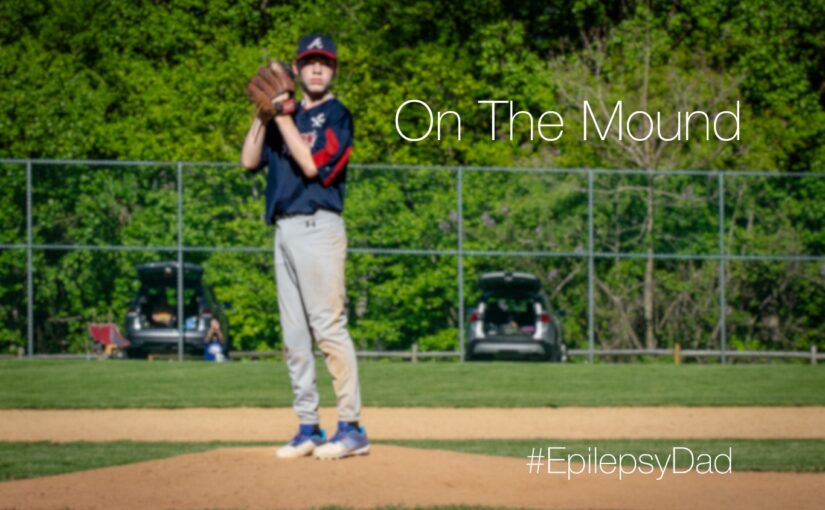
    My son was excited to participate, always believing he could hit a “dinger.” Nervously, I signed up to pitch to him during the event. Selfishly, I thought it would be a good father/son moment. But, even though I’ve been pitching to him since he first picked up a bat, I wanted to ensure that he was set up for success. When I asked him what he preferred, he said that he wanted me to pitch, so I practiced for days ahead of the event.

    When I was out there on the mound, it wasn’t about whether or not my son hit any home runs (he didn’t) or how far he hit the ball (very, very far). It was watching him step up to the plate and do something brave. It was watching him take that deep breath, set himself up, and swing the bat. It was watching the smile on his face or the way he holds the pose at the end of his swing when he makes solid contact. It was hearing the other players in the dugout cheering for him when he sent a ball to the outfield or to try to reassure him when he had a string of infield hits. It was, after his time ended, walking up to him and telling him how proud of him I was and seeing how proud of himself he was.

    The season’s final game was a “Graduation Game,” where they put all the 12-year-olds on teams one last time. It felt like an All Star Game where all the kids who had gotten to know each other over the season could go out and play one last time. After the game, each player received a plaque commemorating the season. They called up each player one by one while the others cheered. My heart swelled when it was my son’s turn, and I hid behind my phone to not embarrass him with my huge smile and watering eyes.

    I am so grateful that my son has found something that brings him joy. There were times when I only focused on the loss of hockey…the idea that something he loved was taken away from him by his condition. There were times watching him have seizures on the field or struggle with his stamina and attention that I worried that he wouldn’t be able to find anything else. There were times when my overprotective, helicopter-parent nature and the terrifying experiences we’ve had with epilepsy have caused me to focus on the things he shouldn’t or can’t do.

    But going through these experiences and watching my son continue to surprise me with what he can do…it’s humbling and wonderful and inspiring. It has caused me to move from a place of fear to a place of hope and gratitude. It has caused me to stop worrying as much about creating a perfect experience and to appreciate and enjoy the experiences as they come more fully. Every day my son teaches me something just by being himself. Every day, I feel like the luckiest dad in the universe.

  • It’s Time To Stand Up

    It’s Time To Stand Up

    It’s been a while since I’ve sat in front of the computer to write. It’s also been a while since I’ve felt the need to engage with the outside world. But, to be honest, who would want to engage with the world in the state that it is in?

    A powerful country invaded another in an ongoing war. There’s been a string of mass shootings, including another at an elementary school. The highest court in our country is slowly stripping away the rights of its people while, at the same time, making it easier to carry weapons of war capable of tearing through the children in that elementary school…children the same age as my son.

    The outside world is a shit show.

    It’s only going to get worse. Our country is reverting to a time when women and people of color didn’t have rights. Every group that clawed and scraped to get recognized and to finally see some protection or equality or benefit is going to have it taken away from them.

    Our job as parents is to love our children, protect them, and prepare them to go out into the world. We try to help them understand what is happening and make sense of it. But that is hard to do when we don’t understand it ourselves.

    That’s not entirely true. I understand it. There are people with money and power who are trying to transform the world in a way that gives them more money and more power. They’re dehumanizing the “other” so they can take away their identities and their ability to prevent what is happening, making it harder for them to vote. They’re rigging the game to create a world full of people who look just like them.

    My son doesn’t quite look like them, and the thought that keeps going through my head is, “how long before they take away his rights?” Even in the gun debate, the side that wants to arm every person with an assault weapon says that the problem isn’t guns, the problem is mental health. They’re hand waving to distract us away from the carnage that these weapons do by pointing to a different villain and pretending that if we can defeat it that we won’t need to do anything about guns. The reality is that we do have a mental health crisis stemming from the way we talk about mental health, the stigma associated with it, and the lack of affordable, quality resources that we offer. And we have a gun problem. But the overlap between them is so small that solving only one of them won’t have a meaningful impact on the other. We need to address both.

    My fear with the holding up mental health as the scapegoat is that, rather than investing in better health care and addressing the problem, we’re going to start taking away the rights of people with mental health issues. Taking something away is cheaper and easier than committing resources to address the problem. They’ll start with something easy like taking away guns from those with a diagnosed mental health issue, but its a slippery slope to taking away other rights, too, that eventually will include the right to vote. And it will be the people in charge who decide where that line is between “normal” and what constitutes a mental health issue that poses a threat. (Spoiler: we all have mental health issues to some degree…that is being human and IS “normal”).

    I am not one who normally shares his opinion on these matters. My nature is to avoid conflict and to stay invisible stemming from trauma in my past. These issues are upsetting and, while I have an opinion about them, the impact of the issues is not immediately relevant to me. No one in my circle needs an abortion. No one in my circle was a victim of gun violence. At least, that’s the story that I tell myself so that I feel justified in staying silent. I layer on all the possible consequences of sharing an opinion…conflict, losing relationships, all the way to physical harm to me or my family. Those fears have kept me safe. But they’ve also kept me from being seen.

    There is another problem with staying silent.

    This is a poem with a complicated history by Martin Niemöller called First They Came written after World War II:

    First they came for the Communists
    And I did not speak out
    Because I was not a Communist
    Then they came for the Socialists
    And I did not speak out
    Because I was not a Socialist
    Then they came for the trade unionists
    And I did not speak out
    Because I was not a trade unionist
    Then they came for the Jews
    And I did not speak out
    Because I was not a Jew
    Then they came for me
    And there was no one left
    To speak out for me

    First They Came by Martin Niemöller, 1946

    I’ve been thinking about that poem a lot lately. Different groups (for now) are being targeted, but history is repeating itself. The people in charge are systematically targeting the “other” under the guise of nationalism, convincing segments of the population that the “other” is evil and attacking “true” Americans. They spew lies about scarcity and how the “other” is stealing from them and pretend the current landscape gives every group a fair shot at opportunities. They believe themselves to be the victims, ignoring the hundreds of years of oppression and persecution, and so much so that they don’t want “that” history taught in schools.

    Those in charge have also convinced broad segments of the population that they are victims, too. They’ve activated these groups to fight for their cause by making them believe that they are on the same side as the leaders of the movement. The irony is that these groups don’t realize that, while they might look like the ruling class, they’re an “other,” too. But our lack of critical thinking skills, our willingness to be a victim and to need someone to blame, and our lack of empathy blind us to this manipulation and cause us to focus only on our differences and need to “win” by making the “other” lose.

    These groups mobilize and attack the source of their perceived struggles; usually the same people the ruling class has oppressed for generations. They continue the oppression because, somehow, giving rights and protections and recognition to the “other” takes away from the rights of the majority. Because, for some reason, it’s impossible to be equal. Rather than lifting the “other” to be on the same level, they believe that raising the “other” lowers the status and privilege that the majority has enjoyed throughout history.

    The people that are being attacked may try to speak up, to organize and rally and raise awareness of what is happening. Some just take it because that’s how it has been for them all along, anyway.

    Then, there are the rest of us, not directly affected so we stay small and silent and hope that they don’t eventually come for us or someone we love. (Spoiler: it’s only a matter of time.)

    The frustrating thing is that if you watch the news, you’re led to believe that these opinions come from the majority. They don’t. If you asked every person whether they think it’s a good idea to continue to allow assault weapons with extended clips to be handed to civilians, I’d bet the answer would be “of course not.” If you asked every person whether the woman should have the right to decide for herself what to do with her body, the majority would say “yes.” But we don’t ask everyone, and the majority don’t offer their opinion or don’t think it matters. Hence, the people with the money and the power manipulate the system to force their view on the rest of us until it becomes our reality. But, again, it doesn’t affect us, so we stay silent.

    Staying silent is a choice, and I think about how my choice to stay silent affects my son. Not just for the inevitability that he will be impacted by these changes, but also the example that I am setting for him. I worry about him a lot. I worry about him fitting in. I worry about him being hurt because of his differences. For me, the solution when I was young was to be invisible, but I want so much more for him. I want him to love himself, to be proud of who he is, and to surround himself with people who feel the same. I want him to feel confident and brave enough to show his full self, to believe in things, and to be willing to stand up for those beliefs.

    But if I want him to do those things, I need to do them myself. Not just to model the behavior for him, but also to be seen myself. I don’t want to look back on my life and simply have survived it, I want it to have meant something. That’s not to say that I have to have an opinion about everything or always be standing up for something. But if I stay silent and stand for nothing other than myself, then I will have been part of the problem, and my son will likely repeat the pattern.

    If you’re reading this blog, you probably have someone in your life who is considered an “other.” You might be benefiting from assistance to give that person a better quality of life or an opportunity to thrive in this world in spite of having a disadvantage. You are probably also empathetic because you’ve seen how hard life can be and the struggle that comes from being different. I know it feels safer to stay safe, to stay invisible, and to not speak up. But we’re all going to have to speak up, either because we find the courage to stand up now when so many are under attack, or because eventually we’ll need to because they finally came for us.

    This post is my choice to stand up now.


  • Out of Balance

    Out of Balance

    One night before bed, my wife came and sat next to me.

    “I know you’re tired,” she said. “But when you get that tired, the way you check out is to be really short with us, and like we are bothering you. We haven’t been spending a lot of time with our son, and that’s how he sees you at night.”

    Of course, she was right. Looking back, I can see how I responded with one-word answers or a tone of disinterest. Our nights became about checking out by sitting on the couch watching TV while our son played video games online with his friends in the basement. Dinner time was mostly apart, as well, us watching TV while he ate and watched his iPad.

    It was too easy to fall into this routine. The long winter nights, the lingering pandemic, the burnout from keeping everything together leeched our energy and motivation. We checked out long before it was time to check out, and anything that required exerting effort or interest was met with resentment and disdain.

    After my wife called me out, I felt ashamed and guilty. I used the excuse of letting him play with his friends to justify my behavior. “He’s doing what he wants to be doing, so it’s ok to check out.” But it was just that…an excuse.

    I’m glad that he has friends now from school and has more independence to hang out with them virtually. It’s what he wants to do and what he should be doing, especially after many years of isolation.

    It also comes after so many years where we were always “on,” too. We were the caregivers of a child with epilepsy, with all the care and worry that required. We were his emotional regulators when he couldn’t do it himself. We were his teachers and his entertainment when he was too sick to attend school. That was in addition to trying to manage our own lives, jobs, and relationships.

    But moving from one extreme to another threw everything out of balance. That’s not to say that the amount of time needs to be equally portioned. My son is getting older, and we’re not his only source of entertainment or care anymore. He should be spending more time with friends and more time with himself. But that doesn’t mean those two things should be the only things in his life or that they are excuses not to be a parent.

    Or a husband. Sitting on the couch next to my wife isn’t spending time together. We’re relaxing but not interacting. We just happen to be occupying the same space and doing the same thing.

    As in most situations, awareness is the first step to change. I’m grateful to my wife for pointing out where I was and how I was responding to our son. Since then, I’ve been more aware of my tone, and we’ve also started having more family dinners, more walks in the neighborhood, and more ping pong tournaments in the basement. My son still plays with his friends, and my wife and I still veg out on the couch watching television. But, now, those aren’t the only things we do.

  • Checkpoint

    Checkpoint

    It’s a new year.

    In video games, after you make progress or achieve an accomplishment, you save your game and create a checkpoint. It’s a snapshot of the way things are at that moment. That way, if anything happens after that point, you can always revert to the checkpoint. Everything before the checkpoint already happened and can’t be undone, but anything that happens after the checkpoint becomes volatile until the next checkpoint is created.

    There were so many changes and developments for our family last year. We started last year by adding my son’s service dog to our family. After almost 20 years with the same company, I decided to leave and take a different job at a new company. After 7 years of struggling with the school system, we found a school that is a better fit for my son. Because of that, after 7 years of living in the city of Philadelphia, we also moved to the suburbs.

    Most of last year was about those changes, and for most of the year, they felt like changes in transition rather than an end state. As we came upon the new year, I wanted to shift that mindset from “in transition” to “this is the way things are.” I wanted to create a checkpoint that solidified those changes in a way that allowed us to look forward and build new things on top of the old and create new experiences from that point in time.

    Of course, the checkpoint includes the both the good and the bad, and last year wasn’t all good. It never is. My son still has epilepsy. We are still very much in the middle of a pandemic. The planet and its people are continuing to degrade. We continue to make choices that hurt each other because we’re too selfish or ignorant or malicious. We still need to be right. We still need to be justified. We still need to win. Or maybe we’re just too hurt ourselves. People are messy.

    That pain is part of this checkpoint, too. Some of it is harder to leave behind and accept as “facts from the past” because it seems determined to infect this year, too, and influence the volatile nature of the present and future. As much as the hope is to leave the hurt and the actions and the trauma in the past, it’s hard to ignore their echoes that exist in the present.

    A checkpoint also means you can’t go back. You move forward. You can do things differently from that point on, but you can’t go back and undo what has already been done. That’s the risk of creating one. But in life, we can’t go back. Wishing we could go back and do it differently or make different choices is focusing in the wrong direction and prevents us from accepting what is and focusing our attention on the only direction we can actually influence.

    Forward is where we have choice. Forward is where there is possibility. Forward is where there is a chance to heal. Forward is where there is intention. Forward is where there is hope.

    It’s not a matter of letting go – you would if you could. Instead of “Let it go,” we should probably say “Let it be”.

    John Kabat-Zinn
  • Trying Something New

    Trying Something New

    Shortly before the year started at my son’s new school, we received an e-mail announcing that they were recruiting for their soccer team. When we mentioned it to our son, he was excited, so we signed him up.

    On the first day of practice, I took my last meetings from the bleachers to check in on my son. Soccer practice was after a full day of school, which was also something new for him, so I wanted to make sure that he wouldn’t push himself past the point of exhaustion.

    The team was a mix of kids who had never played soccer before alongside seasoned veterans who ran circles around the other kids. My son was in the former category. I could tell there was a lot of new information being thrown at him, but he hung in there. When practice was over, I gave him a high five, and we headed home.

    That night, as I was putting my son to bed, we talked more about his day. When the topic of soccer came up, he said he was excited but also very tired, adding, “maybe I’ll skip soccer tomorrow.”

    As we talked more, it was obvious that the full day of school and soccer practice was physical and mentally draining, but there was more to it. Soccer was something new, too, and he wasn’t good at it yet. He was feeling nervous and insecure, especially since one of his friends on the team was much better than my son.

    It’s easy to get excited about something new. Still, sometimes that excitement only carries you up to the point where you have to do the new thing: signing up for a new activity like soccer, moving to a new location, or changing jobs. But when you are standing on the side of the field, about to put in an offer on a new home, or reading a job offer, that’s when the fear and uncertainty creep in.

    What if I’m not good at it? What if someone else is better? What if I get rejected? What if I make the wrong choice? What if the new thing is worse? What if I miss out on something better? What if I don’t deserve this?

    Those voices in our heads that question our choices and our worthiness get louder as we get closer to acting on that excitement. They thrive in uncertainty and fill in the gaps between what we know and what we don’t know yet with stories of fear and doubt. They don’t want us to put ourselves out there. They don’t want us to fail. They want to keep us safe. But they can also keep us from something better.

    I look at my own life and how many times I was afraid to start something new. I think about the experiences I would have missed out on had I not taken the next step.

    I shared with my son stories of when I was afraid or uncertain. I told him how I was nervous when I joined the Army, and the first time I played drop-in hockey in the city, even though I didn’t know anyone. I told him about getting on stage to give a presentation, and how I still get nervous when writing a post for this blog. I told him how I wasn’t sure that I could do any of those things, just like he wasn’t sure about soccer. But, especially when it is something that you want to do, sometimes the hardest thing is taking that next step.

    Not everything went the way I thought it would or wanted it to, but I can look back and be proud that I took that next step. I can be grateful for the experiences that I’ve had. And I can use those experiences as a catalyst the next time I face uncertainty, insecurity, and doubt.

    “Let’s see how you feel in the morning,” I said. “We shouldn’t make any decisions when we’re this tired.”

    “OK, daddy,” he replied and turned to the side and closed his eyes.

    The following day, he came down for breakfast, already dressed and ready for school.

    “Good morning, daddy,” he said, pointing at his socks. “These are soccer socks because they are long like soccer players wear.”

    “I see that,” I said. “How are you feeling about playing today?”

    “I’m excited,” he replied. “I think I was just tired last night and a little nervous, but I’m ready to get on the field!”

    He sailed through the next few practices and now spends time between practice kicking the ball in the yard. He also learned that one of his friends in the neighborhood was on a soccer team and picked up a few tips from him.

    He got through that initial fear and found a new activity that he enjoys doing. Not every story will have such a happy ending, but he would never have known unless he took that next step.

    I am so proud of my boy.