Tag: charity

  • National Walk For Epilepsy 2018

    National Walk For Epilepsy 2018

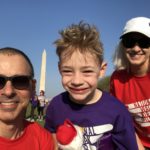
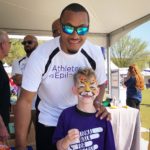
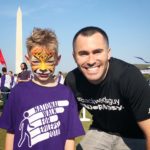
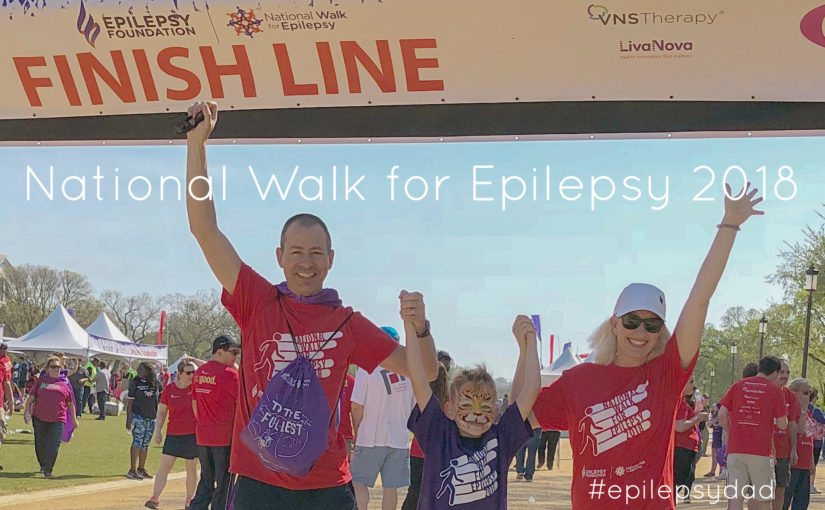
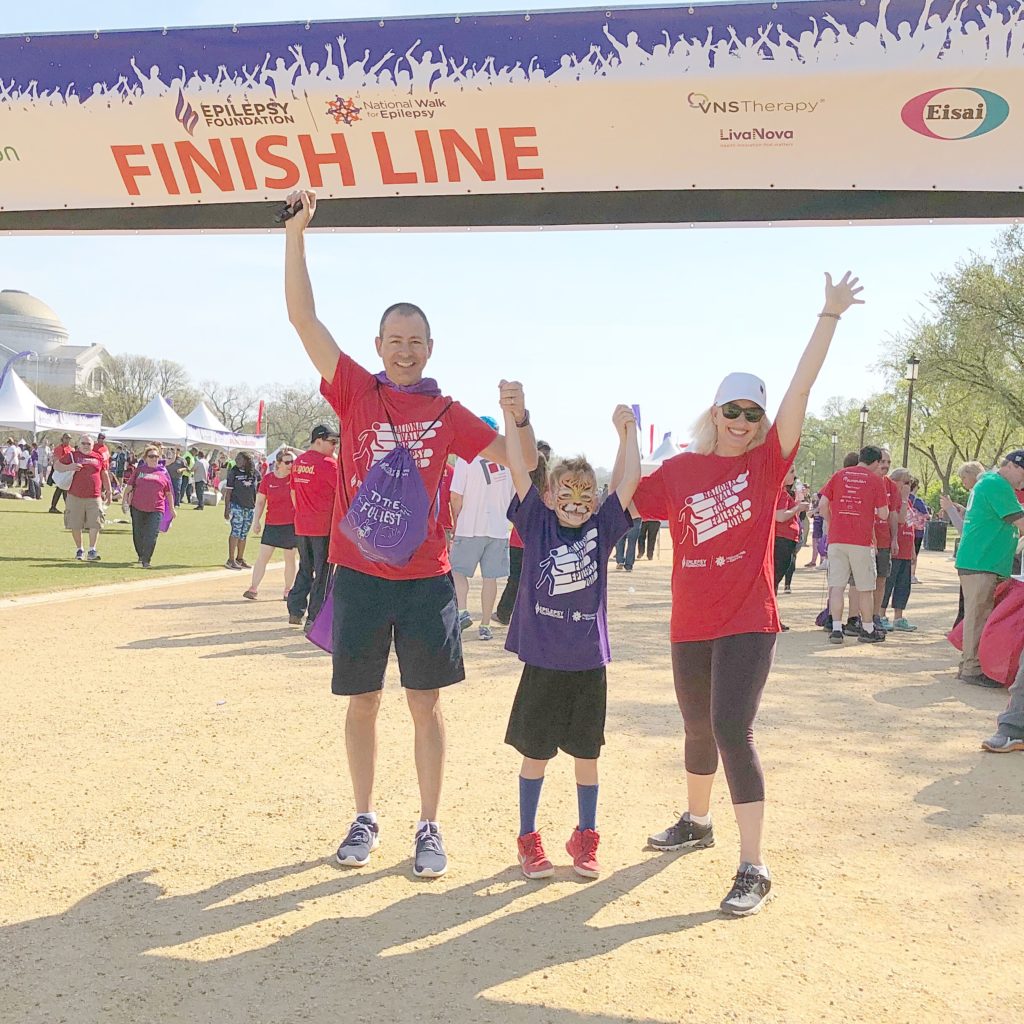
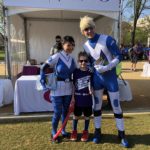
    Last weekend, we participated in the Epilepsy Foundation National Walk for Epilepsy in Washington, D.C. It was so different from the first time we attended two years ago. That year, we were only a few months in to our diagnosis and had only recently gotten out of the hospital. We were physically and emotionally drained and couldn’t even complete the shorter “fun course”. While it should have been comforting, I felt overwhelmed to being surrounded by so many people supporting a cause that we knew little about and were thrust in to.

    This year was a completely different experience. We knew other people at the walk. We met some online friends in person for the first time. We saw people from our local Epilepsy Foundation affiliate. And there was a sense that this really was our community of people trying to make life better for my son and other’s like him.

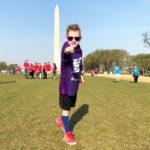
    It was a lot for my son to take in, too. He was excited when we got there, but the more people we talked to and the more he was exposed to the energy around him, we could see him start to shut down. Right before we started the walk, he slipped in to his “wonky place.” His eyes glazed over and he tried to run away, but I help him and sat with him long enough for him to calm down. He reluctantly started the walk, and I could feel that we were teetering on the edge of a full meltdown. But a quarter of the way in, we passed the Washington Monument that he recognized from the Spider-Man: Homecoming movie. I started talking about the movie and, a few minutes later, he started engaging in the conversation and I could see the tension leave his body. By the end of the walk, he was sprinting across the finish line to officially complete our first National Walk.
     

    National Walk For Epilepsy 2018

    If you haven’t done either the National Walk or an event from your local Epilepsy  Foundation affiliate, I encourage you to try it. The first one might be overwhelming, but it’s important to know that there are others like you out there, and that there are people and companies that are working hard to improve the quality of life for people living with epilepsy. We are involved with the Epilepsy Foundation of Eastern Pennsylvania, so if you live in that area, you’ll know at least one family at the event, which can make it easier. But if you don’t, go to at least one event and you’ll start building those connections to other families and it can turn a sometimes isolating condition in to one of community. You are not alone.
  • Our Community

    Our Community

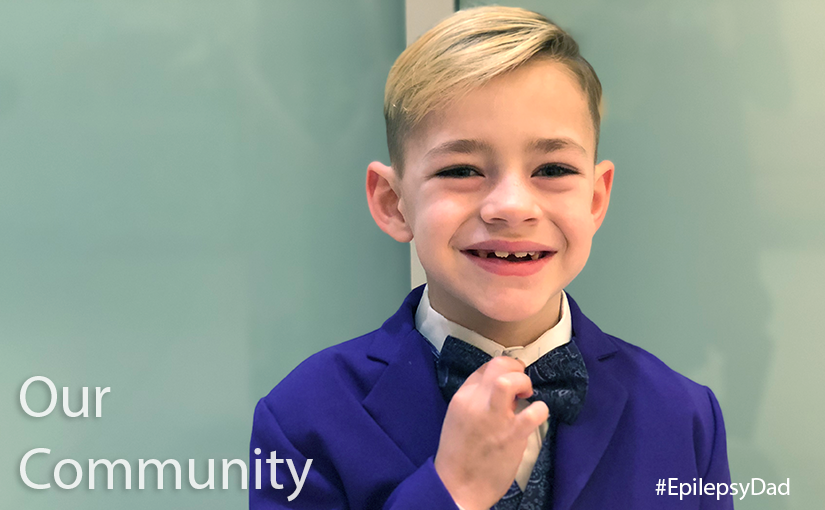
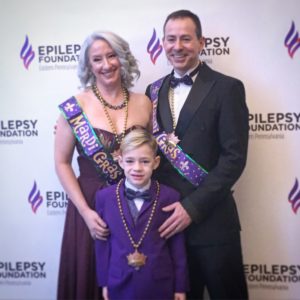
    My wife and I were honored as the King and Queen of the Epilepsy Foundation of Eastern Pennsylvania’s Mardi Gras Galas. The Gala is the signature fundraising event of the foundation and brings together Philadelphia’s top neurologists, hospitals, pharmaceutical companies, and members from its business and legal communities to celebrate the Foundation and its accomplishments to improve the quality of life of individuals living with epilepsy and their caregivers.

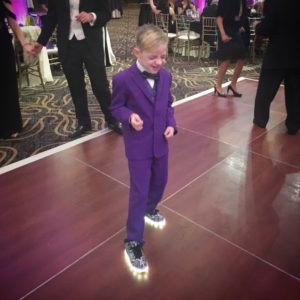
    We were joined at the Gala by an extended table full of our family and friends. There were people at our table that made my son better and that made our lives better. There were people at our table that gave us hope and made us feel like we were not alone. There were people at our table that gave my son a chance made him feel special and normal at the same time. Instead of seeing a sick kid, they saw a baseball player, a jokester, and a dancer. But mostly, they saw a child. And they let him be himself and accepted him for who he was. That is a gift that I can never repay, and having our table full of those people…our people…made that night even more special.

    Good evening. We are honored to be here with you all tonight. My name is David Monnerat. This is my wife Kerri, and this is our son.

    [Our son: Hi, Is everybody having a great time??]

    Our journey with epilepsy started 3 years ago when we moved from Colorado to Philadelphia. Two miles away from where we are tonight, Mitchell had his first seizure. For many of you in this room, you know how scary that can be. We were alone in a new city with no support and found ourselves locked in the hospital watching our son slip away, fighting a battle against an enemy that seemed determined to take him from us.

    We have never been so scared, we have never felt so alone. But little did we know, our journey couldn’t have started in a better place. I always say, “We don’t believe there is a malevolent force working against us, a trick of fate where we drew the short straw and our son got sick! We believe this is our path and everyone has “something”. That being said, I am more certain now than ever that there is a force, an energy, a God that ensured we were given every possible gift to help keep us going through this journey. We were given this wonderful city, Children’s Hospital of Philadelphia, the Epilepsy Foundation of Eastern Pennsylvania, and the system of support that has come to form our village who are sturdy and enduring, loving and true.

    There are people in this room that saved our son’s life.
    There are people in this room that put our son back together.
    There are people in this room that made him a part of a team.
    There are people in this room that have become family.

    If you ever wonder if these things you do ever make a difference to anyone, I’m here to tell you that the answer to that question is “yes”.

    Thank you for the honor. Thank you for your support for the foundation and for this community. Our community.

    Thank you.

  • Why I’m Running The Philadelphia Half Marathon 2017

    Why I’m Running The Philadelphia Half Marathon 2017

    Today, I’m re-sharing a post I did last year ahead of the Philadelphia Half Marathon. I’m running it again this year as part of the #AthletesVsEpilepsy team to raise awareness about epilepsy and to run for those that can’t.


    I used to hate distance running. Growing up, I was a sprinter. The act of running was confined to short, powerful bursts, and it was over before my brain could register what was happening and commanded me to stop. That style of running served me well in sports and in getting away from my sister.

    When I joined the Army, I knew there would be running but I felt misinformed as to how much running there would actually be. On the first morning at 0-dark-30, I discovered another level of distance running. I also learned that you could run up the same hill multiple times without ever running downhill. That experience challenged my sense of physics as well as my body every day for eight weeks. Filling up the rest of the day was running between buildings and tasks any time we were in a hurry and, in the Army, you’re always in a hurry. While the amount of running went down after basic training, there were still physical fitness tests that included a two-mile run at a pace that caused my lungs to burn. I wish had a fitness wearable to track all those miles. I would have rolled the digital odometer more than once.

    When I left the Army, I couldn’t escape the running. I worked in an office of young, single twenty-somethings and there was always a 5K on the beach to support the whales, or the dolphins, or the turtles, or a 5K to support people that run 5Ks. After doing so many charity runs, I just kept running until running had become a core part of my workout routine.

    I’m still not very good at it and it’s rare that I do a distance greater than a few miles, but the mental block that prevented my younger brain from enjoying the experience seems to have faded and my 5-mile jog along the water in Seattle has become a favorite tradition when I visit.

    Five miles, though, is considerably shorter than the 13.1 miles that I’ll need to do to cross the finish line in November. When I think about how far I will have to run, I get nervous. When I look at the calendar and when I see that there are only a few weeks left, I get discouraged and negative. There’s not enough time left to train. I can’t do this. I start to question my life choices. Well, at least the one about signing up for the event.

    Why, then, did I sign up?

    Sometimes after a hard run, maybe it felt longer or I stopped more times than I wanted to, those fears and doubts come rushing in. But as I painfully climb my way up the four steps to our apartment, when I use whatever energy I have left to push the door open, I’ll hear “Daddy, how was your run?”

    No matter how far I ran or how hard it was, I’m instantly energized. I don’t think about the pain or the negativity or the nerves. I think about my son and why I am running.

    My son wakes up every day and takes a handful of pills. He may have already had a few seizures that disturbed his sleep. He has to will himself to get ready for school. He eats his high fat, mayonnaise, and soy flour donuts and drinks his vitamins that sometimes upset his stomach. The drugs kick in and his brain swims in mind-altering medicine. His school is crowded, loud, and hard, but he walks through those doors and up those stairs and waves back at us as he passes through the glass atrium with a smile.

    epilepsy dad half marathon philly athletes

    I’m running for my son. I’m running for that smile. I wanted to do something hard because he runs a marathon every day. I want to see my son at the finish line and tell him that I did it for him.

  • Why I Signed Up For A Half Marathon

    Why I Signed Up For A Half Marathon

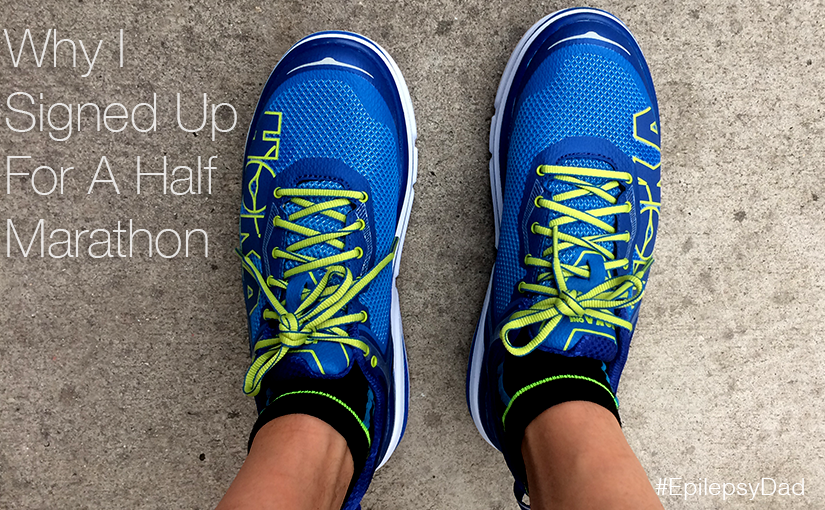
    I used to hate distance running. Growing up, I was a sprinter. The act of running was confined to short, powerful bursts, and it was over before my brain could register what was happening and commanded me to stop. That style of running served me well in sports and in getting away from my sister.

    When I joined the Army, I knew there would be running but I felt misinformed as to how much running there would actually be. On the first morning at 0-dark-30, I discovered another level of distance running. I also learned that you could run up the same hill multiple times without ever running downhill. That experience challenged my sense of physics as well as my body every day for eight weeks. Filling up the rest of the day was running between buildings and tasks any time we were in a hurry and, in the Army, you’re always in a hurry. While the amount of running went down after basic training, there were still physical fitness tests that included a two-mile run at a pace that caused my lungs to burn. I wish had a fitness wearable to track all those miles. I would have rolled the digital odometer more than once.

    When I left the Army, I couldn’t escape the running. I worked in an office of young, single twenty-somethings and there was always a 5K on the beach to support the whales, or the dolphins, or the turtles, or a 5K to support people that run 5Ks. After doing so many charity runs, I just kept running until running had become a core part of my workout routine.

    I’m still not very good at it and it’s rare that I do a distance greater than a few miles, but the mental block that prevented my younger brain from enjoying the experience seems to have faded and my 5-mile jog along the water in Seattle has become a favorite tradition when I visit.

    Five miles, though, is considerably shorter than the 13.1 miles that I’ll need to do to cross the finish line in November. When I think about how far I will have to run, I get nervous. When I look at the calendar and when I see that there are only a few weeks left, I get discouraged and negative. There’s not enough time left to train. I can’t do this. I start to question my life choices. Well, at least the one about signing up for the event.

    Why, then, did I sign up?

    Sometimes after a hard run, maybe it felt longer or I stopped more times than I wanted to, those fears and doubts come rushing in. But as I painfully climb my way up the four steps to our apartment, when I use whatever energy I have left to push the door open, I’ll hear “Daddy, how was your run?”

    No matter how far I ran or how hard it was, I’m instantly energized. I don’t think about the pain or the negativity or the nerves. I think about my son and why I am running.

    My son wakes up every day and takes a handful of pills. He may have already had a few seizures that disturbed his sleep. He has to will himself to get ready for school. He eats his high fat, mayonnaise and soy flour donuts and drinks his vitamins that sometimes upset his stomach. The drugs kick in and his brain swims in mind-altering medicine. His school is crowded, loud, and hard, but he walks through those doors and up those stairs and waves back at us as he passes through the glass atrium with a smile.

    epilepsy dad half marathon philly athletes

    I’m running for my son. I’m running for that smile. I wanted to do something hard because he runs a marathon every day. I want to see my son at the finish line and tell him that I did it for him.

  • Giving Thanks And Giving Back

    Giving Thanks And Giving Back

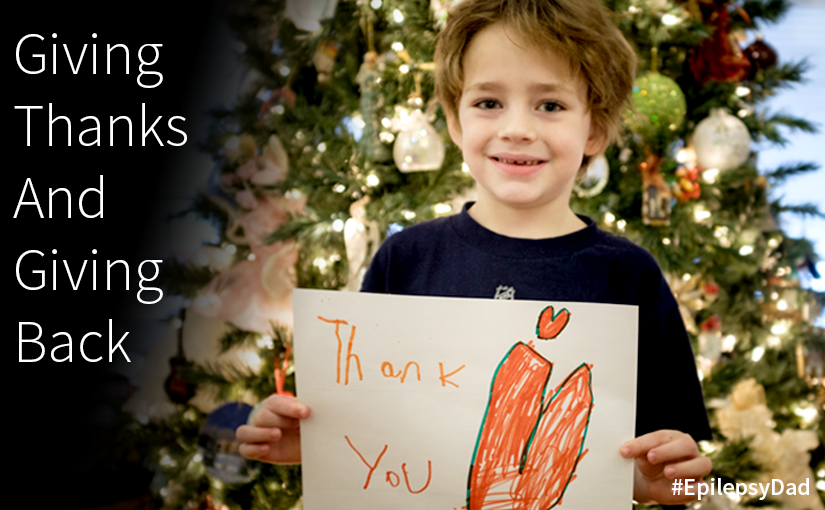
    Each December, we make a special end-of-year donation to a charity. This year, we are giving thanks and donating to the organizations that helped my son and our family through our first year with epilepsy.

    We are very fortunate. Even though my son’s epilepsy is complicated, we have insurance, and I have a good job working with compassionate people who allow me to balance work with taking care of my son and my family. We’ve met a lot of other families that were less fortunate, and the groups that we are donating to this year provide help to everyone. That support and the research necessary to better understand epilepsy costs money, and that is why we are donating.

    If you are looking for a place to put  a donation at the end of the year, each of these groups has had a direct, positive impact on my family, and I would appreciate any support you could give them.

    Children’s Hospital of Philadelphia

    chop childrens hospital of philadelphia

    We spent more than two months on the Neurology floor in the Children’s Hospital of Philadelphia (CHOP). Many of those days, we were at the bedside of our son praying that the seizures would stop. Thankfully, we were able to eventually go home thanks to the many, many people at CHOP that took part in my son’s care. The doctors, therapists, Child Life Services, custodial staff, EEG and phlebotomy techs, volunteers, and especially the amazing nurses on the neurology floor, collectively took care of our son and our family, and we are unspeakably grateful.

    You can donate to the Children’s Hospital of Philadelphia on their Donation page.

    Children’s Hospital of Philadelphia Ketogenic Kitchen

    chop keto ketogenic kitchen childrens hospital of philadelphia

    Our son has refractory epilepsy, which means that he doesn’t respond well to medicine. To help with his seizures, we were put on the ketogenic diet. At CHOP, on-boarding to the keto diet is a week-long inpatient process where the children are monitored while adjusting to the diet and where the families are trained on how to be successful with the diet, including classes in the Keto Kitchen on measuring and cooking keto meals. The Keto Team also hosts keto cooking classes, and fund a culinary intern to explore more creative, tasty meals for the keto kids.

    You can donate to the CHOP Keto Kitchen on their Donation page.

    Epilepsy Foundation of Eastern Pennsylvania

    efepa epilepsy foundation of eastern pennsylvania

    When my son was diagnosed with epilepsy, we spent the first few months in the hospital surrounded by an amazing support network. When we left the hospital, though, we felt very alone. We didn’t know who to talk to or where to find more information about our new world. We didn’t know what resources we would need or what was available. We didn’t know how to talk to the people around us about epilepsy. Fortunately, the resources available through the Epilepsy Foundation and the Epilepsy Foundation of Eastern Pennsylvania (EFEPA) helped. We walked in their Summer Stroll and learned more about other programs they had for the epilepsy community. They also came in to my son’s school and talked to his teachers and classmates about epilepsy. When the world seemed big, and scary, and dark, EFEPA provided a bit of light.

    You can donate to the Epilepsy Foundation of Eastern Pennsylvania on their Donation page.