Category: parenting

  • Questions Without Answers

    Questions Without Answers

    Like many fathers, when my son was born, I had a list of things that I wanted to teach him. I wanted to be the sage, the guru that imparted to him wisdom drawn from my life experiences. I looked forward to the opportunity of leaving him feeling like his old man was a fountain of knowledge for all things. I longed for the bond that the transfer of knowledge would create between us.

    How do I tie my shoes?

    How do I throw a ball?

    How do I tell a joke?

    How do I ride a bike?

    How do I catch a fish?

    How do I program a computer?

    How do I ask a girl out on a date?

    How do I drive a car?

    But after he was diagnosed with epilepsy, I began to fear the questions that I knew he would eventually ask. I went from wanting to be the person he went to for answers to the person afraid to disappoint him when he asked questions for which I didn’t have an answer.

    Why is this happening?

    Will it ever go away?

    How do I live with epilepsy?

    These questions may be the biggest questions that he will ever ask because they are the biggest questions that I have ever asked. I’m also on a search for answers, but I don’t think I’ll have them before he poses the questions to me because not every question has an answer. We may never know why this is happening to him, but it is clear that this is our path. We may never know if it will go away, but we know that is here now. And we may not know how to live with epilepsy down the road, but we are doing the best we can today.

    Rarely does life go according to plan, but we are facing a life that can’t be planned. How my son is each morning, depending on seizures and side effects, determines what we can expect from the day ahead. It’s impossible to predict anything in the future when you can’t predict the next day.

    In the beginning, this uncertainty shut us down. I’m not sure it could have gone differently when my son was first diagnosed with epilepsy because we were fighting for his life. But even after he was stable, we were consumed with finding answers. After four years, it has become clear that there aren’t going to be any. But instead of letting that pull us back into hopelessness, we’re trying to allow it fill us with gratitude for what we do have. Because we have today, and for a time we didn’t think that we would even have that.

    I went into fatherhood expecting to show my son the things he needed to know. But maybe the most important thing I can show him is how to live without having all the answers.

  • Wall Of Limitations

    Wall Of Limitations

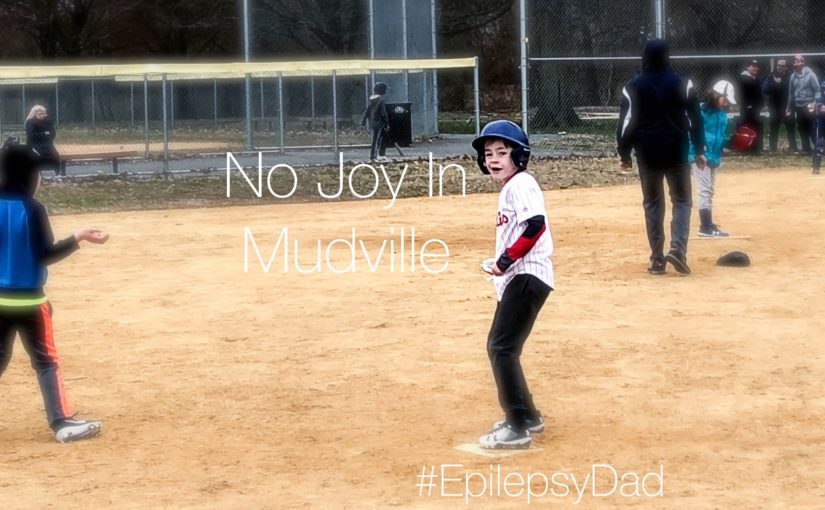
    This summer, my son participated in a week-long baseball camp. We knew it would be physically demanding so we spoke with the coaches before we registered him to make sure that he could rest and leave early if he needed it. It’s a phone call we have made before and will likely make many times in the future that serves two purposes. First, it helps us make sure that our son will be safe. And second, it identifies any places not willing to make accommodations for people who need them, which is not a place we want to be.

    My son’s nanny took him on the first day and the coaches welcomed him to the camp. He managed to stay for half the day but then took a three-hour nap when he got home. But he had fun and he made friends. The second day was much the same with a long nap after a shortened day.

    By the third day, he didn’t want to go. He was noticeably tired but he managed to make it out the door. His nanny coaxed him on to the field and, after almost thirty minutes, one of the coaches managed to finally get my son to participate. He left early again that day.

    On the last day of camp, we planned to let him stay all day because they were going to play a game. His nanny made sure he took frequent breaks and he made it through the day and finished the camp with a smile.

    The end of the camp coincided with the Little League World Series. I watched the grueling tournament and wondered, given how the camp went, whether my son could do anything like that. By now, I don’t have any grand vision of him playing in the major leagues, but I do want him to continue to play something that gives him joy and that makes him feel like a part of a team.

    It made me think that someday we’re going to run into a wall of limitations. We’ve faced small ones before, but we’ve managed to pass them mostly by watching our son climb over them. We’ve managed to keep our distance from larger walls by adjusting our path. We swapped hockey for baseball. We learned to work around his physical and endurance issues. But we haven’t been faced with consciously confronting the difference between possibility and probability. Potential versus practical. Fantasy versus reality. We haven’t faced the wall that was once on the horizon but is now uncomfortably close.

    And every day we are moving closer. It’s starting to block our view to the world behind it. I’m beginning to wonder what we will do when we reach it. Will it be too big and stop us in our tracks? Will it be too overwhelming and send us back the way we came? Or will we do what we have always done and follow our son as he finds a way to climb it, even though we know there will be an even bigger wall behind this one?

  • Invisible In Plain Sight

    Invisible In Plain Sight

    I stepped on to the street on my way to work. As I joined the flow of foot traffic, I saw a young man walking quickly ahead of me. I say “walking”, but he was bouncing more than he was walking. I didn’t see any of the earphones that I and most of my fellow pedestrians were wearing, but he was moving as if he had a soundtrack playing in his head that lightened his steps.

    I noticed him because he was so different from everyone else on the street. He was a tall, young African American teen wearing a bright blue t-shirt surrounded by an army of mostly white business people dressed in muted black, brown, or blue. He head was up as he looked at the world around him while that world was looking down at their feet or at their phones.

    When he stopped at a crosswalk, I got close enough to see that he would sometimes raise his hands and sign to no one in particular. It was as if he was signing the lyrics to the song in his head. Like when the chorus of a really good song comes on and you find yourself singing along, even if only in your head. From half a block away, this young man looked like joy personified walking up the street.

    The light turned green before I could catch up to him. He danced through the intersection and on his way. As he did, I saw that he would occasionally wave to people passing in the opposite direction. Even from my distance, I could see a big smile on his face. But no one that he waved to reacted. They kept their head down. They looked at their phones. They looked the other way.

    Maybe they didn’t see him. Maybe they were busy. Maybe they were really interested in whatever was on their screen. Maybe they were scared. Or maybe they just couldn’t be bothered. We live in a big city and I see people ignoring the world around them and everyone in it all the time.

    I thought that maybe the young man had a disability because he was signing. Or maybe he was just different than, in color and age and general attitude, the other people on the street. But watching how the young man was being ignored made me think of my son.

    Epilepsy is often called an “invisible” condition because it lacks physical markers, but there can be signs. We’ve had more than a few people ask us politely “Is there something wrong with him?” after they spend time with our son. He’s noticeably different in a self-centered world that doesn’t seem to have a place for people that are different. We talk about diversity and inclusion but we look the other way when it is our turn to act…when it is our turn to accept someone who is different from us.

    I watched the world look away from that young man on the street. I saw the world unwilling to acknowledge another human being. I don’t want that for my son but I don’t know what to do about it. I wish I could change the world. I wish I could make it more accepting, more forgiving, more tolerant, more open, more aware. But we’re heading in the wrong direction. I fear that the only thing that I can do is prepare my son for the road ahead.

    But then I turned my attention back to the young man. I could see, as he waved to the next person, that he was smiling. Even with the world ignoring him, he was walking with a bounce in his step and smiling. He would wave at another person. And then another. And he would keep smiling. I watched him not slow down, not shy away, and keep moving forward. I thought of my son then, too, because he has that same persistence, the same drive to bring joy to the world. And for a brief moment, I felt hope.

    I never caught up to him, but I wish I could tell that young man that he brightened at least one person’s morning that day.

  • Happy Anniversary, Epilepsy

    Happy Anniversary, Epilepsy

    Four years ago this week, my son had his first seizure.

    Four years.

    Almost half his life.

    He doesn’t remember the time before. Most days, neither do I. Our memories are of our new life that started the night his body contorted and stiffened on the floor of the arcade. It was the night that time stopped as we prayed that our son would come back to us and when I held his frozen body in a thunderstorm waiting for the ambulance to arrive.

    Even though his second seizure wouldn’t be for nearly two months, the fear and uncertainty that the first one had caused lingered. It turned out that time was the quiet before the storm…that feeling you get when the clouds darken and the air changes and you know the storm is close. The air filled with the same electricity that would soon wreak havoc on my son’s developing brain.

    And then it happened. The second seizure burst free just as my son sat in his seat onboard an airplane. Another thirty minutes and the plane would have been in the air but, thankfully, the crew got him safely off the plane and on his way to the children’s hospital. Within a few months, his seizures would be out of control and we’d be back in the same hospital learning firsthand what status epilepticus was.

    It would take nearly two years before my son was stable. But even then, we were still adjusting medication, dealing with side effects and behavioral issues, and occasionally using his rescue medication. He was stable, but not living the life we had planned. But by then we were beginning to realize that we needed a new plan.

    Four years in, we’re still adjusting that plan. There hasn’t been a day that has not been affected by epilepsy. He’s had countless seizures. He’s been on and off medications and suffered endless side effects. He’s had a barrage of blood draws, EEGs, and other testing and had a myriad of therapies trying to restore what epilepsy had taken away. He’s been isolated from his peers and falling more behind in a world that doesn’t wait for people who can’t keep up, or are different, or need help.

    After four years, I thought we’d be further along. I hoped he would outgrow his seizures or we’d at least have them under control. I thought we would have figured it all out. I thought we’d be able to get back to normal. But, instead, we had to change our definition of “normal” and learn how to live life with different expectations.

    In these four years, I’ve learned a lot of other things, too. I think I am a better man, husband, and father than I was before this started. And we’ve had so many wonderful experiences and met some amazing people on our journey. But I can’t bring myself to be grateful. I can’t allow myself to acknowledge the things that are good because I don’t want to reward the monster that continues to attack my son. Our life is what it is in spite of epilepsy, not because of it.

    Four years is a long time. But I know we have many years to go. We didn’t ask for this, and we don’t want it. But it looks like we’re going to be together for a while.

    So, Happy Anniversary, Epilepsy.

    I didn’t get you anything.

    Because I hate you.

  • Poopsicle, Popsicle, Dreamsicle

    Poopsicle, Popsicle, Dreamsicle

    Since my son was little, we have had a tradition of ending our nights by talking about our days. It started as “poopsicle, popsicle, dreamsicle” but it has evolved over the years to include a few additional reflections:

    Poopsicle – Something bad that happened today

    Popsicle – Something good that happened today

    Dreamsicle – Something you want to happen

    Grateful For – Something you are grateful for

    God Bless – Someone you are thinking about that could use your thoughts or prayers

    Mistake – A mistake you made today (because mistakes are opportunities to learn)

    Proud Of – Something you did today that you are proud of yourself for

    Each night, we would take turns going through the list. But for the past few months, I haven’t been participating. My wife has been reading with our son before bed and the reflections became part of their routine. Instead of joining them, I busied myself by cleaning the kitchen or working on the computer.

    I don’t remember exactly when I stopped. It could have been near the end of my last job when I was so unhappy and stressed and just wanted to get out. It could have been after I started my new job because I was so exhausted trying to prove myself to my new team. It could have been any number of times when life got hard and complicated and fast.

    Ironically, it was probably when I needed to reflect the most that I stopped doing it. I didn’t just stop reflecting with my family, I stopped reflecting at all. I didn’t notice the day, I survived it. I spent all my energy moving things forward without appreciating where I’ve been or what I’ve done. Instead of acknowledging the really hard things and being proud of myself for having done them, I moved on to the next thing on my endless list of things to do.

    This Father’s Day, my wife surprised me with a special Japanese tea ceremony. It was a beautiful ceremony in which a teacher described each step as it was demonstrated by his students. He described the ritual of serving the tea, but also introduced a mindfulness aspect from the perspective of the guest. During the ceremony, the guest would inspect the different things in front of her. She would lift the bowl and examine every side of it. Because this moment may never happen again. She may never see the bowl again. She may never see the host again. So she was appreciating this moment and these objects and being mindful and present in the moment.

    Three minutes into the ceremony, I caught myself wondering how long we had been there and how long we had to go. But after awhile, I settled in on the experience. I settled into the space. I noticed the way the host and assistant walked in and out of the room. I noticed how they folded the silk cloths they used to wipe down the bowl. I noticed the way the guest turned the bowl to examine it. I noticed my son watching the ceremony.

    Drink your tea slowly and reverently, as if it is the axis on which the world earth revolves – slowly, evenly, without rushing toward the future. ~Thich Nhat Hahn

    It was as if the world slowed down enough for me to see what was happening. Instead of moving on to the next thing, I was seeing the things that were in front of me. I wasn’t thinking about my to-do list. I wasn’t thinking about work. I was there. I was present. I hadn’t felt that way in a long time. It felt good. I missed feeling that way.

    I have gotten into the habit of doing instead of experiencing. It’s easy to measure a day by how much gets done because there is no end to the list of things to do. But that keeps my eyes focused on the horizon instead of the ground beneath my feet, or noticing the footprints I left behind me, or being aware of who is at my side.

    My son has a serious medical condition that can change our lives or take away his without warning. We are not guaranteed any moments beyond the one we are in. I want to be better and being present in it with my family. I want to share these moments with the people around me. And I want to reflect on them and acknowledge what they mean to me. Because I want life to be about more than checking things off an endless list of things to do.

    That night, I laid next to my wife and son as we put him to bed. “What’s your poopsicle?”, I asked him. Then, we took turns reflecting on our day.