“It’s not the unknown itself that paralyzes us—it’s our fear of what it might hold.” – Unknown
In life, there is always uncertainty.
Will my car start? Will there be traffic? Will I make it in time?
Is this milk bad? What will happen if I drink it anyway?
Most of the time, we aren’t aware of how much uncertainty there is. We focus on the present moment and the task at hand. Our awareness and perception are constrained to what is in front of us.
That’s a good thing. It would be terrifying if we were constantly aware of just how much uncertainty there is. We’d be paralyzed by fear—fear of the unknown, of what the future might hold, and of how little control we truly have.
“When everything is uncertain, we crave control. But clinging to certainty can keep us from growing.” – Unknown
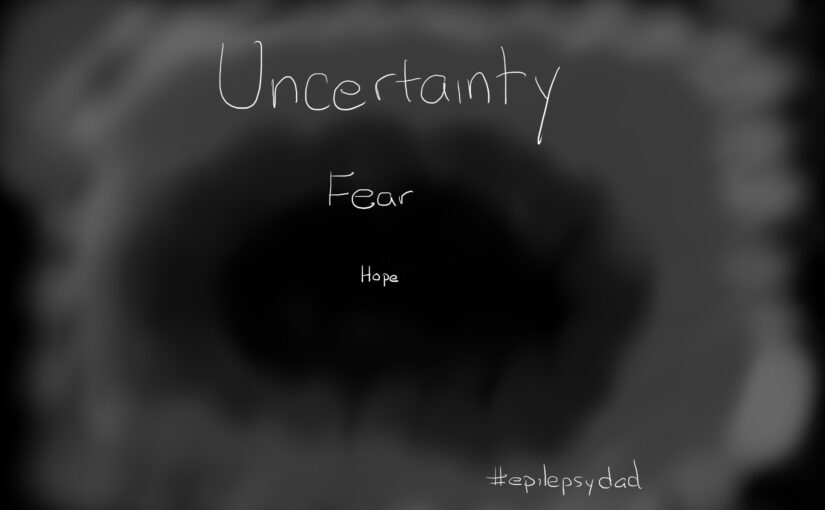
Sometimes, though, uncertainty is impossible to ignore. Sometimes, it compounds until it becomes big enough to have a gravity of its own. And sometimes, it collapses on itself like a black hole that consumes every other thought.
Uncertainty about my son’s future. Uncertainty about my career. Uncertainty about the health of a loved one. Financial uncertainty. Relationship uncertainty. Each can be daunting by itself and occupy my thoughts. But, together, there can be nothing else. No other thought can escape.
When uncertainty dominates our thoughts, it can be overwhelming. In these moments, it’s easy to focus on the negative, like the discomfort of not knowing and the worst-case scenarios that could unfold.
I’ve always tended to wait for the other shoe to drop, focusing on the rare moments when it does rather than the many times it doesn’t. This pattern is known as negativity bias—the tendency to give more weight to negative experiences than to positive or neutral ones. Even when good outcomes are more common, the few bad ones loom larger in my mind, especially during times of uncertainty, when the unknown consumes my thoughts.
It’s hard to remember that uncertainty isn’t always a bad thing because it’s difficult to imagine positive outcomes when all you see is the unknown.
I like this quote because it shifts perspective. While uncertainty can be unsettling, it also allows space for hope. The unknown holds the potential for something better, new opportunities, healing, and change.
I try to remind myself of this when fear takes hold. When everything feels uncertain, there is still room for hope. And sometimes, hope is enough to keep moving forward.
This is the true story…of seven strangers…picked to live in a house…(work together) and have their lives taped…to find out what happens…when people stop being polite…and start getting real…The Real World.
Around the time I graduated high school, MTV launched a show called The Real World. The first season followed seven young adults living together in a New York City loft, documenting their interactions, conflicts, and discussions about race and identity. It was marketed as an unscripted glimpse into young adulthood, but in reality, The Real World was anything but real. The show was heavily edited, and its cast was carefully selected to generate conflict and drama. The environment was artificial—a manufactured version of adulthood designed for entertainment rather than truth.
Lately, I’ve been thinking about that contrast between reality and expectation as we navigate our own version of The Real World—helping our son transition into adulthood. We’re working with a transition counselor to understand his path forward, and it’s forcing us to confront some hard realities about his future.
This process has resurfaced unanswerable questions and concerns about how much support our son would need to get through his daily life. Will he remember to take his medication? Does he know when to do laundry? Will he remember to turn the stove off? Would he be able to finish chores and tasks without getting distracted?
The scripted version of adulthood—the one where you turn 18, go to college or get a job, and move into your own place—isn’t the one we’re working with. Instead, we’re piecing together a different kind of future shaped by his abilities, challenges, and the resources available to help him live as independently as possible.
The good news is that there are benefits and programs designed to support people like him. However imperfect, there are systems in place that can help him build a life. A life where he can find his own sense of independence, identity, and path.
The bad news is that these systems and benefits are the same ones under attack by the current administration. Social Security, Medicare, Medicaid, the Department of Education, and support for non-profits are all in danger of being eliminated or losing some or all of their funding. The uncertainty of the future of these vital support programs directly correlates with the uncertainty I feel about my son’s future.
Ultimately, this is the real world that I am thinking about. Not the one made for television, but the one that exists where there are no cameras. A world that is not made for people like him. A world where, one day, he’ll have to live without us, whether those support systems exist or not. What that world looks like and what his quality of life will be in that world is what we are fighting for.
When my son started having seizures, I was paralyzed. I was afraid. I was helpless. I was there physically but didn’t know how to be emotionally present for him or my wife. I had disassociated from the situation, leaning into my job and the mechanics of keeping a household running. My wife became the full-time caregiver in a new city without any family to support her through my son’s most challenging times medically, intellectually, and emotionally.
After years of therapy, I still struggle with the semantic debate about whether to say I was afraid or I felt afraid. But looking back, I think I was both because while those words described how I was feeling, they also described my actions. And inactions.
It was an impossible time, and I committed to doing better. Over the years, I became a better partner and father, but I had a lot of work to do to repair the damage those years did to the relationships in my life.
A few years ago, my wife had health challenges that limited her capacity for physical activity. Rather than distancing myself from the situation, I tried to lean in. In addition to going to work, I took on most of the responsibilities around the house. I thought showing her I could care for her would be enough. But the same lack of emotional connection persisted. She was cared for but wasn’t receiving what she needed and deserved most.
Being the parent of a child with special needs is challenging enough. Coming into the situation with trauma and fears makes the situation infinitely more complex, dangerous, and demanding. I know families who have been ripped apart by it. I also know families who have become stronger, and I wanted to be one of those families.
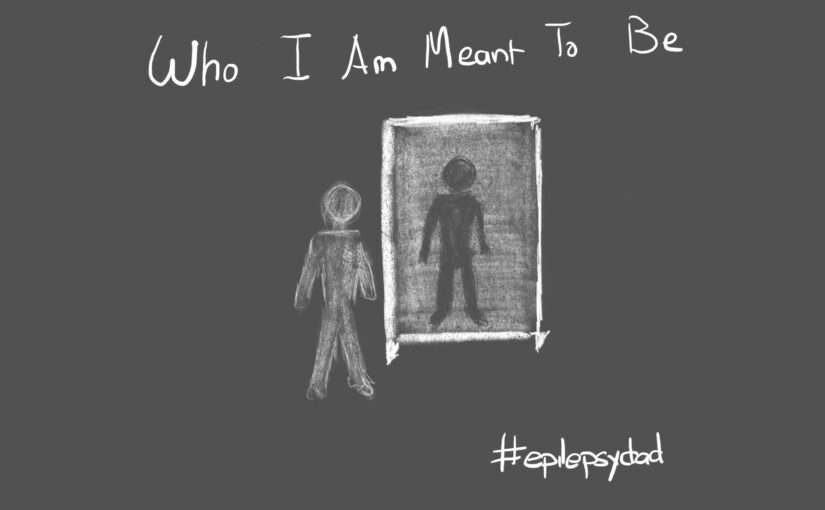
Rather than paralyzing me, I want these challenges to help me discover who I can be. I want to be the type of person who can show up and be present. I want to be a person who can be vulnerable when the vulnerability is needed. I want to be the type of person who makes a person feel seen who is struggling, or in pain, or needs to feel seen. I want to be the type of person who isn’t afraid to be seen.
I still have moments of doubt, of fear, of wanting to retreat into old patterns. But each time, I remind myself that being present, vulnerable, and truly showing up is a choice. And every time I make that choice, I get closer to the person I want to be.
We’ve been spending some time in Chattanooga to support our goddaughter as she recovers from surgery.
My wife and I have been taking turns spending time with our goddaughter at the hospital, and her grandparents have been extremely kind, bringing our son on various adventures to the aquarium, shopping, and restaurants.
One afternoon, her grandparents were at the hospital so my wife, son, and I decided to explore downtown and find a fun activity. We parked the car and stepped into downtown Chattanooga.
We lived in downtown Philadelphia for years, so when I use the word “downtown”, it’s technically true. However, it’s like coming from Colorado and hearing people on the East Coast use the word “mountain” to describe the adorable hills they ski down.
But downtown Chattanooga checked a lot of boxes. It had a combination of southern eateries and national chains, obscure shops and traditional retailers, and a blending of locals and tourists on the sidewalks.
We parked the car in a lot and stepped onto the sidewalk, adding ourselves to the mix. We had made it half a block before we saw another feature that Chattanooga had in common with other city centers.
As we passed a storefront, we saw a person in need asking if we had any change we could spare. I awkwardly felt in my pockets and found nothing. I apologized and he nodded the way you would expect a person who has been told the same thing hundreds of times a day would do and we continued down the sidewalk.
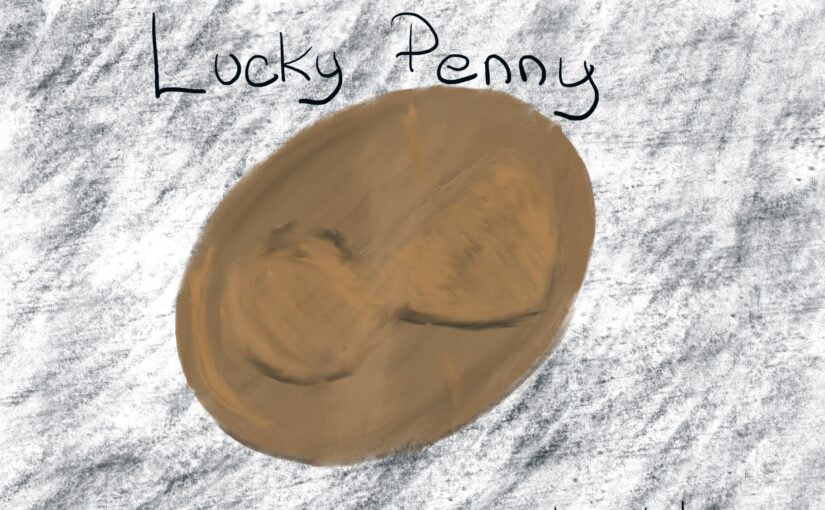
After a few more steps, my son stopped and turned back to the man. I watched as my son reached into his pocket and handed something to the man. I didn’t see what my son said, but I did hear the man say, “Thank you, but I can’t take your lucky penny.”
My son held his hand up in the universal “I’m not taking it back; it’s yours now” gesture and stepped back. The man looked at me and then back at my son, a small but genuine smile breaking through the weariness on his face. “Thank you,” he said again, softer this time.
My gaze shifted to my wife who was nearly in tears. I felt the same way.
As parents, we often look for signs that we’re making the right choices for our children. We want them to have opportunities to be successful and to grow up to be kind, caring individuals. We want them to have better than we did and be better than we were. But we don’t always get that validation, especially when we’re navigating the challenges that come along with their unique needs.
I spend more time assuming that I am making the wrong choices than acknowledging the signs that my son is on the right path. I worry that my trauma will prevent me from being who I need to be for him or that my insecurities will be passed down to him, like my brown hair or love for video games.
Then there are moments like this. Moments that force me to stop. Moments that open my eyes. Moments that show me who he is.
We continued up the block until we found a place to sit. My wife dug into her purse and found a little cash. She gave it to our son, and I followed him up the block to where the man was still seated. My son handed him the folded-up bill and, in return, received a thank you and a handshake. I nodded to the man when he looked at me, and he gave me a look of deep appreciation.
Parenting is a journey filled with doubt, but also these small, brilliant flashes of clarity. Watching my son that day, I saw the kind of person he is becoming. And for a moment, all the worry faded, replaced by gratitude—because if nothing else, he is growing into someone who leads with his heart.
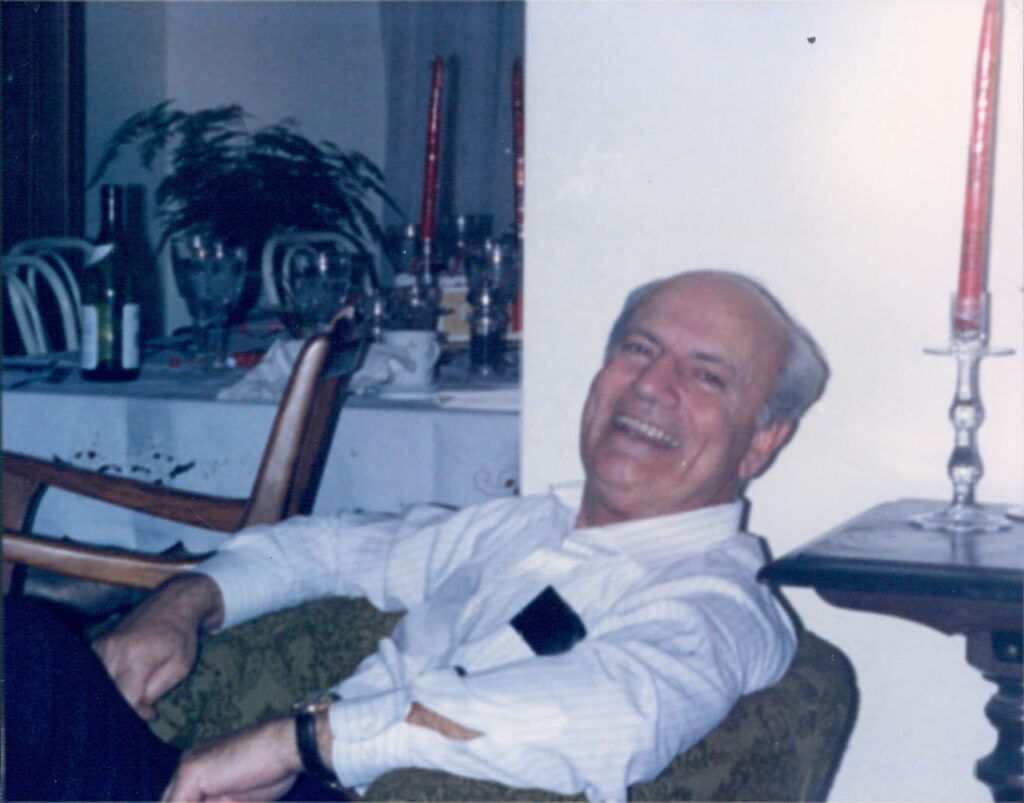
My grandfather was one of the most influential people in my life. He passed away when I was only 18, although we didn’t see each other as often after I moved away with my parents 5 years prior.
I didn’t have enough time with him.
He worked at a Pratt & Whitney factory. I was fascinated by the aircraft his engines powered into the sky, and every year, he would bring me a company calendar highlighting them. I would hang the calendar on my wall, marvel at the specifications, and build models of the aircraft to show him.
My sister, cousin, and I would spend a lot of time at my grandparents’ house, especially over the summers. We’d play in the yard he kept groomed with his riding lawnmower, which he would sometimes let me drive. We’d climb the apple trees overlooking the garden he had made for my grandmother. And I’d rest in the cool basement with him, watching golf on the old television until we both fell asleep.
There were times when he worked the night shift, and when we spent the night, we’d watch him go to work after dinner and come home in time to have breakfast with us. Despite his inconsistent schedule, I remember him consistently making time for us.
He instilled in me the importance of hard work and education, and he’s part of the reason I continued to get my bachelor’s and master’s degrees even after I had already started my career without them.
I’ve been thinking about him because my dad passed away recently, and it made me think about the relationship my son had with his grandfather.
Growing up, my dad (technically my stepdad, who I called “dad” as soon as he married my mother when I was 11) wasn’t especially warm. He was kind, and he was smart. I learned how to fix bicycles and do basic home repair and electrical work because he invited me to help him on projects around the house. But there was always an emotional distance. There were few hugs and no “I love you.” But he was a good dad and provided a good life for us.
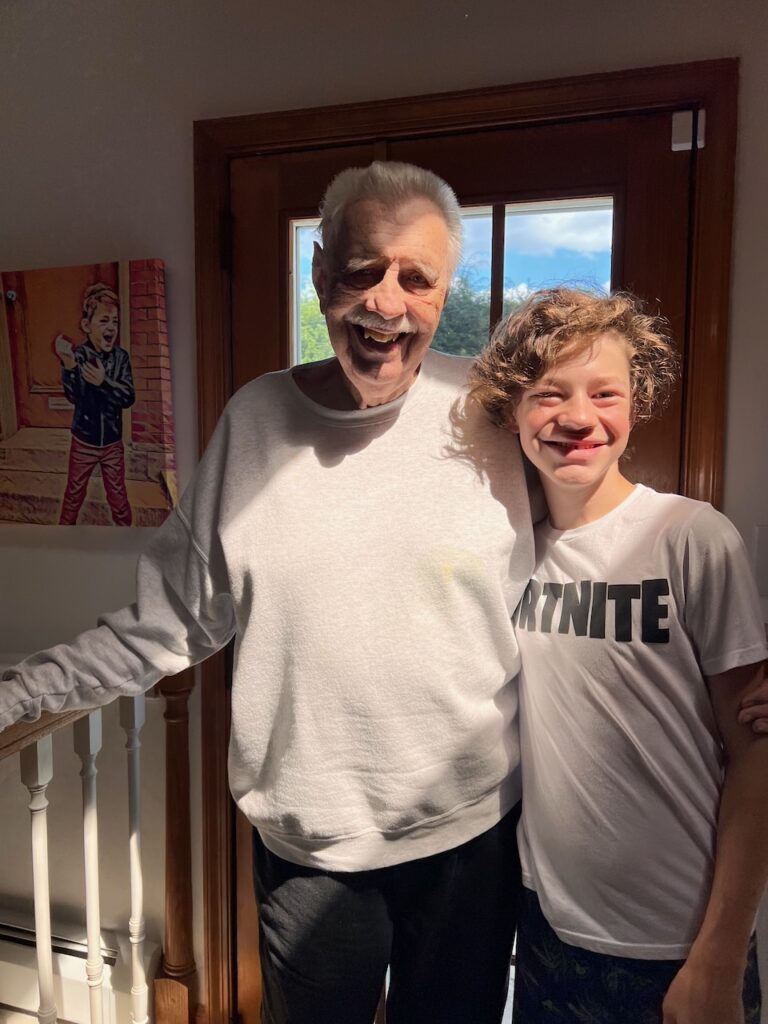
When my son was born, that started to change. We would visit my parents in Florida a few times a year, and my dad was always genuinely happy to see my son. He would greet us at the airport and welcome a big hug from his grandson. We would stay at their house and spend time together. I have pictures of my dad watching my son jump and splash in the pool and also following my son along a jelly bean trail left by the Easter Bunny. My dad was thrilled with every present and card my son gave him, as if each was the best gift he had ever received and was exactly what he wanted.
As my son got older and after he was diagnosed with epilepsy, I could see my dad opening up. My son’s challenges cracked open a piece of my dad that even he didn’t know was there. He would always tell me how well my son was doing, how amazed he was at what my son could do, and how much he wanted my son to be okay.
We moved my parents to live near us a few years ago. By then, my dad’s health had started to decline, both physically and mentally. But he maintained the same excitement to see us and his grandson every time we visited. We would have holiday dinners together, and while it was different from when I would go to my grandparents when I was young, it was a time for my son to spend time with his grandparents, too.
Even though it got more challenging for him to get around, we took my dad to a few of my son’s baseball games. I’m not sure he always knew which player was his grandson, but he was so happy to be there and always told my son how proud of him he was. When I would stop by after work, the conversation with my dad would always turn to asking how my son was doing and how big he was getting.
“He’s not a kid anymore,“ my father would say. “He’s a grown man.”
Somewhere along the way, my father started to say “I love you” to us. At first, it was in response to us saying it to him. But then, he started to offer it himself.
I don’t remember my grandfather saying “I love you.” We weren’t a big “I love you” family, so I thought it was normal. He would tell me he was proud of me and other, safer, phrases, so I didn’t know what I was missing.
That’s one of the changes we made as parents. My wife brought that into the family, and I am grateful she did. I tell my son that I love him at school drop-off, randomly throughout the day, and every night before he goes to bed. It was nice to extend it to my parents so that my son could also receive it from them.
The last time my son saw his grandfather, he and I had stopped by to visit. My dad looked old and tired and had fallen asleep, slumped to the side in his recliner. At one point, he woke up, saw us, and smiled. He asked about baseball and commented on how tall my son had gotten.
A week later, I sat in the same room. My dad was on a bed provided by hospice instead of his usual recliner, and he was in a deep sleep. I talked to him about the memories he helped create and how grateful I was. I spoke to him about his grandson and how well he was doing.
That would be the last time I would speak to my dad.
A few days later, he was gone.
Loss has a way of making us reflect on what truly matters. For me, it’s the time we have, the love we show, and the memories we leave behind.
I am grateful that my son got to have time with his grandfather, especially these last few years. He got to see a man who, over time, learned to express love in ways he hadn’t before. He got to hear his grandfather’s pride, feel his warmth, and know, without question, that he was deeply loved.
And now, he’ll carry those memories with him, just as I carry my father’s and my grandfather’s with me. In that way, love never really leaves us—it simply finds new ways to be passed on.